


Before you spend more, check the label and the fit: those two steps rule out more bad buys than any vent count or glossy finish. This guide shows what a certified entry helmet already gives you, where upgrades can help, and how to choose for commuting, road riding, MTB and children.
Start with certification: CE and EN 1078 are the EU safety baseline
A bicycle helmet legally sold as a cycling helmet in the EU or EEA should carry CE marking and EN 1078 on the helmet label or documentation. In the UK, check the applicable UKCA or CE marking plus BS EN 1078 or an equivalent cycling-helmet standard.
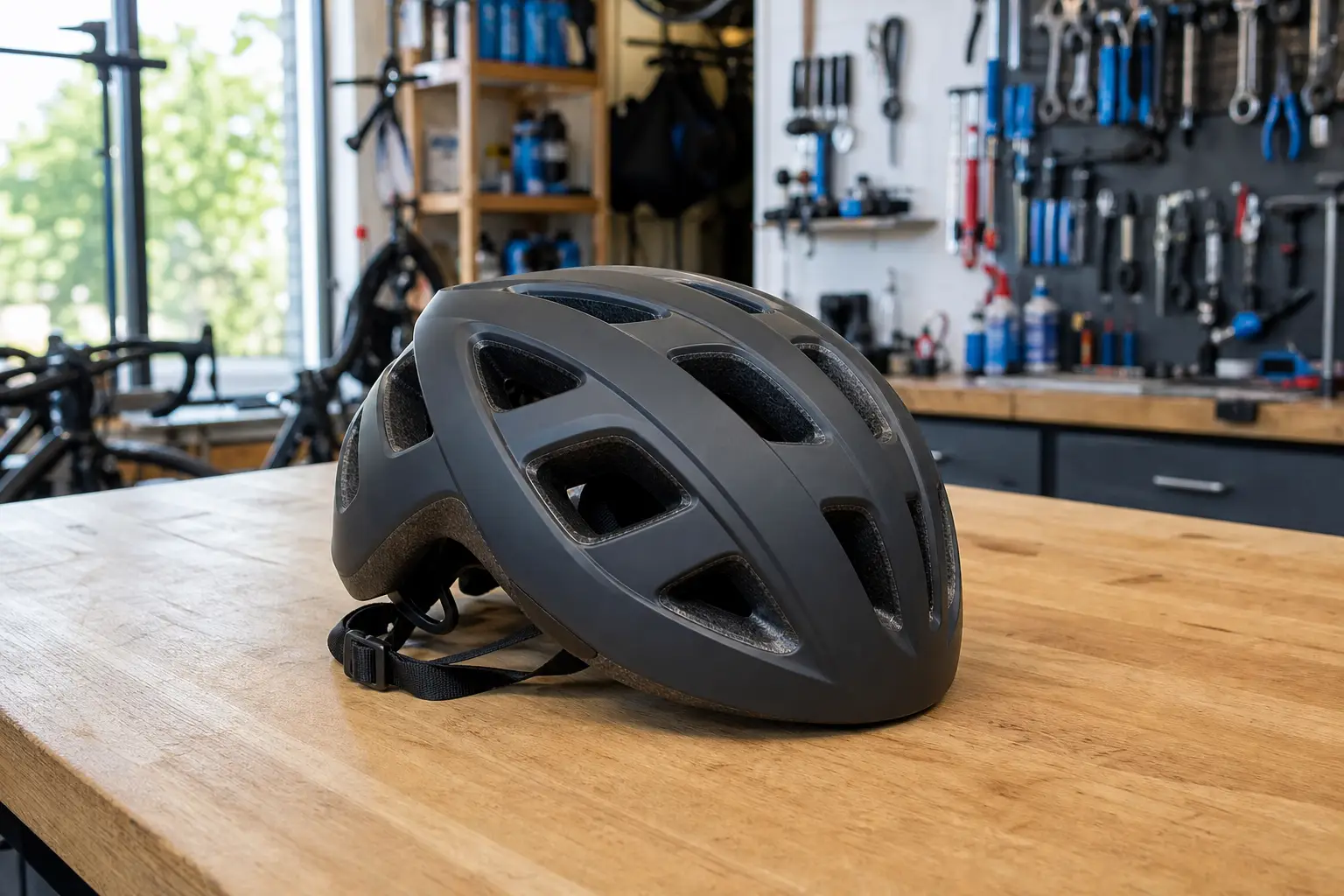
EN 1078 is a pass or fail baseline. It covers construction, field of vision, shock absorption, retention-system strength and effectiveness, and marking. A genuine low-cost certified helmet has cleared that baseline, even if it gives up nicer straps, lighter materials or extra features.
The upgrade you cannot buy: choose the helmet that fits best, then run the two-minute fit check
Fit has the biggest practical effect because a helmet has to stay in the right place during an impact. Adult sizes are usually given by head circumference in centimetres, often around 51 to 55 cm for small, 55 to 59 cm for medium and 59 to 63 cm for large, but every brand varies.
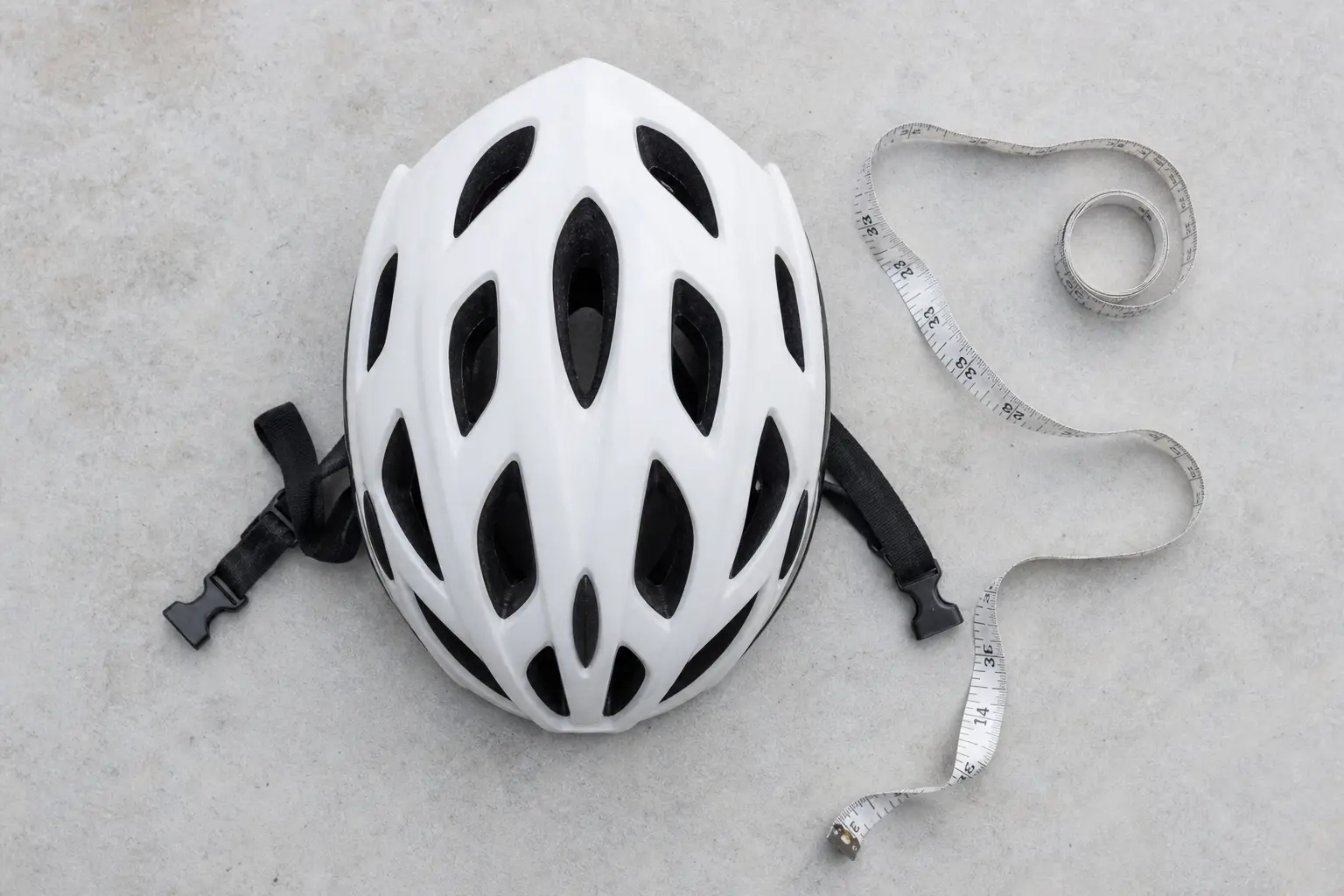
- Measure first. Wrap a tape measure around the widest part of the head, about 1 to 2 cm above the eyebrows. Pick a helmet where that number sits comfortably inside the stated size range.
- Set the helmet level. The front rim should sit roughly two fingers above the eyebrows. It should not tilt back like a cap.
- Tighten the rear dial or cradle. It should feel snug without pressure pain. Where possible, the cradle should sit under the back-of-head bulge.
- Set the side straps. They should lie flat and form a V just below or around each ear, with no twists.
- Set the chin strap. Fastened, it should allow about two fingers under the chin. When the rider opens their mouth wide, the helmet should pull down slightly.
- Do the shake test. Shake the head side to side and nod. The helmet should move with the scalp, rather than sliding on its own.
- Push the front rim up and back with your palm. If the forehead becomes exposed or the helmet shifts a lot, refit it or try another shape.
- Check real comfort. Look for pressure at the temples, strap rubbing, sunglasses conflict and ponytails forcing the helmet upward. If it annoys you in the shop, heat and sweat will make it worse.
What each price band really adds: comfort, cooling, weight, rotational tech and convenience
Higher prices usually buy refinement around the certified core. As of 2026, European retail prices vary widely by sale timing and brand, but the upgrade pattern is fairly consistent.
| Typical tier | What you usually get | What you may give up | Best fit for |
|---|---|---|---|
| Entry, roughly the local equivalent of 25 to 40 | Certified basic city, leisure or kids’ helmets, simple rear dial, basic pads and straps | More weight, fewer vents, less refined strap dividers, usually no rotational system or integrated light | Short rides, holiday cycling, backup helmets and price-sensitive buyers who still want a proper standard label |
| Everyday mid-range, roughly 40 to 80 | Better shell finish, more in-mould construction, improved ventilation, better straps and more size options | Premium weight, advanced ventilation and electronics are still uncommon | Daily riders who want comfort without paying for race features |
| Mainstream upgrade, roughly 80 to 150 | Common zone for Mips, KinetiCore, WaveCel-type systems, lighter shells, nicer fit adjusters, better pads and some commuter-light options | Some models still compromise on ventilation, weight or fit for certain head shapes | Most regular commuters, road riders and MTB riders |
| Premium, roughly 150 to 250 | Lower weight, sculpted vents, higher-end retention systems, magnetic buckles on some models, integrated or rechargeable lights on commuter helmets | You may be paying for finish, styling or marginal performance gains | Long rides, hot climates, frequent commuting, riders sensitive to weight or strap comfort |
| High-end, roughly 250 and above | Aero road shaping, very low weight, smart commuter features, advanced MTB or full-face construction in some models | The baseline standard is already present lower down the shelf | Racers, tech-led commuters, bike-park riders and buyers with very specific needs |
MIPS and rotational-impact systems: how to judge the sticker
Mips and similar systems are designed to reduce rotational motion in certain angled impacts. Depending on the design, that can mean a low-friction layer, a sliding interface or a deformable structure between the head and the helmet; Mips describes about 10 to 15 mm of relative movement in certain angled impacts.
The evidence is promising, with limits. Independent protocols increasingly measure both linear and rotational kinematics. Virginia Tech’s bicycle helmet ratings use a STAR method with 24 impacts, measuring linear acceleration and rotational velocity. Folksam’s 2025 adult helmet test included only helmets with rotational technologies and still found wide variation, with 2 of 11 receiving its “Recommended” label.
So treat rotational tech as a credible paid feature, especially if the helmet also fits brilliantly and performs well in independent tests. Do not let the yellow liner, sticker or brand name override fit, coverage, strap setup and the correct standard label.
Match the helmet to the ride: city, road, MTB, commuter lights and speed-pedelec caveats
The right style depends on speed, heat, terrain and how often you will wear it. A helmet built for a fast road ride solves different problems from one built for a school run or rocky trail.
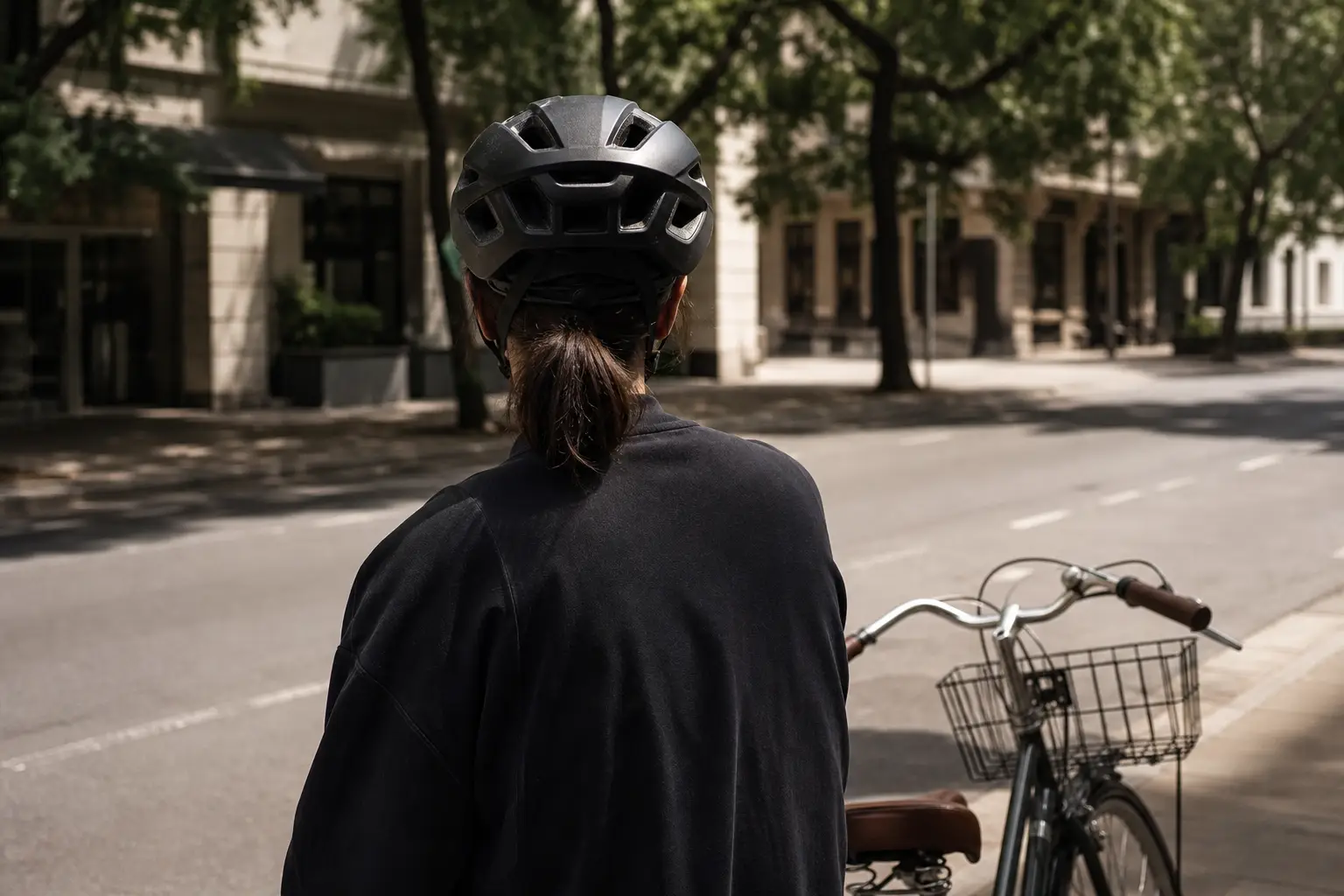
- Basic city or leisure helmet: good for casual rides, short commutes and holiday use. Expect simple adjustment and sturdy handling, with more heat and weight than pricier options.
- Road helmet: built for ventilation, low weight, sunglass storage, a lower frontal profile and sometimes aerodynamics. All-round road helmets usually favour cooling and weight, while aero-road models may trade some cooling for reduced drag.
- Urban or commuter helmet: useful for daily travel, cargo bikes and e-bike commuting at ordinary city speeds. Common features include deeper rear coverage, reflectives, integrated rear lights, fewer or larger vents and a less race-like look.
- MTB trail helmet: designed for off-road movement, with more rear and temple coverage, a visor, goggle compatibility on some models and retention that copes with bouncing terrain. It can run warmer and the visor can catch wind on road sections.
- Full-face MTB helmet: made for downhill, bike parks, jumps and high-consequence off-road riding. The chin bar and extra coverage add heat and weight, which makes it too much helmet for most normal commutes.
- Commuter helmets with integrated lights: handy because the light is always on your head, often higher than a seatpost light. Still budget for legal bike-mounted front and rear lights where required locally.
- Speed-pedelec helmet: if the bike assists to 45 km/h, check national law before assuming an ordinary EN 1078 helmet is enough. Some countries refer to NTA 8776 or related European technical specifications for this faster class.
Kids’ helmets need different buying rules: fit-now sizing, ponytails, outgrowing and no used helmets
Children need a helmet that fits today, because a loose helmet bought for growth can move out of position. Their head size, hair style and patience with straps change faster than adult buying guides often admit.
- Buy the current size. The rear dial should not already be near its limit, and the helmet should sit low enough to cover the forehead.
- Watch for outgrowing signs. Replace or resize if the helmet sits high, the straps no longer form a clean V, the shake test fails, the child reports pressure, or forehead coverage gets poor.
- Solve the ponytail problem before paying. A high ponytail or bun can push the helmet up and back. Try a low ponytail, braid or a helmet with ponytail-compatible rear retention.
- Be careful with buckles. Magnetic buckles can help parents and gloved hands close the helmet without pinching, but they are a convenience feature rather than a separate safety standard.
- Skip used helmets. You cannot verify crash history, hidden foam compression, heat or chemical exposure, recalled status, age or whether the label is still current.
- Remove helmets on playground equipment. Straps can catch when children climb or play. A bike helmet belongs on the bike, scooter or trailer, then off for climbing.
When to replace a helmet: crashes, hidden damage, wear and the truth about ageing
Replace a helmet after any crash or significant head impact, even if it looks fine. The EPS foam is usually a single-impact design, and compression inside the shell can be hidden.
- Replace immediately after a crash, a hard drop with suspected impact damage, or any blow to the helmet while worn.
- Replace if you see a cracked shell, crushed foam, loose straps, a damaged buckle, a failed rear dial or missing pads that affect fit.
- Replace if the helmet is outgrown, cannot pass the shake test, or has an unknown history.
- Inspect older helmets for brittle plastic, faded or rough straps, degraded glue, failed lights, sweat-rotted pads and damage from heat or chemicals.
The ageing question is more nuanced than a simple date. Many brands advise replacement after about 3 to 5 years. Research cited by helmet-safety groups found EPS impact performance did not meaningfully degrade with age alone in undamaged field-used helmets up to 20 to 26 years. In real life, crash history, storage, wear, straps, buckles, pads and fit matter more than the birthday of a clean, undamaged shell.
Common mistakes that make a good helmet a bad buy
- Choosing by price first, then forcing the fit with the rear dial. If the shell shape is wrong, no premium feature fixes it.
- Buying from a vague listing with no clear standard label, no reliable seller and no return route.
- Leaving the helmet tilted back. This exposes the forehead and is one of the fastest ways to waste a good helmet.
- Ignoring straps. Twisted straps and loose dividers can let the helmet shift even when the rear dial feels tight.
- Paying for integrated lights, then forgetting legal bike lights. Helmet lights improve visibility, but local lighting rules usually focus on the bicycle.
- Waiting for a deal while a child’s helmet is already outgrown. A bargain helmet that fails the fit check is still a bad buy.
Compare certified bike helmets
Live prices from more than 20 shops, updated daily.
FAQ: cheap helmets, integrated lights, skateboard helmets and other buyer doubts
Is a very cheap certified helmet safe enough for a holiday bike trip?
For normal cycling, a genuine CE and EN 1078 helmet that fits well is a reasonable choice. For hot touring days, spend more if the cheaper helmet is so warm or uncomfortable that you are likely to leave it in the basket.
What if I am between two helmet sizes?
Try both, and also try another brand shape. Pick the one that sits level without pressure points, passes the shake test and leaves adjustment room without maxing out the rear dial.
Can I wear a skateboard-style helmet for cycling?
Only if the label says it is certified for cycling. EN 1078 covers pedal cyclists and users of skateboards and roller skates, but you still need to check the exact helmet label and intended use.
Are integrated helmet lights enough for night riding?
Treat them as extra conspicuity. They can help drivers notice your head movement, but you should still use legal bike-mounted front and rear lights according to local rules.
Can I use a motorcycle helmet on a bicycle or speed pedelec?
On an ordinary bicycle it is usually heavy, hot and poor for ventilation and hearing. For 45 km/h speed pedelecs, check the national rule before buying, because some markets require or recognise different helmet types such as NTA 8776-style designs.
Can I buy a helmet online without trying it on first?
Yes, if the seller gives the size range in centimetres, the standard marking is clear and returns are practical. Measure first, keep packaging intact and do the full fit check before removing tags or riding.
Verdict: buy the best-fitting certified helmet, then pay only for upgrades you will actually use
Choose a genuine CE and EN 1078 helmet that sits level, passes the shake test and suits your ride. After that, spend on the upgrades you will feel every week: ventilation for heat, lower weight for long rides, rotational-impact tech if the whole helmet tests and fits well, lights for commuting, and child-specific fit if you are buying for a growing rider.
This article was created using AI, following our team's editorial standards.


