


Measure the bedroom’s overnight low for 5 to 7 nights, then move up one warmth band only if you repeatedly wake cold or need a throw. If your current duvet is clean, evenly filled and warm enough after airing, keep it.
Use a 5 to 7-night bedroom check before buying
Your bedroom’s pre-dawn temperature and how you wake up give a better switch signal than the season or daytime forecast. Heating, insulation, sunlight and ventilation can keep two nearby bedrooms several degrees apart.

This guide is for sleepers waking cold, adding layers most nights or fighting over shared covers. You don’t need another duvet if the current one stays dry, odour-free, evenly filled and comfortable through the night.
- Put a min/max thermometer away from the radiator, window and direct sunlight.
- Record the overnight minimum for 5 to 7 nights. Note whether you woke cold, sweaty or uncovered.
- Move up one warmth band if you repeatedly wake cold before dawn, add a throw most nights or pull the duvet so tightly that gaps form beside your partner.
- Move down if your torso feels hot, you wake sweaty or you repeatedly throw the duvet off.
- Use a removable blanket for a single cold night. One brief temperature dip doesn’t justify replacing the whole setup.
Turn bedroom temperature into a realistic tog starting point
Start with the overnight temperature band below, then adjust by one band for your own heat level. No authoritative adult chart converts room temperature directly into tog, so these are practical starting ranges drawn from common retail warmth classes.
| Overnight bedroom temperature | Starting point | Adjustment rule |
|---|---|---|
| Above 75°F | Sheet, empty cover or about 1 to 2.5 tog | Hot sleepers may need no duvet. Cold sleepers can try 2.5 to 4.5. |
| 70 to 75°F | About 2.5 to 4.5 tog | Humidity and heat-retaining foam mattresses can make this feel warmer. |
| 64 to 70°F | About 4.5 to 7.5 tog | Cold sleepers can try 7.5 to 9. Hot sleepers can remain at 2.5 to 4.5. |
| 59 to 64°F | About 7.5 to 10.5 tog | A common autumn range. Sleepwear and filling have a strong effect here. |
| 54 to 59°F | About 10.5 to 13.5 tog | Check drafts and room heating before relying on heavier bedding. |
| Below 54°F | About 13.5 to 15 tog, layers or a warmer room | Very cold rooms can bring condensation and wider comfort concerns. |
Retailers usually call 1 to 4.5 tog summer weight, 7 to 10.5 transitional and 12 to 15 winter weight. Tog measures thermal resistance. It doesn’t reveal thickness, weight, moisture handling or how warm the whole bed will feel.
A brushed cover, thick sleepwear and a heat-retaining mattress all add warmth. The same 9 tog duvet can also feel warmer wrapped closely around one sleeper than stretched tightly across two people.
Choose filling by heat, allergies and the care routine you can manage
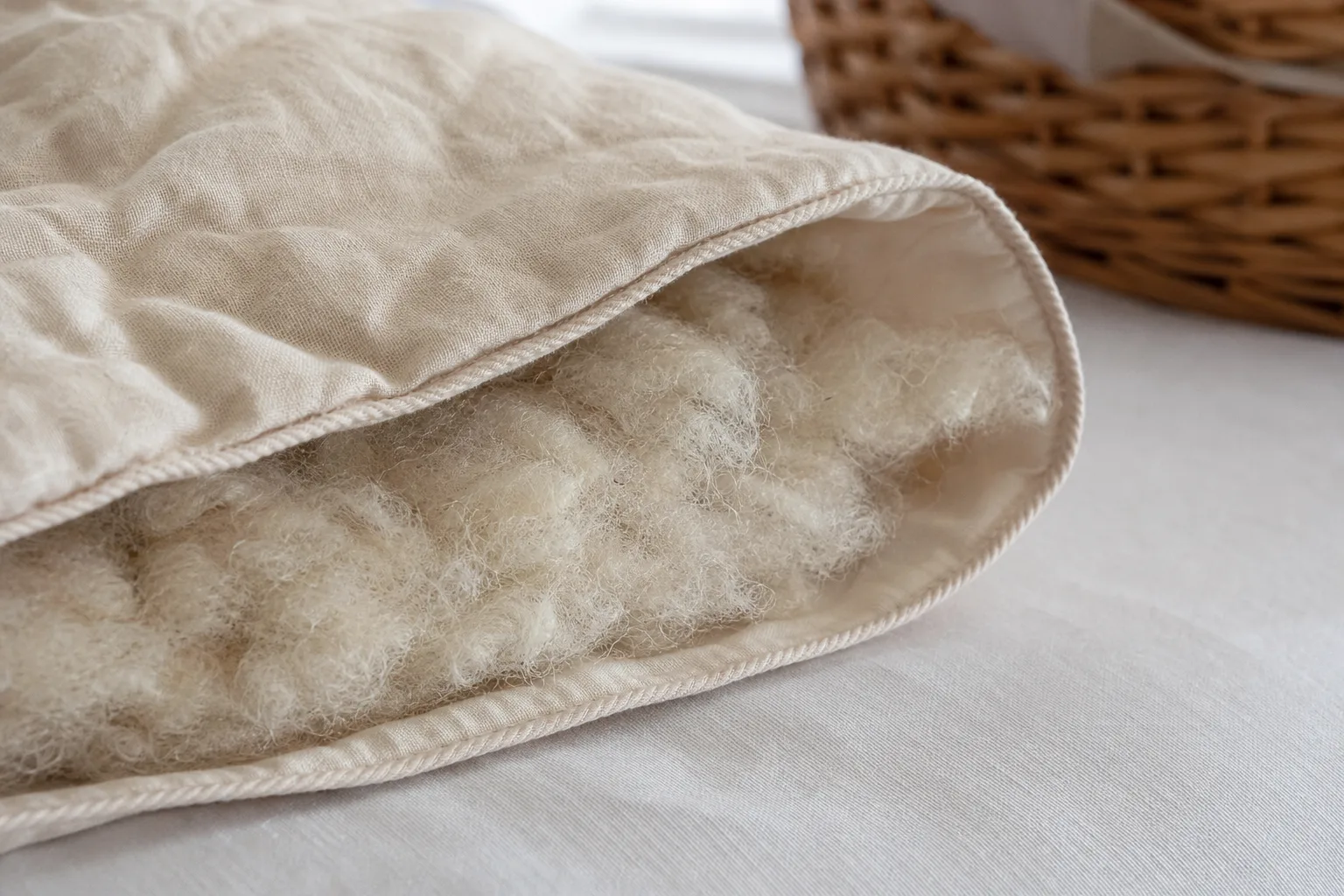
Most buyers should choose filling according to sleeping temperature and realistic laundry capacity. Down suits cold sleepers who dislike weight, synthetic suits frequent washing, and wool suits people who sleep hot or sweaty.
| Filling | Best for | What it buys you | Checks and drawbacks |
|---|---|---|---|
| Down-rich | Cold sleepers and buyers who dislike heavy bedding | High warmth for relatively low weight, soft drape and loft | Higher price, slow drying and variable washability. Fill power alone doesn’t state total warmth. |
| Feather and down | Natural fill at a lower price | A substantial feel and lower entry price than down-rich fill | Heavier, with possible feather shafts or leakage if the casing is poor. Check the down percentage. |
| Synthetic | Allergy routines, children, guest rooms and frequent washing | Low upfront cost, quick drying and widely available machine-washable options | Often bulkier for the same warmth and more prone to flattening or clumping. |
| Wool | Hot or sweaty sleepers and people who prefer flatter bedding | Moisture-vapour buffering and a stable, less puffy feel | Usually heavier. Care varies from machine washable to specialist cleaning. |
For down, compare tog, down percentage, fill quantity and construction before species. Higher fill power means more loft per quantity of down, but a lightly filled high-power duvet can still be cooler than a fuller one. Animal-welfare certification addresses sourcing and traceability rather than warmth or washability.
Synthetic fill is easier to clean, but it isn’t automatically free of allergens. Dust mites occur throughout the bed and room. If allergy control matters, check the whole duvet’s maximum wash temperature, drying instructions, machine fit and compatibility with a zipped allergen-barrier cover. Anyone with a confirmed feather sensitivity should avoid feather and down.
Compare year-round, all-season and layered setups
A stable-temperature bedroom usually needs one medium duvet, while homes with large seasonal swings gain more from separate warmth settings. A 3-in-1 bundle mainly buys matched connectors and convenient combinations.
| Setup | Best fit | Cost and flexibility | Main drawback |
|---|---|---|---|
| One year-round duvet | Bedrooms that stay within a narrow temperature range | Lowest storage burden and one item to maintain | A medium rating can overheat a hot sleeper or leave a cold sleeper short in winter. |
| 3-in-1 all-season set | Rooms ranging from hot summers to cold winters | Commonly combines 4.5 and 9 tog for 4.5, 9 and 13.5 settings | Joined layers feel heavier and require handling, fastening and storage. |
| Two seasonal duvets | Buyers wanting different fills or exact warmth levels by season | Each insert can be washed and replaced independently | Requires storage and two separate purchases. |
| Current duvet plus blanket | Occasional cold nights and tight budgets | Cheapest adjustment, removable during the night | Warmth is less evenly controlled and arbitrary layers have no exact combined tog. |
A June 2026 retailer snapshot found comparable synthetic 3-in-1 sets and two separately purchased synthetic duvets in nearly identical price bands. Entry-level natural-fill bundles were sometimes modestly cheaper than two separates, but size and fill specifications changed the comparison. The extra money for a bundle buys fastening points and matched layers, rather than a dependable discount.
Fix cover wars with dimensions and separate warmth zones
A larger shared duvet solves missing coverage, while two separate duvets solve different heat needs and cover-stealing. Check inches on the insert and cover because familiar size names vary between markets and retailers.
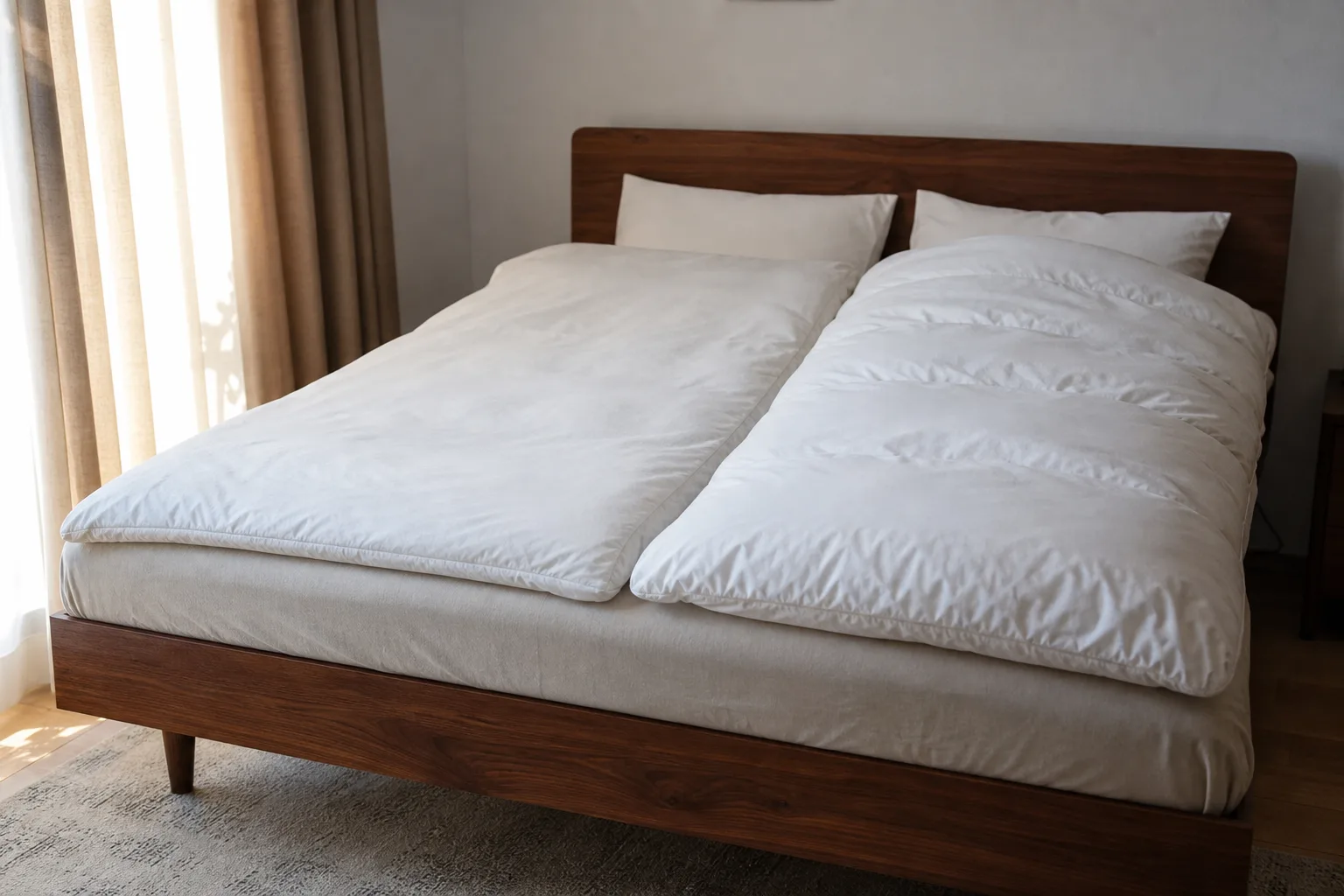
As an illustration, two 53 by 79 inch twin duvets provide a combined nominal width of 106 inches. A common king duvet in the same sizing system measures around 104 by 90 inches. The twins also let one person use 4.5 tog wool while the other uses 10.5 tog down.
- Go one size larger if the only problem is exposed shoulders, restless movement or insufficient side drape.
- Try two twins if partners differ by more than one tog band, prefer different fillings or repeatedly disturb each other’s covers.
- Check whether the larger option fits your washing machine and dryer before buying it.
- Trial two spare twin duvets first. The setup costs more in covers, creates a visible central overlap and doubles cover-changing work.
Partners’ sleep movements affect each other, although research hasn’t established separate duvets as a clinical sleep treatment. Treat the arrangement as a practical way to control insulation and movement.
Decide between airing, washing and replacement
Air a sound duvet, wash a dirty washable one, and replace it only when cleaning can’t restore even warmth or freshness. There is no evidence-based universal expiry date.
- Air it if it is dry, evenly filled and only smells enclosed after storage. Let it air fully before making the bed or storing it again.
- Wash it if there is visible soiling, persistent body odour, an allergy-management requirement or long unprotected storage. Follow the care label for temperature, programme and detergent.
- Use a larger laundry machine or professional service if the dry duvet fills most of the home drum. Bulky bedding often needs an 18 to 22 lb machine, while some king-size items require around 22 lb or more.
- Dry it completely. Large natural-fill duvets can need several drying cycles, and damp filling encourages clumps and musty smells.
- Replace it if clean filling remains clumped, permanent cold spots appear, the casing leaks or tears, loft has collapsed, or mustiness remains after correct cleaning and drying.
Store a fully dry duvet in a breathable bag. Long-term heavy compression can damage loft, and sealing away residual moisture invites odour.
Avoid calendar switching, vague claims and excess warmth
The expensive mistakes come from buying before measuring, treating marketing language as performance data and choosing more insulation than the room needs.
- Ignoring the room: a 15 tog winter duvet is often excessive in a bedroom that stays around 64 to 68°F.
- Reading weight as warmth: wool can feel heavy and flat, while down can reach the same tog with less mass.
- Trusting “cooling”, “climate control” or “temperature regulating” without comparative test data and wash-durability information. Treat these as added cover features.
- Assuming “hypoallergenic” makes bedding mite-proof. Washability, barrier covers and humidity control matter more.
- Buying a super-sized duvet that cannot move freely in the household washing machine.
- Keeping bedding near candles, cigarettes, open flames or portable heaters. Tested bedding is still combustible. Follow heated-blanket instructions, including restrictions on folding or trapping it.
Duvet-switch FAQ
These four checks cover the awkward cases that warmth charts leave unresolved.
Can I add the tog ratings of any two duvets?
Purpose-designed all-season sets are sold with combined ratings, such as 4.5 plus 9 tog equalling 13.5 tog. Don’t assign an exact rating to unrelated layers because compression, gaps and construction change the result.
Does a stale smell mean a stored duvet needs replacing?
Air it first if it stayed dry and protected. Wash it when odour persists, visible dirt is present or your allergy routine requires it. Replace it only if correct cleaning and complete drying fail to remove the smell.
What should a hot sleeper use as autumn gets colder?
Try 4.5 to 7.5 tog before jumping to a winter rating. Wool can help manage moisture vapour, while a washable low-tog synthetic offers easier care. Also check for a brushed cover, thick sleepwear or a heat-retaining mattress adding warmth.
Is 10.5 tog a universal year-round choice?
No. It can suit a cool room or cold sleeper, but it is likely to overheat a hot sleeper in a bedroom consistently above 68°F. Use the measured overnight low and adjust one band at a time.
Measure tonight, then change one warmth band
Place a thermometer in the bedroom tonight and log the overnight low for a week. Air your current duvet, inspect the fill and use a blanket during isolated cold spells. Buy only if you remain cold across several nights or the duvet fails the condition check.
Compare washable synthetic duvets
Live prices from more than 20 shops, updated daily.
For most replacement buyers, a washable synthetic duvet in the measured tog band is the practical default because it costs less upfront and is easier to maintain. Choose wool if overheating and moisture are the main problems, or down if you need high warmth with little weight. Couples separated by more than one warmth band should buy two twin duvets.
This article was created using AI, following our team's editorial standards.


