


For confirmed dust-mite allergy, put the first household budget into fully zipped bed encasings, then support them with weekly laundry, measured humidity control and contained cleaning. These steps reduce everyday exposure, but they cannot diagnose or treat allergic disease.
Confirm mite allergy before changing the bedroom
Get a clinical assessment before spending heavily on covers, appliances or flooring. Dust-mite symptoms overlap with pollen, mould, pets, infections, irritants and non-allergic rhinitis. A clinician can compare the symptom pattern with exposure history and use a skin-prick test or serum-specific IgE test where appropriate.
- This guide suits people with confirmed sensitisation and symptoms linked to mite exposure, including symptoms around beds, morning symptoms or reactions during dust disturbance.
- A positive allergy test shows sensitisation. It does not prove that mites explain every symptom.
- Healthy households, or people with a vague idea of having a dust allergy, do not need preventive mite products.
- Parents managing a child’s confirmed mite-triggered asthma or rhinitis should follow the child’s clinician-led plan.
Autumn exposure comes mainly from stored allergen
The autumn pattern usually reflects allergen accumulated during warmer, more humid months. Mites and their faecal material build up in mattresses, pillows, upholstery and carpet. More time indoors, closed windows and renewed air movement can then increase contact with those reservoirs.
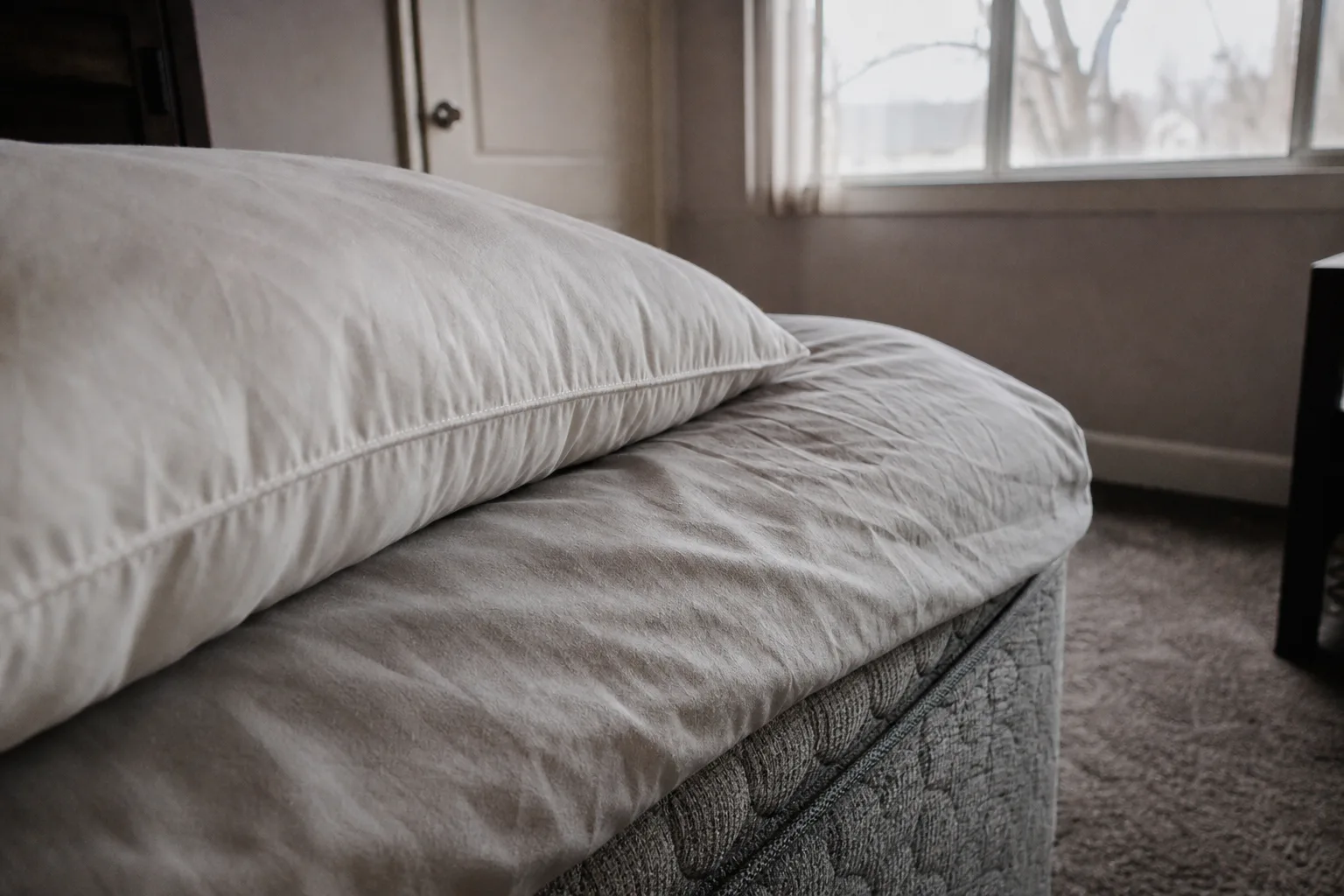
Switching on the heating isn’t a universal trigger by itself. Heating generally lowers relative humidity and can suppress mites over time, yet it leaves existing allergen behind. Making the bed, moving on a pillow, walking across carpet and vacuuming can suspend particles, with most larger particles settling again within about 20 to 30 minutes. Local humidity cycles matter more than the calendar month.
| Measure | What the evidence supports | Buying rule |
|---|---|---|
| Mattress and pillow encasings | Strong, repeatable reduction in allergen escaping from bedding | Make these the first product purchase |
| Weekly bedding wash | Removes allergen and many live mites | Use 140°F where textiles allow |
| Humidity control | Reduces mite survival and reproduction over time | Measure before buying machinery |
| Sealed fine-dust vacuum | Contains collected particles better than a leaky cleaner | Check the complete exhaust path |
| Hard bedroom floor | Usually stores less allergen and is easier to damp-clean | Choose during planned renovation |
| Purifiers, sprays and ionisers | Limited or unreliable benefit for mite-related symptoms | Skip as a primary mite measure |
Fully zipped encasings are the strongest first buy
Start with six-sided, fully zipped encasings for the mattress and every pillow used by the sensitised person. These close reservoirs near the breathing zone and have the clearest support for lowering measured bed exposure. Symptom improvement remains inconsistent when covers are used alone.
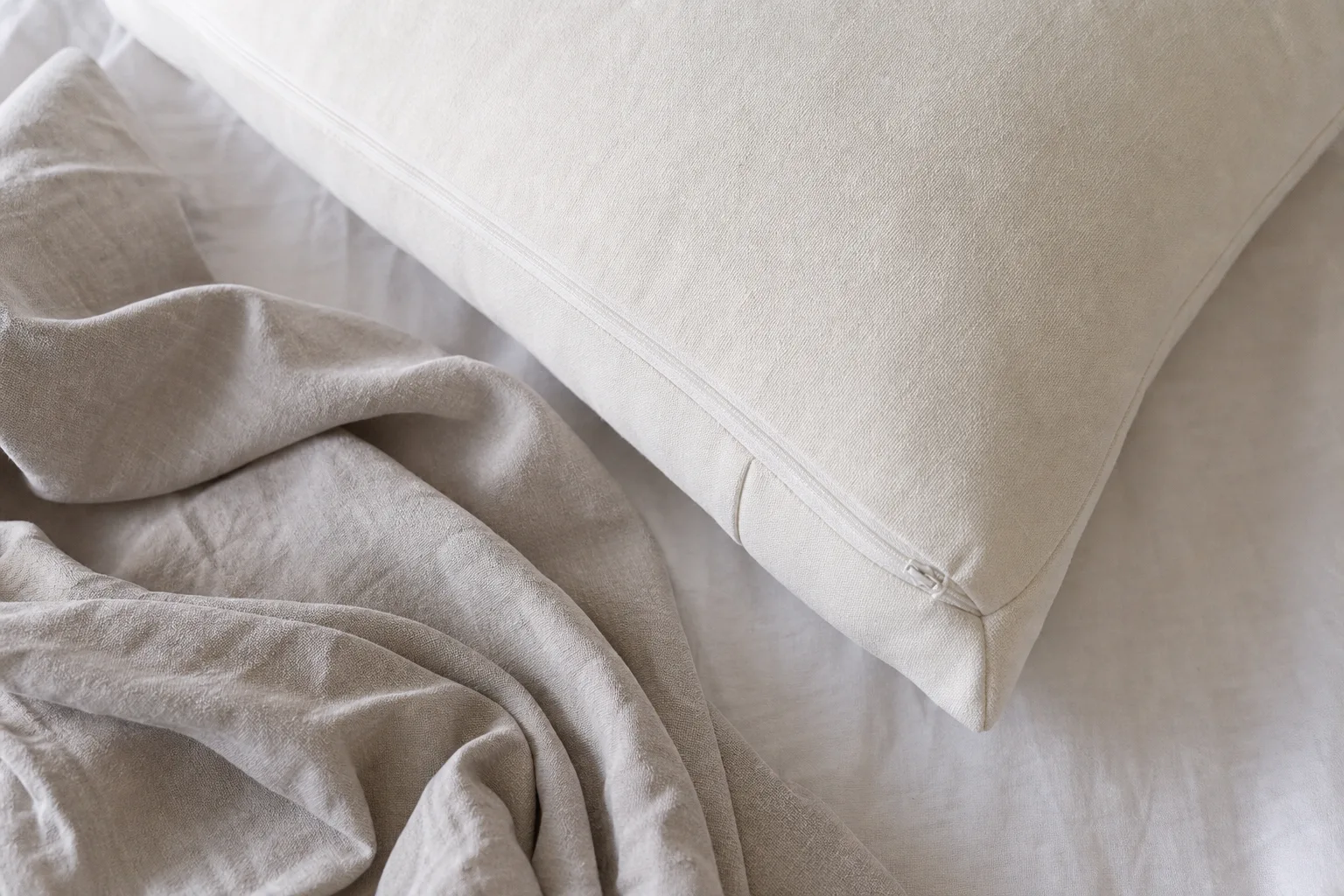
- Measure mattress length, width and depth. A tight cover strains the seams and zip, while excess fabric wrinkles and can tear.
- Check for a close-fitting zip, a fabric-backed zip flap and protected corners. A fitted top-and-side protector leaves the underside open.
- Prefer a finished encasing with independently tested barrier performance. Tightly woven material with a reported mean pore size below about 10 µm can block mite allergen, provided the seams and zip also prevent leakage.
- Ignore vague terms such as “hypoallergenic”, “anti-allergy” and “antibacterial”. They do not confirm an allergen barrier.
- Add a duvet encasing when the insert cannot be washed regularly. An upholstered divan or fabric bed base can also be enclosed where practical.
- Place ordinary sheets, pillowcases and a duvet cover over the encasings. These outer layers handle skin contact and weekly washing.
Membrane-backed covers tend to be cheaper and highly impermeable, although they can feel warmer or noisier. Tightly woven microfiber or cotton usually feels softer and more breathable and often costs more. The extra spend buys comfort and better long-term usability, without stronger proof of symptom relief.
Compare mattress encasings
Live prices from more than 20 shops, updated daily.
Weekly washing beats occasional sanitising
Wash exposed bedding every week because allergen starts accumulating again after cleaning. Sheets, pillowcases, duvet covers, blankets and washable protectors should go through a full detergent wash and dry completely.
- Use a cycle around 140°F where the care label permits. This temperature reliably kills mites.
- If the fabric cannot take 140°F, use the warmest safe full wash with detergent. Cooler washing still removes much of the soluble allergen and many mites.
- Do not increase the stored hot-water temperature solely for mite control. Scalding risk outweighs the value of chasing a hotter wash.
- Follow the encasing maker’s care instructions. The encasing itself rarely needs weekly washing when clean outer bedding protects it, and repeated removal can damage the zip.
Measure humidity before buying a dehumidifier
A small hygrometer should decide whether humidity equipment belongs on the shopping list. Measure near the bed for several days, including overnight. Aim for roughly 30 to 50% relative humidity. Prolonged readings above about 50 to 60% increasingly support mite survival and reproduction, with active mites thriving particularly above 65 to 70%.
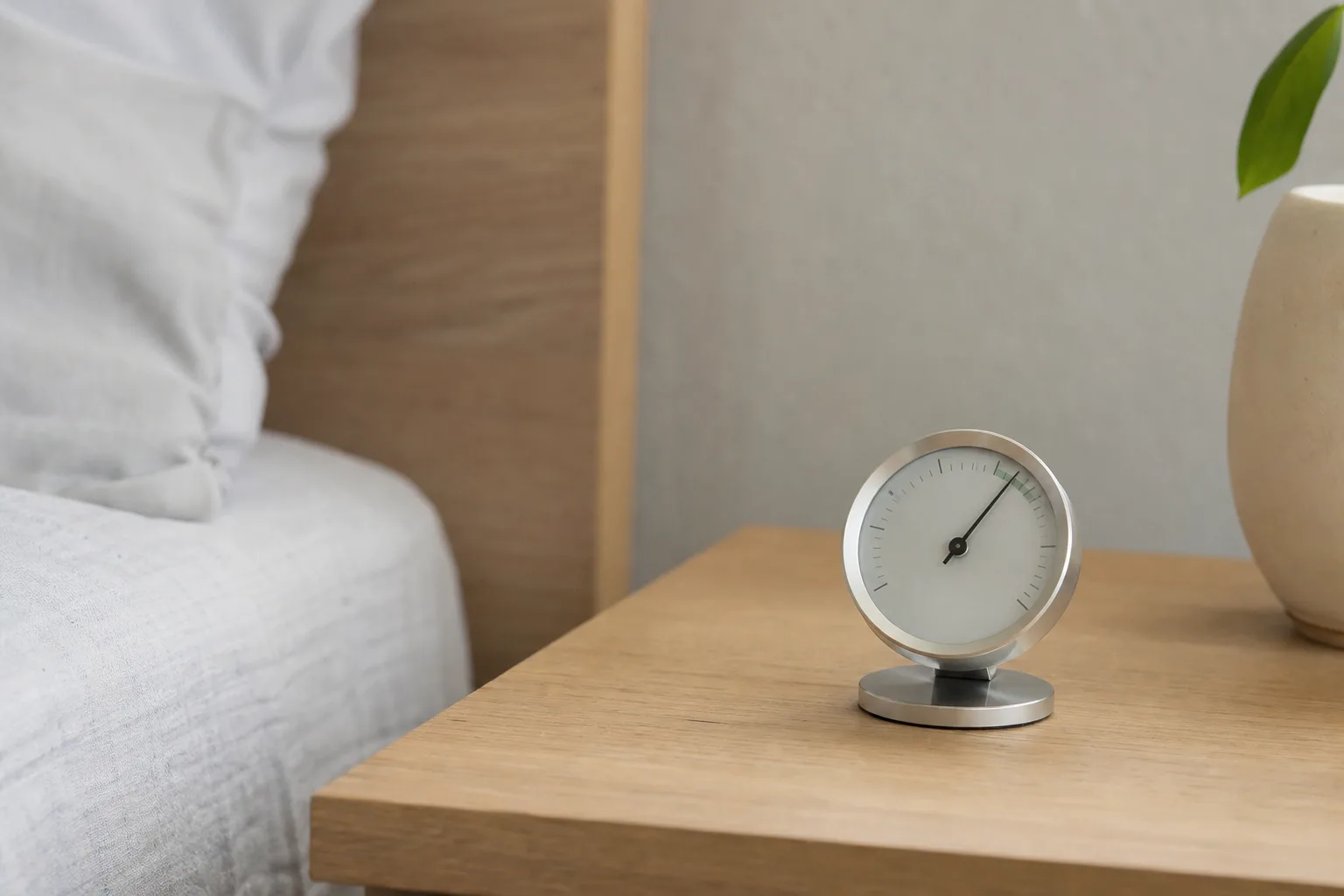
- Address leaks, weak bathroom or kitchen extraction and wet laundry drying in the bedroom first.
- Buy a dehumidifier only if simpler changes cannot keep the bedroom within range. A heating-season room already below 50% gains little from one.
- Check extraction in pints per day at realistic room temperatures, humidistat accuracy, continuous drainage, tank size, noise, filter access and automatic defrost.
- Compressor models suit normally heated rooms. Desiccant machines work better in colder spaces but commonly use more electricity and add more heat.
- Make sure the machine controls the actual bedroom. One unit in a hallway may achieve little behind a closed door.
Humidity control works slowly. It reduces future mite survival and allergen production but does not clear material already held in the mattress or carpet. Running cost equals rated watts multiplied by operating hours, divided by 1,000, then multiplied by the local electricity price per kWh. A reliable humidistat and drain can save more than app controls.
Dust containment matters more than floor replacement
Keep the existing floor for now and improve how dust is captured. Carpet generally holds more mite allergen per square metre, yet removing it alone has not been shown conclusively to improve asthma outcomes. Bed controls deserve the first share of the budget.
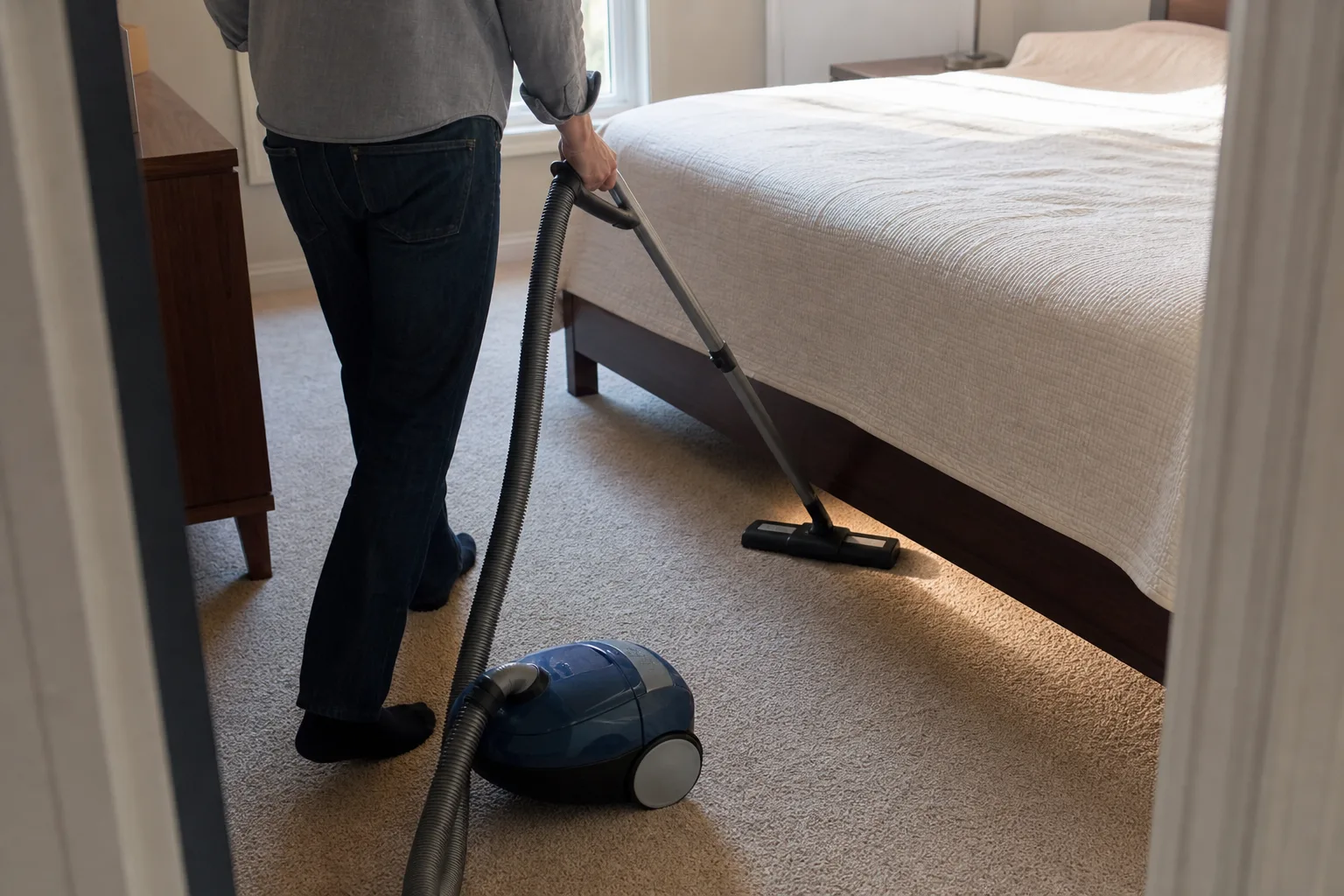
- Choose a vacuum whose full exhaust path passes through a genuine high-efficiency final filter. A HEPA cartridge inside a leaky body does not create a sealed machine.
- Check seals around the bag or bin, filter housing and exhaust. Motor wattage, cyclonic branding, UV lights and mattress-beating claims do not establish fine-dust containment.
- Bagged models make contaminated dust easier to seal and discard. If buying bagless, check that the bin can be emptied outdoors without shaking dust towards the face.
- Use powered agitation on carpet and a controllable or soft roller on hard floors. Reach under the bed and affordable replacement bags or filters also matter.
- Vacuum at least weekly where carpet remains. Damp-dust and damp-mop instead of dry sweeping.
- Keep the sensitised person away while cleaning disturbs dust. Allow suspended particles time to settle before they return.
Hard flooring is easier to damp-clean and generally forms a smaller reservoir, so it is the practical choice during an already planned bedroom renovation. Renters and households facing unaffordable building work can keep carpet and use a well-contained vacuum. Carpet pile labels are a poor shortcut because allergen can sit deep near the backing.
Most mite gadgets are poor standalone buys
Skip products whose main pitch is killing mites or treating briefly airborne particles. Mite allergen spends most of its time settled in textiles, so laboratory particle changes do not guarantee useful symptom relief.
- Mite sprays and acaricides can kill mites, yet body fragments and faecal allergen remain until physically removed. Clinical symptom evidence is weak. Products making mite-control claims may also be regulated biocides, and registration does not prove allergy relief.
- Essential-oil sprays can irritate skin or airways, damage textiles and create risks for children or pets. A natural claim says nothing dependable about safety or effectiveness.
- Ionisers have failed to improve symptoms in controlled work and can emit ozone. Ozone is a respiratory irritant.
- Portable mechanical HEPA purifiers capture particles during their brief airborne period. They make more sense where pollen, smoke, pet allergen or general particle pollution is also a concern. They are weak as the only mite measure.
- Freezing a plush toy can kill most live mites in that toy. It leaves allergen behind, so washing or extraction is still needed. Treat freezing as a small helper.
FAQ
Do I need to replace an old mattress?
Usually no. A sound mattress can stay in service inside a correctly fitted six-sided encasing. Replacement makes sense for ordinary condition or comfort reasons, but mite presence alone does not require it.
Should I encase a synthetic or “hypoallergenic” duvet?
Synthetic fill does not create an allergen barrier. Encase the duvet if its insert cannot be washed regularly or if a clinician-led multicomponent plan includes full bed containment. Check the duvet’s U.S. dimensions carefully because bedding sizes vary by manufacturer.
Can plush toys stay in the bedroom?
Keep the number manageable and favour toys that tolerate regular washing and complete drying. Freezing can kill mites but must be followed by washing or effective extraction to remove remaining allergen.
What if sensible bedroom changes do not improve symptoms?
Return to the clinician. The original trigger may have been misidentified, several triggers may be present, exposure reduction may be incomplete, or medical care may need adjustment. Another appliance is unlikely to answer those questions.
Verdict
For a clinically confirmed dust-mite allergy, choose fully zipped mattress and pillow encasings first, adding a duvet or upholstered-base cover where those reservoirs cannot be washed. Keep washable outer bedding on top, launder it weekly, measure bedroom humidity and use a sealed fine-dust vacuum. Buy a dehumidifier only for persistent readings above the target range, and choose hard flooring during planned renovation. Sprays, ionisers and a purifier used alone offer poor value for mite exposure.
This article was created using AI, following our team's editorial standards.


