


Treat tonight as a sequence that starts hours before you lie down: block the sun, wait for cooler outdoor air, then make the bed and help your skin shed heat faster. In much of the U.S., tropical nights when temperatures stay above 68°F are making 82°F attic bedrooms feel normal, and that is already an overheated sleep setup for many people.
Start with the few things that matter tonight
If you only have one evening, do the highest-yield steps in order. A late fix helps less if the room has been absorbing sun all day, but you can still improve the bed surface and your body temperature before lights-out.
- Check indoor and outdoor temperature, even with a cheap thermometer. If outside is warmer than the bedroom, keep the window closed.
- Close shutters, blinds, or curtains on sun-facing windows before the glass heats up. Prioritize east in the morning, south around midday, and west in the afternoon.
- Strip the bed early. Remove throws, spare pillows, heavy duvets, and any thick foam topper that feels heat-retentive.
- Plan the evening flush. Open up after sunset once outdoor air is cooler and create a route for air to enter and leave.
- Take a tepid shower 60 to 90 minutes before bed, then use loose sleepwear, a light sheet, and indirect airflow.
Stage 1: Keep daytime heat out so the bedroom is cooler before bedtime
The daytime job is to stop the bedroom from storing solar heat. Roofs, walls, floors, furniture, and the mattress absorb warmth, then release it late, which is why a room can feel hotter at 11:00 p.m. than the air outside.
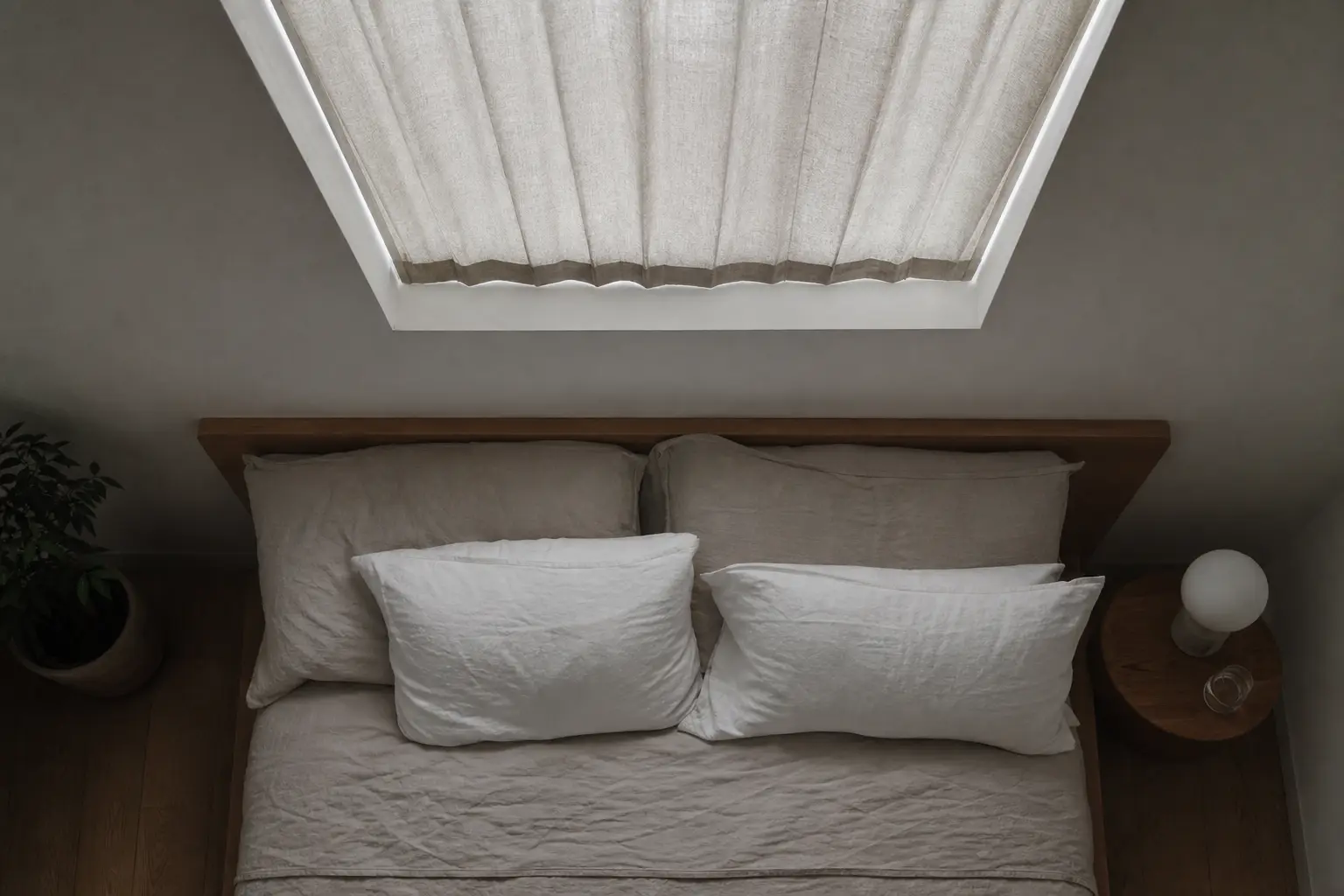
- Close exterior shutters, awnings, or outside blinds first if you have them. They reduce heat before it passes through the glass.
- If you only have indoor coverings, close them tightly. Light-colored, close-fitting blinds or curtains are better than dark, loose fabric.
- Keep windows closed while outdoor air is hotter than indoor air. Fresh air is less useful when it brings in heat.
- Use the bedroom door deliberately. Leave it open if the rest of the apartment is cooler; close it if a kitchen, hallway, or sun-facing room is hotter.
- Cut internal heat. Avoid the oven if possible, turn off unused electronics and chargers, and keep hot-running lamps or gaming PCs out of the bedroom.
Stage 2: Flush the bedroom after sunset only when outside air is cooler
Overnight ventilation works best when it has a clear path. Opening one hot, still window may do little, while a route from a cooler side of the apartment to a warmer exit can pull heat out of the room.
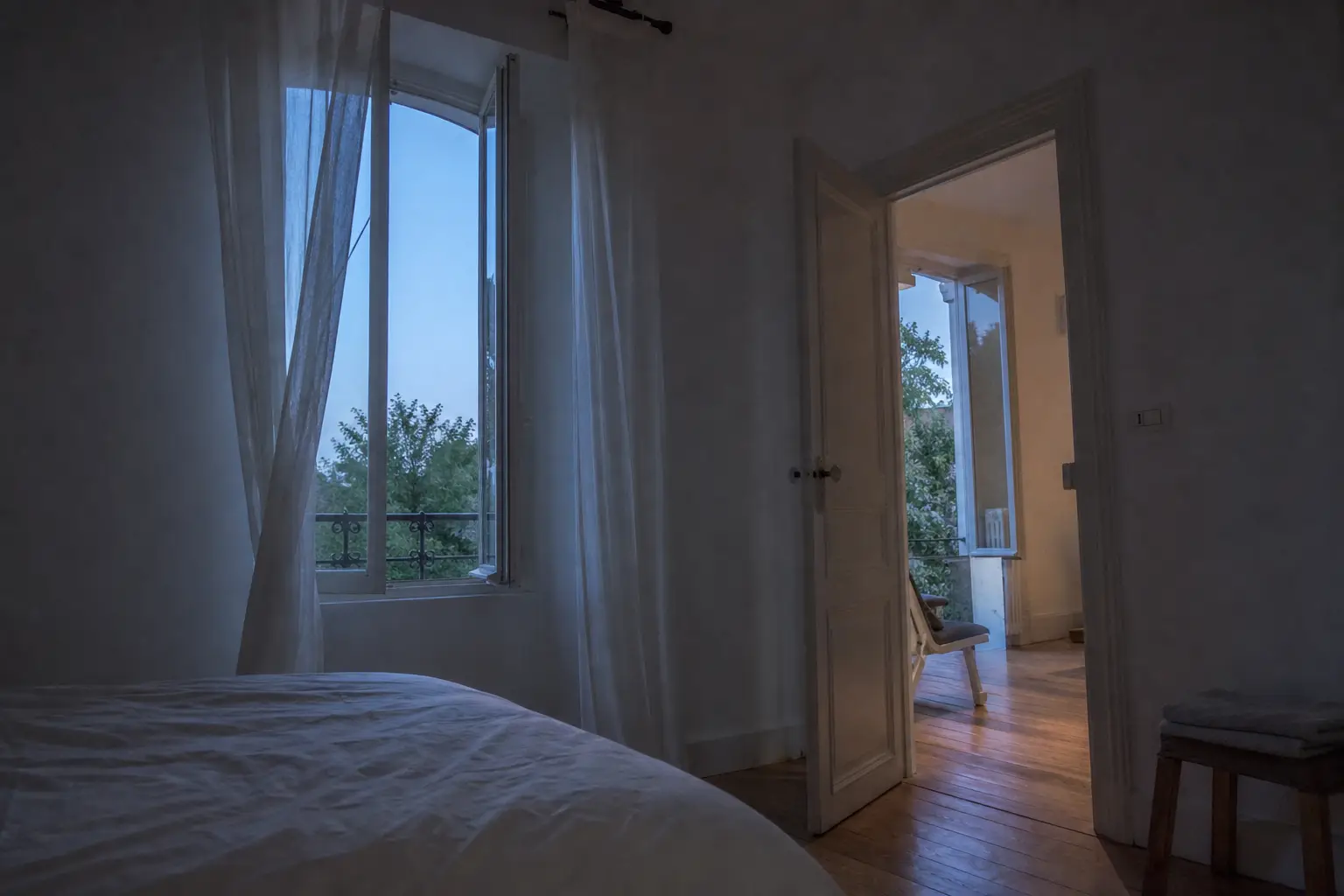
- Start the flush when outdoor temperature drops below the bedroom temperature, or when the evening air clearly begins to fall after sunset.
- Open windows or doors on opposite sides where safe. Keep internal doors open so air can move through the apartment.
- In a one-sided room, use a fan at or near the window to help exhaust hot room air or draw in cooler air from the shaded side.
- If the outside air stays cooler and it is safe, keep some ventilation overnight. If noise, security, smoke, pollution, asthma triggers, or high humidity become a problem, close up and rely on airflow inside the room.
- Close again early in the morning before sun and outdoor heat climb. This reset is what gives the next night a chance.
Stage 3: Strip the bed to breathable layers and reduce mattress heat-trapping
Bedding matters because you sleep inside a small heat and moisture pocket. The sheet, nightwear, mattress protector, pillow, and mattress decide whether sweat can evaporate or stays trapped against skin.
| Bed layer | Better hot-night choice | What to watch for |
|---|---|---|
| Sheets | Linen or cotton percale, washed and dry, with a light feel | Very high thread counts, heavy sateen, and dense synthetic sheets can reduce airflow |
| Top cover | One lightweight flat sheet if you need the feeling of cover | Duvets, decorative throws, and spare cushions hold warm air around the body |
| Mattress protector | Breathable cotton, wool, or another non-plasticky protector | Waterproof layers that feel sweaty can cancel out good sheets |
| Mattress surface | A firmer, airier surface with less sink-in | Memory foam can trap heat because it hugs the body and reduces airflow |
| Topper | Ventilated latex, wool, or a breathable pad if the mattress runs hot | Thick soft foam adds contact area and may feel warmer despite a cooling label |
| Pillow | Breathable cover and fill first | Gel or cool-touch surfaces give an initial cool feel, then warm up |
Percale is usually crisper and airier than sateen because of its plain weave. Linen breathes well and handles moisture, though it can feel rougher at first. Microfiber and other dense synthetics may feel smooth in the store, then clammy at 2:00 a.m.
Do not buy by thread count alone. A very dense sheet can be beautifully made and still too warm for a heat wave. Fiber, weave, and weight tell you more about cooling comfort.
Shop breathable linen and cotton percale sheets
Live prices from more than 20 shops, updated daily.
Stage 4: Cool your body in the last 60 to 90 minutes without overcorrecting
The final hour should help your body move heat from core to skin, then away from skin. Icy shocks can make you tense or shiver, while a tepid routine is easier to repeat and less stimulating.
- Take a lukewarm or tepid shower 60 to 90 minutes before bed. Sleep research on warm bathing suggests timing it about 1 to 2 hours before sleep, but in a heat wave many people will prefer cooler water.
- Dry lightly, or leave skin and hair slightly damp if that feels comfortable. Moving air then increases evaporative cooling.
- Use a damp cloth on the neck, wrists, or forearms while winding down. Wrap any ice pack or frozen bottle and keep condensation away from electronics and bedding.
- Drink steadily through the day. A rough adult heat-wave guide is about 8 ounces per hour and 8 to 12 cups per day, but medical fluid restrictions come first.
- Avoid alcohol as an evening cooling drink. Go easy on caffeine, eat earlier and lighter where possible, and move vigorous exercise to the morning.
- Dim lights and stop heat-making activity in the bedroom. Loose sleepwear or a sheet alone usually beats tight synthetics.
Place the fan so air moves through the room
A fan helps by moving air over skin and by helping exchange indoor and outdoor air when windows are open. It does not lower the room temperature by itself, so placement matters more than speed.
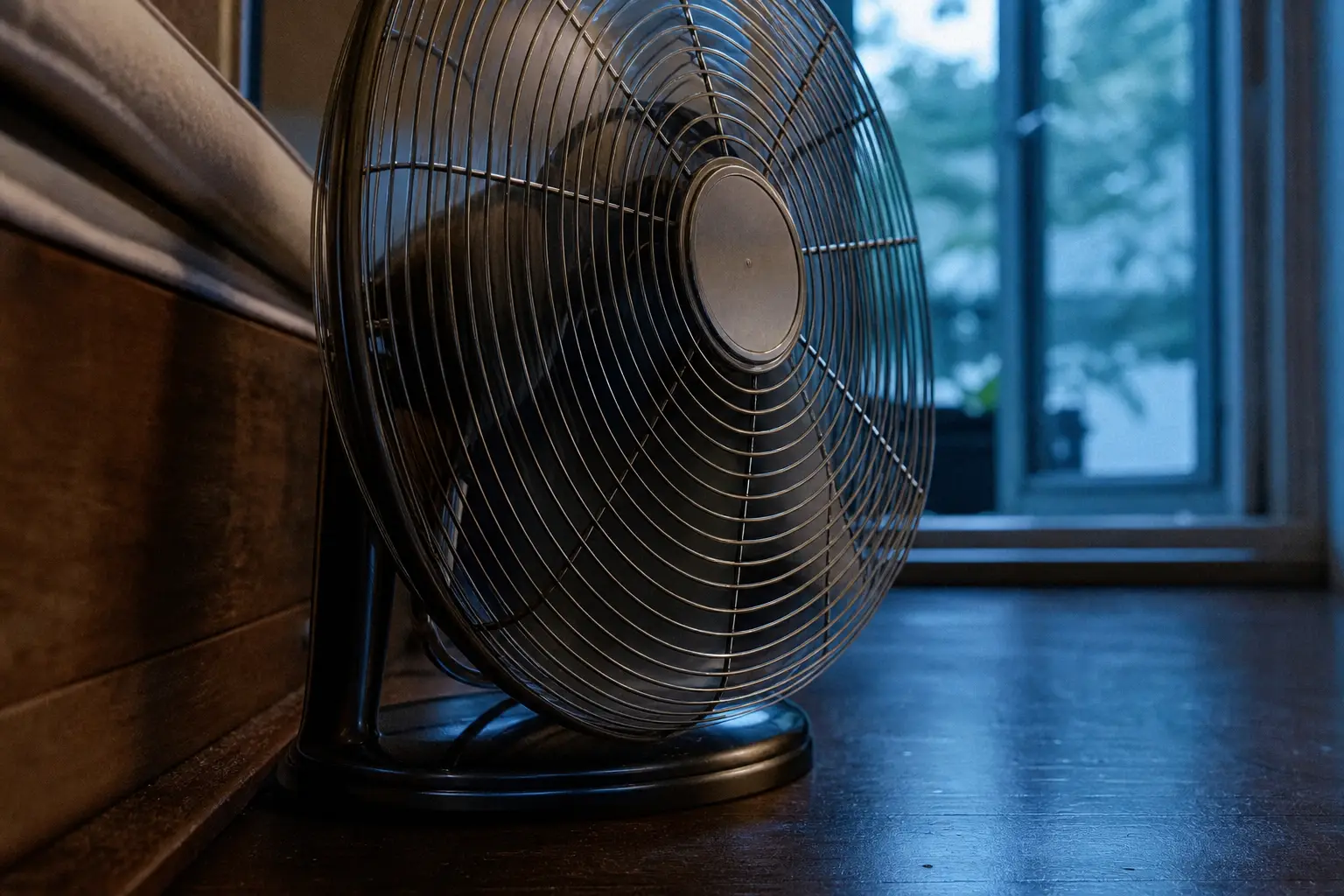
- During the evening flush, put the fan at or near a window. Use it to push hot room air out, or to pull cooler air in from the shaded side if that gives a better path.
- With one fan, align it with the natural direction of airflow. With two fans, one can exhaust while the other helps intake from a cooler opening.
- For sleeping, aim the fan across the room, at a wall, or past the bed. Oscillation helps reduce dry eyes, dry throat, and stiff neck.
- Keep the base stable and cables clear. Keep the fan away from small children, water, loose fabric, and damaged sockets.
- Clean dust from blades and grilles. Dusty airflow can irritate throats and worsen allergy symptoms.
Mistakes that ruin hot-night sleep, and when heat symptoms mean getting help
Most bad heat wave nights come from one of two errors: letting heat in too early, or trapping heat close to the body. Fix those before spending money on short-lived cooling gadgets.
- Leaving windows open all afternoon because the room feels stale. Ventilate for air quality when you need to, but use temperature as your guide during peak heat.
- Buying a cool-touch pillow while keeping a heavy duvet, microfiber sheets, and a plasticky protector. The bed microclimate will still run hot.
- Taking a very hot shower at lights-out. It may relax you, but it can leave the skin flushed and the bed damp with heat.
- Chugging large amounts of water at bedtime after under-drinking all day. Steady hydration works better and is less likely to wake you to urinate.
- Pointing a fan straight at the neck all night. The first few minutes feel good, then dryness and muscle stiffness can wake you.
- Ignoring symptoms. Faintness, confusion, nausea, severe headache, intense thirst, loss of consciousness, or a person who stops responding are heat-health warning signs. Seek urgent medical help.
FAQ: windows, cold showers, cooling pillows, gel pads, toppers and fan direction
Should I open the bedroom window all day in a heat wave?
Usually no. Open for air quality if you must, but for cooling, compare indoor and outdoor temperature. If the outdoor air is hotter, daytime opening can heat the room and its surfaces. Also factor in smoke, pollution, security, and child fall risks.
Is a cold shower best before bed?
For ordinary hot-night discomfort, tepid or lukewarm water is the better sleep routine. Icy water can be unpleasant, stimulating, and may trigger shivering. If someone shows signs of heat illness, treat that as a medical cooling problem rather than a bedtime trick.
Do cooling pillows and gel pads stay cold all night?
Expect a short comfort window. Gel and phase-change materials absorb heat, then they have to release it again. One textile study on phase-change material found heating and cooling effects of about 15 minutes in that clothing setup, and bedding products vary.
Can a topper fix a hot memory-foam mattress?
Only partly. A breathable pad or ventilated topper can reduce direct contact with heat-retentive foam. A thick soft topper, especially foam, can increase sink-in and body contact, which may make heat build-up worse.
Should the fan point straight at me while I sleep?
A fixed blast at the face, throat, or neck often causes dryness and stiffness. Aim it across the room, toward a wall, or through a window during the night flush. If you need direct air briefly, use oscillation and a lower speed.
The shortest sleepable-bedroom routine to follow tonight
Your best odds tonight come from controlling the room early, then cooling the bed surface and your body in the last hour. Follow this stripped-down version if you are tired and the room is already hot.
- Now: close any window where outdoor air is hotter, shade sun-facing glass, and remove heavy bedding.
- After sunset: open only when outside is cooler, create an intake and exit, and use the fan to help the flow.
- One hour before bed: take a tepid shower, drink a modest amount, avoid alcohol, dim lights, and stop vigorous activity.
- At lights-out: use linen or cotton percale if you have it, one light sheet, a breathable pillow cover, and indirect fan airflow.
- If the room stays dangerously hot or someone is vulnerable: use the coolest room available, consider sleeping on a lower floor, and seek help if heat symptoms appear.
You do not need a perfect bedroom tonight. You need a room that is no longer gaining heat, a bed that lets sweat evaporate, and a routine that helps your body drop heat before sleep.
This article was created using AI, following our team's editorial standards.


