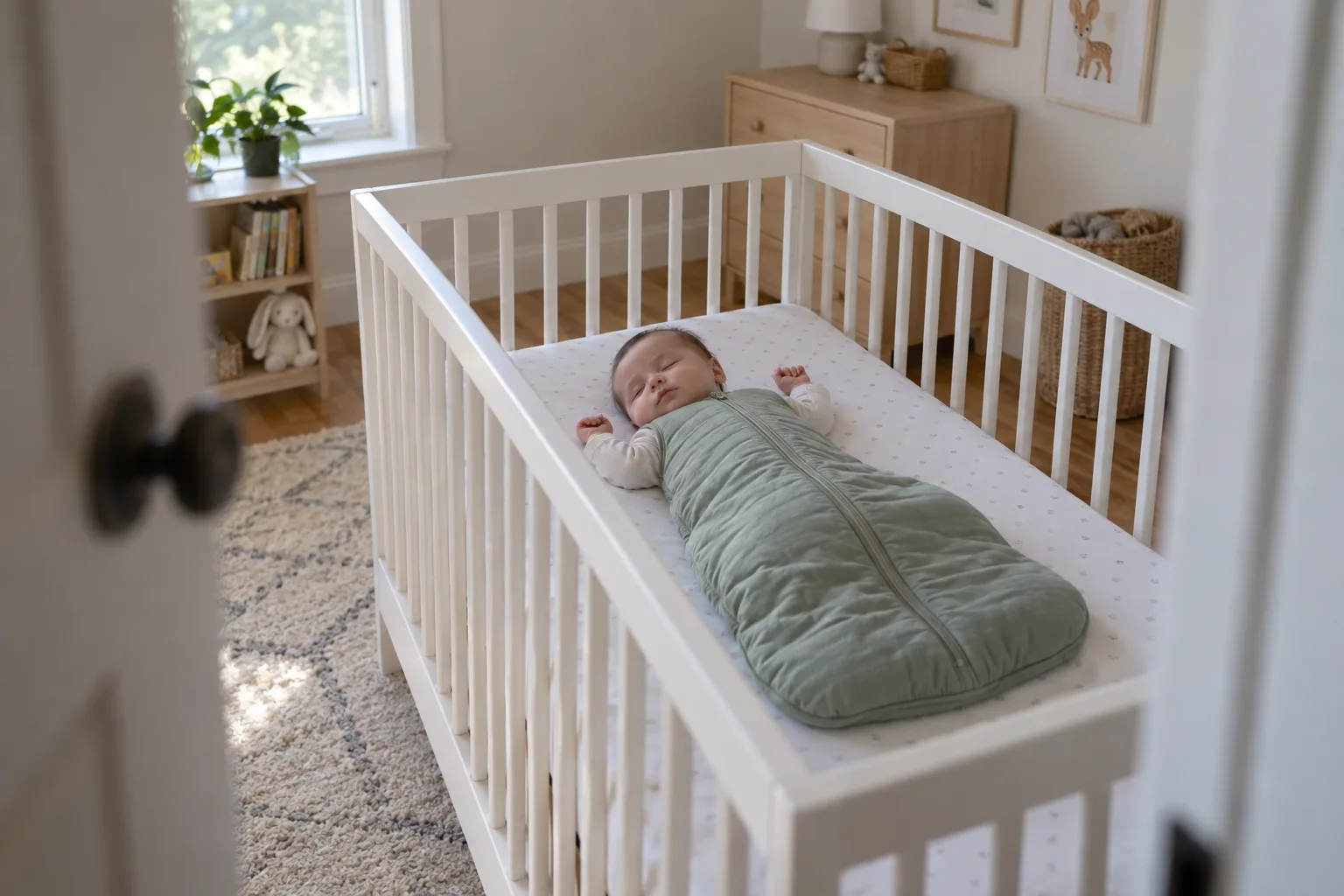


The safest vacation plan starts before you pick the luggage: follow the child seat through the plane, the rental counter, and the car you'll actually drive. This guide helps you decide whether you should fly with your own seat, buy a lighter second seat, or treat the rental-company seat as a last resort.
Start with the three handoffs your seat has to survive: airline, rental counter and unfamiliar car
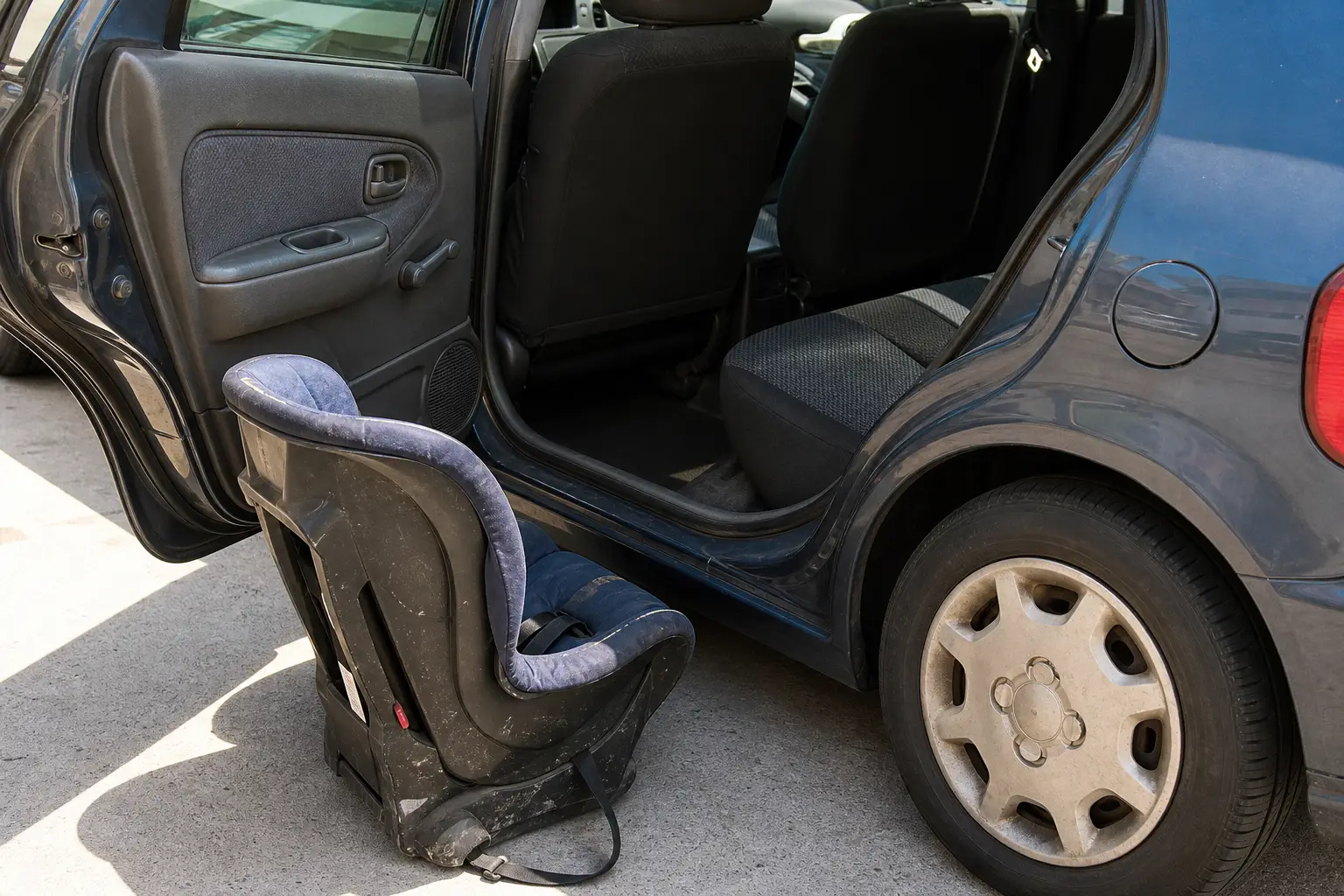
A vacation seat plan works only if every handoff is realistic. A seat that is excellent in your own car can still fail at the gate, arrive damaged in the cargo hold, be missing from the rental counter, or refuse to install properly in a relative's older car.
- Airline handoff: road approval is not enough for cabin use. You need aircraft approval, the right width and a permitted seat position.
- Rental-car handoff: a reservation doesn't prove the seat will be clean, undamaged, the right size, or available when your flight lands.
- Destination-car handoff: LATCH may be missing, the belt may be short, the center seat may have only a lap belt, and support legs or top tethers may have nowhere safe to go.
Before you buy anything, write down your child's height, weight, current seat model, FMVSS 213 certification, aircraft approval if any, seat width, install methods and the cars you expect to use. That one page cuts through most forum advice.
Use the certification label correctly: FMVSS 213 covers U.S. road travel, not aircraft use
For road travel in the US, a seat that meets FMVSS 213 and fits your child's height and weight is the cleanest choice to carry. FMVSS 213 is the federal motor-vehicle standard for child restraints, and the label tells you the size range the seat is built for.
Many state laws keep kids in a booster until about 4 feet 9 inches, and some use age or weight cutoffs instead. A high-back booster that fits to 4 feet 9 inches can save you from awkward cross-state edge cases and usually gives better belt fit.
Older seats that still carry a valid certification label may still be legal to use if they are within their service life and undamaged. For a new vacation purchase, you should usually buy a current FMVSS 213 model.
Clear the airline test before you fly: aircraft label, 16.5-17 inch width limits and seat-position rules
Airline acceptance is a separate check from road legality. For cabin use, look for an FAA-approved child restraint system, a label that says "This restraint is certified for use in motor vehicles and aircraft", or an equivalent approval your airline accepts.
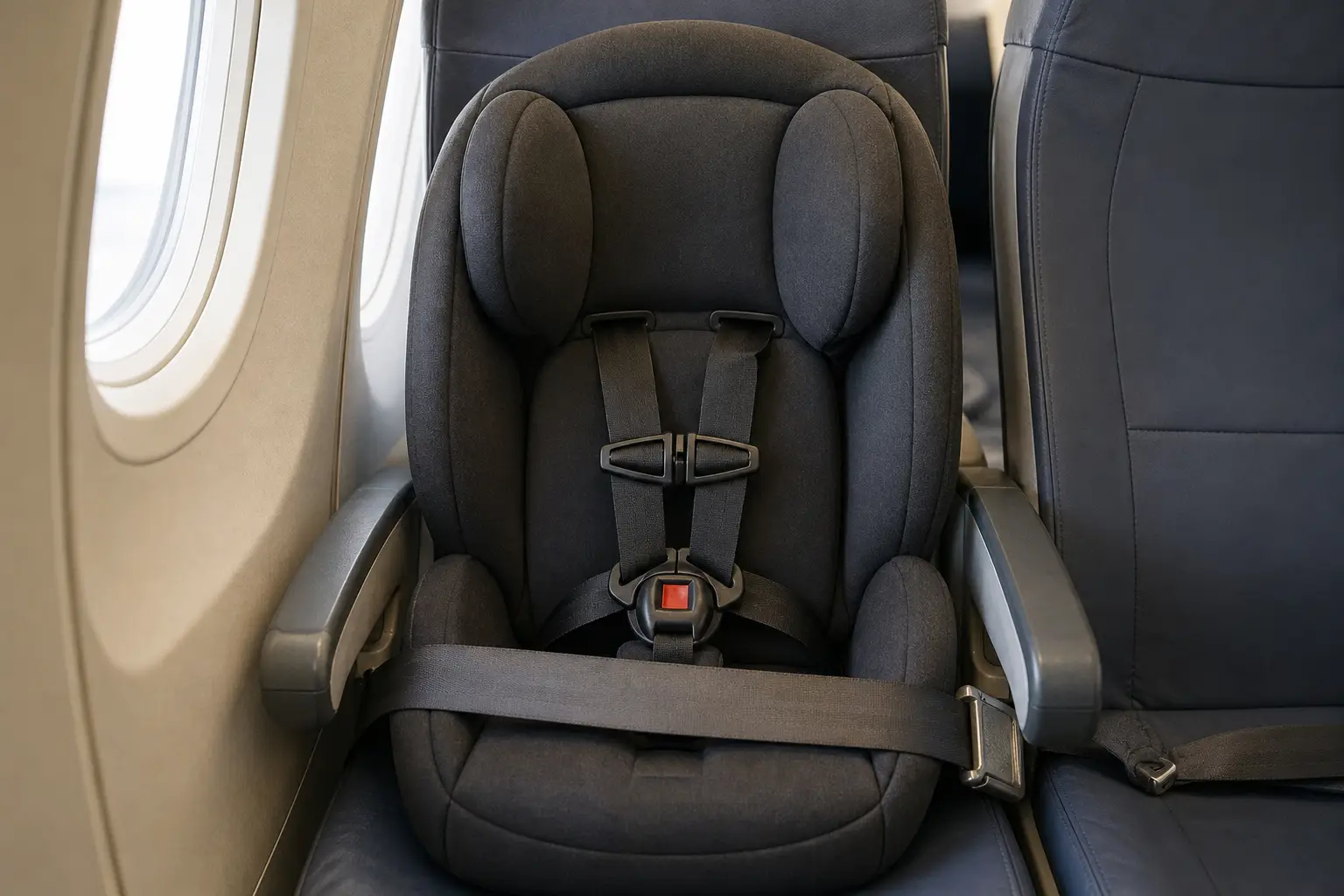
- Buy a separate airplane seat for the child if you want to use a car seat on board.
- Check the airline's current width rule. Common U.S. examples sit around 16.5 to 17 inches between armrests, with some carriers publishing a 16-inch minimum seat width.
- Check orientation. Some airlines only accept the seat in one direction, which matters if your child still needs rear-facing travel on the road.
- Check position. Car seats are commonly restricted to window or other non-aisle seats and are not allowed in exit rows or where they block evacuation.
- Plan for lap-belt installation. Standard aircraft seats don't have LATCH, and crew may check the label but won't install the restraint for you.
Booster seats are usually a problem on aircraft because they need a three-point belt and aircraft seats use lap belts. Many airlines require boosters to be checked or stowed for takeoff, landing and seatbelt-sign periods.
Pick your destination-car plan: bring your own, buy a second seat or rent only as a fallback
For a child still in a rear-facing or harnessed seat, a known seat is usually the most reliable plan if you can move it safely. You know its history, you know your child fits, and you can practice the installation before the airport rush.
- Bring the everyday seat if it fits your travel route. Use a padded bag if checking it, keep the manual handy, and inspect the shell, harness, buckle and foam after arrival.
- Buy a second travel or grandparents' seat if you travel often, use ride-sharing, or want a seat kept with grandparents. Choose by FMVSS 213 certification, child fit and belt-install compatibility, not by a carry strap alone.
- Rent a seat with the car only as a fallback. Reserve early, reconfirm with the local branch close to departure, screenshot the booking and have a plan for buying a local approved seat if the rental seat is wrong or damaged.
Rental costs add up fast in peak season. As of a July 2026 check, published U.S. examples ran roughly from about $5 to $15 per day, with some weekly caps around $40 to just under $100. For one week and one child, that can approach the cost of a basic second seat.
Judge lightweight travel seats by child fit, not carry weight: harnessed seats, foldable high-back boosters and emergency boosters
A lighter seat makes sense only after it fits the child and installs in the cars on the trip. Very low weight can mean less side support, more install sensitivity, or a product meant for older children.
- Dedicated harnessed travel seat: useful for repeated trips or a grandparents' car. For kids under 4, don't move to a booster for convenience. Rear-facing toddler travel options can still be bulky or need a top tether, so check the destination car first.
- Foldable high-back booster: sensible for many children around 40 to 57 inches who can sit properly for the whole journey. Independently tested folding boosters in this range weighed about 9.7 to 13.7 pounds and scored well in the test group.
- Backless compact booster: very light options around 1.5 pounds exist, but they lack head and side support. Treat them as emergency stopgaps for older children with good belt fit, where local rules allow.
- Aircraft-only harness: a CARES-type aviation harness can help on board for children within its limits, but it is not a road car seat. Arrange a proper vehicle restraint at the destination.
Plan for older cars before you arrive: LATCH, belt installation, top tethers, support legs and lap-only belt traps
Older cars can be perfectly usable, with more homework on the exact seating position. A 15-year-old family sedan or hatchback may have LATCH on the outboard rear seats, but you should not assume lower anchors in the center seat or a safe place for a support leg.
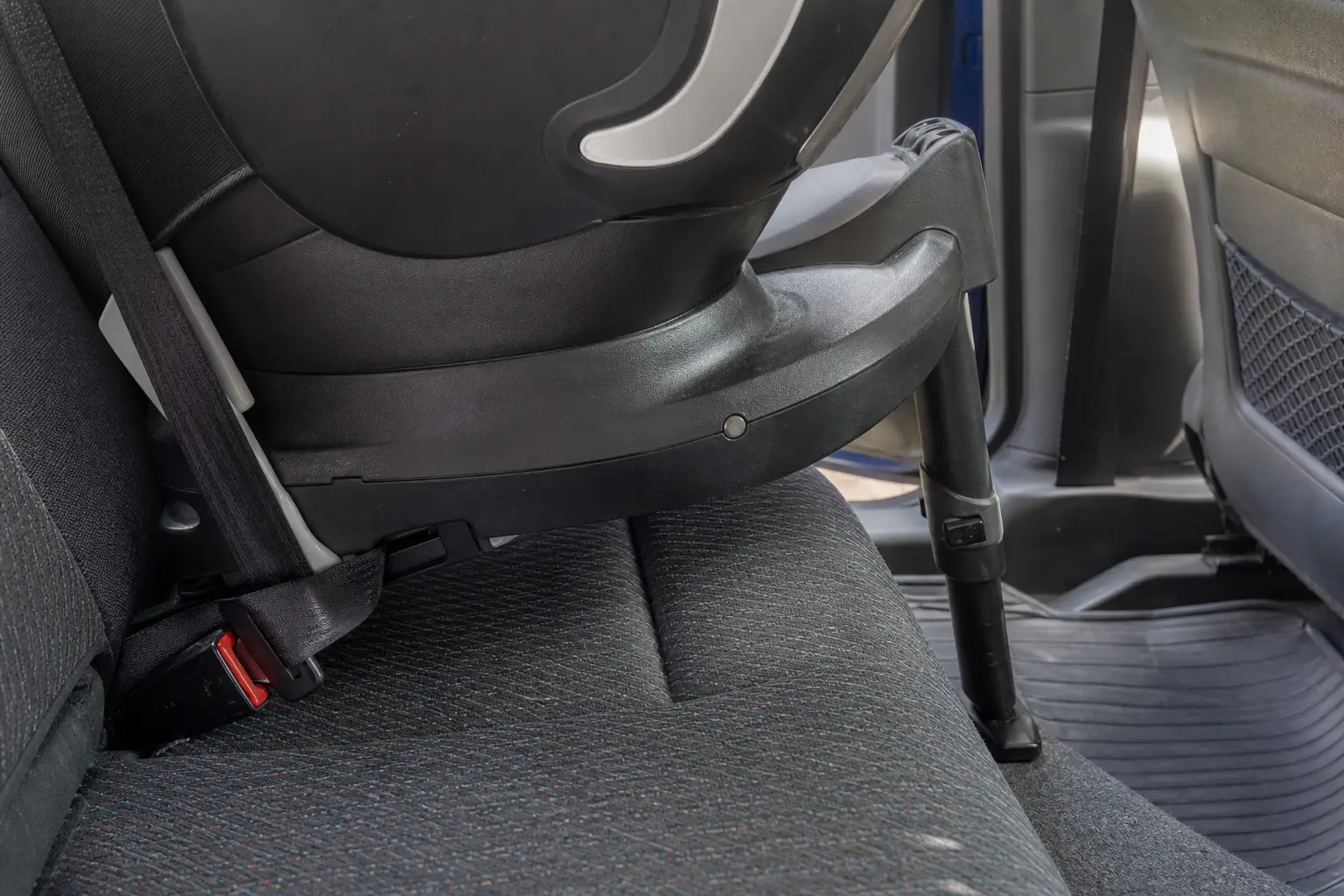
LATCH reduces installation errors and is quick, especially for infant and toddler seats. Belt installation can also be safe when the seat is approved for belt use, the belt follows the color-coded route, the restraint is tight and the car has a three-point belt in that position.
- Check the car manual for rear outboard LATCH anchors and top-tether points.
- Check the child-seat fit list, especially for older cars, vans, campers and center rear seats.
- Avoid lap-only belt positions for boosters. Most modern boosters and many child seats need a three-point belt.
- Check underfloor storage compartments. A support leg should not rest on a storage lid unless both manuals allow it.
- After installing, check for common failures: belt through the wrong guide, loose harness, top tether not attached, support leg floating above the floor, or buckle crunch where the adult-belt buckle bears on the child-seat frame.
Compare the safest vacation strategies by child stage, trip type and car uncertainty
Use the child's stage and destination-car uncertainty to choose the plan. If the car is unknown, favor a seat you can install with the vehicle belt and check before travel.
| Child or trip situation | Strongest practical plan | Checks before booking | Avoid |
|---|---|---|---|
| Infant or young toddler | Bring the known rear-facing seat, or buy a second FMVSS 213 seat tested in a similar car | Aircraft label if using on board, width, belt path, support leg or base compatibility | Relying on a random rental infant seat after a late flight |
| Under 4 or still needs a harness | Known harnessed seat, preferably practiced before departure | Height range, maximum occupant weight, three-point belt or LATCH plus top tether if required | Switching to a booster for luggage convenience |
| Older child 40-57 inches | Known foldable high-back booster with strong independent test results | Shoulder belt sits mid-shoulder, lap belt stays low on hips and thighs, child stays upright asleep | No-back emergency booster for a long vacation drive |
| Flight restraint only | FAA-approved child restraint or CARES-type harness if the child fits | Separate airplane seat, airline acceptance, lap-belt install | Arriving with no road seat at destination |
| Rental car with no other option | Reserved rental seat inspected at the counter | Certification label, manual, size range, harness, shell, foam, buckle, missing parts | Assuming staff will install it or that the booking guarantees condition |
Compare travel car seats and foldable high-back boosters
Live prices from more than 20 shops, updated daily.
Avoid the mistakes that cause vacation seat failures at the gate, rental counter and grandparents' driveway
Most vacation failures are admin and installation failures, so check them while you still have choices. The awkward part is rarely the law; it is the missing label, the wrong belt, or the seat that fits your car at home and nothing else.
- Assuming FMVSS 213 road certification allows aircraft use. It covers road travel, while aircraft cabin use needs an FAA-approved label.
- Taking a LATCH-only plan onto a plane or into an older car. Aircraft seats use lap belts, and older cars may lack the anchors you expect.
- Checking a car seat in a thin plastic bag, then failing to inspect it after baggage claim.
- Booking a rental seat without reconfirming the local desk and without a backup plan.
- Accepting a rental or borrowed seat with missing labels, unknown history, damaged foam, twisted harness or missing parts.
- Using a booster with a child who slumps, puts the shoulder belt behind their back, or can't stay upright when asleep.
- Putting a rear-facing seat on a front passenger seat with an active airbag.
- Using the center rear seat because it feels safest, then discovering it has only a lap belt.
FAQ: flying with car seats, rental add-ons, FMVSS 213 rules and installing in older cars
Can I use my car seat on the plane if my baby is booked as a lap infant?
Usually no. To use a child car seat in the cabin, you normally need a separate airplane seat for the child, plus an FAA-approved restraint that fits the aircraft seat and installs with the lap belt.
What should I do if the rental child seat is dirty, damaged or the wrong size?
Do not install your child in it. Photograph the seat and label, ask for a replacement, document the issue at the desk and be ready to buy a local approved seat before driving away.
Does one FMVSS 213 certification cover a road trip through several states?
A seat that meets FMVSS 213 is the simplest interstate road solution. State child-passenger rules can still vary, so keep booster-age children in a high-back booster until the adult belt fits well.
Can grandma's middle rear lap belt be used for a booster?
No for normal boosters. Boosters need a three-point belt so the shoulder belt controls the upper body and the lap belt stays low. Use a rear outer seat with a three-point belt, or choose another car.
How far before travel should I buy a second seat?
Aim for at least 2-3 weeks. That gives time to check the certification label, test the child fit, practice belt installation and solve surprises before the airport day.
Verdict: make the weakest handoff decide the purchase
Choose the seat plan around the weakest point in your trip. Small children need a known rear-facing or harnessed seat, either brought from home or bought as a tested second seat. Older children can travel well with a foldable high-back booster if the belt fit is good and the car has a three-point belt. Rental seats are a backup, not the plan you build a summer vacation around.
This article was created using AI, following our team's editorial standards.