

In a 12 m² roof bedroom still at 29 °C at midnight, buy a portable AC only if you can seal a short exhaust hose to the outside. For many bedrooms, a quiet fan plus daytime shading and cooler night air is the better first spend.
Choose a fan for body cooling; choose portable AC for sealed heat removal
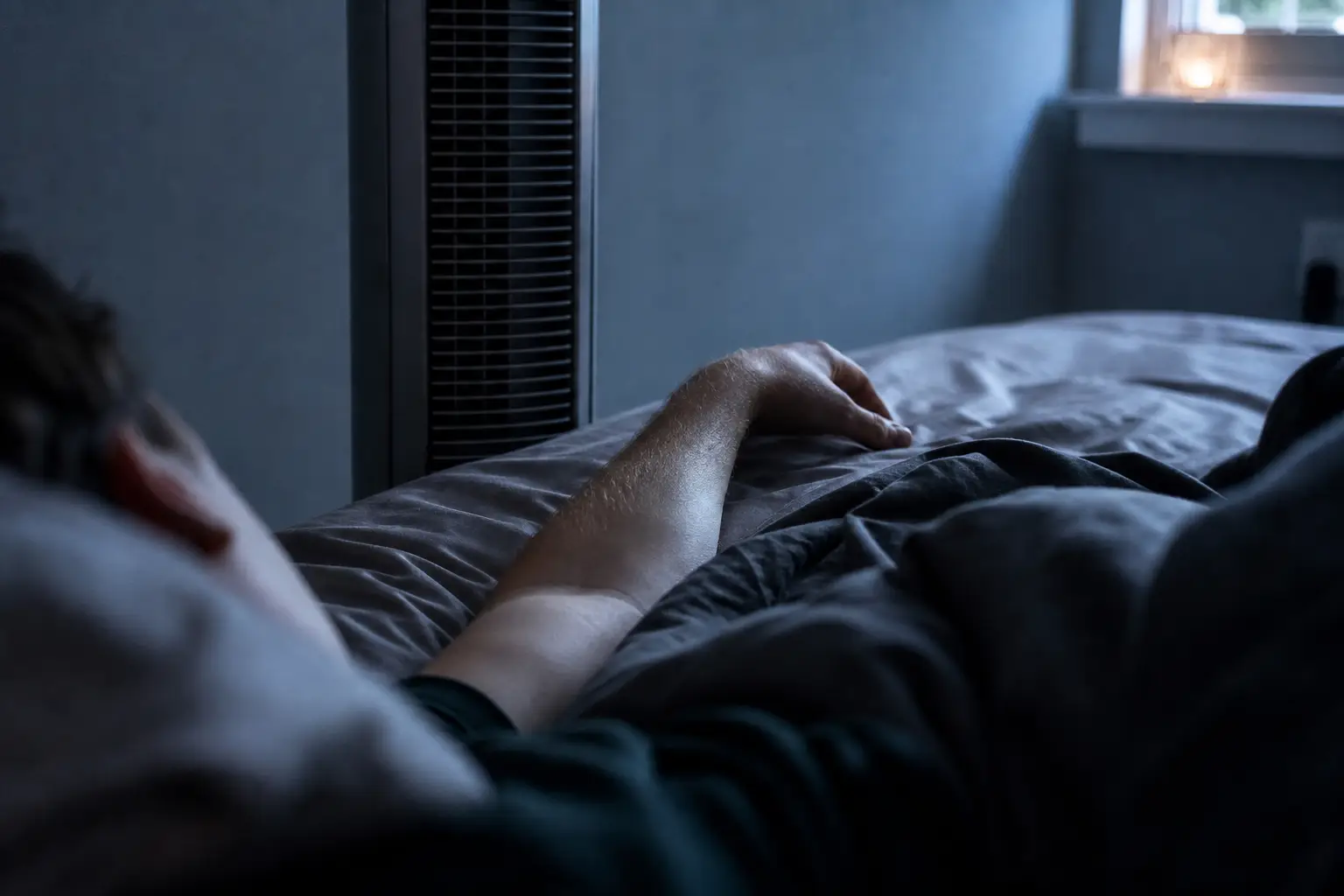
The decision turns on where the heat goes. A tower fan, pedestal fan or air circulator moves room air across your skin, which helps sweat evaporate and makes sleep feel easier. It does not lower the temperature of a closed room.
A portable air conditioner can reduce room temperature and humidity because it moves heat out through an exhaust hose. That only works in a small, closed room with a sealed window or door kit. If the hot exhaust leaks back in, the AC is paying to fight itself.
| Bedroom situation | Better choice | Why |
|---|---|---|
| Room is warm but outdoor air cools after dark | Fan | Use it on your body or to help pull cooler night air through the room. |
| Room stays hot and humid all night | Portable AC, if sealed | It can remove heat and moisture, which a fan cannot do. |
| No openable or sealable window or door | Fan or passive fixes | A hose that cannot vent outdoors properly will waste energy and add heat problems. |
| Very noise-sensitive sleeper | Fan | Steady airflow is usually easier to sleep through than compressor cycling. |
| Top-floor or west-facing room with strong sun | Fix shading first, then decide | Stopping heat before it enters the glass can beat trying to remove it at night. |
| Open-plan room, stairs or doors left open | Usually neither portable option | A single-room AC will cool the air path rather than the bedroom. |
The physics that decides the winner: airflow helps skin, air conditioning removes heat and humidity
A fan wins if the room air is below the danger zone and you mainly need personal comfort at bed level. Public-health guidance commonly treats electric fans as helpful below about 35 °C indoor air temperature. Around or above that, do not rely on a fan to prevent heat illness, especially for vulnerable people.
An AC wins when the air itself must change. It cools the indoor air at the evaporator, removes some moisture, then rejects heat at the condenser. In a monobloc portable unit, all of that machinery sits in the room, so the exhaust path matters as much as the cooling rating.
The window-seal test: single-hose portable ACs need a short, sealed, isolated exhaust path
A portable AC earns its keep only when the hose can dump heat outdoors cleanly. The hose is the heat-removal path, not a spare accessory. Venting into a loft, corridor, chimney void or loose curtain gap leaves much of the heat in the building.
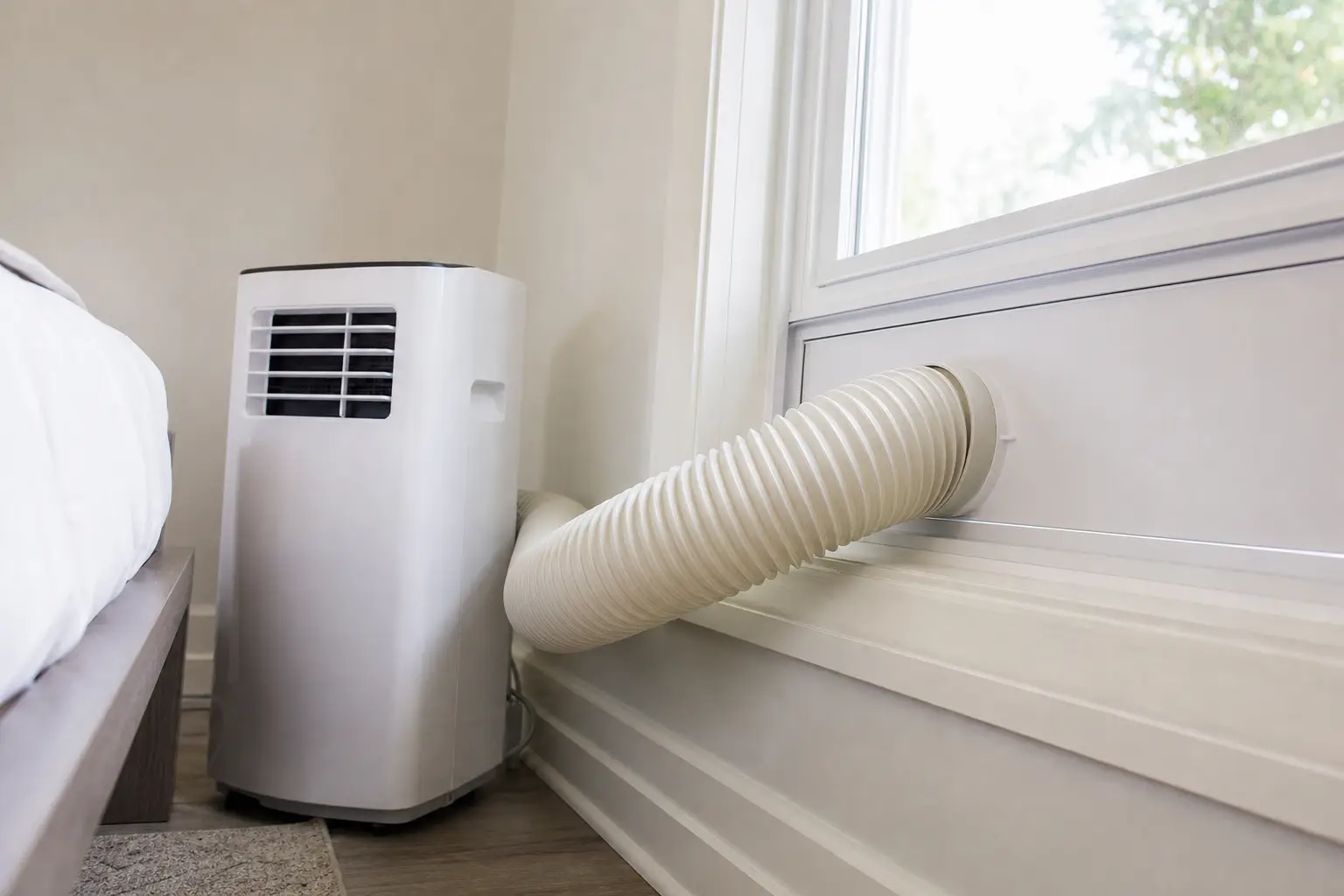
Single-hose units have a built-in penalty. They expel indoor air outdoors, which creates negative pressure and pulls warm replacement air through cracks, door gaps and nearby rooms. Dual-hose or hose-in-hose designs reduce this problem because the condenser side uses outdoor air, but they cost more, take more space and still put compressor noise indoors.
- Keep the exhaust hose as short and straight as the room allows.
- Seal the window or door kit, especially on tilt-turn and outward-opening windows with fabric zip kits.
- Close the bedroom door while the AC runs.
- Feel around the seal for hot leaks after 10 minutes.
- Avoid running kitchen or bathroom extract fans at the same time because they can worsen negative pressure.
- Do not cover the hose with curtains or block the appliance grilles.
Night noise: a tower fan’s steady whoosh beats compressor cycling for many sleepers
For light sleepers, the fan usually wins the noise round. Good sleep guidance has long pointed to bedroom noise below 30 dB(A), while most cooling appliances exceed that once they move useful air. The real question is noise character.
Quiet fans can publish low-speed figures around 13 to 25 dB, with much higher figures at full power. Portable ACs often sit around the mid-50s to mid-60s dB range depending on whether the maker quotes sound pressure or sound power. They also add compressor rumble, clicks and cycling.
- For a fan, look for a low first speed, display-off mode, beep-off mode and smooth oscillation.
- For AC, read reviews for compressor cycling near a bed, not just the word quiet.
- Pre-cool the closed room before sleep, then raise the setpoint or use fan-only mode if the room holds the cool air.
Running cost per night: fans cost pennies; portable AC costs pounds or euros when the compressor runs
The fan wins running cost by a huge margin. Use this formula: power draw in kW × hours used × your electricity price per kWh.
| Appliance | Typical power while running | 8-hour energy use | Typical 8-hour cost at 0.25 to 0.40 per kWh |
|---|---|---|---|
| Bedroom fan | About 5 to 55 W | 0.04 to 0.44 kWh | About 0.01 to 0.18 |
| Portable AC | About 700 to 1,500 W while actively cooling | 5.6 to 12 kWh if continuous | About 1.40 to 4.80 |
A portable AC will cycle off once it reaches the set temperature, so a shaded, sealed room can cost less than the continuous figure. In a top-floor heatwave bedroom, expect long compressor runs. Energy-saving guidance has put all-day portable AC use at up to about 20 times a typical fan, which matches the lived difference: cents or pennies against whole currency units per night.
Room size and heat load: BTU ratings matter less than closed doors, shaded glass and a small bedroom
Portable AC capacity matters, but real bedroom conditions often decide the result. Manufacturer room sizes can be optimistic, so treat them as a starting point and reduce expectations for roof rooms, late-day sun, high ceilings or leaky seals.
- 7,000 BTU/h, about 2.0 kW cooling: small sealed bedroom, roughly 10 to 18 or 20 m² in favourable conditions.
- 9,000 BTU/h, about 2.6 kW: typical small to medium bedroom, roughly 15 to 25 m².
- 12,000 BTU/h, about 3.5 kW: larger bedroom or small living room, roughly 20 to 35 m² if sealed.
- 14,000 BTU/h and above: large-room territory, often bulky and loud for a bedroom.
A fan is different. Do not size it by floor area. Size it by whether the airflow reaches the bed and whether it can help night purging. A pedestal fan or air circulator often throws air farther than a slim tower fan, while a tower fan suits narrow bedside spaces.
When the fan is the smarter buy, and when neither appliance is the right first fix
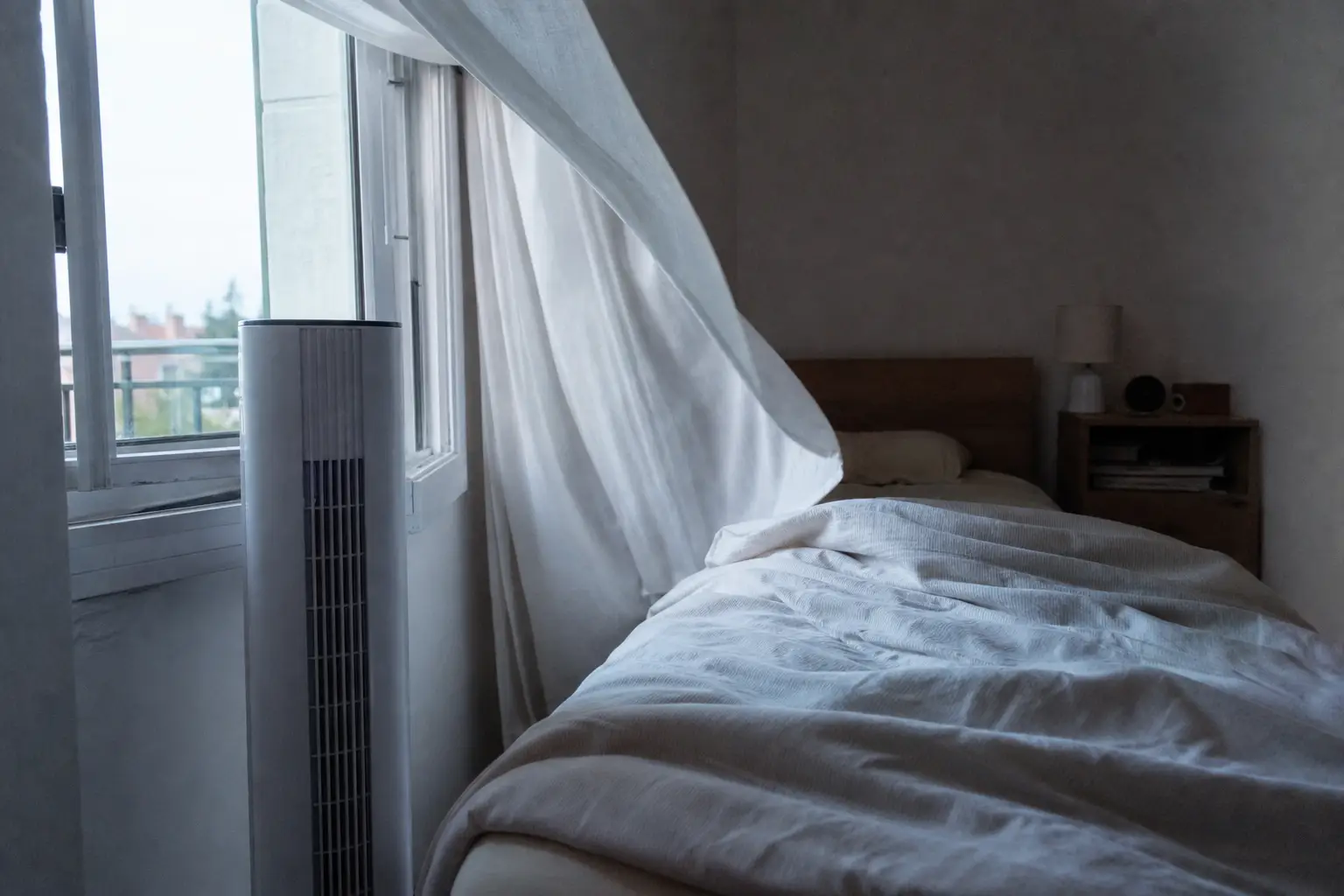
A fan is the right call for many bedrooms that feel stuffy rather than unsafe. Choose it first if the room drops after midnight, you can shade the glass by day, you sleep better with steady airflow and the AC exhaust would be awkward or leaky.
- Add external shading where possible. Internal blinds help glare, but heat has already crossed the glass.
- Close windows and blinds during the hottest part of the day, then open when outdoor air is cooler than indoor air.
- Use night purging: create a cooler-side intake and a warmer-side or upstairs exhaust, with a fan helping the flow.
- Reduce internal heat: switch off unused lights and electronics, charge devices outside the bedroom and avoid adding laundry moisture.
- Move sleep to a lower or cooler room during heatwave peaks if the top-floor bedroom will not recover.
Skip expensive purifier or bladeless fans if you only need cooling comfort. They may add filtration, design or safer enclosed airflow, but they do not change fan physics. Also be careful with evaporative coolers in humid weather: they add moisture, which can make sweat evaporation harder.
Compare quiet tower fans
Live prices from more than 20 shops, updated daily.
FAQ: portable AC vs tower fan for a heatwave bedroom
Can I run a portable AC without the hose?
No. Without the hose sending condenser heat outdoors, it is no longer cooling the room properly and can add net heat indoors.
Is a mini portable AC a real air conditioner?
Usually not if it has no exhaust hose, outdoor section or other heat-removal path. Most are small fans or evaporative coolers.
Do I need to drain a portable AC at night?
Many units evaporate some condensate through the exhaust during normal cooling, but humid nights can fill the tank and stop the unit. Check the drain design before buying for a bedroom.
Can a dehumidifier replace portable AC in muggy heat?
A standalone compressor dehumidifier releases its heat back into the same room. Lower humidity can feel better, but it can also warm the bedroom.
Should I buy the highest BTU portable AC I can afford?
No. Oversizing adds cost, bulk and noise. For a closed bedroom, buy the capacity band that fits the room and spend attention on the window kit.
Verdict: buy for the room’s heat path
Start with a fan if your bedroom cools later in the night, you can aim airflow at the bed and you can keep sun out during the day. Spend more on a quiet DC fan before paying for purifier styling or oversized features.
Buy portable AC when the room stays hot and humid, the door can stay closed, the room is within the right size band and the exhaust can run short and sealed to the outside. If that heat path is weak, fix shading, ventilation or the sleeping room before buying a louder, dearer appliance.
This article was created using AI, following our team's editorial standards.