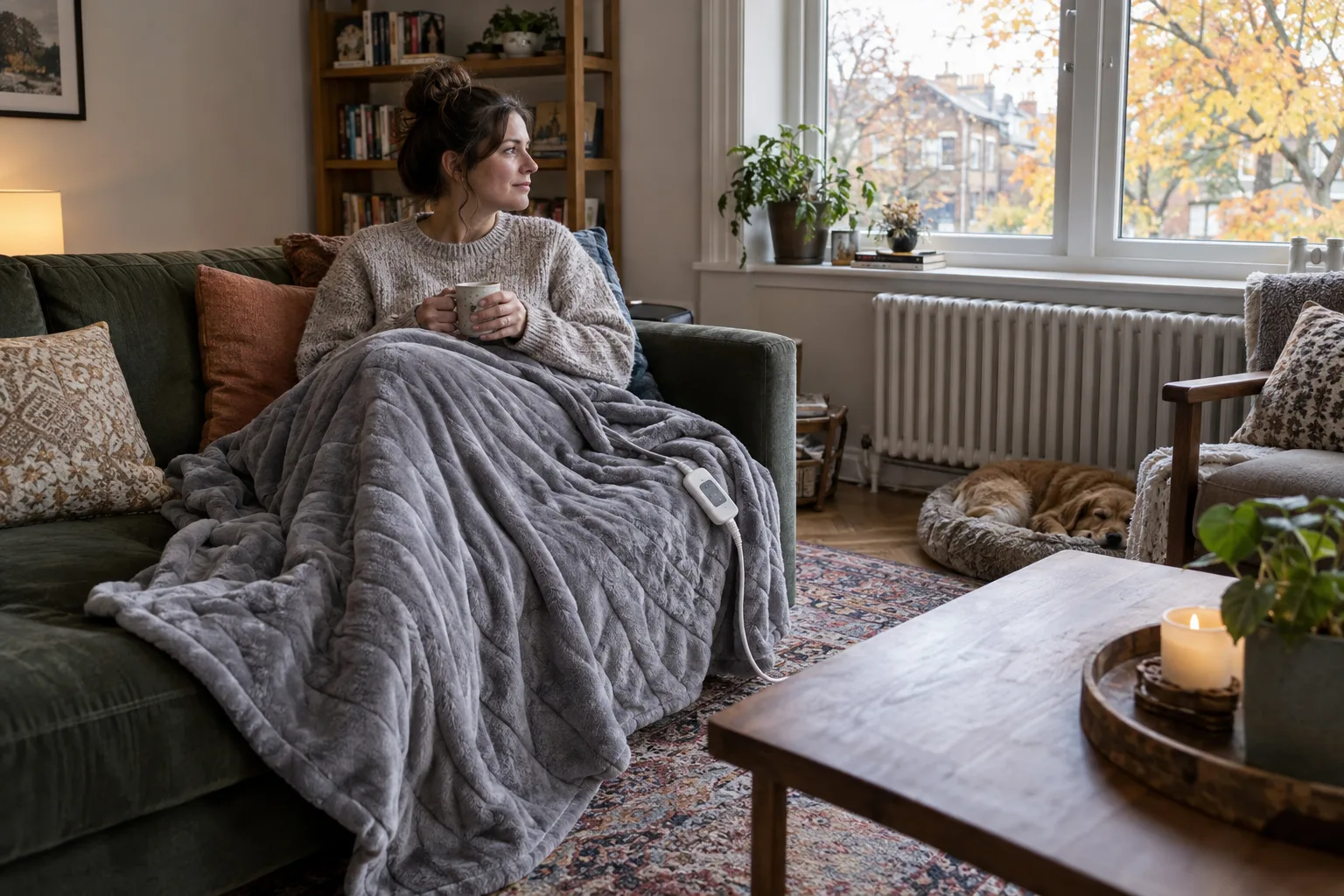


For a healthy adult in a dry bedroom that stays safely warm, a timed underblanket is the best nightly buy: it warms the mattress for a few cents or less. Choose an overblanket for sofa-to-bed use, a covered hot-water bottle for occasional local warmth, and room heating whenever cold air, damp or a vulnerable occupant makes ambient warmth necessary.
Underblankets win nightly, throws win portably
Your routine decides the category before heat settings or fabric enter the picture.
- Pick an electric underblanket for the same bed every night. It warms the mattress, legs and feet, and a dual-control version lets two sleepers choose separate settings.
- Pick a heated overblanket or throw if warmth needs to follow you from sofa to desk and occasionally into bed. Confirm that its instructions allow bed use, since some throws are intended only for waking use.
- Pick a hot-water bottle for infrequent use and the lowest purchase price. It gives immediate warmth but covers one small area and needs safe filling each time.
- Turn up fixed room heating if the air, walls and furnishings are too cold, or if occupants need warmth while dressing, moving around or providing care.
Preheating and switching off is safest
Preheat the bed, then switch direct heat off before sleep unless the exact product manual explicitly permits overnight use. If overnight use is allowed, choose the lowest setting and use the timer or automatic heat reduction.
Some healthy adults sleep comfortably at roughly 16 to 18°C with suitable bedding. Still, 18°C is a widely accepted safe minimum indoor benchmark during cold seasons, and older people, young children and people with chronic illness can need more. Cool sleep advice never justifies a persistently cold or damp home.
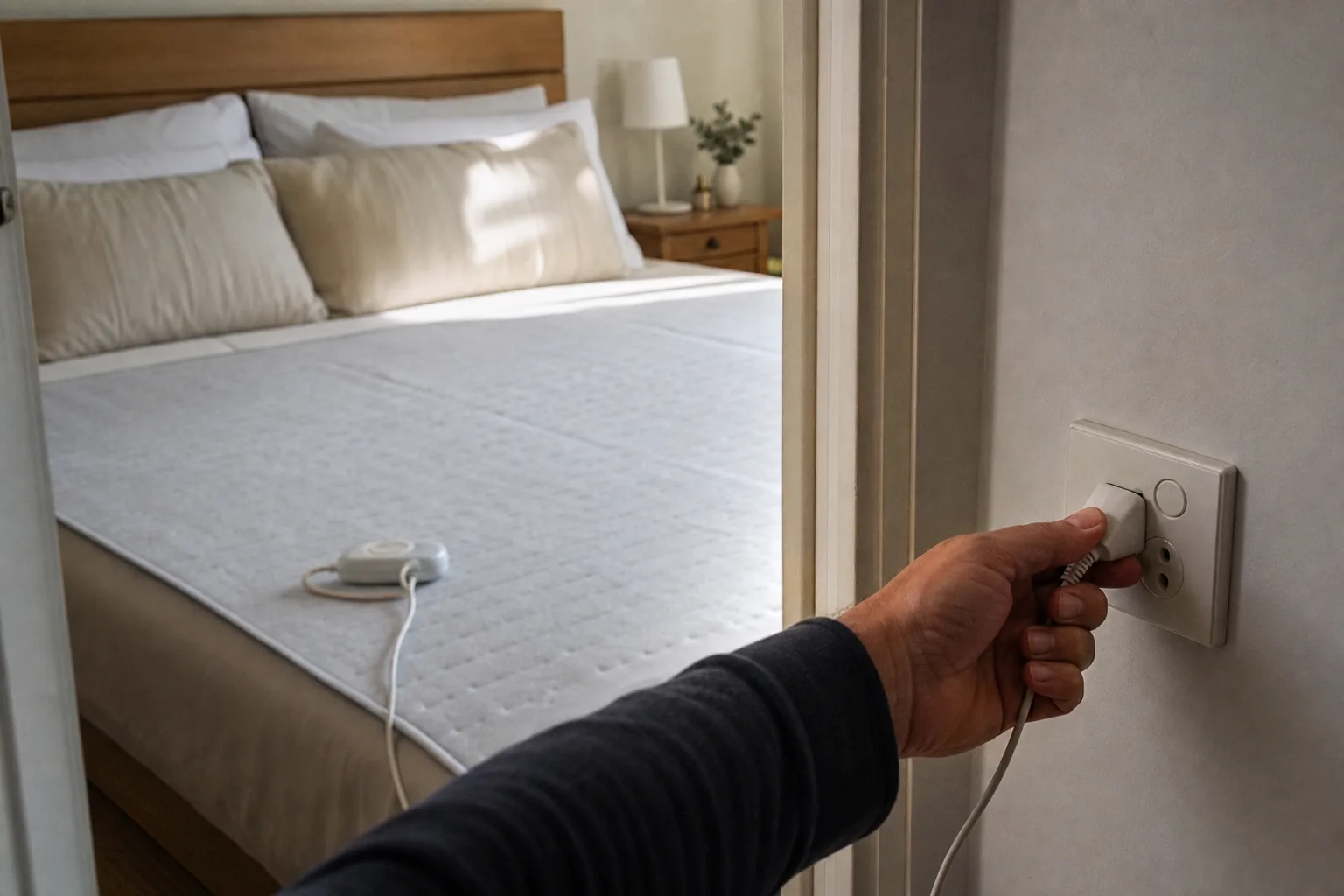
- Choose heated bedding from a reputable seller with the applicable conformity or independent testing mark. Check for both a user timer and an overheating fault cut-out. They perform different jobs.
- Keep an electric blanket flat. Never operate it folded, creased, tightly tucked, bunched or crushed by a person, pillow, pet or heavy object. Secure an underblanket so it cannot migrate across the mattress.
- Use an underblanket below the sleeper and an overblanket above. Adjustable beds, sofa beds, airbeds, waterbeds and specialist mattresses need explicit approval in both product manuals.
- Inspect fabric, wires, connectors, controller and plug before winter and periodically during use. Stop using the blanket if it has scorch marks, lumps, stiff areas, fraying, exposed wires, intermittent controls or a cracked or hot plug. Tape is not a repair.
- Never use an electric blanket and hot-water bottle in the same bed. A leak around powered bedding creates an electrical hazard.
Fill a hot-water bottle in this order to reduce leak and scald risk:
- Check the bottle and stopper for cracks, fading, brittleness, splits or leaks.
- Use hot water, never boiling water. Hold the bottle upright over a sink and away from your body.
- Fill slowly to no more than about two-thirds capacity, or to the level stated by the manufacturer.
- Gently expel excess air until water reaches the neck, then secure the stopper without overtightening it.
- Invert the bottle over the sink to check for leaks, then fit a cover.
- Keep body weight off the bottle and avoid prolonged contact with one patch of skin. Conservative guidance is to remove it before sleeping.
A heated bed uses 1 to 2% of a room heater's energy
A one-hour blanket preheat uses a small fraction of the energy consumed by four hours of electric room heating. The examples below use tariffs of 0.20 to 0.40 per kWh in the reader’s local currency, a useful range for comparing current residential electricity costs as checked in September 2026.
| Option and use | Energy | Illustrative cost | Warm-up | Heat after switch-off | Best use |
|---|---|---|---|---|---|
| Underblanket, 60 W for 1 hour | 0.06 kWh | 0.01 to 0.02 | Usually 15 to 30 minutes | Mattress and duvet retain some warmth | Nightly bed use |
| Overblanket, 110 W for 1 hour | 0.11 kWh | 0.02 to 0.04 | Felt within minutes, settles over 15 to 30 minutes | Cools faster than a warmed mattress | Sofa, desk and approved bed use |
| Hot-water bottle, about 1.2 L heated by kettle | About 0.10 to 0.12 kWh | 0.02 to 0.05 | Immediate after filling | Useful warmth around 1.5 to 2.75 hours | Occasional local warmth |
| Electric room heater, 1.5 kW for 4 hours | 6 kWh | 1.20 to 2.40 | Tens of minutes to hours | Depends heavily on insulation and building mass | Warm air and surfaces |
| Electric room heater, 2 kW for 4 hours | 8 kWh | 1.60 to 3.20 | Tens of minutes to hours | Depends heavily on insulation and building mass | Larger or colder rooms |
The 60 W underblanket uses 1% of the 6 kWh room-heating example. The 110 W overblanket uses about 1.8%. Thermostatic controllers usually cycle, so nameplate wattage multiplied by time is an upper-bound estimate for longer use.
Central heating has no honest universal cost per bedroom. Fuel price, zoning, boiler efficiency, heat-pump performance, pipe losses and the number of rooms already being heated all change the result. Gas boilers and heat pumps can narrow the monetary gap, but direct electric warmth still concentrates energy on one sleeper.
Underblankets give the most even bed warmth
An underblanket takes longer than a filled bottle to feel hot, yet it gives the broadest and most persistent warmth once the mattress and duvet have warmed.
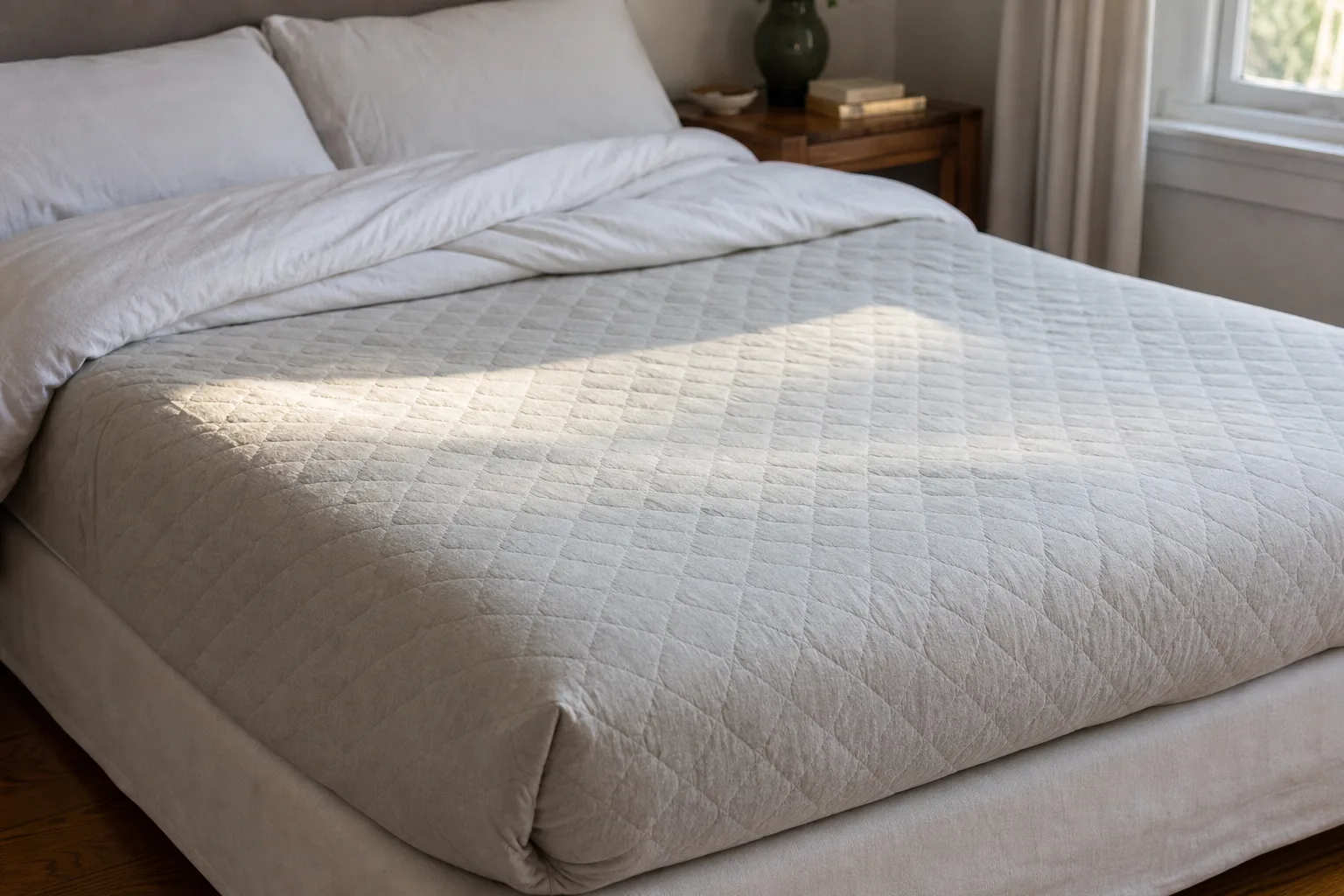
- Underblanket: allow 15 to 30 minutes under the duvet. Premium rapid-heat models can produce initial warmth in about five minutes, although a cold mattress still takes longer to warm evenly. Full-length coverage should reach the feet.
- Overblanket: heat is noticeable at contact points within minutes. It feels like a heavier conventional throw and works well across the lap or shoulders, but it stores less heat than a mattress and can bunch under restless sleepers.
- Hot-water bottle: warmth is available as soon as filling and leak checks are complete. A conventional 1.5 to 2 litre bottle lasts longer than many mini or long designs, but it remains lumpy, heavy and local. Temperature falls continuously with no fine control.
- Radiator: room warm-up ranges from tens of minutes to hours because output, room size, insulation and outdoor temperature dominate. It is the only choice here that also improves comfort after the sleeper leaves the bed.
Underblanket buyers should check padding, wire visibility and connector position. Overblanket buyers should check total weight and whether the cable reaches without crossing a walkway. For couples, dual controls buy more useful comfort than extra maximum heat or several additional settings.
Washable blankets still have finite lives
Machine washing makes heated bedding easier to keep, but repeated compression, folding and cable movement still age the electrical parts.
- Many current blankets can be machine-washed at 30°C after removing the controller. Follow the sewn-in label, since tumble drying, ironing and wringing are commonly restricted.
- Wash only when needed, use a gentle cycle and mild detergent, reshape while damp and reconnect the controller only after the blanket is completely dry.
- Store heated bedding loosely rolled or as its manual directs, with no heavy items on top. Overblankets usually face more drink spills, pet contact and folding; underblankets face nightly compression.
- Inspect an electric blanket more critically as it ages. Sampled warranties commonly run three to five years, while safety guidance recommends considering replacement beyond ten years even if no obvious fault appears. Ten years is a ceiling, not a promised lifespan.
- Empty a hot-water bottle and store it dry with the stopper removed, away from sunlight, oils and heat. Replacement guidance commonly ranges from yearly to every two years. Follow the shorter local or manufacturer interval and replace damaged rubber immediately.
Six heat settings against nine should not decide the purchase. A reliable low setting, a usable timer, automatic heat reduction and clear controls matter more.
Radiators win when the room needs heat
Room heating is the right answer when the air and building surfaces create the problem.
- The bedroom falls below a safe indoor temperature, especially where babies, frail occupants or people with chronic illness live.
- Cold surfaces and condensation are contributing to damp.
- People need warm air for dressing, caregiving, night-time movement or working in the room.
- Several occupants need warmer ambient air, or one person cannot safely use direct heat.
- The home must remain above a minimum temperature for health, plumbing or building protection.
Treat plug-in heaters more cautiously than fixed central-heating radiators. Keep portable heaters at least 0.9 m from bedding, curtains and furniture, plug them directly into a wall socket, and switch them off before sleeping. Fuel-burning appliances require correct ventilation and working carbon-monoxide alarms.
Four household needs produce four winners
Match the purchase to the person and room rather than buying the warmest-looking product.
- Regular cold sleeper in a safe, dry bedroom: choose a correctly sized underblanket with a timer, heat reduction and fault cut-out. Add dual controls for two sleepers with different preferences.
- Renter or home worker moving between rooms: choose a heated overblanket or throw. Verify that the instructions permit every intended use, especially sleeping.
- Occasional user with a tight purchase budget: choose a covered, in-date hot-water bottle. It suits feet or another small area for a few hours, provided the user can fill and move it safely.
- Household with damp, unsafe room temperatures, a baby or somebody with reduced sensation: use controlled room heating and ordinary insulating bedding.
If the bedroom is dry, safely warm and comfortable under an ordinary duvet, you need none of these products. Keeping what already works is cheaper and removes another item to inspect, wash and store.
Compare electric underblankets
Live prices from more than 20 shops, updated daily.
FAQ
The exact manual settles sizing, controls and approved sleep use.
What size electric underblanket should I buy?
Measure the mattress length, width and depth because named bed sizes vary across Europe. A sampled single underblanket is around 150 × 80 cm, while fitted versions can cover a 200 cm-long mattress. Make sure the heated area reaches the feet and that the connector will sit clear of your body.
Are dual controls worth buying for a double bed?
Yes, if two people share the bed. Each side can use a different setting or remain off. Double models commonly split roughly 120 W across two 60 W controllers, so switching one side off also avoids heating an empty half.
Does five-minute fast heat warm the whole mattress?
No. It describes the arrival of noticeable initial warmth. A cold mattress still takes longer to warm evenly, so plan on the standard 15 to 30 minute preheat if you want the full bed comfortable.
Do more heat settings make a blanket safer?
No. Safety depends on sound construction, correct flat use, an overheating fault cut-out and the blanket’s condition. Extra settings mainly provide finer comfort adjustment.
Can a warm bed treat insomnia?
The evidence supports a cool, comfortable bedroom with suitable bedding. It does not establish electric blankets as an insomnia treatment. Persistent sleep problems need appropriate medical advice.
Verdict: Warm the sleeper unless the room needs heat
For routine cold nights, choose a timed underblanket and preheat the bed for 15 to 30 minutes. A throw wins for portability and a hot-water bottle for occasional local warmth. Use the radiator whenever the room is damp, below a safe temperature or occupied by someone who needs controlled ambient heat.
This article was created using AI, following our team's editorial standards.