


A pillow should keep your neck level, not just feel nice in your hand. Start with your sleep position, shoulder depth, mattress firmness and heat preference, then choose loft, firmness and fill from there.
Start with neck alignment: match loft and firmness to your sleep position
The right pillow fills the gap between your head and the mattress so your neck stays in line with your upper spine. Too high bends the neck upward. Too low lets it drop.

Use sleep position as the first filter. Then adjust for your body and mattress, because the same pillow can sit very differently on a firm bed and a softer one.
- Side sleepers: usually need medium-high to high loft, often around 3 to 5+ in. The pillow has to fill the shoulder-to-ear gap, so side sleepers often need firmer support than other sleepers.
- Back sleepers: usually need medium loft, often around 3 to 5 in. The aim is to support the natural curve of the neck without pushing the chin toward the chest.
- Stomach sleepers: usually need low loft, often under 3 in, or no pillow. This position is easy to over-lift, which can strain the neck.
- Combination sleepers: often do best with adjustable fill or a medium profile that can be shaped during the night. The goal is not a perfect fit for one pose, but a tolerable fit across several.
Fine-tune the fit for shoulder depth, mattress firmness and compressed loft
Loft on the label is only the starting height. What matters is compressed loft: the height left after your head sinks in and the fill settles.
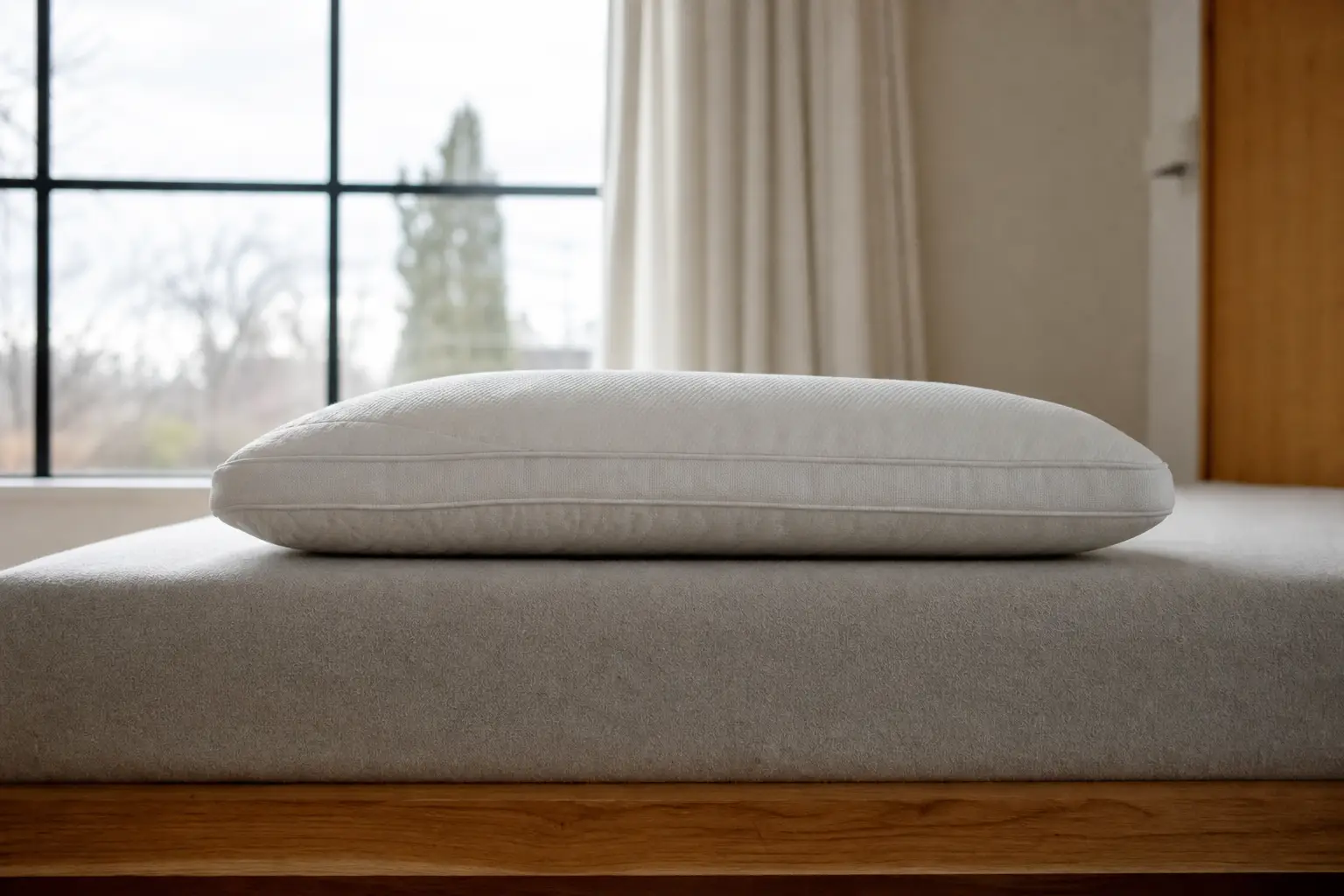
Side sleepers with broad shoulders usually need more pillow height than narrow-shouldered side sleepers. A firmer mattress can also increase the gap under the neck because the shoulder does not sink as far into the bed.
A softer mattress can reduce the gap because the shoulder sinks in more. In that case, a pillow that looked right on paper can feel too tall once you lie down.
- Lie in your normal sleep position on your actual mattress, or one with a similar firmness.
- Let the pillow compress for a few minutes. Do not judge it the second your head touches it.
- Check the neck line. Your head should not tilt up, drop down or rotate sharply.
- If you are on your side, check whether the pillow fills the space from shoulder to ear without lifting the head.
- If you are on your back, check that your chin is not pushed toward your chest.
- If you are on your stomach, choose the thinnest option that still feels comfortable, or consider no pillow.
Adjustable-fill pillows are useful when you are between heights, have unusual shoulder depth or are changing mattresses. Remove or add fill over several nights, because the first night is not always enough to catch a bad fit.
Choose the fill that delivers the support, feel and care routine you want
Fill controls how a pillow compresses, holds shape, traps heat, washes and wears. Two pillows with the same loft and firmness label can feel completely different if one is down and the other is latex.
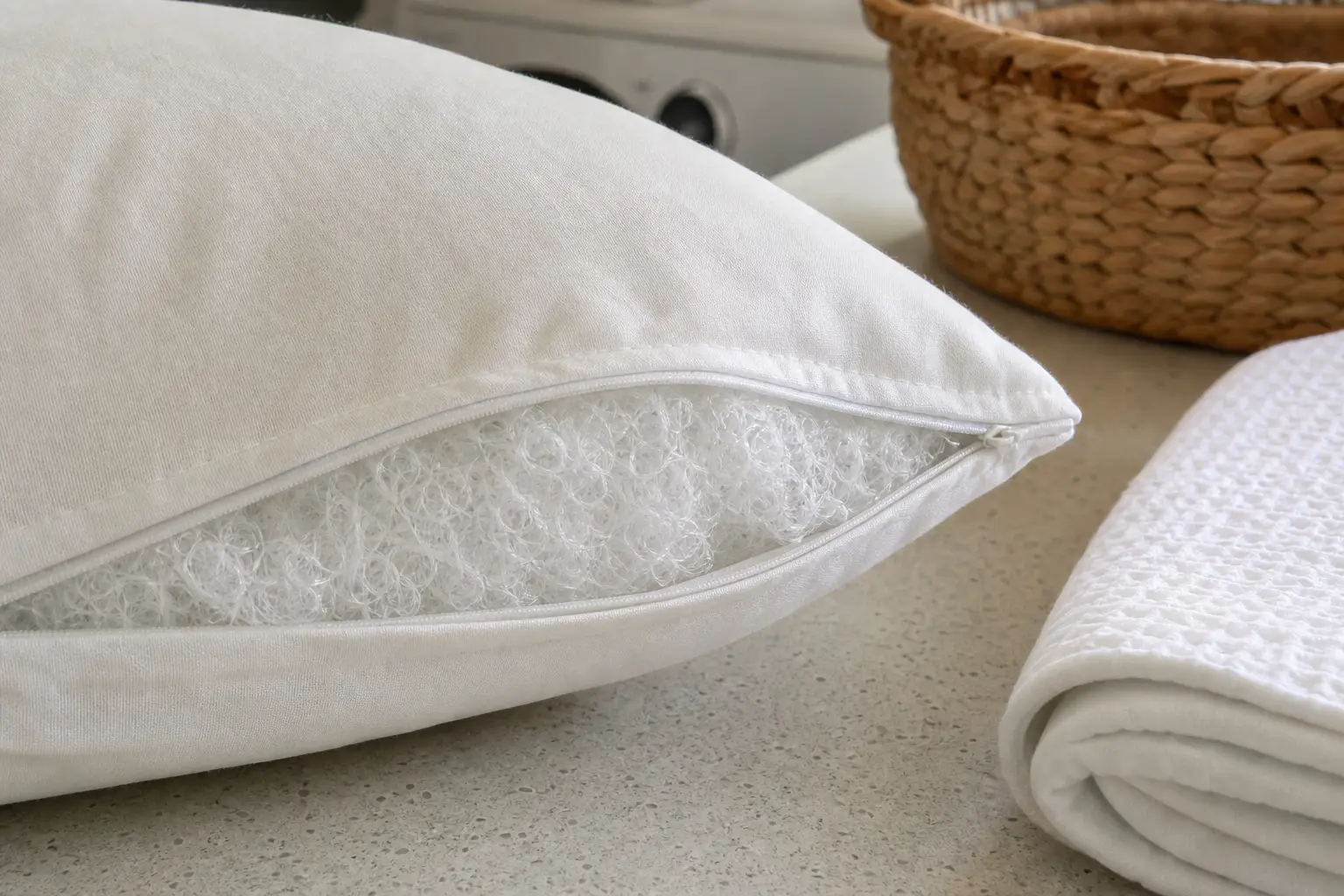
Polyester and down alternative
Choose polyester or down alternative if you want a lower-cost pillow, a vegan option, a guest-room pillow or a fill that avoids down. It often feels light, soft and fluffy.
The trade-off is support and lifespan. Polyester can clump, flatten and retain heat sooner than better fills, so it may suit temporary use better than someone trying to solve ongoing neck support.
Down and feather
Down suits buyers who want plush, moldable softness and good breathability. It can work well for some stomach and back sleepers when the loft is low to medium.
Many side sleepers need more structure than a soft down pillow gives unless it is filled firmly or built with supportive chambers. Feather and down blends are usually firmer and less costly than high-down fills, but quality and labelling matter.
Check the stated down and feather blend, and any species claims, rather than relying on vague luxury wording. Down is not vegan and can raise allergy or ethics concerns for some buyers.
Memory foam: solid or shredded
Memory foam suits sleepers who want contouring and neck support. Solid foam keeps a defined shape, while shredded foam is more moldable and often adjustable.
The main trade-offs are heat and care. Memory foam can retain warmth and may have initial odours. Many foam pillows are spot-clean or hand-wash only, so a removable washable cover matters.
If a polyurethane foam pillow lists a certification, read what it covers. A foam certification is not the same as a guarantee that the whole pillow, cover, cooling claim or comfort level will suit you.
Latex: solid or shredded
Latex suits sleepers who want springy support, good shape retention and a cooler feel than memory foam. It feels buoyant rather than slow-sinking.
It is usually heavier and more expensive than basic fills, and it is often not machine-washable. Avoid it if you have a latex sensitivity or allergy.
Adjustable and hybrid pillows
Adjustable and hybrid pillows suit combination sleepers, uncertain buyers and side sleepers whose shoulder depth makes fixed-height pillows awkward. Common designs use shredded foam or latex with fibre, or a supportive inner core with a softer outer chamber.
They work best if you are willing to tune them. Removing fill can be messy, but the pay-off is a closer fit on your own mattress.
Compare pillow materials at a glance: memory foam vs down vs latex vs down alternative
| Material | Best fit | Feel and support | Temperature and care | Watch for |
|---|---|---|---|---|
| Polyester or down alternative | Budget buyers, guest rooms, vegans, people avoiding down | Soft, light, often fluffy; support varies widely | Can flatten or clump; may retain heat faster than better fills | Good price, but replacement may come sooner |
| Down and feather | Plush-feel shoppers, some stomach and back sleepers | Soft, compressible and moldable; feather blends can feel firmer | Generally breathable; care depends on the label | May lack side-sleeper support; not vegan; check blend and species claims |
| Solid memory foam | Sleepers who want a defined shape and contouring neck support | Slow-response, pressure-relieving, less moldable | Can trap heat; often spot-clean or hand-wash only | Needs the right height from the start because you cannot easily adjust the core |
| Shredded memory foam | People who want contouring plus adjustability | Moldable and often height-adjustable | Usually more airflow than a solid core, but foam can still feel warm | Best if you are willing to add or remove fill over several nights |
| Solid or shredded latex | Hot sleepers who still need springy support; durability-focused buyers | Buoyant, responsive, supportive, less sinking than memory foam | Generally cooler than memory foam; often not machine-washable | Heavier, usually more expensive, unsuitable for latex sensitivity or allergy |
Compare bed pillows
Live prices from more than 20 shops, updated daily.
Prioritize temperature control without falling for vague “cooling” claims
Hot sleepers should look at airflow and materials before softness. A pillow can feel lovely for five minutes and still trap heat by morning.
- Memory foam commonly retains heat, especially in solid cores.
- Shredded or ventilated cores can improve airflow compared with a dense solid block, but they are not a guarantee of cool sleep.
- Latex and down are generally more breathable than memory foam.
- Breathable covers and natural-fibre covers can help manage heat and moisture.
- Gel, copper and phase-change wording should be treated as feature claims, not promises. Compare the full construction, not one cooling word.
If you sleep hot and need strong support, latex or an adjustable shredded design is often a more logical starting point than a plush, dense foam pillow. If you sleep cool and want close contouring, foam may still be the right trade-off.
Know when a specialty shape, adjustable fill or cervical pillow is worth it
Shape should follow the use case. Do not buy a shaped pillow because the label sounds medical or premium. Buy it because the geometry solves a specific fit problem.
- Cervical or contour pillows: can help some back and side sleepers keep the neck supported, but the neck roll height has to match your body. A “cervical” label does not fix a poor fit.
- Wedge pillows: useful when you need upper-body elevation rather than standard head support.
- Body and pregnancy pillows: add support along the body and can help keep side sleeping more stable.
- CPAP-friendly pillows: shaped to create mask clearance for people using a mask during sleep.
- Travel pillows: made for short sleep away from a bed, not as a full replacement for a nightly pillow.
Standard rectangular sizes usually follow bed size and pillowcase size, with common names such as Standard, Super Standard, Queen, King and Euro. For support, shape matters more than size name.
Avoid the common pillow-buying mistakes that cause morning neck pain
Most bad pillow buys come from shopping by touch alone. A pillow that feels soft and full in your hands may collapse under your head or push your neck out of line.
- Buying the fluffiest pillow by default. Fluffy can mean comfortable, but it does not always mean supportive.
- Ignoring sleep position. Side, back and stomach sleepers need different loft and firmness targets.
- Forgetting the mattress. A pillow that works on a firm mattress can sit too high on a softer one.
- Assuming firm means high. Firmness is resistance to collapse. Loft is height. You need the right mix of both.
- Choosing a contour pillow without checking neck roll height. If the roll is too high or too low, the shape becomes the problem.
- Keeping a flat pillow because it is familiar. Familiar is not the same as supportive.
Replace your pillow when support fails, not just when it looks old
Many pillows are replaced after 1 to 2 years, but the better trigger is support failure. A washed pillow can look cleaner and still fail to hold your neck level.
- The pillow stays flat after you fluff it.
- The fill has clumped or shifted into hard and empty zones.
- You need to fold or stack it to get enough height.
- You wake with more neck discomfort than you used to on the same mattress.
- The cover is yellowed or the pillow feels stale even with normal care.
- Your sleep position, mattress or body needs have changed.
Polyester pillows can wear faster. High-quality latex may last around 3 to 4 years because it keeps structure well. Use a pillow protector and follow the care label, but do not expect washing to restore lost loft.
The real cost is not only the purchase price. Include replacement frequency, pillow protectors, extra pillowcases and any return shipping if the trial or return policy is not free.
FAQ: choosing the right pillow for your sleep position, heat level and budget
What pillow loft is best for side sleepers?
Most side sleepers should start with medium-high to high loft, often around 3 to 5+ in. Broad shoulders and firmer mattresses usually need more height. The pillow should fill the shoulder-to-ear gap without lifting the head upward.
What pillow is best for back sleepers?
Back sleepers usually need a medium-loft pillow, often around 3 to 5 in, with medium support. It should support the neck curve without pushing the chin toward the chest.
Should stomach sleepers use a pillow?
Some stomach sleepers do best with a very low pillow, often under 3 in, and some may prefer no pillow. A tall or firm pillow can bend the neck too far upward in this position.
Is memory foam or latex cooler?
Latex generally sleeps cooler than memory foam. Memory foam can retain heat, especially in solid cores. Shredded or ventilated foam may improve airflow, but cooling claims are not guarantees.
Are down pillows supportive enough for side sleepers?
Sometimes, but many soft down pillows compress too much for side sleeping. Side sleepers who want down should look for firmer fills or supportive chamber designs and check the compressed height carefully.
How often should I replace my pillow?
Many pillows are replaced after 1 to 2 years. Replace sooner if the pillow is flat, lumpy, clumped or no longer keeps your neck comfortable. High-quality latex may last around 3 to 4 years.
Verdict: buy the pillow that keeps your neck level all night
Choose by posture first, feel second. Side sleepers usually need more loft and firmer support, back sleepers need a medium setup, and stomach sleepers need the lowest profile.
Then pick the fill that matches your trade-off: memory foam for contouring, down for plush moldability, latex for cooler springy support, down alternative for lower cost and down-free buying. If you are unsure, choose adjustable fill and tune the compressed loft on your own mattress.
This article was created using AI, following our team's editorial standards.