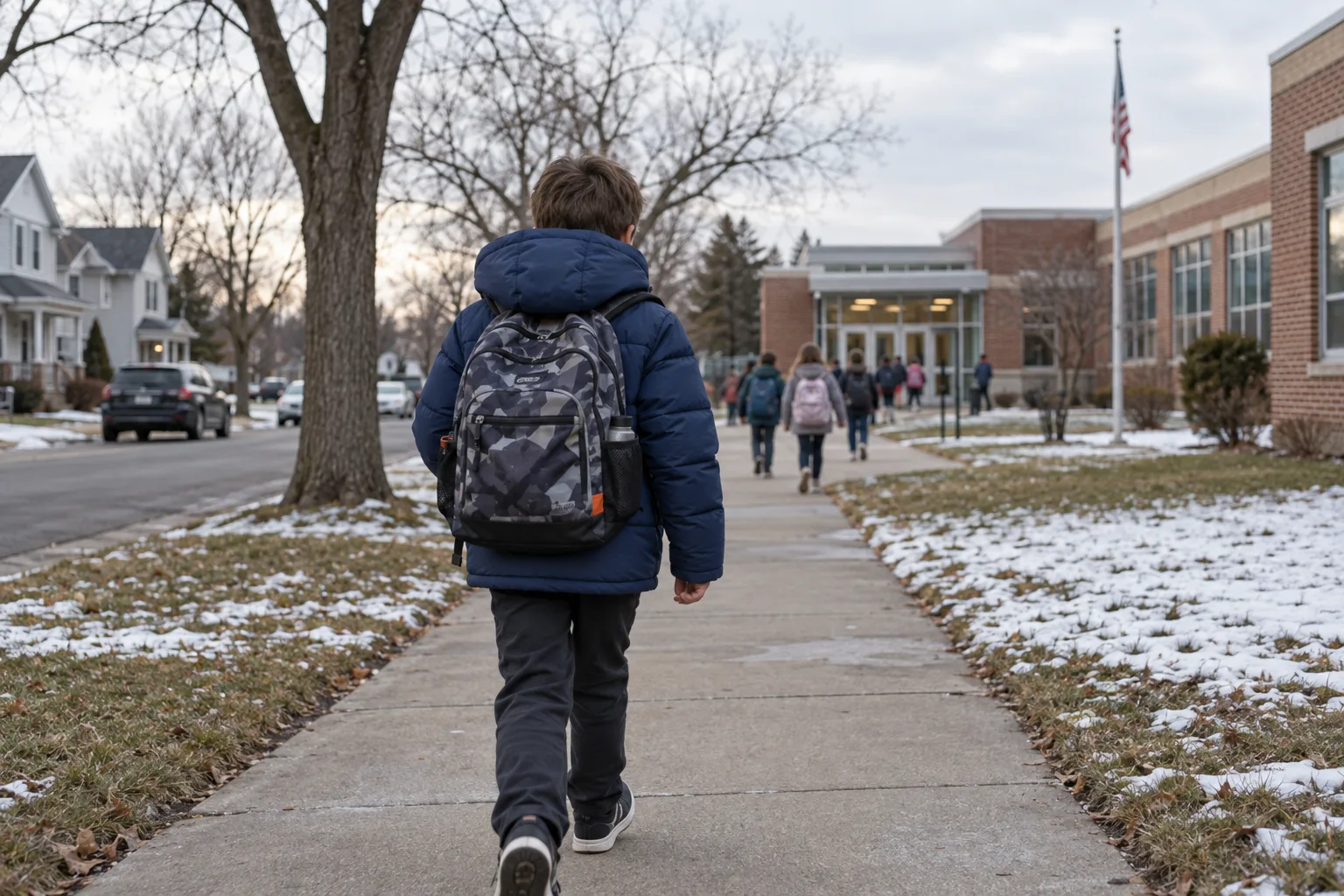


For daily nursery play, start around 8,000 to 10,000 mm, then spend your attention on sealed seams, reinforced wear points and a safe fit. A well-built 5,000 mm welded PU set can still beat a more technical shell when a child spends the morning kneeling in mud.
Buy only if the current kit fails the nursery routine or the safety check
Keep a sound rain set until it becomes unsafe, too small or unreliable at its pressure points. Nurseries in several European countries plan for outdoor time throughout the year, and many individual settings expect rainwear every day, so check the kit list before buying specialist gear.
- Inspect the seat, knees, crotch, inseams, cuffs and hems for thinning, cracks, holes or lifting seam tape.
- Put the gear on over normal autumn layers and boots. The child must be able to squat, kneel, climb and use their hands.
- Check that hems clear the ground and underfoot straps lie flat beneath the boot. Replace stretched, split or detached straps.
- Make sure the hood moves with the child’s head and leaves the eyes and peripheral vision clear.
- Choose heavy reinforcement only for frequent kneeling, crawling and puddle play. Occasional school-run use needs less construction.
Treat the water-column number as an entry ticket, then inspect the seat, knees and every seam
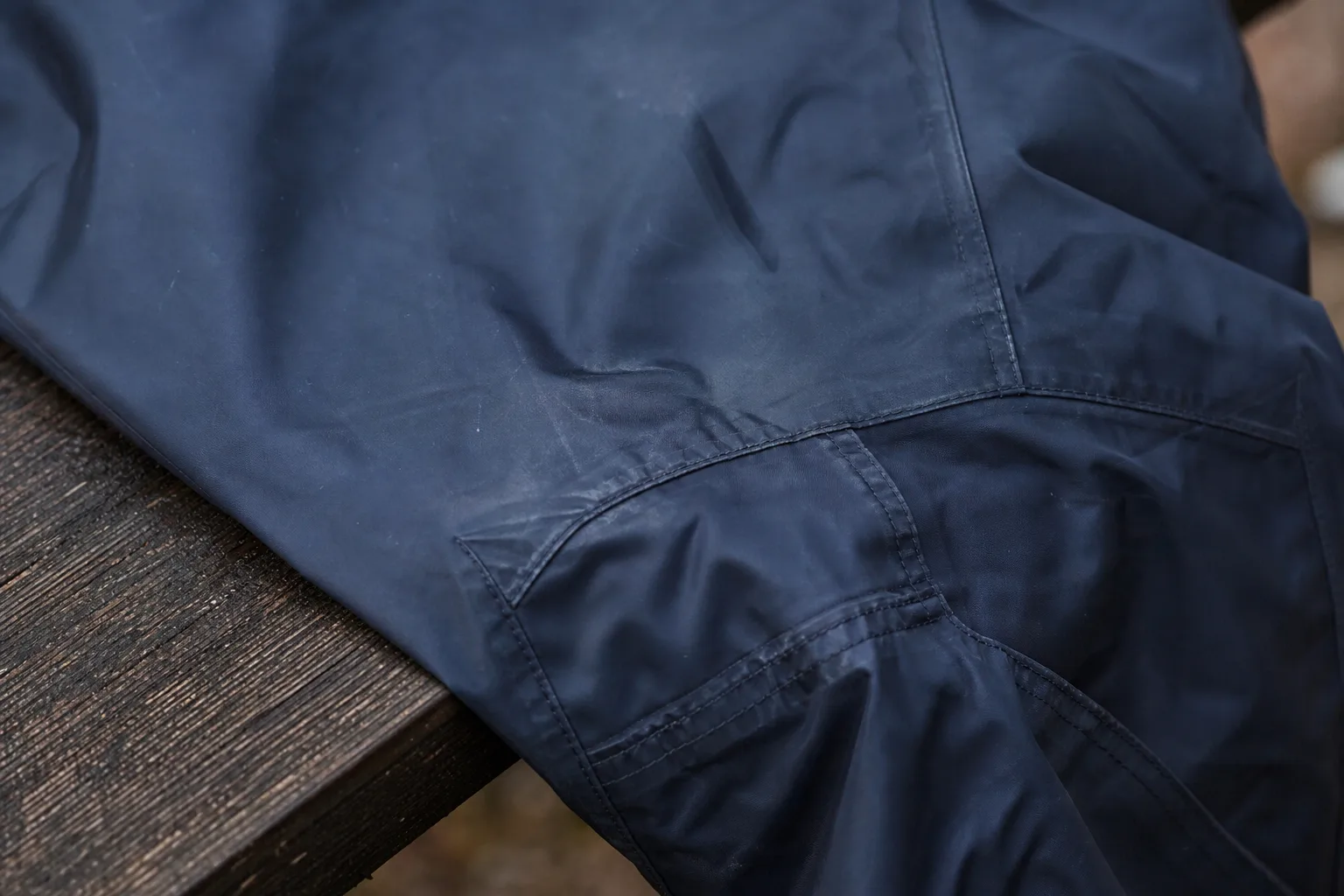
Whole-garment construction determines how long the rating remains useful. Hydrostatic head measures the pressure a fabric resisted in a laboratory: 10,000 mm represents a theoretical 10 m column of water, rather than a usable water depth.
A child sitting in a 4 cm puddle creates concentrated pressure at the bottom and folded seams. Kneeling adds grit and movement at the knees. The laboratory number doesn’t account for needle holes, worn coatings, laundering, flexing or water entering through a zip.
- Below 3,000 mm: reserve it for short showers unless the maker provides convincing whole-garment evidence.
- Around 5,000 mm: adequate for school journeys and ordinary wet play when the seams are fully sealed and the fabric is unworn.
- 8,000 to 10,000 mm: the sensible target for nursery puddles, wet grass and longer outdoor sessions.
- 10,000 to 15,000 mm: useful for prolonged wet conditions, repeated pressure at the seat and knees, or planned reuse.
- Above 15,000 to 20,000 mm: rarely a priority for school use. Spend first on reinforcement, seam sealing and fit.
Turn the garment inside out before buying. Woven shells should have all seams taped, while PU rainwear commonly uses welded seams that avoid stitching holes.
- Reject tape that is curling, lifting or puckered, including on a second-hand garment.
- Check the crotch, inseams, seat-panel edges, hood join, pockets and bib openings.
- Look for a storm flap or waterproof construction around the front zip.
- Treat “critically taped” cautiously on trousers and suits. Ask whether the seat, crotch and inseams are included.
- Choose knee and bottom panels that cover the full kneeling and sitting areas, with joins positioned away from direct pressure.
Choose one-piece, bib or waist trousers by toilet independence and self-dressing
Developmental stage gives a better answer than the age on the label. Toilet access and the ability to dress without help should decide when a child moves from a one-piece suit to separates.
- Before toilet training: choose an unlined one-piece puddle suit for crawling and muddy play. It closes with one zip and leaves no waist gap.
- During toilet training: choose a jacket with bib trousers or easy separates. Bibs keep the chest and waist covered, although braces can slow an urgent toilet trip.
- Independent nursery or preschool: choose a two-piece set with simple fasteners. The child can remove a layer and manage the toilet more easily.
- Primary school: choose elastic-waist overtrousers and a jacket for quick self-dressing. Bibs remain useful for very wet outdoor programmes.
- Tall, short-torso, broad or slim children: choose separates so the jacket and trousers can be sized independently.
Unlined rainwear covers more of the year because warmth can be changed underneath. Fleece-lined gear suits consistently cool, wet weather and slower play, but it dries more slowly and can leave an active child sweaty.
Allow growth without creating dragging hems, misplaced knee panels or a dangerous hood
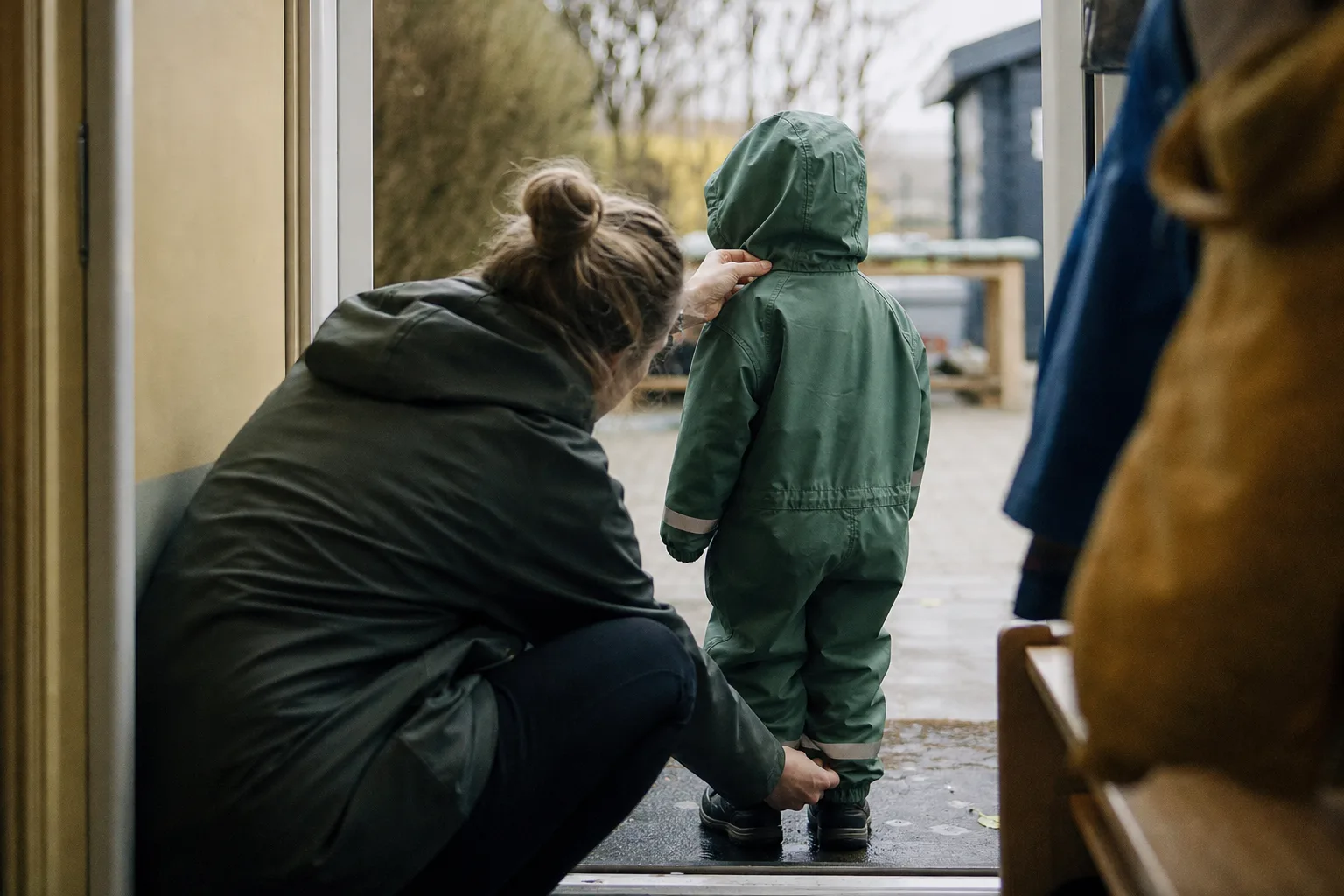
Buy from measured height and the maker’s garment chart, then test the next season’s thickest likely layers underneath. Some Nordic outerwear already includes about 6 cm of growth room, so automatically sizing up can create excessive length.
- Raise both arms overhead. Cuffs should stay close to the wrists while leaving the hands usable.
- Squat fully. The crotch, shoulders and knees should move without pulling hard.
- Kneel down. Reinforcement must sit over the kneecap, rather than below it.
- Sit on the floor. The back should remain covered and the zip should stay relaxed.
- Step onto a low stair. A dropped crotch mustn’t catch near the knees.
- Fit the boots and stirrups. Hems should cover the boot tops while clearing the ground.
- Turn the head from side to side. The hood must keep the eyes clear.
Extendable sleeves and legs are better than immediate oversizing because they can release roughly one size later. Reject cuffs that swallow the hands, hems folding beneath boots and excess width that lets knee panels slide out of place.
Balance breathability, warmth and visibility for the walk, playground and dark mornings
Pay for breathability when the child walks, runs or climbs long enough to sweat. Welded PU works well for a ten-minute transfer or slower puddle play, while a waterproof breathable shell is more comfortable on a 20 to 40-minute walk.
- For active use, published MVTR figures around 5,000 to 7,000 g/m²/24h provide a useful reference, but compare them only when the test methods match.
- Use removable fleece or ordinary insulating layers beneath an unlined shell. Permanent insulation reduces the garment’s useful temperature range.
- Expect some condensation in warm, humid weather. Loose fit and covered vents help low-breathability PU gear.
- Choose reflective trim visible from the front, rear and sides. A backpack can hide a large reflector across the jacket back.
- Use bright or fluorescent colour for daylight and dusk. Reflective material becomes effective under headlights after dark.
- Treat an ordinary reflective logo as a useful detail, rather than certified high-visibility equipment.
Compare rainwear types and price bands by age, activity and expected cost per wear
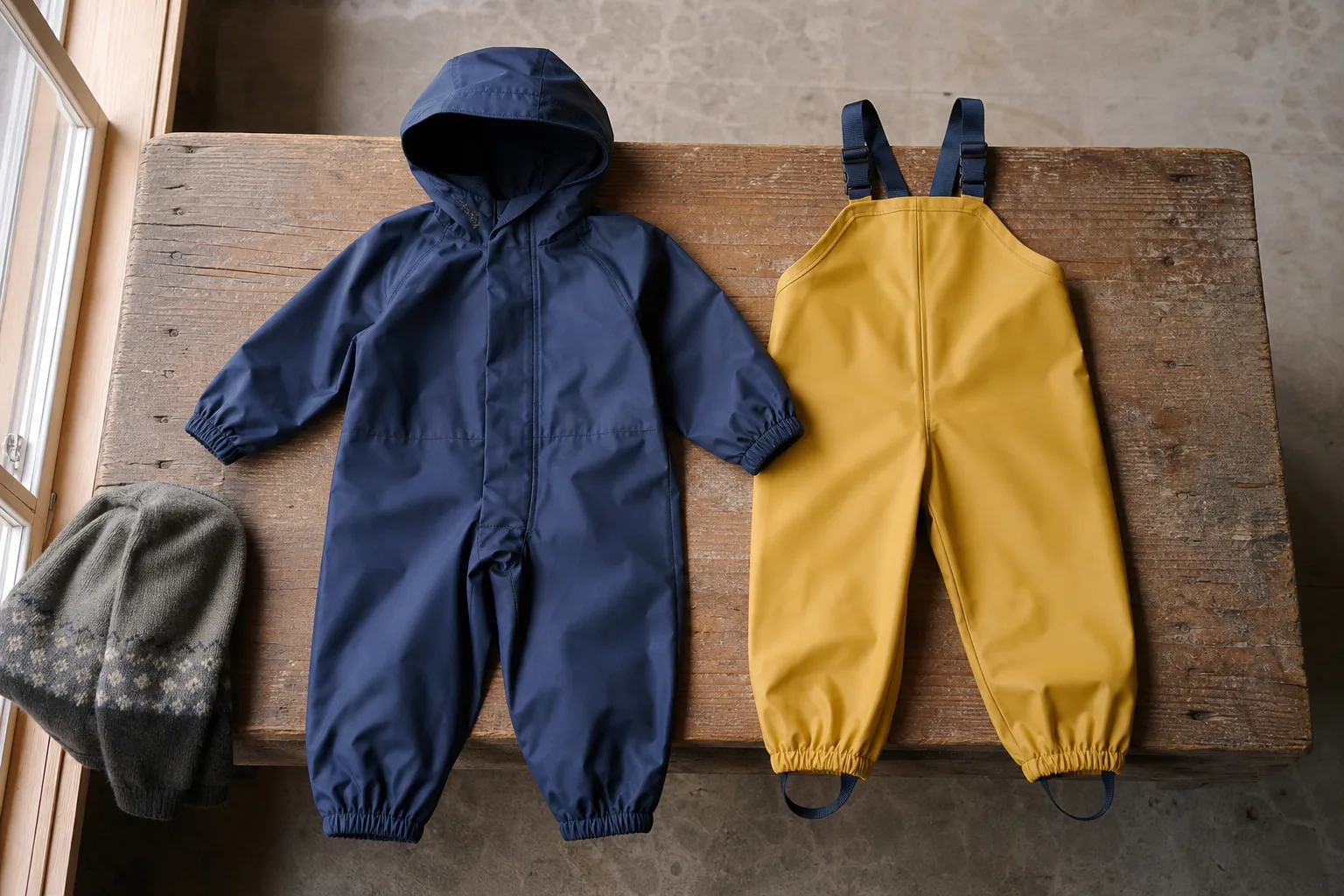
For a child certain to outgrow the set after one autumn, the everyday middle tier is a sensible spending ceiling. Move higher only when the construction supports reuse, resale or genuinely active use.
| Type | Best use | Main limitation | Fair spending level |
|---|---|---|---|
| Welded PU set | Younger nursery children, mud and low-to-moderate activity | Low breathability and heat-sensitive care | Budget to everyday, depending on reinforcement |
| Breathable shell set | Active preschool and primary-school children, longer walks | Needs correct washing, intact seam tape and DWR care | Everyday to premium |
| One-piece puddle suit | Pre-toilet-training children and crawling play | Slow toilet access and proportion-sensitive fit | Budget to everyday |
| Bib trousers plus jacket | Toddlers and children who sit in puddles | Braces can hinder quick toilet use | Everyday |
| Waist trousers plus jacket | Independent primary-school children and school runs | Less waist coverage if the jacket rides up | Budget to everyday |
| Packable shell or poncho | Emergency bag, holiday or short journey | Poor choice for kneeling, mud and playground climbing | Budget |
As of August 2026, complete uninsulated systems fall into three broad local-market tiers:
- Budget or occasional: lightweight construction, commonly around 5,000 mm, with limited reinforcement. Verify every seam.
- Everyday nursery or school: fully sealed PU or a better woven set, stronger closures, reflectors and secure boot interfaces.
- Technical or premium: breathable 10,000 mm-class fabric, stronger wear panels, growth features, useful durability data, spare parts or repair support. Premium entry commonly costs about half to three-quarters more than everyday entry.
That extra money should buy full seam sealing, reinforced seat and knees, useful breathability, replaceable straps, extendable sizing or credible repair support. A 20,000 mm headline alone doesn’t justify it.
Calculate cost per wear as purchase price minus resale value, divided by actual wears. If a set costs 80, resells for 20 and is worn 80 times, it costs 0.75 per wear in the same currency.
Compare children's rain sets
Live prices from more than 20 shops, updated daily.
Avoid the mistakes that cause leaks, sweat and early replacement, including damaging wash routines
Follow the garment’s own care label because PU coatings and breathable shells need different treatment. Washing correctly can preserve performance, while heat, fabric softener and unsuitable stain removers can shorten the garment’s life.
- Hose or wipe mud from PU rainwear first. Some pieces allow a 40°C machine wash, but high heat and tumble drying can damage the coating.
- For breathable shells, close zips and loose straps, use a gentle cycle with a small amount of liquid detergent, and avoid bleach and fabric softener. An extra rinse helps clear residue.
- If a breathable shell stops beading, wash it first. Use low heat to reactivate the finish only where the care label permits, then apply a compatible reproofer if beading still doesn’t return.
- Don’t apply breathable-shell heat instructions to PU gear. External PU waterproofing generally requires no DWR reproofer.
- Dry both sides before storage. Avoid hot cupboards, sharp long-term folds and storage while muddy or damp.
- Patch small holes promptly with material compatible with the coating. Widespread cracking, brittle coating or extensive seam-tape delamination usually marks the end of waterproof service.
- Avoid overdressing an active child. Damp inner clothing can come from sweat and condensation even while the waterproof layer remains intact.
- Ignore broad “eco”, “recycled” or similar claims when judging durability. They provide no evidence about seam sealing, abrasion resistance or wash life.
School rainwear FAQ: puddle pressure, taped seams, reproofing and second-hand checks
Use these checks to separate a fixable surface problem from failed waterproof construction.
Is 10,000 mm twice as waterproof as 5,000 mm?
It resisted twice the static laboratory pressure, but that doesn’t translate into twice the time in rain. Seams, abrasion, fit, flexing and washing decide how the complete garment performs.
Can 5,000 mm rainwear keep a child dry while sitting in a puddle?
Yes, especially when flexible PU fabric has welded seams and remains unworn. It offers less pressure margin than an 8,000 to 10,000 mm garment, so inspect the seat and crotch carefully.
Are critically taped seams enough for rain trousers?
Only if the maker confirms that the seat, crotch and inseams are sealed. Full seam sealing is the safer choice for regular puddle play.
Will reproofing repair a leaking knee?
Reproofing restores water beading on the outer surface. It cannot mend a hole, cracked coating or detached seam tape. Those faults need a compatible patch or garment replacement.
How should I check second-hand rainwear?
Inspect the seat, knees, crotch, inseams, tape edges and foot straps. Hold a damp cloth against a suspect area and apply gentle pressure. This reveals more than pouring water over the outside.
What does PFAS-free mean on rainwear?
It can mean that no PFAS were intentionally added, rather than analytically zero traces. Look for a brand that defines the claim, then judge waterproofing and durability separately.
The verdict: buy the lowest-priced set that passes the fit, wear-point and care tests
For daily wet nursery play, choose an unlined one-piece before toilet independence, then move to fully sealed separates. Primary-school children usually manage elastic-waist overtrousers best. Aim for 8,000 to 10,000 mm during prolonged wet play, accept welded 5,000 mm PU for slower puddle use, and pay a premium only for reinforcement, breathability, growth features or repairability that the child will use.
This article was created using AI, following our team's editorial standards.