


The bus is late and your child is standing in the wind. A planned 5-minute wait has become a 20-minute delay: buy for the time they spend standing still, then make the walking layers removable.
An 8-minute sheltered walk may need no new coat
If your child stays dry and comfortable on an 8-minute sheltered walk in the coat they own, keep it. Ask about the journey home and outdoor time at school too. A removable fleece or rain shell may solve a new problem more cheaply than another insulated jacket. The answer changes for the child waiting at an exposed stop: walking generates heat, but standing in wind calls for more insulation and a plan if transport is late.
| School journey | Starting choice | Main check |
|---|---|---|
| Short, sheltered walk | Existing coat with adjustable layers | Comfortable and dry on the way home too? |
| Active walk with little waiting | Light synthetic jacket | Can they shed a layer before getting sweaty? |
| Wet journey with an exposed wait | Waterproof insulated synthetic coat | Fully taped seams? |
| Reliably dry, cold journey | Down jacket or parka | Can the fill stay dry all day? |
| Changing weather and activity | Insulated layer plus waterproof shell | Can the child manage both pieces? |
For dark mornings, bright or reflective areas help drivers see a walking child. A small reflective logo still leaves the route and supervision to you.
The bus stop sets the warmth target
That exposed stop deserves more attention than the forecast high. Count how long your child walks, waits without shelter and stays outdoors at school, then check the temperature and wind for both journeys. A child-size thermal-manikin study found that clothes under a jacket substantially changed the predicted comfort of the whole outfit. The child who needs an extra layer at the stop may need to take it off for the walk or in the classroom.
Wind makes the wait less forgiving: −10°C air with a 20 km/h wind gives a wind chill of about −18°C. That figure describes faster heat loss, especially from exposed skin; it cannot rate a coat or tell you how long your child can safely wait. If a planned 5-minute wait becomes a 20-minute delay, find out where they can get shelter. Keep mittens or gloves and footwear dry too. A warmer jacket cannot protect wet feet or uncovered fingers, and sweat-damp layers increase cold risk.
In regular rain, the shell matters more than the fill
For that wet bus-stop wait, inspect the outer construction first. Fully taped seams stop rain entering through stitching; a water-repellent finish that beads drizzle cannot do that through sustained rain. A waterproof shell can be built into the insulated coat or worn over a separate warm layer. Neither down nor synthetic fill makes a jacket waterproof.
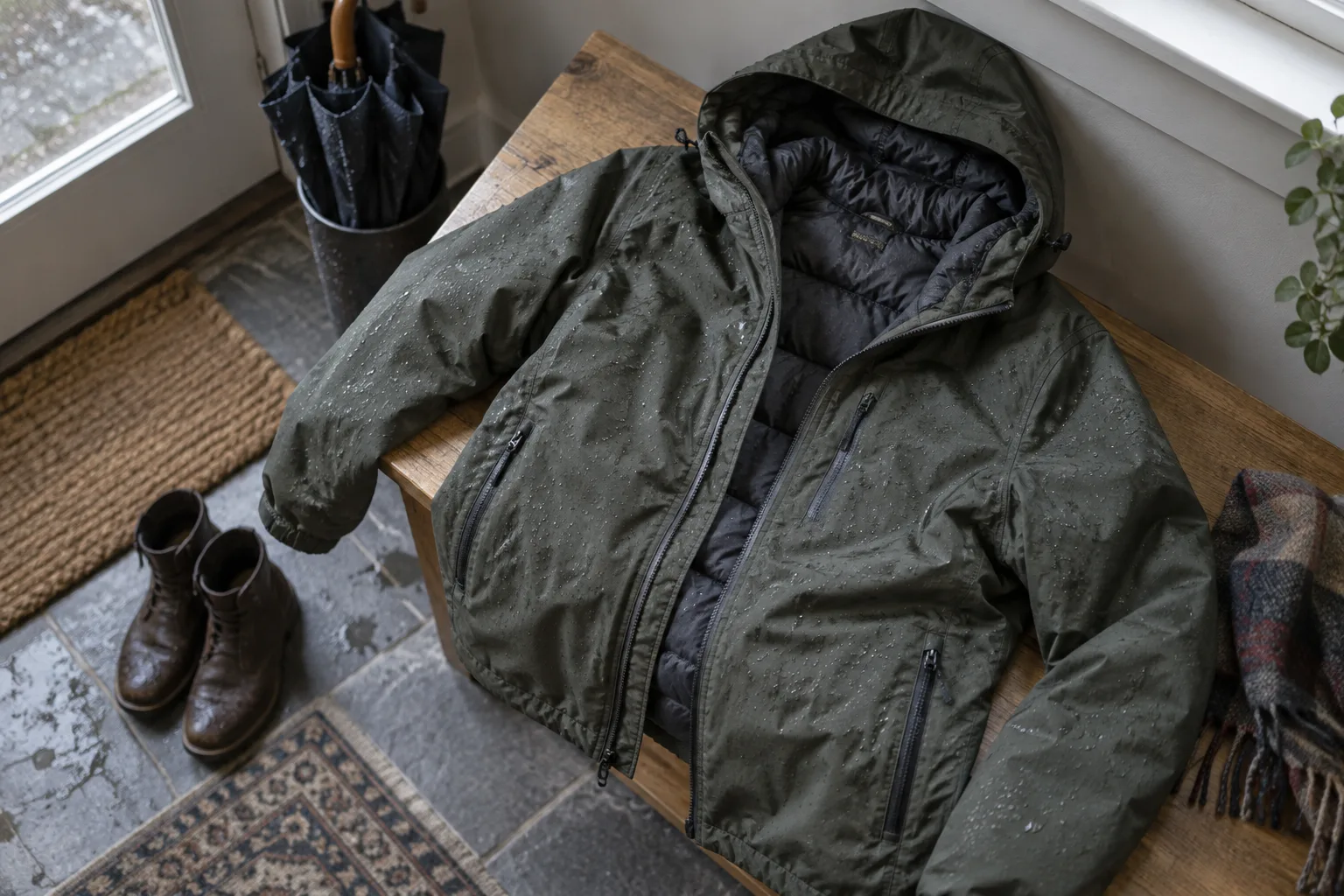
Down gives high insulation for its weight in dry cold, but loses loft when thoroughly wet and dries slowly. Water-resistant treatment helps with limited moisture, not a long wet journey. Synthetic fill keeps more useful loft when damp and dries faster, although matching down’s dry warmth generally takes more weight or bulk. Neither saves an outfit that has become soaked. For frequent rain or wet snow, the shell is the purchase that changes the journey.
A good fit keeps the warmth you bought inside
Try the coat over school clothes and the intended mid-layer. Your child should be able to zip it, lift both arms, carry their bag, sit and turn their head. When they bend, the hem should still cover their back; cuffs and neck should close without squeezing, and the hood should stay put without blocking their view. A much-too-large coat lets in drafts and gets in the way, even on that short sheltered walk.

If you’re hoping to get another winter from it, some purpose-made grow features extend sleeves roughly 3.8 to 5.1 cm. That’s more predictable than spare room everywhere. A longer cut covers more of the hips or thighs, while a sheltered zip reduces another gap for wind to find.
Frequent muddy washes favour synthetic fill
A machine-washable synthetic coat is usually easier to live with through a school week: it generally dries sooner, though repeated compression and wear can reduce its loft. Read the particular coat’s care label. Down is not automatically dry-clean only, but washable down needs thorough drying to restore its loft; damp clumps undo the advantage you paid for. Low-heat tumble drying can take time where the label allows it.
Inspect the zip, cuffs, seams and patches rubbed by bag straps. The coat has to survive the whole school day, not just the coldest morning.
Wet, exposed waits favour a waterproof synthetic coat
For the child regularly standing in rain or wet snow, start with a waterproof, fully seam-taped synthetic coat that fits over a removable layer. A heavier coat helps while they wait but may feel too hot on a brisk walk; the child can shed the mid-layer when active or indoors. Check that they can manage the zip and keep track of what they remove.
The useful price step is often weather protection. In selected France/EU listings as of September 2026, lightweight synthetics were around €20 to €30, a waterproof padded example about €55, and selected branded down jackets €160 to €200. That puts the waterproof example at roughly twice the entry price, while those down examples cost several times as much; sizes and promotions can narrow or reverse the gaps. Pay that middle step if regular rain makes a shower-resistant entry coat inadequate. Down isn’t automatically dearer than every synthetic coat.
Compare waterproof insulated kids' coats
Live prices from more than 20 shops, updated daily.
For reliably dry cold, down can deliver warmth with less carried weight and bulk, provided the finished coat contains enough insulation and stays dry through the school day. When mornings, walks and afternoons differ sharply, a fleece or insulated layer under a waterproof shell gives more control. A 3-in-1 coat earns its keep only if the shell fits over its liner and the child can manage both pieces.
Compare children's down jackets
Live prices from more than 20 shops, updated daily.
A temperature claim cannot rate the whole outfit
There’s no reliable universal temperature at which a school-age child needs a particular jacket. Activity, wind, time outside and clothes underneath all change comfort. Read a maker’s temperature claim with its stated layers and test conditions. One lightweight synthetic children’s coat, for example, lists 150 g/m² insulation at the torso, 100 g/m² in the sleeves and hood, and a finished weight of 390 g in size 8 to 9 years. Its stated 0 to −5°C range is a claim for that garment, not a prescription for your child.
The other tag numbers need translating too. Down fill power measures the loft of a given amount of down, without telling you how much is inside the coat. Synthetic g/m² measures insulation mass per area, so compare it mainly within similar constructions and look for differences between torso, sleeves and hood. Neither figure settles which of two finished coats will keep your child comfortable at the stop.
Five questions before you pay
Can a child wear a ski jacket to school?
Yes, particularly if the school day includes sustained snow play. For an ordinary short walk, judge its fit and weather protection rather than paying for ski features and bulk.
What does RDS mean on a down jacket?
The voluntary Responsible Down Standard covers animal welfare and chain of custody, including prohibitions on live-plucking and force-feeding. It certifies neither warmth nor waterproofness or child safety.
Is a fleece enough for the school walk?
It may be enough for a mild, sheltered trip, but fleece offers modest insulation and little wind or rain protection on its own. Add a suitable shell when conditions change.
Should I buy next winter’s coat in an end-of-season sale?
Only if the likely future size and return terms work. Selected outlet listings advertised roughly 24 to 50% reductions. Compare the final price for the identical coat and size: a shop’s ‘was’ price may no longer represent a genuine saving if the lower price has become its normal price.
How can I tell if the coat is too warm?
After an ordinary journey, ask about the wait and walk separately and feel for sweat-damp inner layers. If the child is comfortable at the stop but hot while walking, adjust a removable layer before replacing the coat. Don’t use dangerous cold as a clothing trial.
The verdict
Keep the working coat for an 8-minute sheltered walk. For a wet, exposed wait, buy waterproof synthetic insulation with fully taped seams; for reliably dry cold, choose down when lighter warmth matters. In either case, removable layers let one outfit cope with standing, walking and the classroom.
This article was created using AI, following our team's editorial standards.


