


Use September to make the call before popular sizes and workshop slots tighten: choose well-tested 3PMSF all-seasons for mild-climate driving when trips can wait, and separate summer and winter sets for alpine, icy, heavily loaded or unavoidable winter travel. “October to Easter” is a booking prompt only, so check the law for every country on your route first.
September verdict: choose 3PMSF all-seasons for flexible mild-climate driving, two sets for demanding winter duty
Your hardest compulsory winter journey should decide the category. A driver covering 7,000 km a year around a mild coastal city can make good use of all-seasons, especially if the car stays parked during rare snow. Add two alpine crossings, an untreated hill to reach home or fixed night shifts, and dedicated winter tyres become the sensible choice.
- Favour all-seasons for low-to-moderate mileage, cold rain, treated lowland roads, paid tyre storage and journeys that can be postponed.
- Favour two sets for mountain routes, regular ice or packed snow, hot loaded motorway trips, towing and travel that must continue through bad weather.
- Keep two sets if you already own compliant wheels and can store and change them safely. That removes much of the all-season cost advantage.
- Use September for size availability, test research and workshop choice. Reliable evidence does not show a guaranteed Europe-wide September price low.
Check every home, destination and transit-country rule before comparing cost
Winter legality is a pass-or-fail check, and Europe has no single winter-tyre rule. Consult the current national transport ministry, police or motoring authority guidance immediately before travel, including for countries crossed on the way.
- Germany uses a situational rule during ice, packed snow, slush, glaze or frost. Qualifying tyres must be on all four wheels, and M+S alone is insufficient.
- Austria applies winter-equipment rules in wintry conditions from 1 November to 15 April. Qualifying radial tyres need at least 4 mm of tread to retain winter status.
- France applies rules in designated mountain communes from 1 November to 31 March. Drivers need four qualifying tyres or removable traction equipment for at least two driven wheels.
- Italy commonly uses local road orders and signs. Summer use also brings speed-rating restrictions for winter or all-season tyres with a lower seasonal speed code.
- Sweden and Finland use weather-dependent rules within defined winter periods. Both require 3PMSF for relevant non-studded winter use and set a 3 mm minimum tread requirement.
- Belgium and several other mild-climate markets have no general mandate, although chain signs, tyre-condition rules and liability law still apply.
Legal, correctly specified all-seasons do not by themselves cancel motor insurance. Compulsory third-party cover remains valid across EU countries, while own-damage and other optional cover follow the policy. Illegal or clearly unsuitable tyres can worsen findings of fault, fines, contributory negligence and what the driver recovers. Ask the insurer for written confirmation if the planned use is unusual.
Treat 3PMSF as a legal snow minimum, not proof of ice grip or alpine capability
The three-peak mountain snowflake shows that a tyre passed a regulated longitudinal snow test against a reference tyre. Under current UN rules, the required index is at least 1.07 in the specified braking method or 1.10 in the traction method. The mark is a threshold with no grades above it.
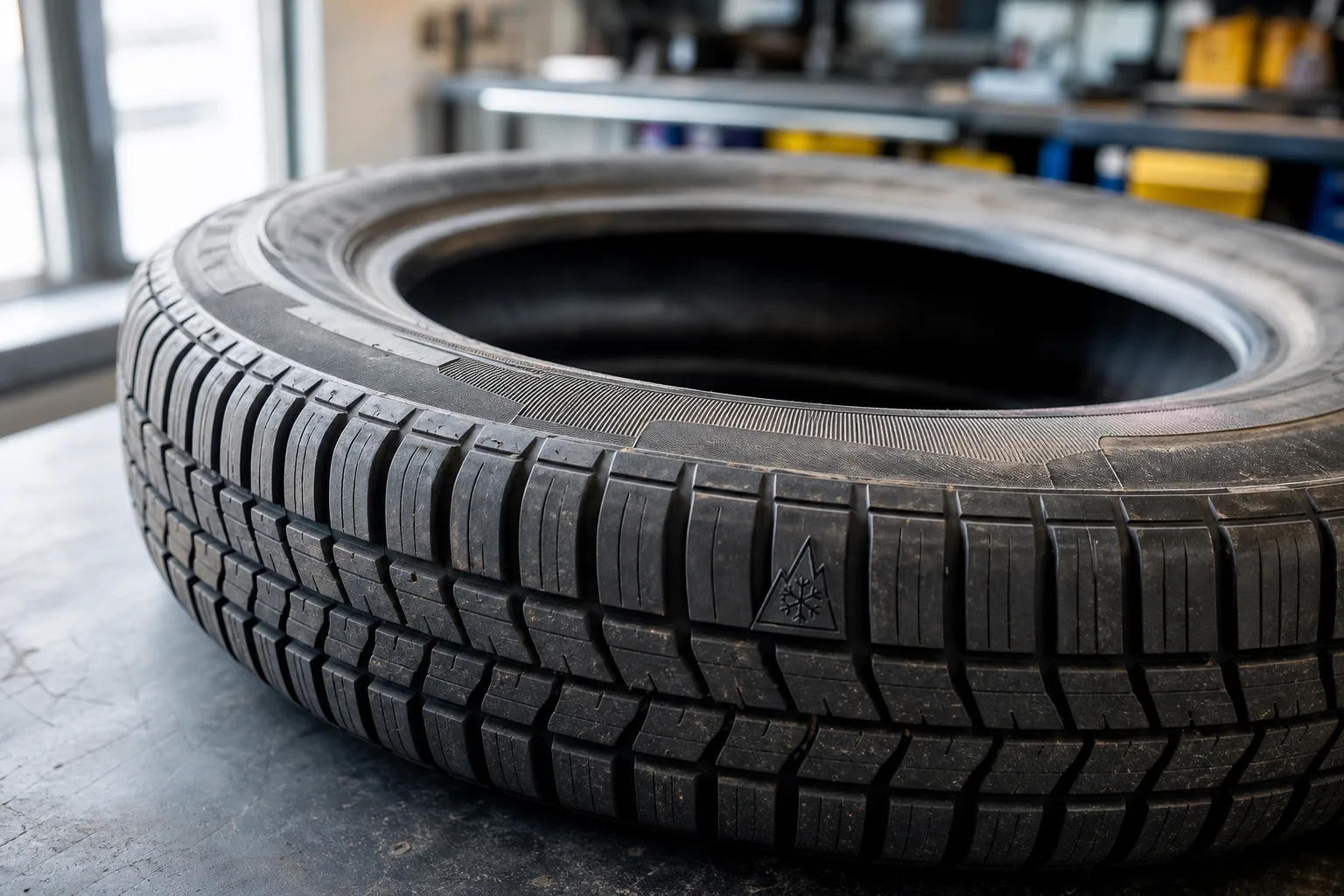
- It gives no score for hot dry braking, steering response or durability.
- It gives no aquaplaning or wet-handling result.
- It gives no assurance on deep snow, polished snow, repeated steep gradients or black ice.
- Ice performance has a separate EU-label pictogram and test where relevant.
- The badge can appear on dedicated winter tyres and year-round tyres, so model-specific testing still matters.
The spread between all-season models is large. In ADAC’s 2025 test, four of 16 were rated good and four inadequate. Its 2026 small-car test found only one genuinely good tyre among 16. Check an independent test in the exact size, or a closely related size, and prioritise wet braking, aquaplaning and snow control for your route.
Heatwaves, wet roads and packed snow: where each tyre strategy wins in daily use
Separate sets win at the temperature and grip extremes, while a strong all-season earns its place in mild, mixed weather and through convenience.
| Condition or cost | Good 3PMSF all-season | Separate summer and winter sets | Winner |
|---|---|---|---|
| Mild wet winter | Well suited if independent testing shows strong wet braking and aquaplaning resistance. | Winter tyres work well in cold rain but can feel softer during warm spells. | All-season |
| Frequent packed snow | Leading models can perform closely to a central European winter tyre in controlled conditions. | More reserve as snow becomes polished, steep, deep or mixed with ice. | Two sets |
| Regular ice | 3PMSF gives no ice promise. | Nordic friction tyres or legal studded tyres serve extreme ice, paired with summer tyres. | Two sets |
| Heatwave, heavy load or towing | Usable models still sacrifice some hot-dry braking and steering precision. | Summer tyres have the design advantage during heat and repeated motorway braking. | Two sets |
| Appointments and storage | One set removes seasonal changes and spare-wheel storage. | Requires two changes each year plus storage and possible TPMS administration. | All-season |
| Wear and ageing | All annual kilometres go onto one set. | Mileage is divided, but low-mileage drivers can age out two partly worn sets. | Neither. Use tested wear and expected calendar life. |
The warm-weather difference can be substantial. In one 2025 test, the best summer tyres covered 34.2 m while slowing from 100 to 5 km/h, against 40.8 m for the weakest included all-season. That 6.6 m gap belongs to those models and that size, but it shows why hot, fully loaded journeys favour summer tyres.
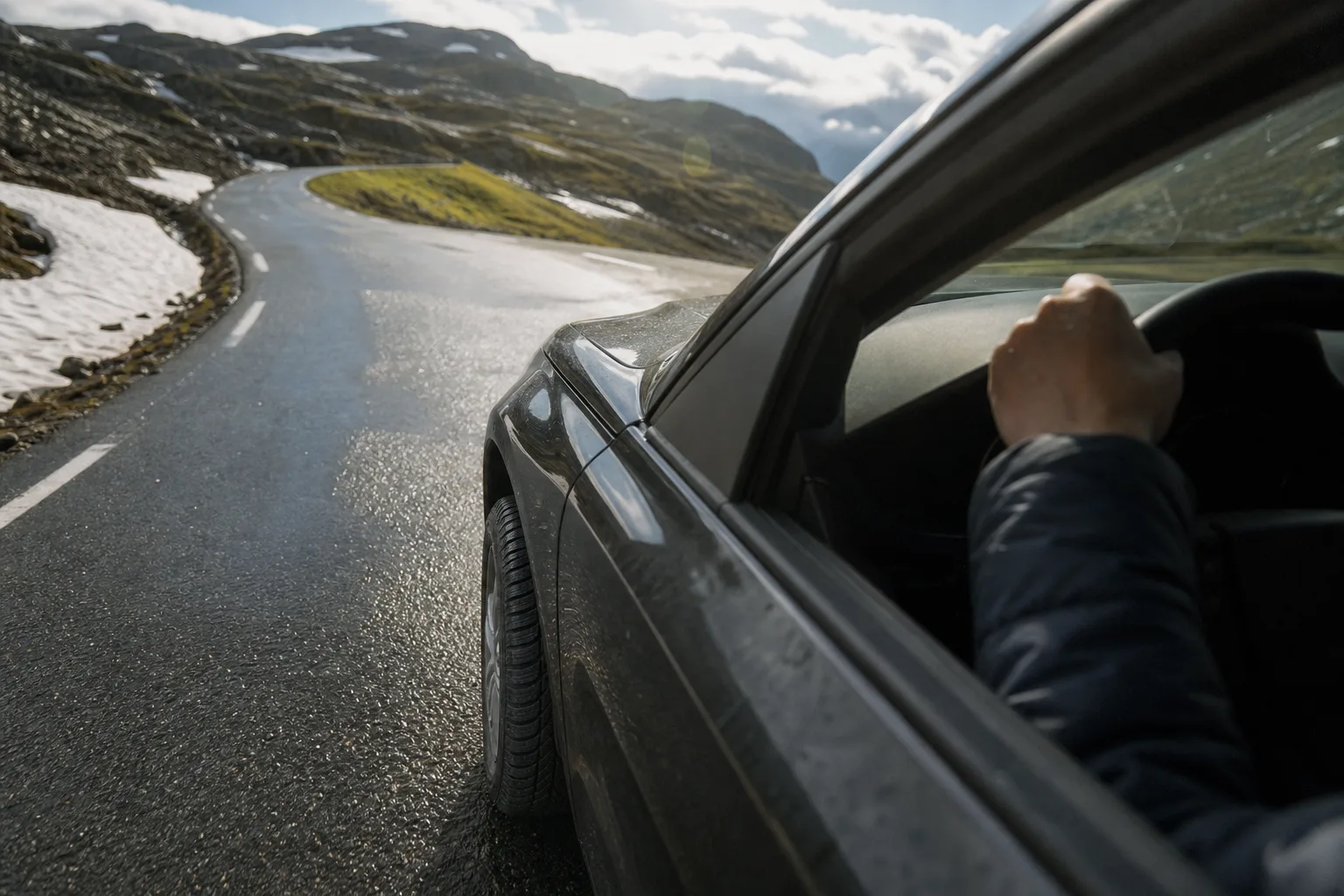
A controlled packed-snow test at an average of minus 2.5°C told a different story: the winter reference completed the course in 85.4 seconds and the best all-season in 86.3 seconds. Both managed the same 4.72-second snow-acceleration time from 5 to 35 km/h. Model choice remains critical. In ADAC wet testing, one all-season stopped from 80 km/h in just over 31 m while another was still travelling at 41 km/h at that point.
Calculate the honest break-even from mileage, tyre ageing, storage and two annual changes
Mileage alone cannot settle the bill because tyre age, winter tread needs and recurring workshop costs change the result.
- For all-seasons, annualise four tyres and fitting, then add rotation, repairs and earlier replacement when winter-capable tread runs out.
- For two sets, annualise eight tyres, second wheels, TPMS sensors and initial fitting, then add two yearly changes, storage, balancing and programming.
- For each set, use the earliest limit reached: wear mileage, safe calendar age or the tread depth required for the intended winter route.
Tested all-season wear projections have ranged widely, from about 41,400 km to 68,000 km among examples in ADAC’s 2025 test, with a 33,000 km example appearing in 2024. General guidance retires tyres after roughly eight to ten years regardless of tread, and hardening can become relevant after around six years of use. At 8,000 km a year, two sets might each cover only about 4,000 km annually and retain plenty of tread as they age.
| Driving pattern | Default choice | What changes the decision |
|---|---|---|
| Under about 8,000 km a year | Tested 3PMSF all-seasons in mild regions | Use two sets for ice, steep untreated roads or mountain duty. |
| About 8,000 to 15,000 km a year | All-seasons if paying for storage and both changes | Existing wheels, free storage and safe home changes make two sets competitive. |
| Above about 15,000 to 20,000 km a year | Two sets for regular long-distance use | The case strengthens with speed, loads, towing and cross-border winter travel. |
| Any mileage with alpine or Nordic duty | Specialist summer and winter sets | Regular chain or stud use, or compulsory travel, removes all-seasons from the shortlist. |
As a July 2026 German illustration, two workshop changes plus storage can add roughly €140 to €320 a year before TPMS extras. At 5,000 km a year that equals about 2.8 to 6.4 cents per kilometre, falling to about 0.9 to 2.1 cents at 15,000 km. A household storing and safely changing complete wheels at home can bring that recurring cash cost close to zero.
Where all-seasons are the better buy, and who should stop considering them entirely
All-seasons are the better buy for a mild-region driver who faces mostly cold rain, has limited storage and can delay the occasional journey during severe weather.
- Choose only a 3PMSF model with strong independent results in wet braking, aquaplaning and snow.
- Check the practical winter tread threshold for every planned route, rather than budgeting to the lowest local summer limit.
- Include replacement availability in the decision, since an uncommon model or size can be hard to source urgently out of season.
Rule out all-seasons for severe or unavoidable winter use
- Regular alpine passes, untreated steep roads or persistent snow cover.
- Nordic ice where friction winter tyres or legal studs are the appropriate tools.
- Work, care or emergency journeys that must continue during storms.
- Frequent hot-weather motorway travel with a full load, trailer or caravan.
- A vehicle whose approved load rating, wheel size or chain-clearance needs cannot be met by a suitably tested all-season.
Compare 3PMSF all-season tyres
Live prices from more than 20 shops, updated daily.
FAQ: October-to-Easter timing, tread depth, chains, TPMS, fitment and insurance
Is October to Easter a legal winter-tyre period?
No common European rule uses that period. Treat it as a planning reminder. Legal duties can depend on dates, weather, local signs or specific mountain areas.
Can I use an all-season tyre below 4 mm in winter?
Check the route’s law first. Austria requires 4 mm for qualifying radial winter use, while Sweden and Finland use 3 mm in relevant winter conditions. ADAC recommends replacing winter and all-season tyres below 4 mm for winter safety and aquaplaning reserve.
Do 3PMSF tyres remove the need to carry chains?
No. Local signs and national rules can still require chains to be carried or fitted. Check the handbook too, because some large-wheel combinations lack clearance for conventional chains.
Will a second wheel set need extra TPMS sensors?
Direct-TPMS vehicles can need a compatible sensor in every wheel plus relearning or programming. An illustrative German workshop charge is around €20 to €50 per vehicle, although some systems self-learn or accept cloned sensors.
Is matching the tyre size enough?
The nominal size alone is insufficient. Match the vehicle-approved load index, speed rating, wheel and axle application. Heavy vehicles, EVs, SUVs and towing setups can require XL or higher-load versions.
Will insurance reject a claim because I used all-seasons?
All-seasons alone do not invalidate cover when they are legal and correctly specified. Tyre illegality or a tyre-related safety failure can affect fault and own-damage recovery under national law and policy terms.
Final September decision: book the right setup before winter stock and fitting slots tighten
Write down the hardest winter route, check every country’s current rules, then price the full setup over its usable life. Buy tested 3PMSF all-seasons for flexible mild-climate driving with paid changeover costs. Book separate summer and winter sets for alpine, icy, loaded or compulsory travel, and secure the correct size and fitting slot in September.
This article was created using AI, following our team's editorial standards.


