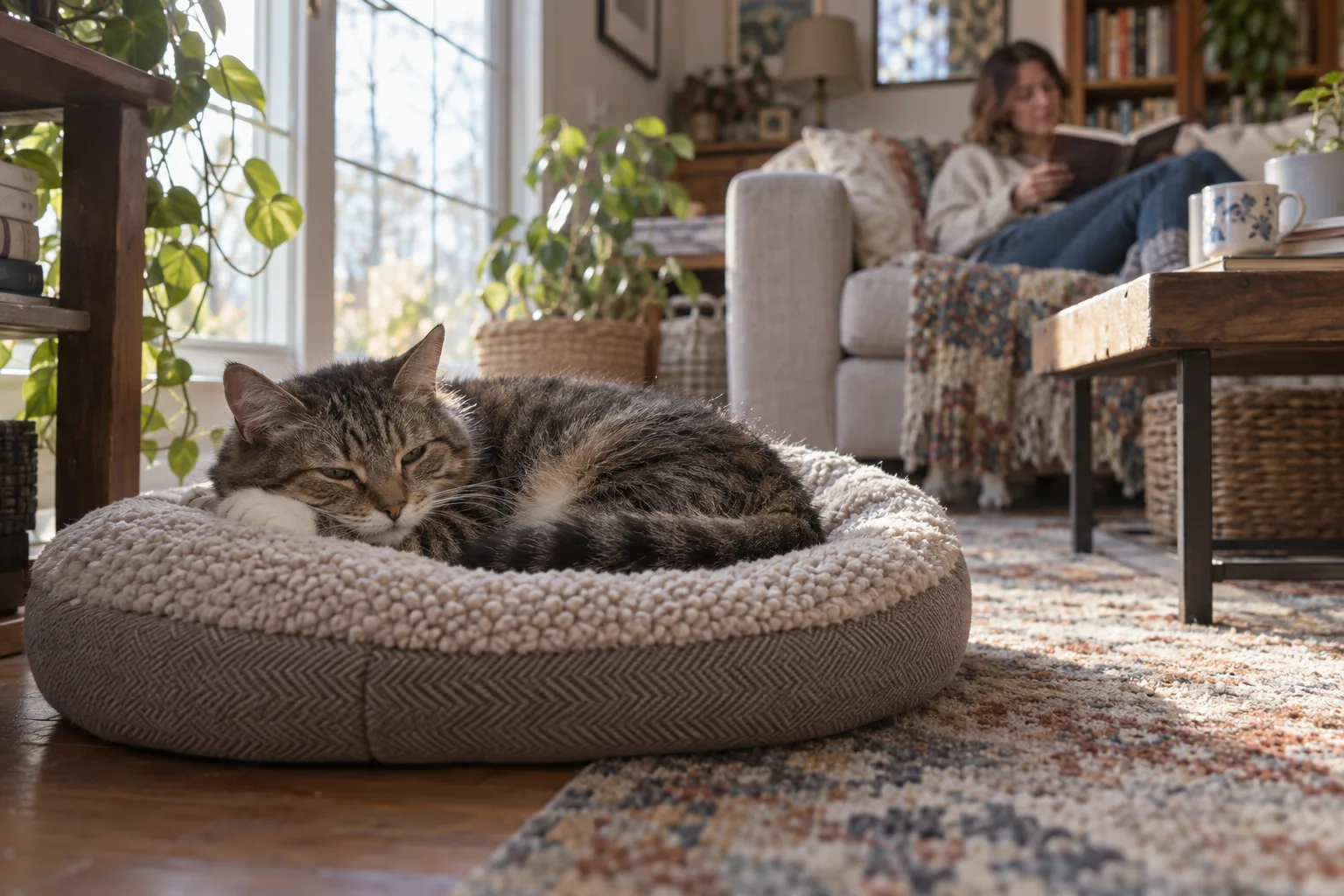


Before the leash comes off the hook, test the ground, check your car plan and lower the activity limit for any pet that struggles to breathe. This guide gives you hard-stop rules for walks, cars, cooling gear and the first minutes after heatstroke warning signs.
What you need this week: a cool-room plan, water access, your vet number and stricter limits for flat-faced pets
Set up the safe version of the day before your pet asks for a walk. In a heatwave, prevention is mostly boring: cool rooms, shade that lasts, water in more than one place, and a plan that removes judgment calls when everyone is hot and rushed.
- Save your vet or emergency clinic number in your phone and write it somewhere visible at home.
- Create one cool room with blinds or curtains closed during direct sun, water, access to hard flooring and a cooling mat if your pet uses one by choice.
- Put water in several shaded spots. For cats, a fountain can help, but keep a regular bowl as backup.
- Move walks to dawn. Use evening only after sunset and after the ground passes the seven-second test.
- Plan potty-only shaded trips for high-risk dogs during heat alerts.
- Leave pets at home if the destination does not allow them inside.
- Decide now that a parked car is off limits, including quick errands.
Dogs and cats cool mainly by panting, not by sweating through skin the way humans do. Dogs have sweat glands mainly in their paw pads, while cats also reduce activity, seek shade and groom to spread moisture on the coat. Hot, humid, still air makes that cooling less efficient.
Step 1: Walk at dawn, or after sunset only if the ground has cooled
In a heatwave, the safest walk is usually the one you move to dawn or replace indoors. UK VetCompass research found exertion or exercise triggered 74.2% of recorded canine heat-related illness events, compared with 5.2% for vehicle confinement. Cars remain a hard stop, but the everyday summer walk causes many cases owners do not expect.
- Use dawn or very early morning as the default walk window, before pavements and walls have stored the day’s heat.
- Treat late afternoon with caution. The day’s hottest air temperature is often around 3:00 p.m. to 5:00 p.m.
- Use evening only after sunset and after the pavement passes the hand test. Warm ground can lag behind cooler air.
- For flat-faced, senior, overweight, dark-coated, thick-coated or unwell pets, switch to potty breaks on grass or shade.
- Cancel running, cycling, ball-chasing and long normal walks during a heatwave. Use scent games, puzzle feeders and short training indoors instead.
Step 2: Use the seven-second back-of-hand test before paws touch pavement
The seven-second test is the fastest way to catch paw-burn risk before your dog finds it for you. Crouch down and place the back of your hand flat on the exact surface your dog would use for seven seconds. If you pull away, wince or feel discomfort, your dog should not walk there.
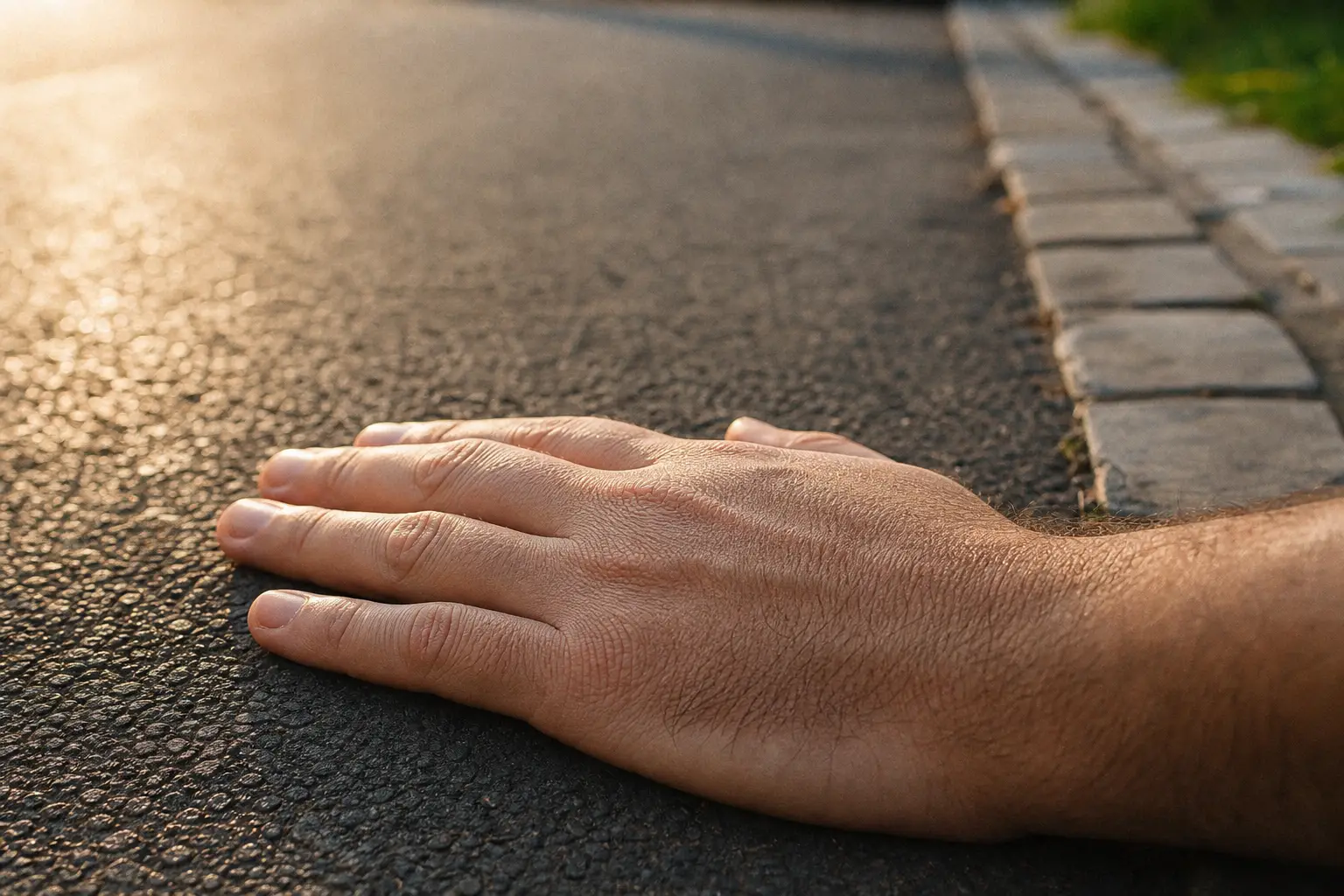
- Test black asphalt, pale paving, sand, artificial grass, metal grates and balcony flooring separately.
- If the surface fails, move to grass or shade, carry a small dog across the hot section, or postpone.
- Use dog boots only for unavoidable short crossings. They protect pads briefly but do not prevent overheating.
- After any hot-surface exposure, check for limping, paw lifting, refusal to walk, licking or chewing feet, darkened pads or blisters. Burned pads need veterinary advice.
Step 3: Keep pets out of parked cars and know the emergency call sequence in the U.S.
A parked car turns warm weather into an emergency faster than most errands can finish. Sun heats the dashboard, seats and trim, then the cabin traps that heat. A cracked window does too little. Heat safety data show the interior can rise by around 20°F in the first 10 minutes even with a window cracked, and testing has found that with outside temperatures below 86°F, a car in sun exceeded 122°F after half an hour.
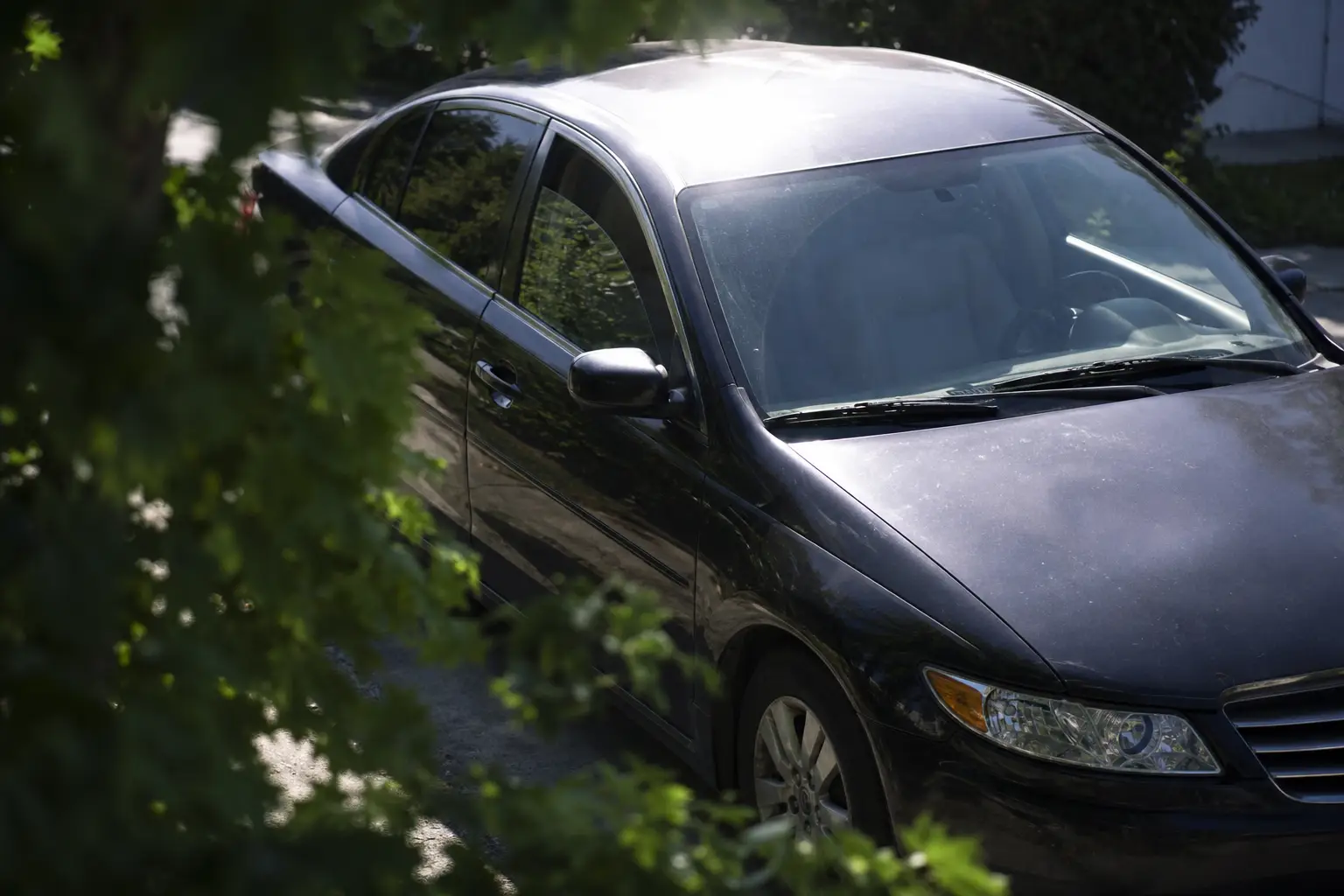
For dogs, the problem is harsher than human discomfort. Panting depends on moving cooler, drier air across the mouth and airways. In a hot enclosed cabin, especially after a walk, panic and humidity can make cooling fail fast.
- Call 911, local police or animal control first. Treat a distressed pet in a car as an emergency.
- Record the car, location, time, the pet’s condition and any attempts to find the owner.
- Ask nearby shops, cafés or venues to make an urgent announcement if it will not delay help.
- Follow police or dispatcher instructions.
- Damage a vehicle yourself only if the animal is in immediate life-threatening danger and help will not arrive in time. Be ready to explain why the action was necessary.
- United States: laws vary by state, but the safe default is to call 911, local police or animal control first and follow the dispatcher’s instructions.
- If you break a window, document the car, location, time, the pet’s condition and your attempts to find the owner.
- Ask nearby shops, cafés or venues to make an announcement if it will not delay help.
- Follow police or dispatcher instructions.
- Only break into the vehicle if the animal is in immediate life-threatening danger and help will not arrive in time. Be ready to explain why it was necessary.
Step 4: Set up shade, water and escape routes for cats, balconies and hot apartments
Home safety depends on where the sun will be later, not where it is now. A balcony corner shaded at 09:00 can be a hot plate by mid-afternoon, and sheds, garages, greenhouses and sunrooms can trap cats before anyone notices.
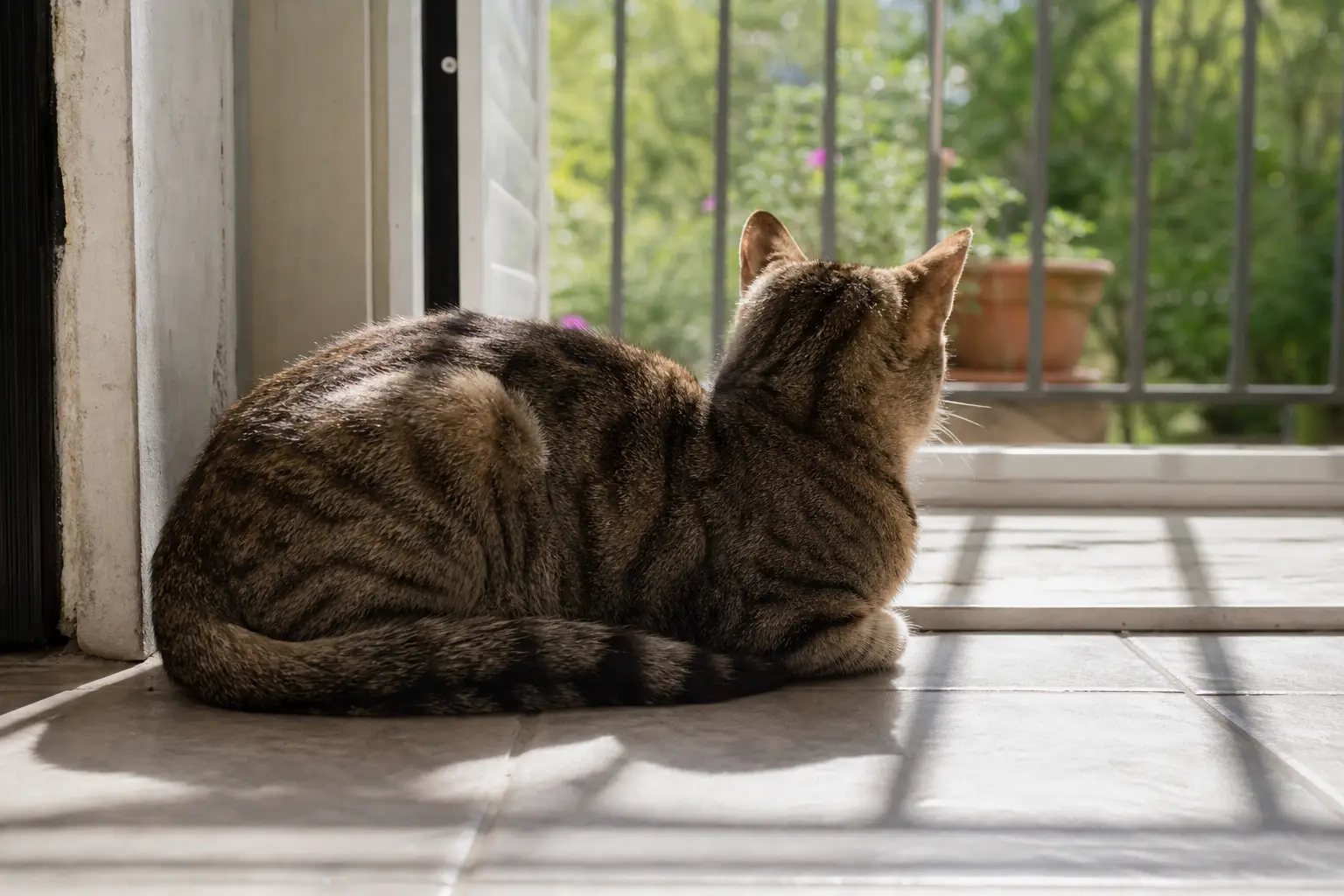
- Check the sun path across balconies, patios and yards. Use shade sails, screens, umbrellas or indoor access, then re-check in the afternoon.
- Do not leave pets shut on balconies during heatwaves. Hard flooring can heat like pavement, and a single umbrella can move or blow over.
- Use heavy or stable water bowls that cannot tip easily. Place them in shade, away from direct sun through glass.
- For cats, check cupboards, sheds, garages, greenhouses and sunrooms before closing doors.
- In apartments without air conditioning, close blinds during direct sun, ventilate when outside air is cooler, and give access to hard floors, water and a voluntary cool mat.
Step 5: Use cooling mats, vests, fountains and frozen treats without letting gear overrule safety
Good heatwave gear supports a safer plan; it does not create one by itself. Buy for fit, cleaning and supervision before color, novelty or claims that sound too easy.
| Gear | Where it helps | How to use it safely | Skip or stop if |
|---|---|---|---|
| Cooling mat | Home, crates with open choice, travel breaks, cats or dogs that choose cool floors | Choose a size that fits most of the body, place it in shade, check for leaks, clean it often | The pet chews it, it leaks, or the animal cannot move away |
| Evaporative cooling vest | Brief necessary outings in dry or breezy conditions | Soak and wring as instructed, check chest and neck fit, use with airflow | It dries out, feels warm, rubs, causes distress or is used to justify a hot walk |
| Cat water fountain | Cats that ignore still bowls or drink more from running water | Clean the pump and bowl, replace filters as directed, route cables away from chewers | You cannot keep it clean or you have no backup bowl |
| Frozen treats and ice cubes | Indoor enrichment when walks are skipped | Use pet-safe ingredients and supervise chewing | The pet is vomiting, collapsed, unable to swallow or suspected of heatstroke |
| Balcony or garden shade kit | Patios, yards and hot rooms with direct sun | Use stable shade that remains through the day, plus water and indoor escape | Shade moves by midday or traps the pet in still hot air |
Compare pet cooling mats, vests and cat fountains
Live prices from more than 20 shops, updated daily.
If heatstroke is possible: recognize the signs and start cooling before the drive
Heatstroke warning signs call for action in the first minutes, even if you are already reaching for the car keys. Start cooling, call the vet or emergency clinic, then travel in a cooled, ventilated vehicle while cooling continues.
- Dogs, early overheating: heavy panting, shade-seeking, whining, reluctance to continue, drooling, noisy or fast breathing, red gums or tongue, fast heartbeat, tremors or spasms.
- Dogs, emergency signs: excessive panting or drooling after stopping, difficulty breathing, vomiting, diarrhea, especially bloody diarrhea, weakness, wobbliness, confusion, collapse, seizures or unconsciousness.
- Cats: panting or fast breathing, abnormal gum color, drooling, vomiting, diarrhea, weakness, confusion, wobbliness, collapse, seizures, blindness or unconsciousness. Panting in a cat deserves urgent attention.
- Stop all activity and move the pet to shade, a cool room or a cooled vehicle with ventilation.
- Pour water cooler than body temperature over the body. Use what is available rather than delaying for the perfect temperature. For a cat, keep water away from the nose and mouth.
- Focus on the neck, belly, thighs and body. Avoid pouring over the head if the dog is struggling to breathe. Wet thick coats down to the skin.
- Use airflow from a fan, open doors or open windows to increase evaporation.
- Use a wet towel underneath the pet. Covering the body with damp towels can trap heat, so re-wet and reposition if you use towels at all.
- Offer small amounts of water only if the pet is conscious and able to swallow. Never pour water into the mouth.
- Call the vet urgently. Heatstroke can cause internal damage even if the pet seems brighter after cooling.
Mistakes that make heatwaves riskier: shaved double coats, wet towels over pets and “just five minutes” exceptions
Most heatwave mistakes start with making one exception to a rule that was sound. The risky part is often familiar: the normal walk, the quick store stop, the balcony your cat likes, or the fur trim that seems helpful.
- DIY shaving a double coat: a clean, unmatted coat can protect skin from sun and slow heat gain. Mats and impacted fur trap heat, so brush and deshed first. Ask a vet or groomer if the coat is matted, very heavy or medically problematic.
- Wet towel over the body: damp towels can trap heat. Use water plus airflow, or place a wet towel underneath and keep it cool.
- Five minutes in a car: no short errand, cracked window, shade space, water bowl or familiar route makes a parked car safe on a warm day.
- Remote climate control or Dog Mode: useful only if active, visible and monitored, with no long stops. Technical faults and uneven cabin temperatures still matter.
- Boots as a heatwave solution: they may protect paw pads during brief unavoidable crossings. They do nothing for rising core body temperature.
- Cooling products as permission to walk: mats and vests are prevention aids. Remove a vest if it dries, warms up or causes distress.
FAQ: quick answers on hot walks, cat panting, cracked windows and cold-water cooling
Is 72°F to 77°F already risky for dogs?
It can be, depending on humidity, sun, pavement temperature, breed, age, weight, health and how used to heat the dog is. A flat-faced dog on warm pavement has a much lower margin than a lean dog resting in shade.
My dog begs for a walk. What should I do instead?
Give a short shaded potty trip, then spend the walk time on scent games, scatter feeding, puzzle toys or easy training indoors. Desire to go out is not a reliable safety signal.
Is cat panting ever normal?
A brief pant after stress may settle quickly, but do not wait if it continues or comes with drooling, weakness, wobbliness, abnormal gums, vomiting or collapse. Cats often hide illness, so panting deserves a low threshold for veterinary advice.
Can I use cold tap water on an overheated dog or cat?
Yes. Current emergency guidance supports rapid cooling with water cooler than the pet’s body temperature. Do not delay because the tap water feels cold. Avoid ice baths as a default home method, and do not force drinking.
Does cracking the car window help if I can see the vehicle?
It does not make the cabin safe. If pets cannot come inside at your destination, leave them at home or have another person stay with them outside the car in a cool, shaded place with water.
Verdict: the rules that matter this week
Use the seven-second ground test, walk at dawn or after sunset only when the surface has cooled, and keep every pet out of parked cars. Give flat-faced dogs and cats stricter limits, set up shade and water before the hottest hours, and if heatstroke signs appear, start cooling immediately and call the vet.
This article was created using AI, following our team's editorial standards.