

The light that looks charming in July has to earn its place in October, after shorter days, rain, frost and dirty solar panels have had their say. This guide shows the specs that predict a second summer: power source, battery, panel, IP rating, materials, cable and light warmth.
Start with the October test: ambience, path safety or socket-free balcony light
Choose the job before the shape, because a lamp bought for atmosphere can fail badly as a safety light. A dim lantern on a dinner table is fine. A step, gate or path edge needs repeatable light on wet evenings.
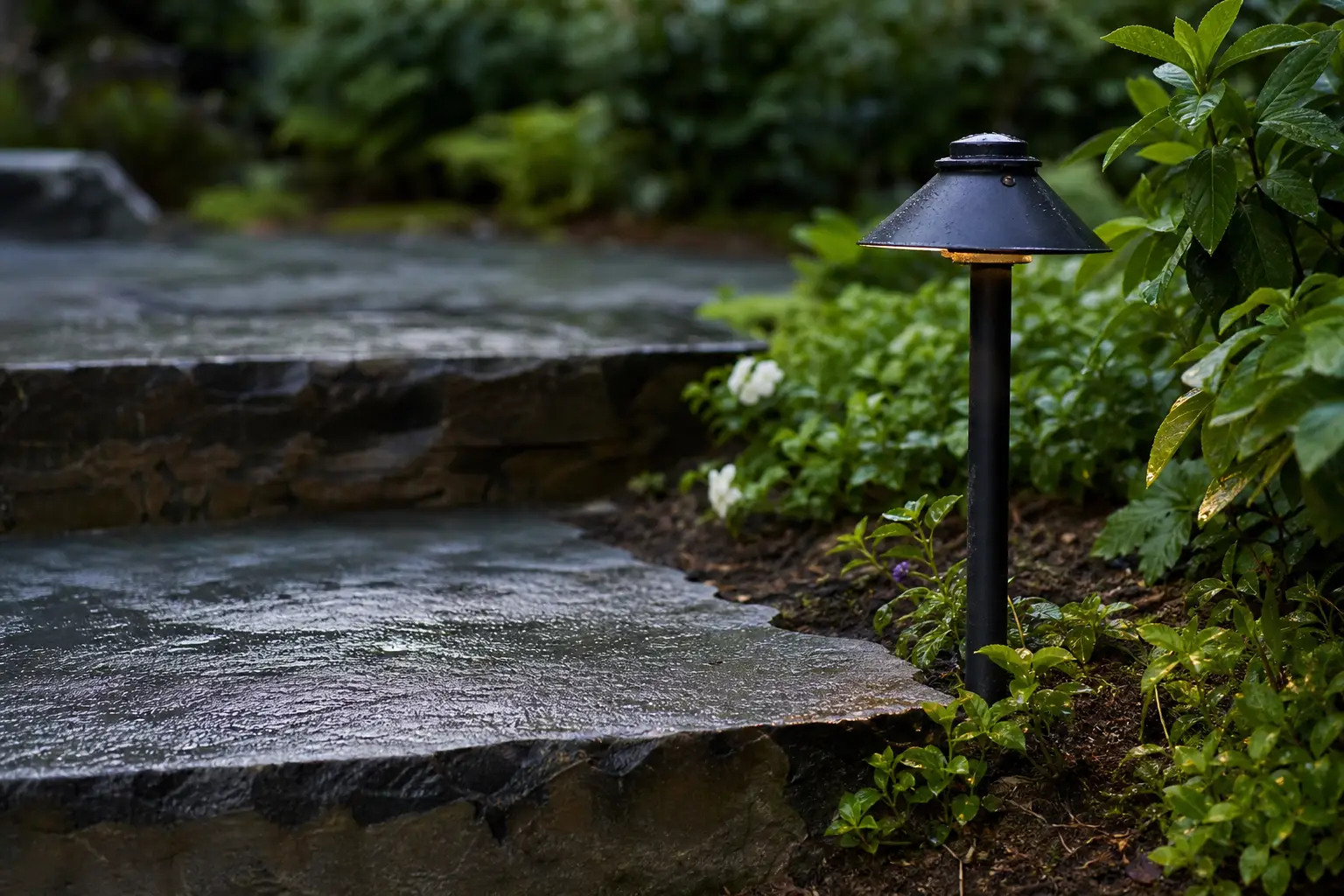
- For ambience, choose warm, low-output lanterns, fairy lights or festoon strings. Runtime and glare matter more than brightness.
- For path orientation, use several low lights aimed downward. Roughly 5 to 50 lm per light can be enough if placement is sensible.
- For step safety through winter, favor low-voltage wired lighting where a safe outlet and transformer can be used.
- For balconies without outlets, solar only works with real sun. USB-rechargeable table lamps are often the calmer choice for shaded spaces.
- For security or entrance lighting, decorative solar stakes are usually the wrong product. Look for purpose-made outdoor fixtures and safe power.
Solar, low-voltage plug-in or USB rechargeable: pick the power source that still works in your space
The right power source is the one your balcony, patio or path can feed every week, including dull weeks. July hides weak systems because days are long and the sun is high.
- Solar suits sunny railings, planters, garden borders and decorative spots where wiring is impossible. A separate or tiltable panel is more credible than a tiny flat panel built into the lamp top.
- Low-voltage plug-in systems, usually 12 V or 24 V, suit paths, pergolas and regular evening use. They need cable planning and an outdoor-suitable transformer, yet they give steadier light.
- USB-rechargeable lamps suit renters and balconies with poor sun. They work well for 2 to 6 hour evenings, as long as you accept manual charging.
- Line-voltage plug-in string lights can be bright and consistent, but the plug, transformer, connectors and cable all need outdoor suitability. Use GFCI protection where local rules require or recommend it.
Why cheap solar lights fade by October: batteries, watt-hours, panel size and replaceability
Most weak solar lights run out of energy before they run out of LEDs. The usual recipe is a tiny panel, a small rechargeable cell, a sealed housing and a runtime claim based on perfect summer sun.
Read battery capacity as energy, not as a big mAh number. The useful formula is Wh = V × Ah. A 600 mAh cell at 1.2 V stores about 0.72 Wh, while 600 mAh at 3.2 V stores about 1.92 Wh.
- NiMH cells are common in low-cost solar stakes. They are cheap and tolerate simple charging, but daily cycling, heat under the solar cap and age can reduce capacity.
- Li-ion cells can power brighter, slimmer lamps, but they need protection electronics and dislike deep discharge, overheating and moisture.
- LiFePO4, often written as LFP, is a better premium solar chemistry when genuinely used. It has safer thermal behavior than many lithium-ion chemistries and a useful 3.2 V cell voltage.
- Replaceable cells matter. A lamp with an accessible standard rechargeable cell can often be revived. A sealed unknown pack usually turns a battery failure into a whole-lamp failure.
- Red flags include no chemistry, no voltage, no capacity, no battery door, a non-standard sealed pack, or any suggestion that an alkaline battery can go into a charging solar circuit.
Panel size and placement are the other half of the energy budget. Listings that state panel wattage, charging time in sun and runtime for a specific mode deserve more trust than ones that only say “solar powered”. Glass-covered panels usually age better than soft plastic faces that haze or scratch. North-facing balconies, covered porches and panels behind glass rarely feed all-night lights reliably.
What IP44, IP65 and IP67 really mean after rain, frost and dirty winter water
An IP code explains the enclosure test against solids and water; the rest of winter durability comes from design and materials. The first digit covers solids and dust. The second covers water.
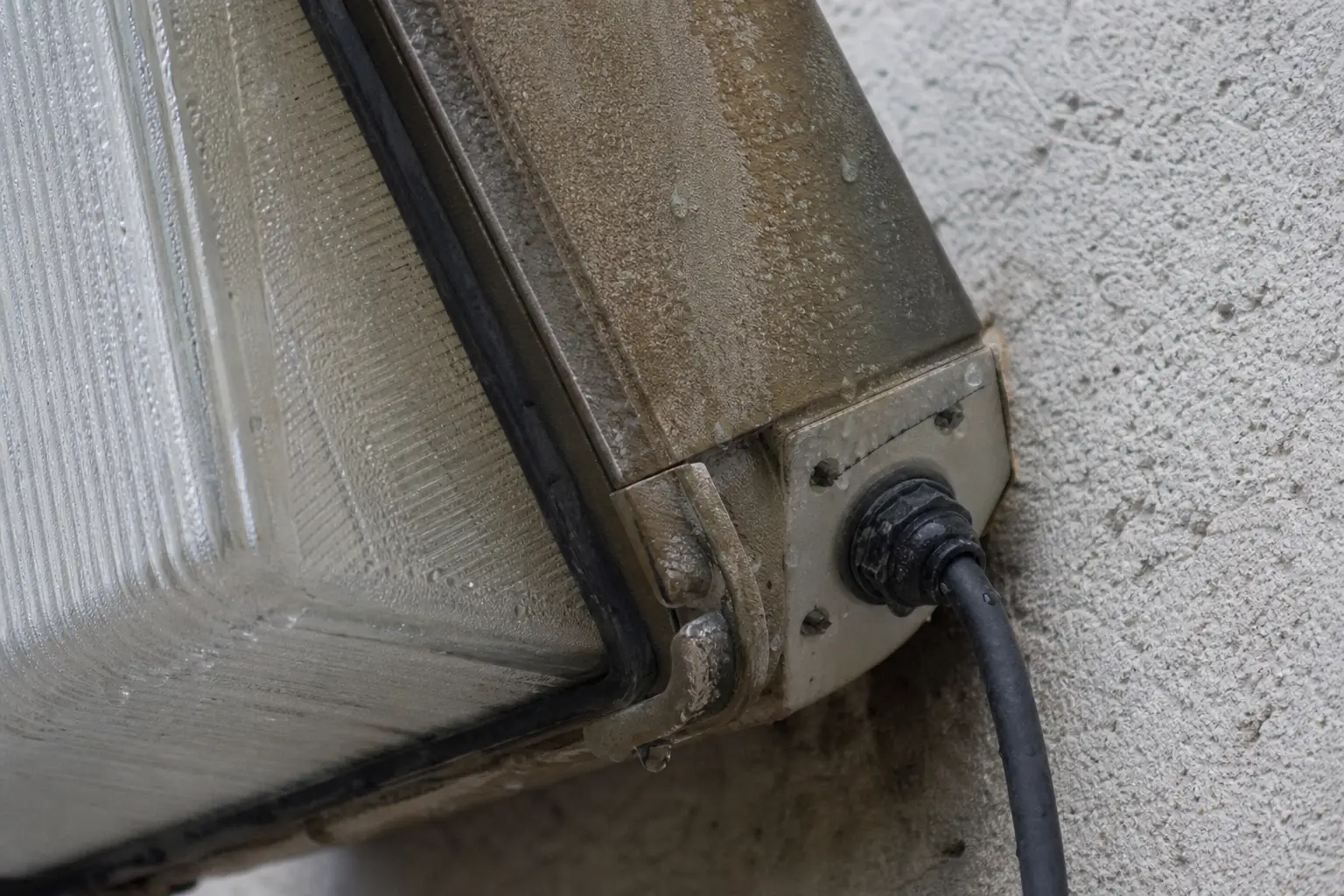
- IP44 means protection against objects over 1 mm and splashing water. Use it for sheltered balconies, covered pergolas and seasonal decoration.
- IP54 or IP55 improves dust and water resistance. Still check connector position, cable entry and whether water can sit around the fixture.
- IP65 is a sensible target for exposed balcony strings, path lights and garden lamps left out year-round. It means dust-tight and protected against water jets.
- IP67 helps where temporary immersion can happen, such as low fixtures hit by pooling water. It does not guarantee good condensation control, frost resistance or long cable life.
- IP68 only matters if the maker specifies continuous submersion conditions. Most balcony and garden lights do not need it.
IP tests use controlled conditions. Real patios add fertilizer, dirt, salt air in coastal areas, chlorinated water, freeze-thaw and UV. The battery door, cable strain relief and screw quality can fail long before the LED.
Materials that survive UV and freeze-thaw: plastic, metal, glass and seals worth paying for
Material choice decides whether the lamp still seals, charges and stands upright after UV and freeze-thaw. Thin unlabelled plastic is where many cheap lights lose the second season.
- Good plastic exists. UV-stabilized polycarbonate can be light, tough and shatter-resistant, which helps on windy balconies.
- Weak plastic shows up as brittle stakes, cloudy solar covers, cracked battery doors and diffusers that yellow.
- Powder-coated aluminum, stainless steel, glass diffusers and replaceable seals are better signs for exposed lamps.
- Metal still needs judgment. Thin painted steel can rust, zinc alloy can pit and aluminum needs a decent coating. Coastal and salty locations are harsher.
- Glass resists UV haze and looks good, but it breaks. For festoon bulbs over a hard patio, shatterproof polycarbonate can be more practical.
String lights that last: the cable, connector and bulb specs to check before LED count
A string light’s survival is usually written in the cable and connector lines; LED count tells you far less. The weakest point is often a wet socket, brittle cable, strained joint or sealed failed bulb.
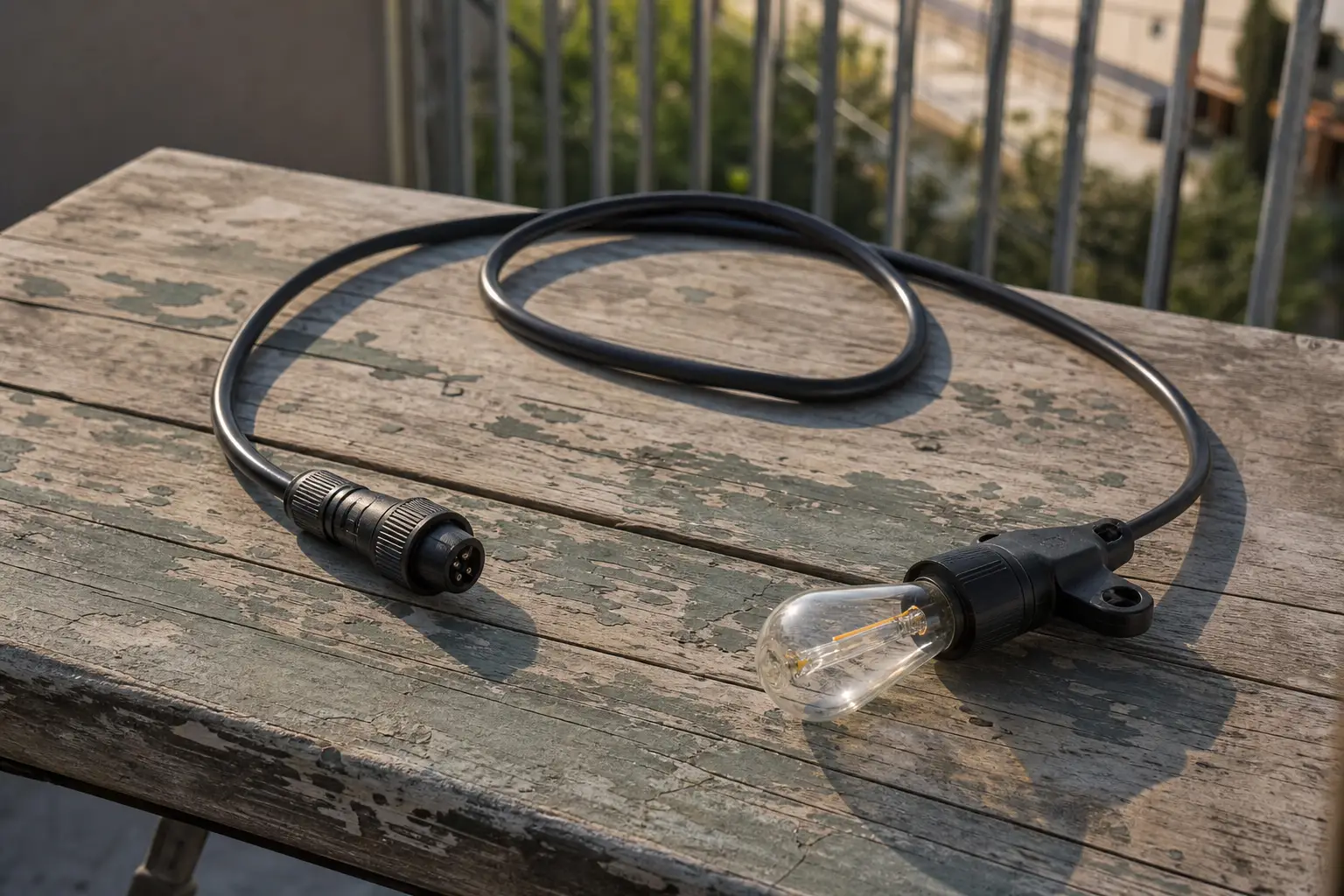
- IP rating for the entire set, including connectors, transformer and plug area.
- Rubber cable, or a clearly stated outdoor-rated cable. H05RN-F is a light-duty rubber flexible cable. H07RN-F is heavier and a strong durability signal for long outdoor festoon runs.
- Replaceable bulbs with standard bases where available, plus spare bulbs you can actually buy.
- Maximum wattage per socket and maximum number of connectable sets. Do not guess or daisy-chain beyond the listing.
- Lead length from plug or transformer to the first bulb, so the power connection can sit in a safe place.
- Hanging loops or a support wire. Long runs should not hang from the electrical cable alone.
- Warm CCT stated in K and a warranty or parts route for bulbs, drivers or controllers.
Non-replaceable micro-LED fairy strings are close to disposable. They can be fine for a shrub, party or rented balcony rail, but one corroded joint or failed sealed battery box usually ends the set.
Warm, low and neighbor-friendly: color temperature, brightness, direction and timers
Warm, low-level light is easier to live with on shared balconies and dense patios. Responsible outdoor-lighting guidance commonly favors 3000 K or lower for home use.
- 2200 to 2700 K gives a candle or filament feel and suits evening seating.
- 2700 K is the safe cozy warm white for most patios and strings.
- 3000 K is still warm white, but can feel more practical than romantic.
- 4000 to 6500 K often feels harsh outdoors and can draw complaints if it spills into windows.
- Direction matters as much as Kelvin. Aim light downward, use shades or diffusers, dim late and avoid flashing modes at night.
- Timers help. All-night decorative lighting is rarely needed on a balcony or small patio.
The honest shortlist: what is worth $25, what is worth $85, and when neither is worth it
A $25 outdoor light is fair when it is bought as seasonal ambience with modest claims. An $85 light earns its price only when the listing shows better hardware, repairability or power consistency.
| Spend | Worth buying | Spec lines that justify it | Walk away if |
|---|---|---|---|
| Around $25 | Decorative solar lantern, stake light or short railing string for summer glow. | Replaceable AA or AAA rechargeable cell, IP44 for sheltered placement, warm light around 2700 K or lower. | The listing promises all-night brightness with no battery, panel or IP details. |
| Around $85 | Better solar lamp, USB or solar balcony lamp, durable festoon set or entry low-voltage kit. | IP65 for exposed use, named battery chemistry and capacity, larger or remote panel, metal/glass or UV-stabilized housing, rubber cable or replaceable bulbs where relevant. | The extra money buys only app control, RGB effects or styling. |
| Neither | Use another system: USB-rechargeable for shaded balconies, low-voltage wired for winter steps, professional outdoor power for high output. | Safe power route, GFCI protection where required, low glare and parts support. | You need reliable safety light from decorative solar, or you plan to run an indoor extension cord outdoors. |
Small plug-in LED setups usually cost little to run compared with replacing failed solar lights every year. If a safe outdoor outlet exists, a low-voltage kit can be the better long-term buy for paths and regular patio use.
Compare outdoor solar lamps, string lights and path lights
Live prices from more than 20 shops, updated daily.
Common mistakes and FAQ: waterproof claims, shaded balconies, dead cells, extension leads and winter storage
These common mistakes are where cheap outdoor lighting becomes waste, nuisance or a safety problem. The small print matters most at the plug, battery door and cable entry.
Can I leave outdoor lights outside all winter?
Only if the rating and construction suit that exposure. For cheap IP44 seasonal sets, winter storage is often kinder: clean the panel, dry the housing and follow the maker’s battery-storage instructions. Do not put wet battery boxes into sealed containers.
Do solar lights charge behind balcony glass?
Usually poorly. Glass, shade, overhangs and low winter sun reduce the energy reaching the panel. A remote panel on a sunny railing or a USB-rechargeable lamp is a better plan for covered balconies.
Is “waterproof” the same as IP65?
No. Waterproof is vague unless the listing gives an IP code and says which parts it covers. Check the lamp, connector, plug, transformer and controller separately.
Can I replace a dead solar cell with a normal alkaline battery?
No. Use the correct rechargeable chemistry, voltage and size stated by the manufacturer. Alkaline cells are not made for charging and can leak or damage the light. Recycle dead batteries and lamps through the proper electronics and battery routes.
Can I run an indoor extension cord through a window to power balcony lights?
Do not use that as a permanent solution. The cable can be crushed, water can reach the outlet, and the route creates trip and strain risks. Use a proper outdoor power point, a low-voltage kit with a safe transformer location, or portable rechargeable lamps.
Are late-summer clearance outdoor lights worth buying?
They can be, if the discounted product still has the right IP rating, cable spec, replaceable bulbs or cells, and spare parts. Clearance shelves also contain many weak seasonal sets, so buy the specification rather than the discount.
Choose solar only where the panel gets real sun and the battery can be replaced or clearly specified. Spend around $25 for a soft summer glow you can live without. Spend around $85 when it buys IP65 exposure rating, better battery and panel hardware, UV-stable materials, rubber cable or replaceable parts. For shaded balconies, winter steps and high-output lighting, skip decorative solar and choose rechargeable portable lamps, low-voltage wired lighting or a proper outdoor power solution.
This article was created using AI, following our team's editorial standards.