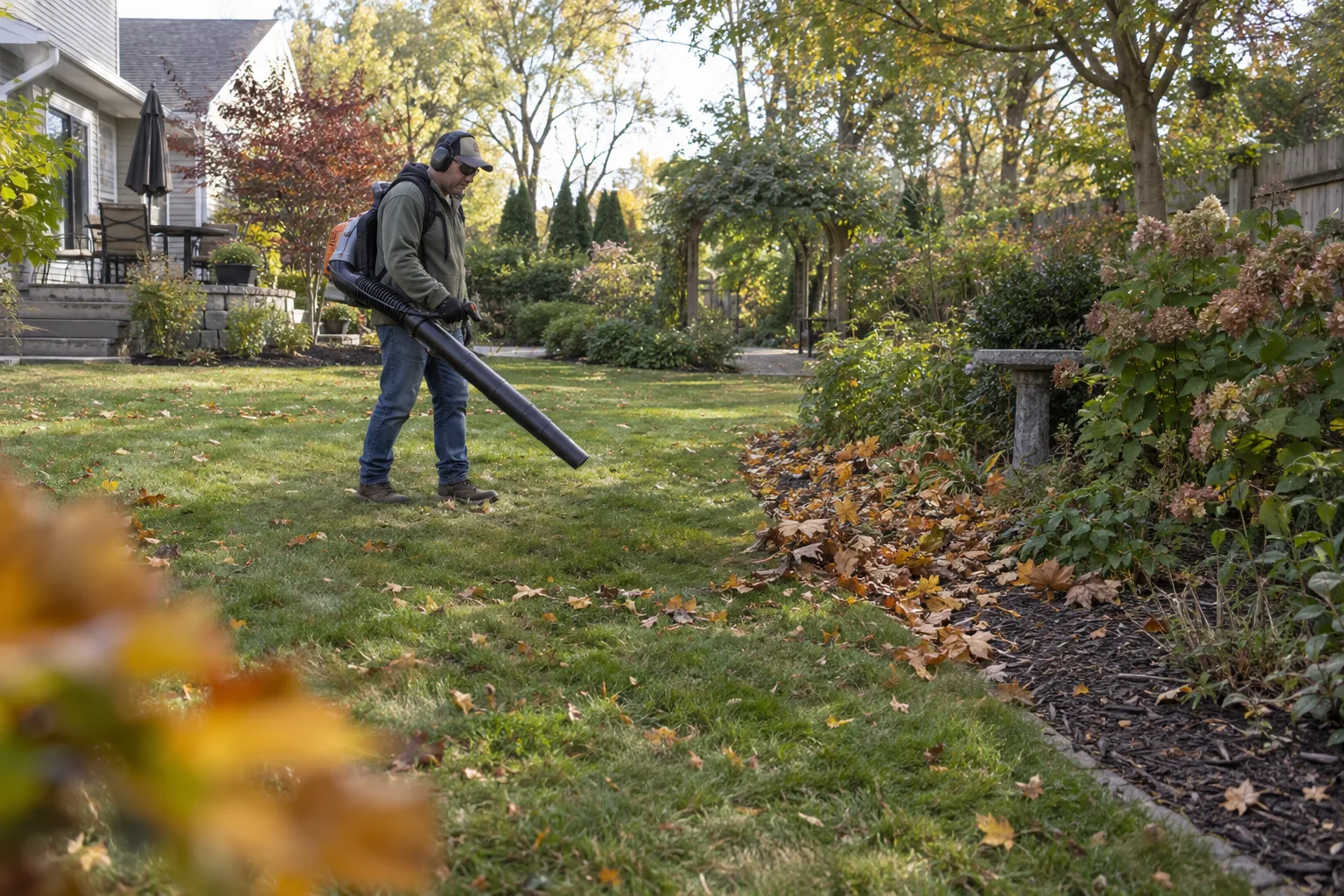


Check the forecast, soil and likely frost date before buying anything. For a cool-season lawn, go ahead only if you have 4 to 6 useful growing weeks, soil above about 45°F and a way to water when rain fails.
Early autumn gives seed warm soil, lower annual-weed pressure and two cool growing periods before summer heat. Spring-sown grass gets a shorter run before weeds, drought and high temperatures arrive.
Before starting: gather the kit and make the site safe
Allow one suitable working session for preparation and sowing, followed by three weeks of close watering checks. The job is moderate rather than technically difficult, but diagnosis and timing decide whether the seed survives.
- A spring-tine rake for light debris, or a scarifier for measured excess thatch on a larger lawn.
- A spreader with adjustable flow for applying weighed seed and fertilizer evenly.
- Grass seed chosen for the lawn’s actual wear, shade and moisture conditions.
- A plain, seed-safe autumn fertilizer or starter product. Avoid products containing weedkiller, pre-emergent or moss-killing pesticide unless the label explicitly permits seeding at the same time.
- A mower, scales for weighing seed and a hose or sprinkler that produces a fine spray.
- Set the local sowing deadline.
- Identify dormancy, death, moss, compaction or dry patch.
- Wait for active growth, then mow and prepare the surface.
- Scarify or aerate only where the diagnosis supports it.
- Weigh, spread and firm the correct seed.
- Apply a compatible fertilizer if the lawn needs it.
- Manage water closely for three weeks, then prepare for the first cut.
Confirm the repair window before buying
September is the main opportunity across many temperate regions, but local growing conditions set the deadline. Aim to give seedlings 4 to 6 weeks before a likely hard frost or sustained halt in growth, with soil remaining at least about 45°F.
- Cold northern or continental areas: the useful window can run from mid-August to mid-September.
- Temperate inland areas: late August through September is common, with late September becoming progressively riskier.
- Mild maritime areas: September and sometimes early October can work if soil stays warm and leaf fall doesn’t smother seedlings.
Proceed only when the soil is moist without being saturated, existing grass has resumed growth and irrigation is available. Early-autumn rain helps, but alternating wet and dry spells can kill germinating seed.
Diagnose summer damage first
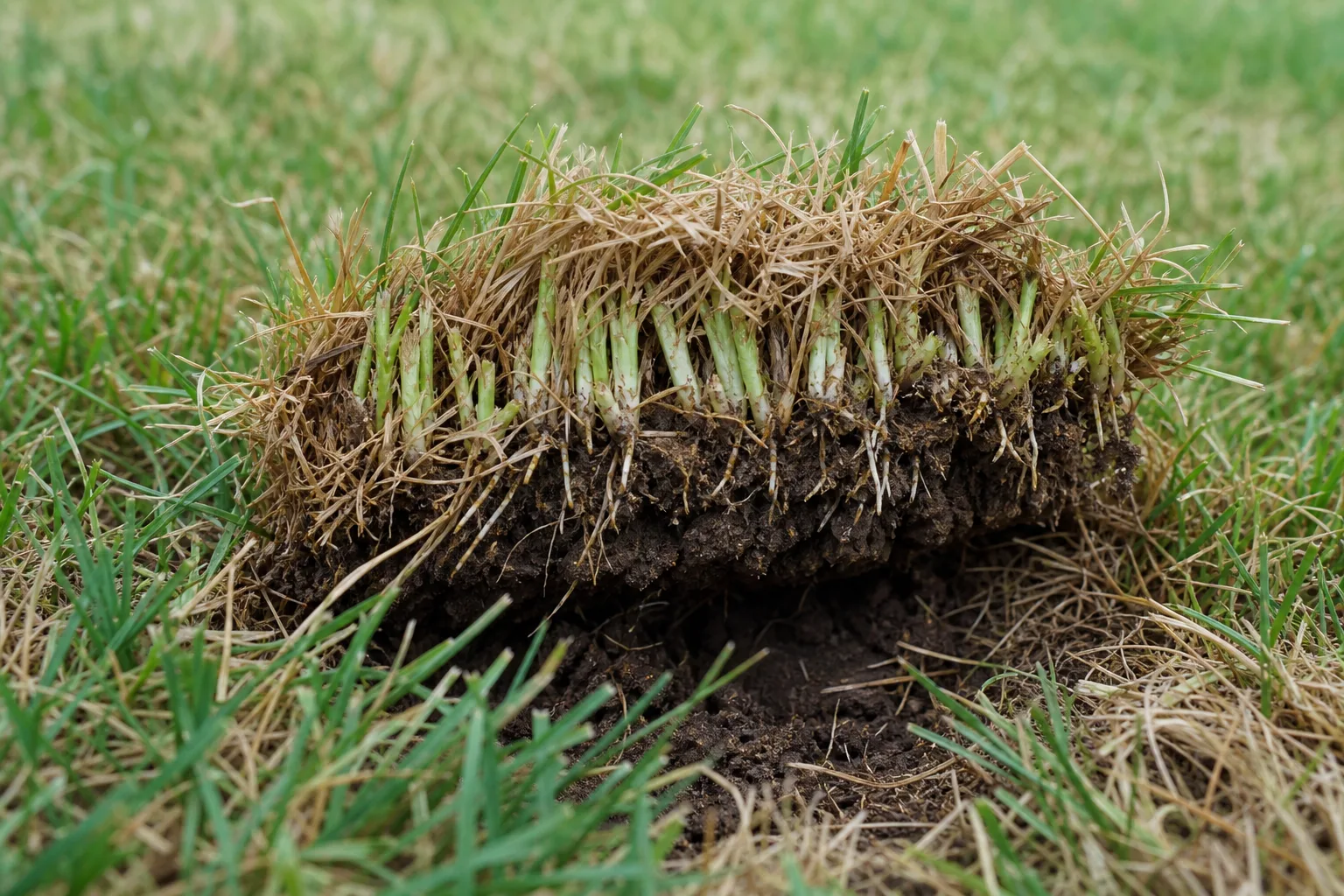
Inspect the crowns, roots and soil before reaching for the rake. Brown leaves alone don’t prove that grass is dead.
| Problem | How to recognize it | Response |
|---|---|---|
| Drought dormancy | Broad browning after hot, dry weather. Crowns at soil level remain firm, pale or green. | Rewet and wait for cooler conditions. Avoid mowing, feeding or power-raking dormant turf. |
| Dead turf | Patches stay straw-brown after nearby grass revives. Crowns are crispy, hollow, rotten or mushy. | Remove loose dead material, identify the cause and reseed. |
| Moss | A low, soft green mat among sparse grass, often in damp or shaded ground. | Correct shade, wetness, low fertility, close mowing or compaction before removal. |
| Compaction | Thin grass follows paths or play areas. Moist soil stays hard, roots are shallow and rain puddles. | Use hollow-tine core aeration and reduce traffic on wet soil. |
| Hydrophobic dry patch | Water beads or runs off while soil below stays dry. | Aerate and rewet gradually. Seed will fail until water reaches the root zone. |
Rewet one representative brown area, then lift a small wedge. Firm pale, white or green crown tissue has recovery potential. Crispy, empty or rotting crowns are dead. If most crowns are alive, leave them in place and allow the lawn time to respond.
Prepare without stripping healthy turf
Mow only after growth resumes, then remove the minimum material needed to expose points of soil contact. For a typical utility lawn, 2 to 2.5 inches is a sensible preparation height.
- If the lawn is long, reduce the height over successive cuts and remove no more than roughly one-third of the blade each time.
- Collect heavy clippings and leaves. Don’t mow brown, dormant turf to force the schedule.
- Cut a wedge and measure the springy brown layer between vegetation and mineral soil. Up to about 1/2 inch is usually useful. Above 1/2 inch can justify management where water or roots are restricted, while around 1 inch clearly calls for mechanical removal or staged renovation.
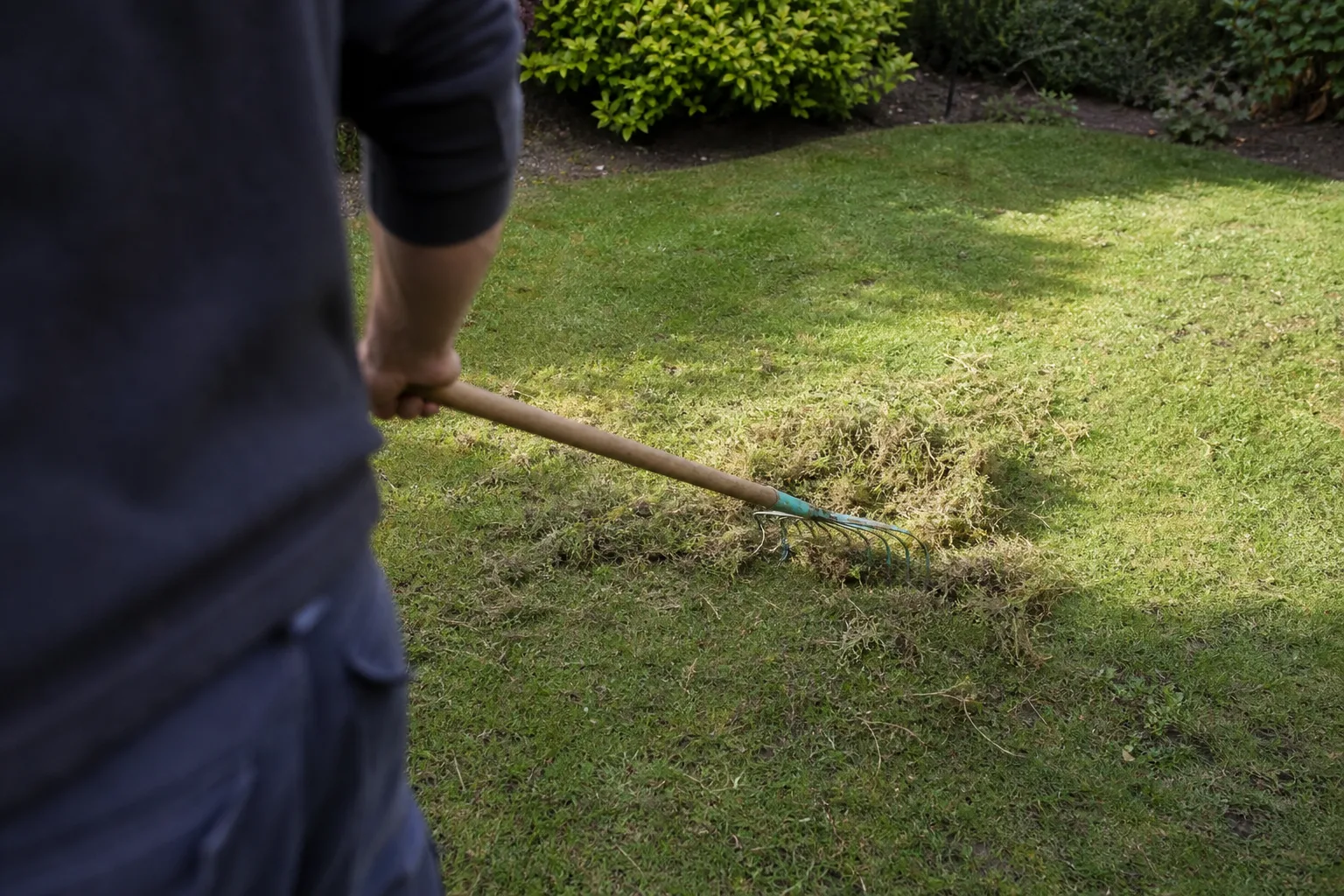
- Use a spring-tine rake for isolated moss and loose debris. Start a powered scarifier at its shallowest setting and test a hidden strip. Deep passes can cut live crowns.
- For compaction, hire or use a hollow-tine core aerator. Spring tines and solid spikes don’t remove soil cores.
- Rake bare patches until the surface is friable, clear loosened debris and leave aeration plugs to dry and crumble. The finished surface should be firm, with many places where seed can touch soil.
Skip scarifying if the lawn is drought-dormant, badly rooted, waterlogged, frosty or already close to the sowing deadline. On very wet, shaded maritime sites, aggressive autumn moss removal can leave weakened grass that moss recolonizes through winter.
Overseed for the lawn’s real use
Choose the mixture by wear, shade and summer moisture, then use the verified overseeding rate printed on the bag. A fast-growing mix that differs from the existing lawn can leave permanent patches in another color or texture.
- Children, dogs and frequent foot traffic: favor turf-type perennial ryegrass or tall fescue. Ryegrass establishes quickly; tall fescue brings useful wear and drought tolerance.
- Hot, dry summers or limited irrigation: favor turf-type tall fescue. Fine fescues suit lower-use areas but suffer under heavy traffic while drought-stressed.
- Partial shade and low input: choose regionally suitable fine fescues such as Chewings, hard or creeping red fescue. Avoid ryegrass-dominated mixtures in substantial shade.
- Sunny, irrigated fine turf: regional Kentucky bluegrass blends or ryegrass and bluegrass mixtures can work, with greater water, feeding and thatch management.
- Dense shade or chronic wetness: stop buying grass seed. Improve light or drainage, or change to a suitable groundcover.
Useful overseeding checks are about 4.1 lb per 1,000 sq. ft. for turf-type tall fescue, 2.5 lb per 1,000 sq. ft. for fine fescues, 1.4 lb per 1,000 sq. ft. for Kentucky bluegrass and 4.1 to 6.1 lb per 1,000 sq. ft. for perennial ryegrass renovation. Mixtures vary, so the bag rate takes priority. At a stated rate of 4.1 lb per 1,000 sq. ft., a measured 430 sq. ft. repair needs about 1.75 lb of seed.
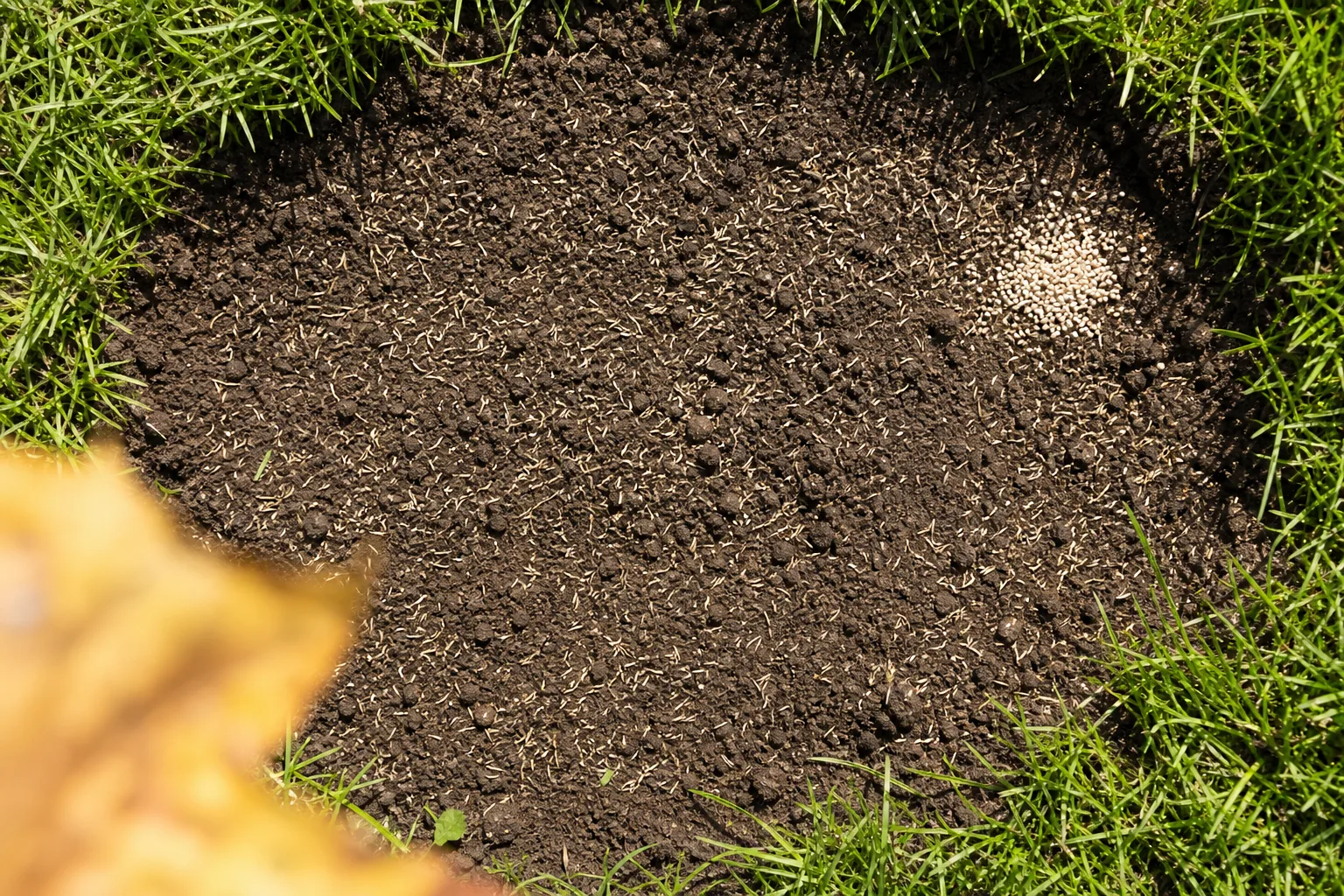
- Weigh the seed, then divide it into two equal portions.
- Spread half lengthways and half across the first pass.
- Rake or brush lightly so most seed touches soil without deep burial.
- Firm gently with the back of a rake, footboards or a light roller.
Compare lawn grass seed
Live prices from more than 20 shops, updated daily.
Use a seed-safe autumn fertilizer
Seasonal wording on the bag doesn’t guarantee the product suits newly sown grass. Autumn formulations vary by market, soil and turf program, so check seed compatibility and the nutrient analysis.
Some autumn feeds use less nitrogen and more potassium to limit soft top growth. Other cool-season programs use substantial early-autumn nitrogen for recovery. Phosphorus should follow soil need and local rules rather than seasonal branding.
- Choose plain granules labeled for new seed or overseeding, or a starter product justified by soil-test advice.
- Apply immediately before or after sowing only where the label permits it. Otherwise wait until seedlings are established, often around the first mowing.
- Never stack full-rate starter and autumn feeds without a soil-test program calling for both.
- Keep granules off paving, drains and water. Sweep spills onto the lawn before watering.
- Follow all label directions for protective equipment, watering-in and when people or pets can return.
Protect germination for three weeks
Keep the surface consistently moist through germination, then reduce frequency as roots develop. Rain counts, so check the soil instead of running a fixed timer.
- Before sowing: moisten a dry seedbed. After sowing, use a fine spray that firms the surface without moving seed.
- Days 1 to 7: keep the top 3/8 to 1 inch moist without puddles. Windy or sandy sites can need several short waterings; cool, rainy weather needs fewer.
- Days 8 to 14: maintain moisture while slower parts of the mixture emerge. Once most seedlings are up, water less often and for longer.
- Days 15 to 21: move moisture progressively toward 4 to 6 inches deep. Let the surface lose its constant sheen, but don’t allow seedlings to wilt.
- After three weeks: continue toward deeper, less frequent irrigation. Make the first cut when seedlings are about one-third taller than the intended height and spring upright after being stepped on. Use a lightweight mower with a sharp blade on dry ground.
Know when to stop and wait for spring
Stop conventional autumn sowing when fewer than 4 to 6 growing weeks remain, soil is approaching 45°F or seedlings are unlikely to be mown before sustained cold. Doubling the seed rate won’t rescue late timing.
- Live crowns show that drought-dormant turf is likely to recover.
- You can’t irrigate reliably or keep children, pets and regular traffic off the repair.
- The ground is waterlogged, frozen, very dry or still heat-stressed.
- Leaf fall will repeatedly cover the seed, or deciduous shade means spring will provide more establishment light.
- A recent herbicide or pre-emergent still has an unexpired reseeding interval.
- Shade, drainage or mowing practice will bring moss straight back.
- The local sowing window has closed. Leave recoverable turf intact and protect genuinely bare soil from erosion until repair is practical.
Get professional diagnosis for chronic standing water, failed grading, deep construction compaction, spreading disease or insect damage, steep eroding ground, or a lawn with less than roughly 50% desirable permanent turf. Adding seed won’t correct those underlying failures.
Early-autumn lawn repair FAQ
Does moss mean the lawn needs lime?
No. Acidity is only one possible cause, and lime won’t kill existing moss. Use a soil test before liming. Shade, wet soil, short mowing and compaction are common reasons turf loses ground to moss.
Is visible seed after raking a problem?
A small amount is acceptable. Guidance allows roughly 10 to 15% to remain visible, provided most seed has firm soil contact and won’t wash or blow away.
How should I seed a sloping bare patch?
Use a seed-safe erosion blanket or light mulch and water with a fine spray. Heavy irrigation can move both seed and soil downhill.
How long should pets stay off the repaired lawn?
Keep pets and people off until the seedlings have rooted and been mown at least twice. Guidance commonly recommends restricting traffic for at least a month after germination.
Catch the window, but favor restraint
Set the deadline, confirm what died and preserve anything still alive. Prepare lightly, sow the right mixture at the measured rate and protect moisture for three weeks. If timing, irrigation or the underlying site is wrong, keep your money and repair in spring.
This article was created using AI, following our team's editorial standards.