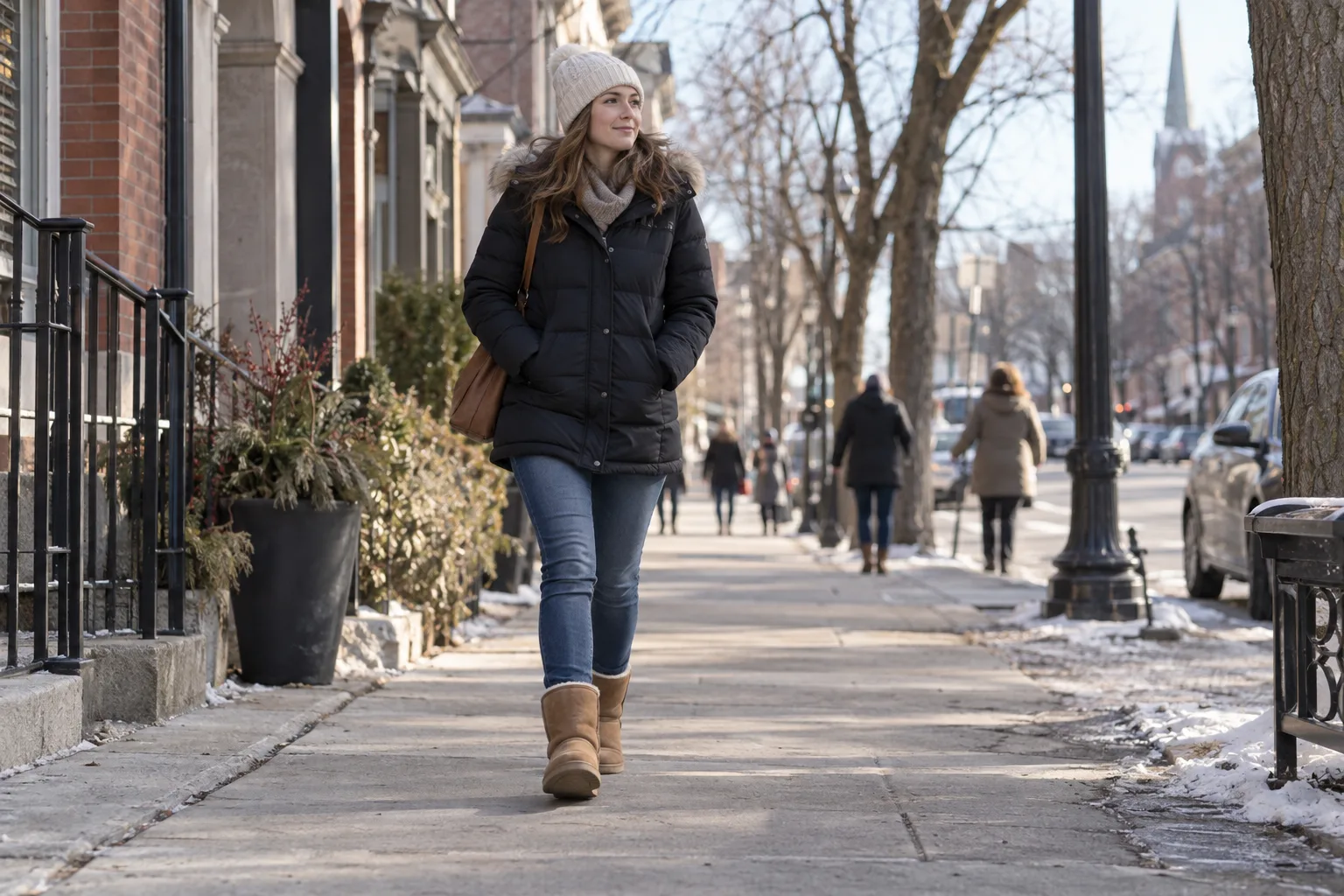


A fully seam-taped shell rated around 10,000 to 15,000 mm will cover most repeated urban journeys. Move to 15,000 to 20,000 mm and durable 3-layer construction for wet hikes or routine backpack use, and try cleaning and reproofing a clammy jacket before replacing it.
Buy for the wettest journey you repeat, and keep your current jacket if care solves the problem
Use your worst regular wet journey as the buying case. A rare severe storm doesn’t justify a mountain shell for every school run.
- For a 10 to 40-minute school run or urban walk, prioritise coverage, a secure hood and easy care. A thigh or lower-hip hem protects normal clothes.
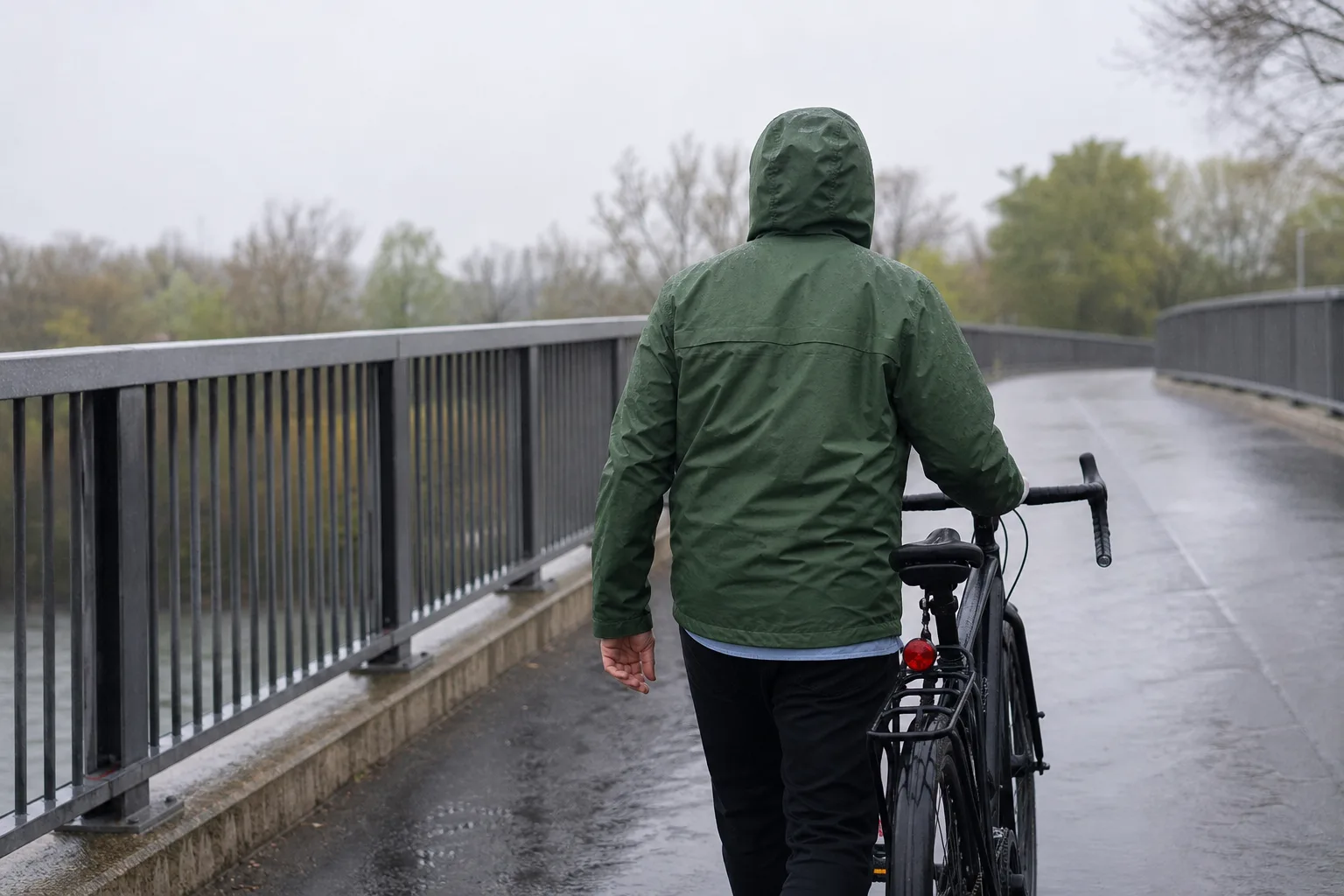
- For cycling, choose longer sleeves, a drop tail, close-fitting cuffs and vents. Raise your arms as if holding handlebars and check that your wrists and lower back stay covered.
- For several hours of hiking, require fully taped seams, an adjustable hood and enough room for a midlayer. Frequent backpack users gain real value from 3-layer fabric or reinforced shoulders.
- An umbrella can cover slow urban walking in low wind. Parents pushing a pram, cyclists and exposed-trail walkers need hands-free protection.
- Keep a sound jacket if washing restores beading and better layering reduces sweat. Specialist work, offshore and emergency use requires appropriate protective clothing beyond consumer waterproof claims.
Translate waterproof and breathability ratings into ten-minute rides, daily commutes and full wet hikes
Hydrostatic head is a pressure measurement, not a clock. A 10,000 mm fabric resists about 98 kPa in a laboratory test, but the result cannot promise a fixed number of dry hours because wind, wear, fit, seams and closures change the outcome.
| Repeated journey | Waterproof target | Breathability and build |
|---|---|---|
| Ten-minute cycle in drizzle | 5,000 to 10,000 mm | Sound closures and useful ventilation matter most at this duration. |
| Daily 30-minute autumn cycle | 10,000 to 15,000 mm | Around 20,000 g/m²/24h MVTR under a disclosed method, plus pit zips or other vents. |
| Several hours on a wet trail | 15,000 to 20,000 mm | Around 20,000 MVTR or low-teens RET, full seam tape and robust 2.5-layer or 3-layer fabric. |
| Full wet day with a heavy pack | 20,000 mm or more | Durable 3-layer fabric, protected closures and secure hood and cuffs. |
These ranges are conservative buying heuristics, since published guidance varies. Below 5,000 mm suits brief drizzle or emergency use. Beyond about 20,000 mm, an ordinary commuter usually gains more from better fit, vents and closure design.
- MVTR below 10,000 g/m²/24h suits low exertion and often feels clammy on a bike.
- Around 20,000 suits brisk walking, commuting and moderate hiking. Around 30,000 or more targets running and fast cycling, yet still cannot export unlimited sweat.
- RET works in the opposite direction, so lower figures are better. Single-digit RET suits sustained high output, while low teens can cover walking and general hiking.
- Compare breathability figures only when the test method matches. Warm, humid rain and a backpack reduce moisture transfer whatever the laboratory rating.
Check seams, zips, hood, cuffs and backpack shoulders before trusting the membrane number
Water usually finds the openings and worn pressure points first. Inspect the whole jacket because stitching punctures waterproof fabric and pack straps grind away surface treatment.
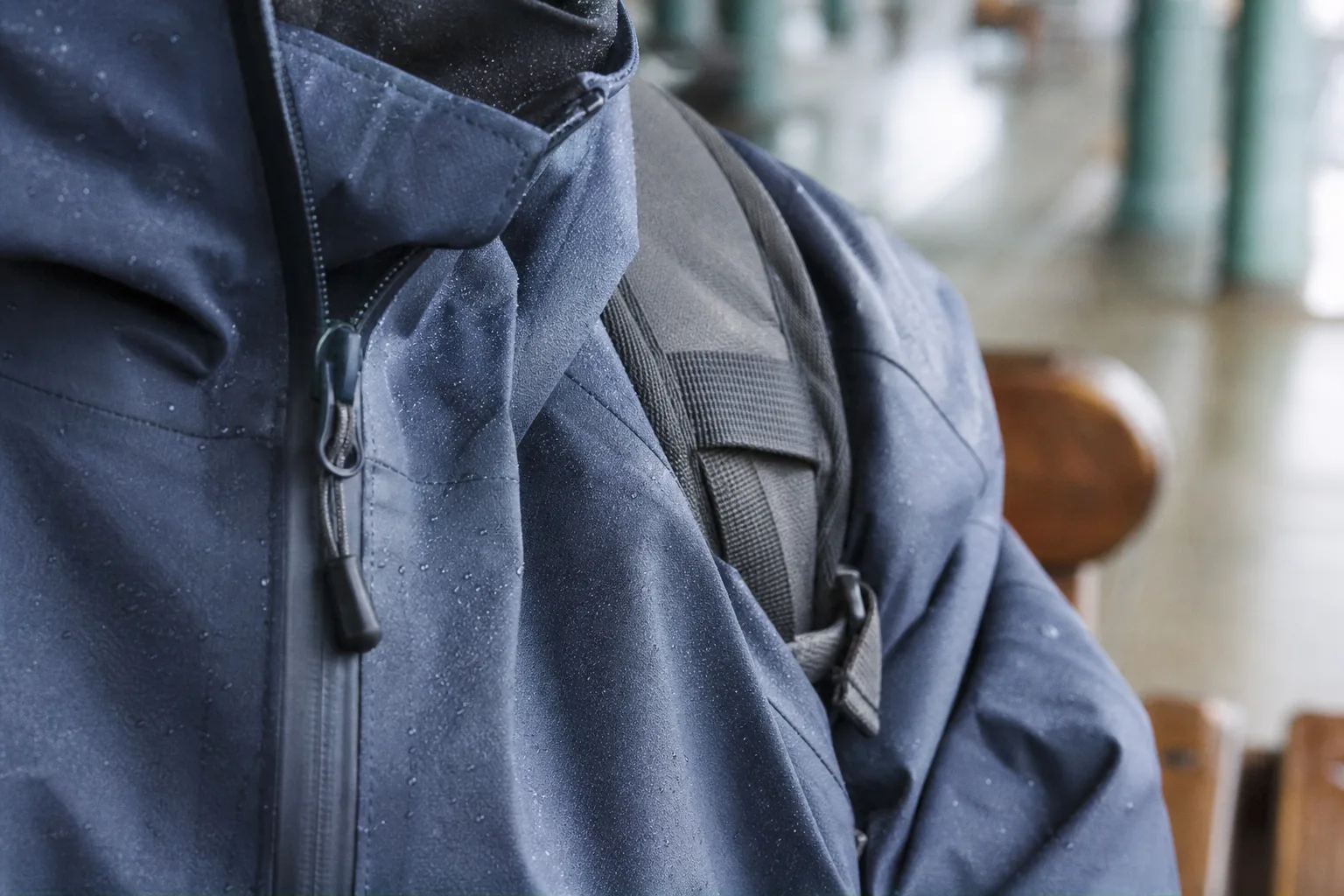
- Choose fully taped seams for prolonged rain. Critically taped seams suit lighter urban exposure but leave some stitched areas vulnerable.
- Check the front zip and pockets for storm flaps, backing flaps and zip garages. Coated zips repel water, yet slider gaps and attachment seams remain entry points.
- Adjust the hood and turn your head fully left and right. A large helmet hood can obstruct normal walking if it lacks front and rear adjustment.
- Close the cuffs over gloves or sleeves. For cycling, they must stop water running up the arms without restricting movement.
- Try the jacket with your usual backpack. Straps hold wet fabric against the shoulders, block evaporation and wear DWR faster. Check that pockets remain usable above the hipbelt.
Wear the expected jumper or midlayer in the shop. Reach overhead and bend your elbows. The shell should stay over the waistband without pulling tightly across shoulders, since tension and rubbing accelerate wear.
Choose the right protection: hardshell, softshell, long raincoat or umbrella
A waterproof hardshell is the dependable all-round choice for repeated autumn rain, while the other options solve narrower journeys better.
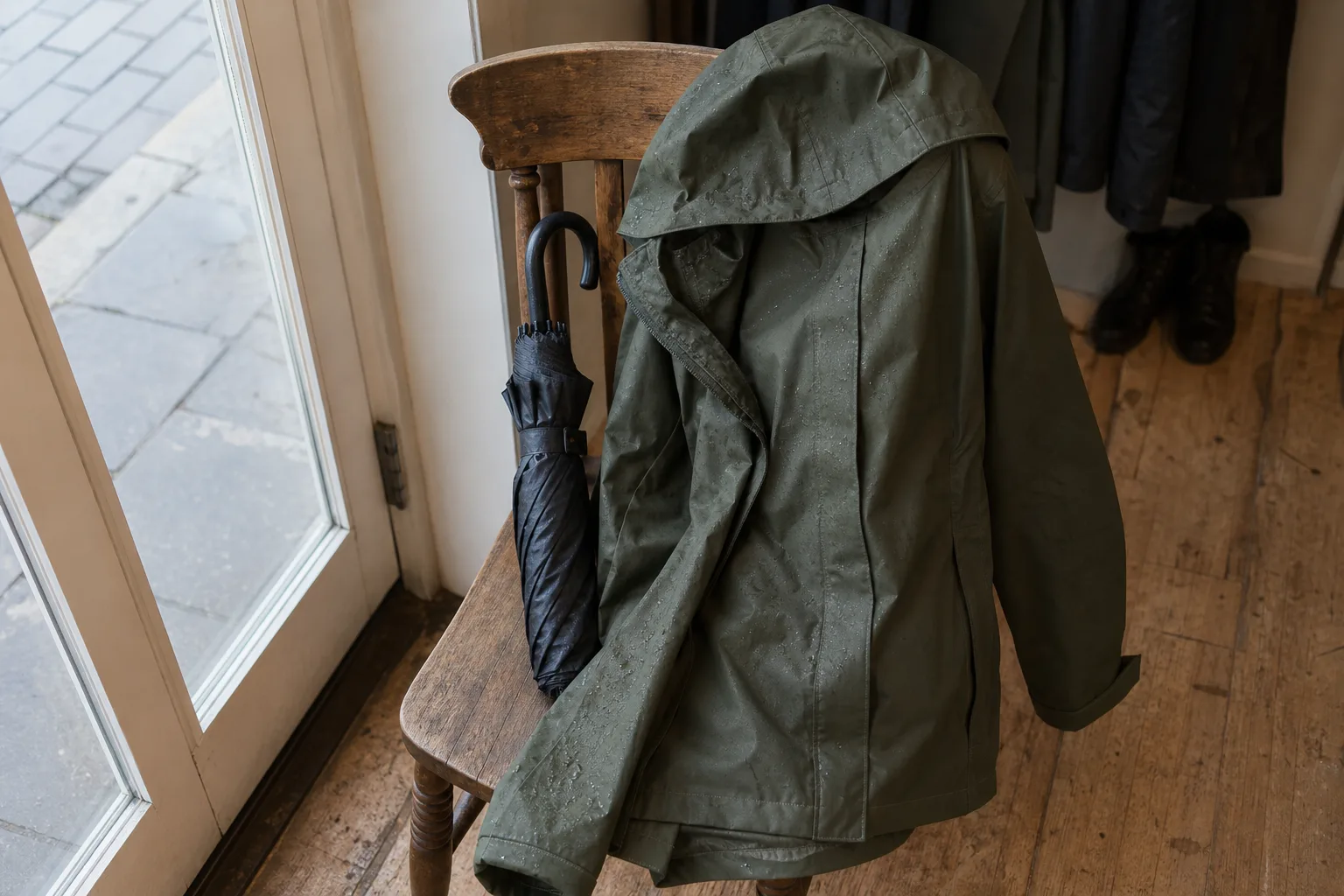
- Hardshell: choose 2-layer or 2.5-layer for occasional use and lower cost. Choose 3-layer for regular packs, repeated washing and long days outside.
- Softshell: good for dry, windy weather and high exertion. Carry a compact waterproof shell if steady rain is likely.
- Long urban raincoat: useful for school gates, office clothes and walking. A two-way zip and rear vent improve stride and sitting comfort. Long loose cuts are unsuitable near bicycle wheels.
- Umbrella: excellent ventilation for slow walking, waiting and warm humid rain with little wind. It performs poorly in gusts, on bikes, on wooded trails or when both hands are occupied.
Compare the practical shortlists by journey, and stop paying when the upgrade becomes a logo
The value centre for regular commuting and hiking sits in the technical mid-tier. The figures below are illustrative US retail ranges checked in July 2026, so local prices, taxes and distribution will vary.
| Tier | Illustrative price | What the money should buy |
|---|---|---|
| Basic consumer waterproof | $60 to $120 | Coated or 2-layer or 2.5-layer build, taped seams and a basic hood for school runs and occasional use. |
| Value technical | $150 to $250 | Full features, better hood and cuff control, vents and improved durability, often with 3-layer construction. |
| Performance | $250 to $450 | Tougher or lighter 3-layer materials, specialist fit, refined pockets and stronger repair or warranty support. |
| Specialist or premium | $500 to $750 or more | Severe-weather reinforcement, mountain or ski patterning, premium finishing or design exclusivity. |
Moving from basic to value technical buys the most useful upgrade: better seam sealing, hood control, ventilation and durability. Above roughly $300 to $350, demand a named benefit such as lower weight, tougher face fabric, specialist fit, repairability or verified aged performance.
Brand earns its place when it represents controlled garment construction, finished-jacket rain testing, retained performance after wear and dependable repairs. Membrane branding alone doesn’t justify doubling the budget. Above $500, the purchase is generally specialist or luxury unless you can identify the severe-weather feature your journey needs.
Compare waterproof hardshell jackets
Live prices from more than 20 shops, updated daily.
Test for wet-out before replacing: wash, reactivate and reapply DWR
A dark, saturated outer fabric usually points to tired DWR surface treatment. Current July 2026 snapshots put US examples around $16 for 300 ml wash-in treatment and $25 for a 500 ml spray, far below the price of a new shell.
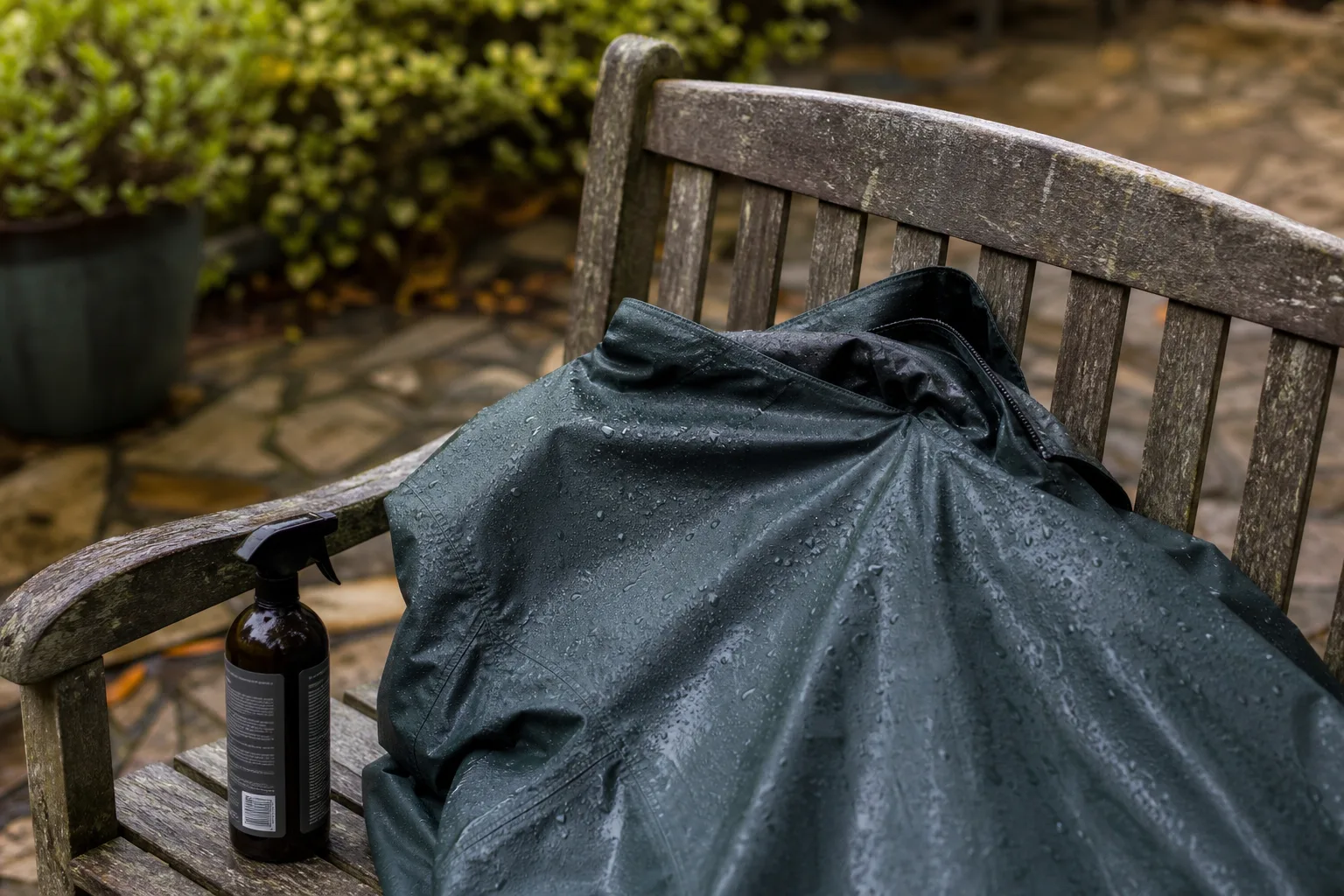
- Inspect for tears, broken zips, peeling seam tape, bubbling and widespread delamination.
- Wash according to the care label to remove dirt, skin oils and detergent residue.
- Dry and apply permitted low heat if the label allows it. Heat can reactivate many DWR treatments.
- Sprinkle or spray water onto the clean jacket. Stop if droplets bead and roll away.
- Apply a treatment made for waterproof-breathable clothing if beading still fails, concentrating spray on shoulders and cuffs.
- Patch small punctures promptly. Send broken zips or loose seam tape for suitable repair where practical.
DWR restores surface repellency and reduces the cold, heavy feeling of wet-out. It cannot repair punctured membranes, detached seam tape, zip damage or broad delamination. Widespread bubbling, flaking or separation usually points towards repair assessment or replacement.
Avoid the claims and buying mistakes that leave jackets leaking or clammy
Reject vague specifications and diagnose where the dampness appears before blaming the laminate.
- “Waterproof fabric” proves only the material claim. Look for full seam taping and protected closures.
- A 30,000 mm figure beats 20,000 mm only under the same test and condition. Fresh and aged results can tell different stories.
- Diffuse dampness across the back under a pack often comes from sweat and blocked evaporation. A drip line following stitching or a zip points towards water entry.
- Ultralight emergency shells save pack space but wear quickly under daily school bags and hiking packs.
- Buying an insulated waterproof jacket reduces flexibility and can cause overheating during active autumn travel. An uninsulated shell with separate layers serves more conditions.
Rain-jacket ratings and care FAQ
Should a rain jacket fit loosely?
Allow space for a jumper or light insulated layer, then bend your elbows and reach overhead. Excess fabric can flap in wind, while a shell stretched across the shoulders restricts movement and increases rubbing.
Do commuters need a helmet-compatible hood?
Choose one only if you plan to wear the hood over a helmet. For ordinary walking or a hood worn underneath, the extra volume can obstruct vision and catch wind.
Can I keep a phone in a zipped rain-jacket pocket?
A water-resistant pocket zip can still admit water during sustained rain. Keep phones, documents and other vulnerable items in an internal waterproof pouch.
How often should PFAS-free rainwear be cleaned?
Use condition as the guide: clean it when dirty, clammy or no longer beading. One manufacturer currently suggests roughly 7 to 10 wears or one long trip for its PFAS-free jackets, but that is brand-specific guidance rather than an industry schedule.
Does a higher denier always mean a tougher jacket?
Higher denier generally signals heavier yarn and greater abrasion resistance, but weave and fibre also matter. Current general-purpose and mountain-shell examples use about 50-denier and 80-denier face fabrics respectively, which helps explain the durability and weight trade-off.
Verdict: prioritise sound construction and usable ventilation, then buy only the rating your journey needs
Choose 10,000 to 15,000 mm, full seam tape and useful vents for regular commuting. Step up to 15,000 to 20,000 mm and 3-layer construction for wet hikes and routine packs. Pay more only for a feature you can name, and give a wetting-out jacket one careful wash and reproofing cycle before replacing it.
This article was created using AI, following our team's editorial standards.