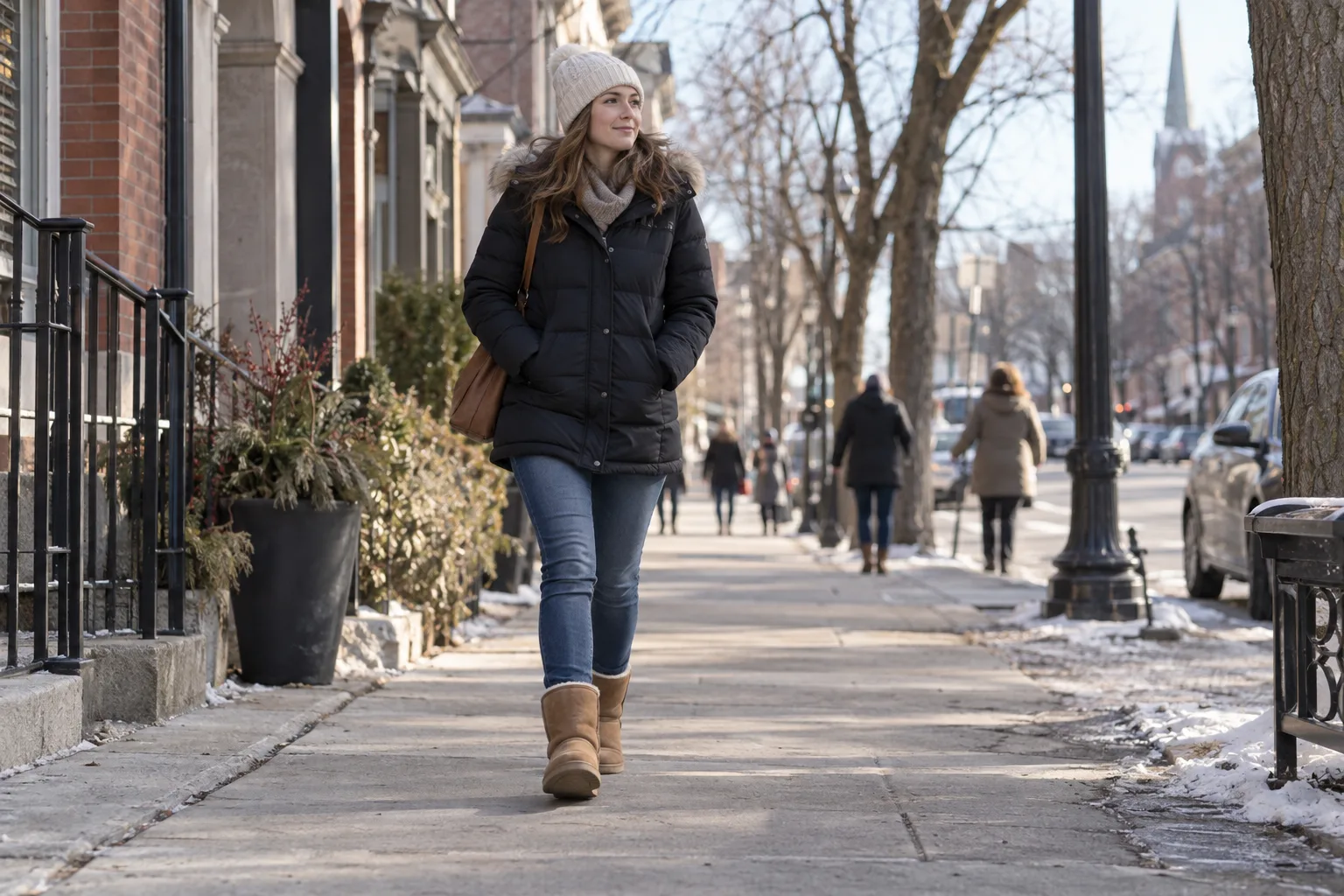


Check in the afternoon with the usual socks, then allow about 1/2 to 5/8 inch beyond the longest toe while keeping the heel secure. European studies repeatedly find high rates of short or narrow shoes, partly because children often stay quiet as their feet grow and the same printed size varies between brands.
Paper is enough for a two-minute check
This is an easy screening check that takes about two minutes once the child is standing. You need a hard floor and a few household items.
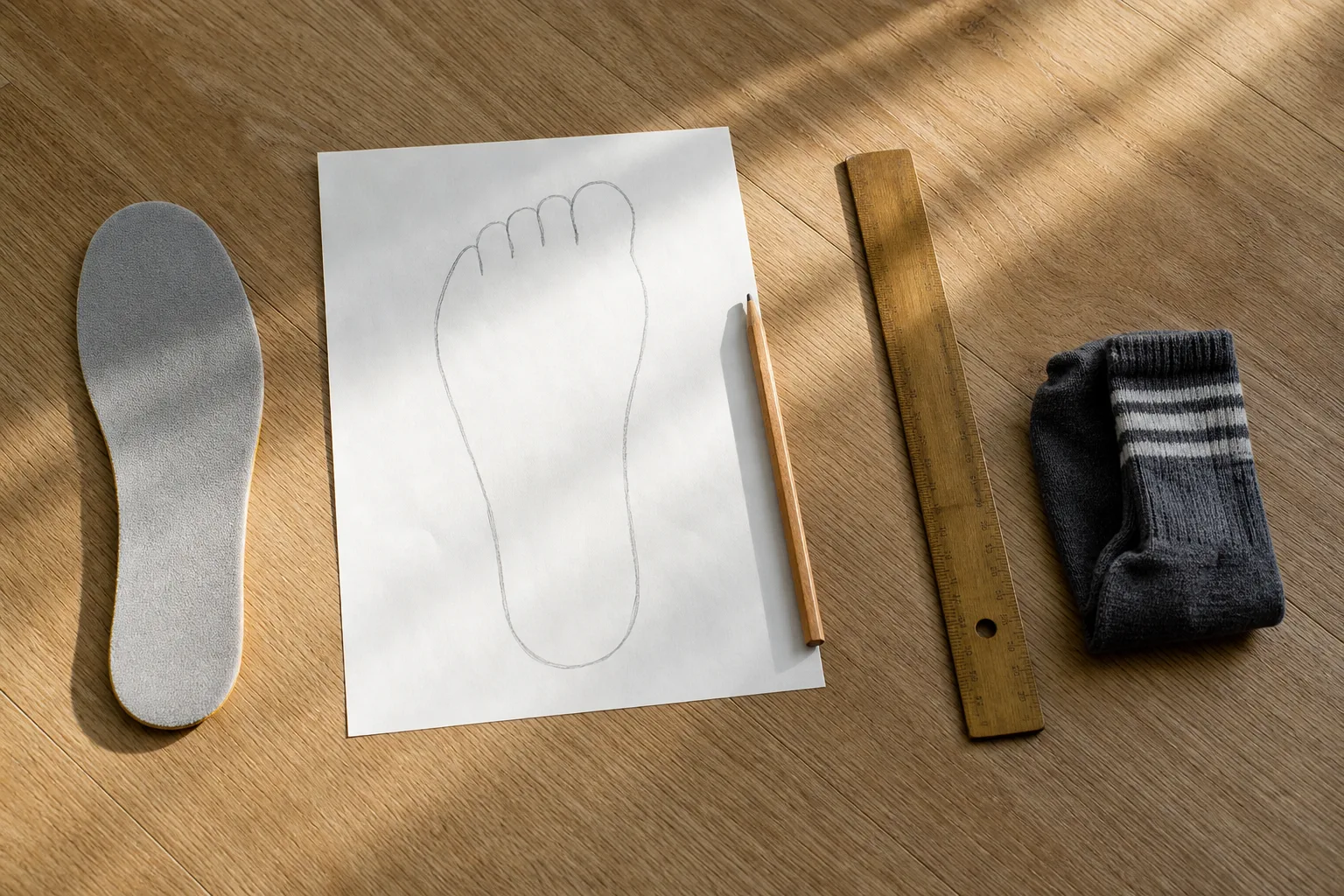
- Plain paper or thin stiff card
- A pencil held upright
- A ruler marked in inches
- The socks worn with the shoes
- The removable insole, if the shoe has one
- Check in the afternoon or early evening, after normal walking and play. Feet tend to be larger then. Put on the socks intended for that shoe.
- Place the paper on a hard floor. With the child standing naturally on both feet, trace around each heel, forefoot and longest toe. The second toe can be longer than the big toe.
- Align each tracing with the shoe’s removable insole, placing the heel where it actually sits. Measure from the longest toe mark to the usable front edge of the insole.
- Put the shoe on, seat the heel and tighten every strap or lace. Have the child walk briskly, turn, squat and stand on tiptoe. The heel should stay seated and the toes should clear the floor.
The larger standing foot sets the space
Record heel-to-longest-toe length and the width across the broadest part of each forefoot. Standing matters because the foot spreads under load, and the larger result sets the required interior dimensions.
If the insole won’t come out, extend the tracing by 1/2 inch at the longest toe and cut a narrow heel-to-toe strip. Slide it flat into the shoe. Bending or buckling shows that the interior is too short. A complete paper template that curls at the sides also reveals a width problem.
Aim for 1/2 to 5/8 inch of space
A new everyday shoe should usually have about 1/2 to 5/8 inch between the longest toe and the usable front edge. Around 1/2 inch is often described as a thumb’s width, although a ruler is more reliable. Part of this allowance supports foot movement during walking, so it isn’t all future growth room.
| Measured space | What it means | Decision |
|---|---|---|
| Below about 3/8 to 1/2 inch | Little room for movement or further growth | Replace or choose a larger interior |
| About 1/2 to 5/8 inch | Practical target for a new general-purpose shoe | Proceed to width and walking checks |
| Over about 11/16 inch | Greater risk of heel slip, toe catching and a misplaced flex point | Reassess the size or choose another shape |
For example, a standing foot measuring 5.6 inches needs roughly 6.1 to 6.2 inches of usable internal length in a new shoe. Decorative rubber extending beyond the footbed doesn’t count.
Width and heel security can still fail
Length passes only one part of the test. The shoe must also match the child’s forefoot, toe shape, depth and heel.
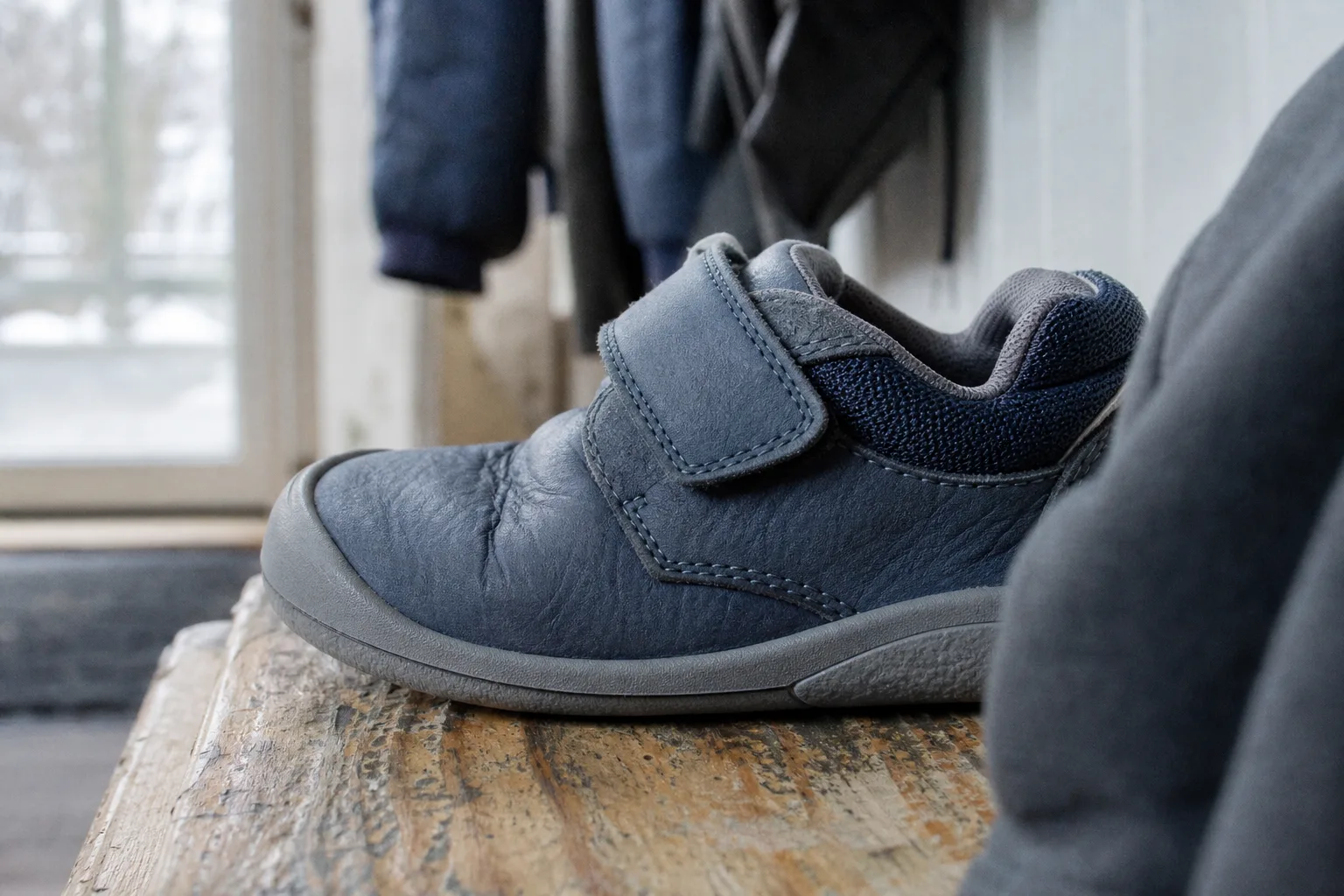
- Align the widest part of the tracing with the widest part of the insole. Any outline hanging over the edge shows insufficient width.
- Choose a toe box that follows the forefoot and leaves height above every toe. Strongly tapered shapes can squeeze the toes despite generous length.
- Look for a little pinchable material over the forefoot. Bulging sides, visible toe outlines or a drum-tight upper indicate pressure.
- Fasten the shoe properly. Laces, buckles or an effective hook-and-loop strap should stop the foot sliding forward. Heel lift on tiptoe is a failure.
- Watch for repeated tripping, toe scuffing, altered steps, rubbing or red pressure marks. Check the old pair for smooth tread, sole separation, collapsed lining, failed fastenings and uneven wear.
A longer size rarely fixes a broad forefoot or high instep. It can move the heel and sole flex point away from the corresponding parts of the foot. Choose a roomier width, depth or last shape instead.
Frequent checks catch growth before complaints
Young children need checks far more often than replacement shopping suggests. Toddlers can move through a shoe size in two to three months, while discomfort may build too gradually for them to report it.
| Age | Practical checking interval | Typical growth pattern |
|---|---|---|
| 0 to 3 years | Every 4 to 6 weeks | A size change can be needed every 2 to 3 months |
| 3 to 4 years | Every 6 to 8 weeks | Half-size changes averaged around every 4 months in older preschoolers |
| 4 years and over | About every 12 weeks | Changes averaged around every 6 months at ages 4 to 6 |
Measure sooner after a visible growth spurt, new tripping, reluctance to put shoes on, unexplained red marks, toenail pressure or a changed walk. A child’s comfort report is useful evidence, but it should never be the only check.
Only the exact shoe reveals usable fit
The same size number can hide different usable lengths, widths and volumes across brands and models. Last shape, lining, insole construction and toe taper all change the fit. Treat the previous size as a search filter and measure the exact pair.
- Sole: choose a light sole that flexes at the ball of the foot, where the toes bend. It should still retain enough structure for the intended surface.
- Heel: the heel counter should hold its shape and retain the foot without digging into the Achilles area.
- Fastening: use adjustable laces, buckles or working hook-and-loop straps. Loose slip-ons and fashion boots are poor choices for extended walking.
- Interior: feel for raised seams, folded lining and hard edges. The upper should accommodate the foot without pressure points.
- Weather use: match tread and water resistance to pavement, mud, rain, snow or ice. No market-neutral boot temperature rating makes warmth directly comparable between brands.
Claims such as “orthopedic,” “corrective,” “barefoot,” “maximum arch support” and “supports healthy development” don’t prove that a shoe fits. Healthy children don’t routinely need corrective footwear. Price is also a weak guide: extra cost cannot rescue a narrow toe box, loose heel or unsuitable sole.
Measure first, then buy before the first forecast cold spell, while shops still have a fuller spread of sizes. Climate sets the date. Avoid buying so early that a fast-growing toddler uses most of the allowance before winter starts, and be cautious with future-size clearance boots that may never fit at the right time.
Winter boots need their own fitting check
Fit lined boots with their lining, insole and the one winter sock combination the child will actually wear. Insulation consumes internal length, width and depth, while some manufacturers already build extra allowance into the boot.
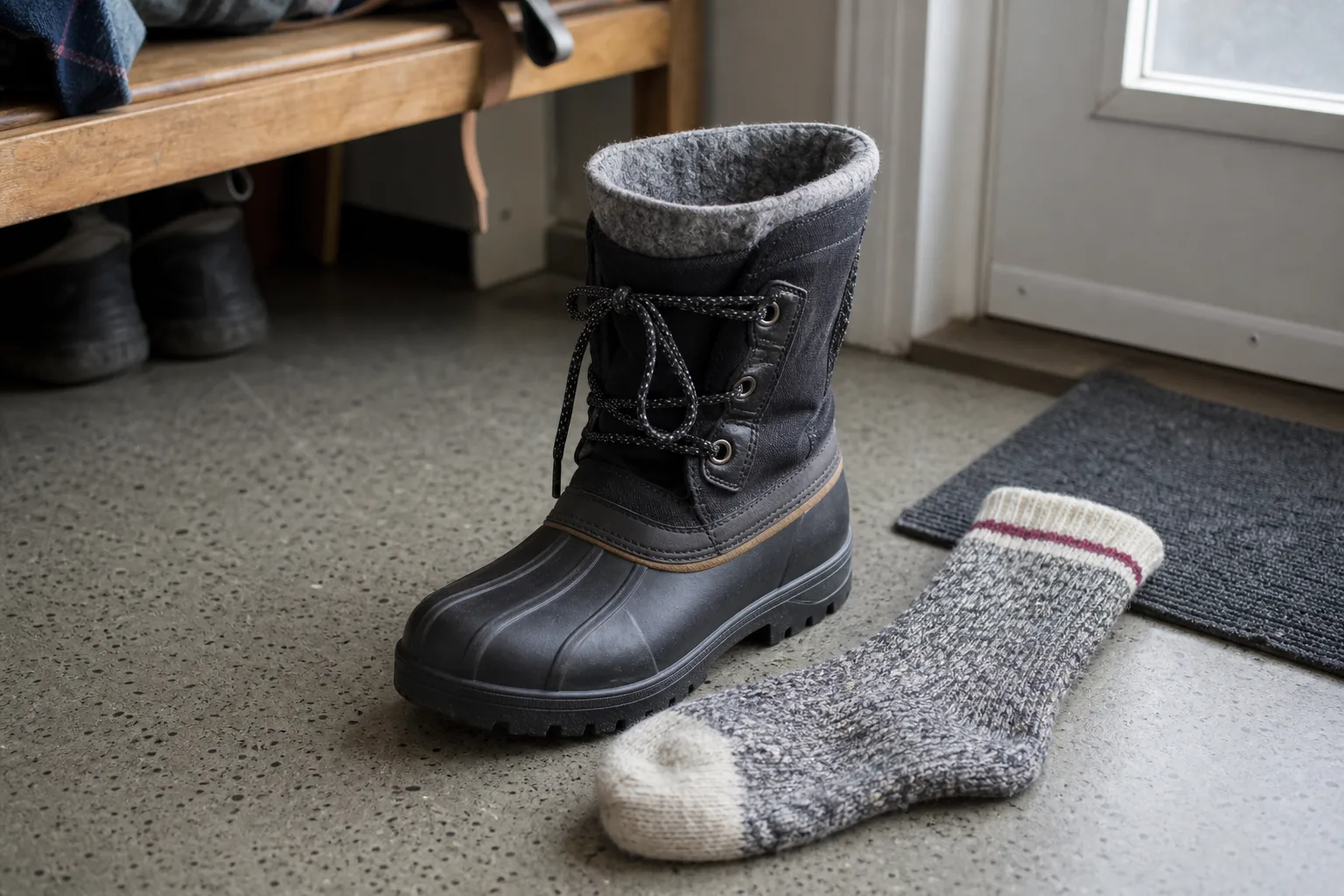
- Avoid ordering one size larger by default. Apply the 1/2 to 5/8 inch target to the complete foot, sock, liner and insole setup.
- Check toe movement, forefoot width and instep pressure. Thick or doubled socks inside a snug boot can compress the foot, restrict circulation and leave feet colder.
- Reject a model if sizing up relieves instep pressure but creates heel lift, toe catching or a changed stride. Its shape is wrong for that foot.
- Walk in heavier snow boots before buying. Bulky, stiff construction can make toe clearance harder.
- Fit removable felt liners in place. Recheck them if washing, bunching or wear changes the space they occupy.
Compare children’s winter boots
Live prices from more than 20 shops, updated daily.
Persistent pain or gait changes need assessment
Replace a clearly misfitting shoe, then seek professional assessment if pain, skin injury or an unusual gait continues in correctly fitted shoes or appears while barefoot. Repeatedly changing brands or adding arch supports can delay the right evaluation.
- Arrange an assessment for recurring foot, ankle, knee or hip pain, a persistent limp, repeated unexplained falls or marked asymmetry.
- Seek advice for sudden or persistent toe walking, a rigidly flat or unusually high-arched foot, recurrent pressure lesions, ingrown nails or a foot shape that standard shoes cannot accommodate.
- Children using orthoses or braces need footwear fitted with the prescribed device in place. Therapeutic footwear is a clinical intervention.
- Pain-free flexible flat feet commonly need observation rather than corrective shoes.
FAQ
Can I check fit by pressing the toe cap?
That method is unreliable. Reinforced uppers can hide the toe position, and children may curl their toes. Use the insole or paper template.
Are rain boots suitable for everyday walking?
They work well for puddles and short wet-weather use. Their loose shafts, coarse sizing and limited fastening often make them unsuitable for long walks.
Can a younger child wear hand-me-down shoes?
Yes, if the pair remains hygienic, evenly worn and correctly shaped. Reject shoes with uneven soles, collapsed heels, damaged lining or failed fastenings.
How should I buy children’s shoes online?
Ask for usable inside length in inches for the exact model. Check width information too, then repeat the tracing, insole and walking checks as soon as the shoes arrive.
Do early walkers need shoes indoors?
Shoes are unnecessary indoors where barefoot walking is safe. Early-walker shoes mainly protect feet from the ground and weather outside.
The two-minute verdict
Trace both socked feet in the afternoon, use the larger outline and aim for 1/2 to 5/8 inch of usable toe space. Buy only when the width, toe shape, fastening and walking test also pass. Recheck monthly for toddlers and every few months for older children.
This article was created using AI, following our team's editorial standards.