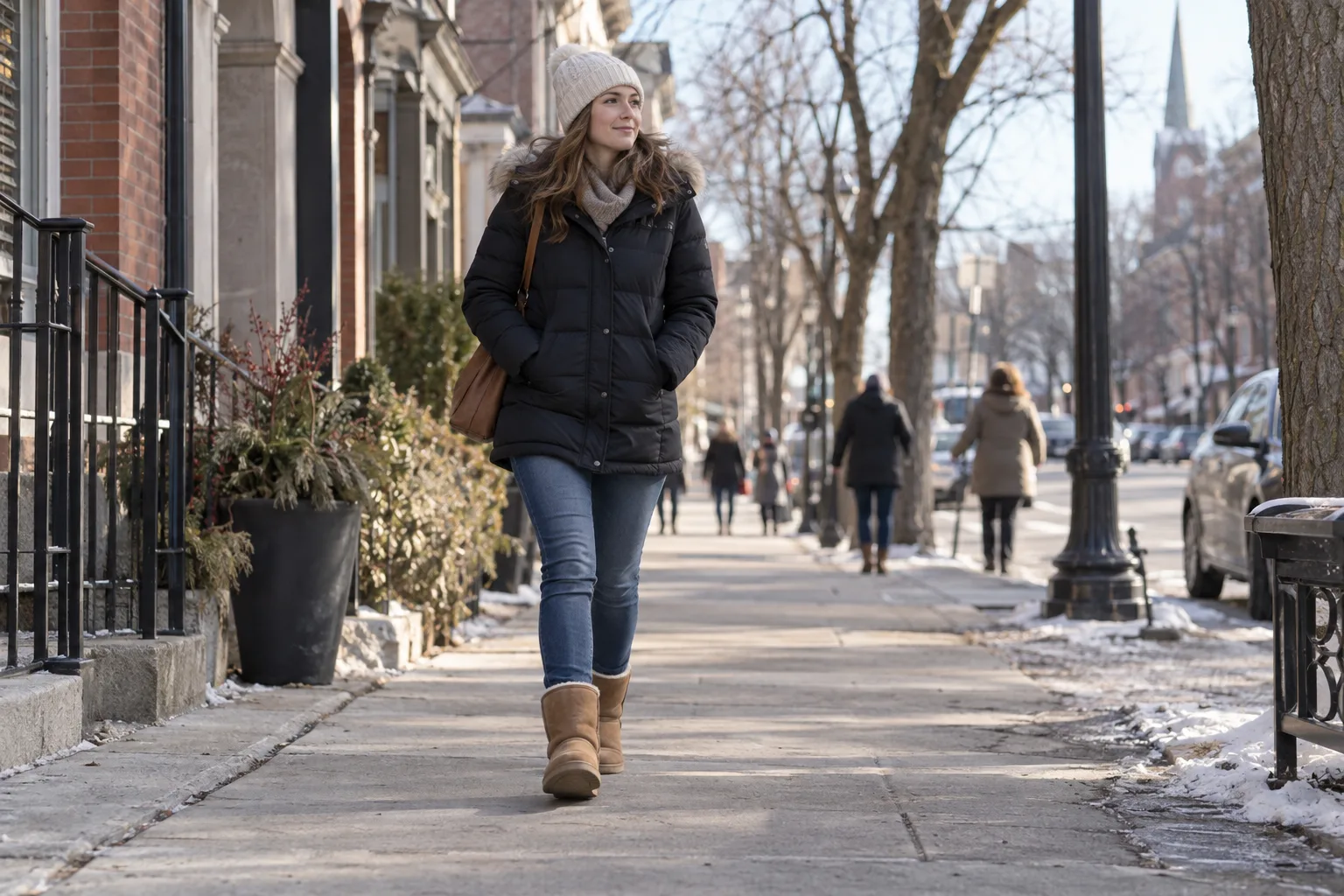


Ask for two figures before buying: fill power and size-specific fill weight in grams. Then check the baffles, coverage and draft seals, because they decide how much useful warmth the jacket delivers.
Choose down only for mostly dry cold
Down earns its place in cold, dry conditions where low weight and compact packing matter. Modern synthetic insulation is the safer purchase for routine rain, heavy perspiration or limited access to specialist cleaning and drying.
- Dry urban use: a longer 600 to 700-fill coat with generous insulation, a fitted hood and sealed cuffs can work better than a short technical puffer.
- Travel and backpacking: high fill power becomes valuable because the jacket weighs less and packs smaller for a given loft.
- Static cold: spectators, photographers, winter workers and belayers need substantially more fill, longer coverage and strong draft control.
- Wet commuting and high-output exercise: choose synthetic insulation. For a 35-minute cycle commute in repeated autumn rain, its faster drying and useful damp loft matter more than tiny packed size.
- Limited care facilities: choose synthetic if you lack an agitator-free washer, tumble dryer or specialist cleaning service.
- Animal-welfare, vegan or diagnosed feather-sensitivity concerns: synthetic insulation avoids down entirely. Certification improves sourcing controls, but down remains an animal product.
Fill power needs fill weight
Fill power measures how much volume a specified mass of conditioned down occupies under a standard load. Common figures run from about 550 to 1,000. A higher figure allows a maker to reach a target loft with less down, which saves carried weight and packed space.
A jacket containing 200 g of 650-fill down has about 4,586 cubic inches of theoretical loft. One containing 100 g of 800-fill down has about 2,822 cubic inches. The first has roughly 63% more potential down volume, assuming comparable size and construction.
- 50 to 100 g: ultralight travel, emergency warmth or an active layering jacket.
- 100 to 150 g: lightweight general-purpose puffer or three-season camp layer.
- 150 to 220 g: substantial midweight jacket for colder weather and moderate static use.
- 250 to 350 g: heavyweight winter or belay parka.
- 400 to 500 g or more: specialist expedition clothing for exceptional cold.
These are buying heuristics for adult technical jackets around size M. Jackets have no universal temperature-rating system, and activity, wind, humidity, fit, length and personal cold tolerance all change the result.
Missing grams require hands-on checks
If the label omits grams, ask the seller: “What is the net down fill weight, and which garment size does that figure cover?” Treat any comparison as uncertain if the maker cannot answer.
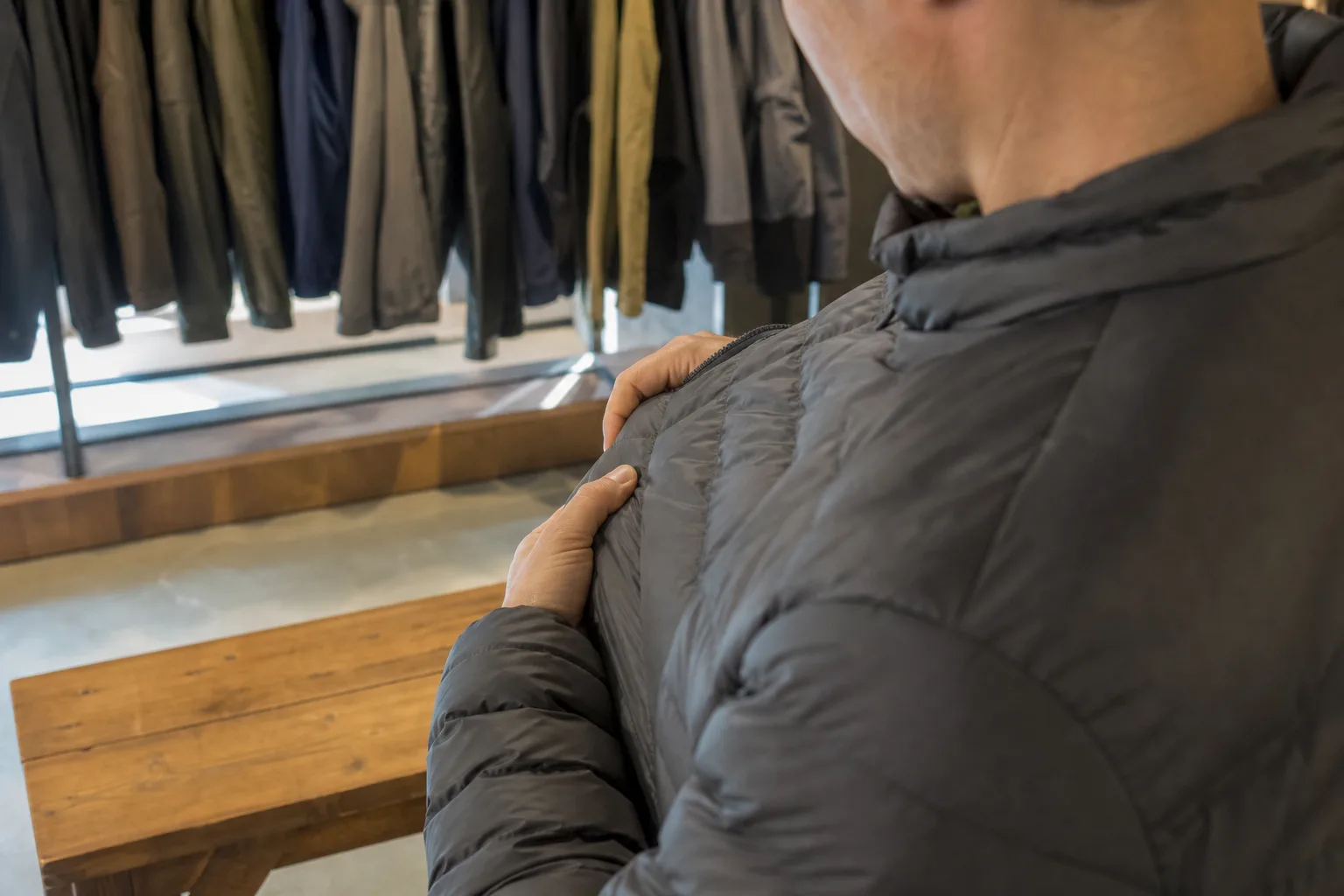
- Let the jacket recover after tight packaging. Freshly unpacked down needs time to expand before its chamber depth can be judged.
- Compare jackets with similar coverage and size. Inspect the center chest, upper back, sleeves and hood separately, since one full display baffle can hide sparse areas elsewhere.
- Gently squeeze a torso baffle between your palms, then release it. Healthy down should rebound evenly and feel light. Fast rebound shows loft quality and condition, but it cannot reveal the total number of grams.
- Look for thin lanes, lumps and chambers where the lining and outer fabric meet too easily. Bright backlighting can reveal empty sections, although dark or dense fabrics make this check less reliable.
- Try the jacket over your intended layers. The shoulders and chest must keep their loft, while the hood, cuffs, hem and insulated zip flap should close obvious escape routes.
Match shell strength to use as well. Fabrics around 7 to 15 denier save weight but snag easily. General-purpose jackets often use roughly 20 to 30 denier fabric, while specialist parkas can use 30 to 50 denier or reinforced panels. A repair service, replaceable zip or supplied patch can add more life than another 50 fill-power points.
Box walls reduce seam cold lines
Sewn-through construction stitches the outer shell directly to the lining. Each seam compresses the down almost to zero thickness, creating a narrow thermal bridge where heat escapes more readily.
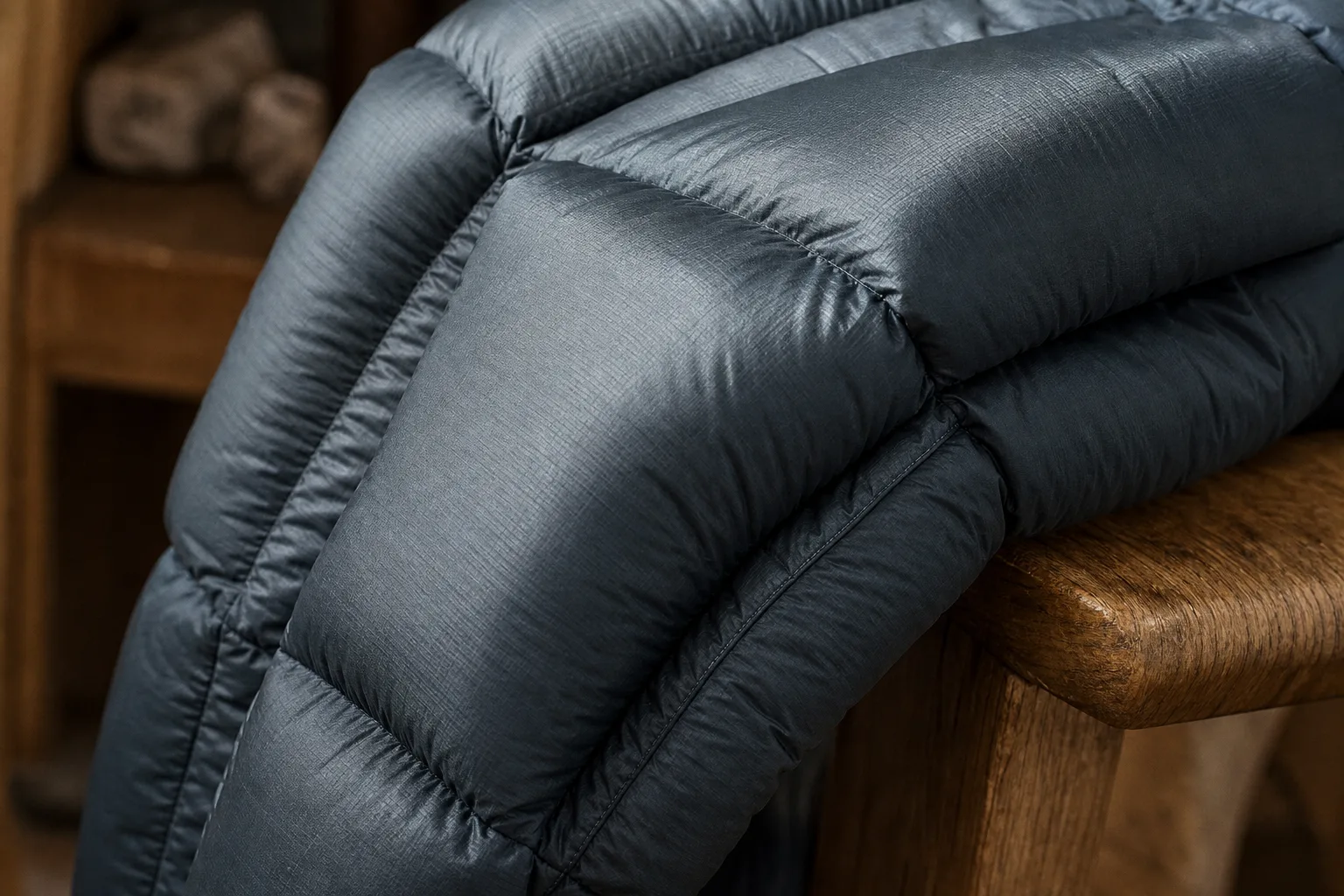
Box-wall jackets place internal fabric walls between chambers, allowing the insulation to stay thicker around their edges. Hybrid designs can use box walls on the torso, sewn-through sleeves for mobility, or synthetic insulation at damp and compression-prone areas.
A high baffle count gives no guarantee of warmth. Excessive quilting in a sewn-through jacket creates more compressed lines, so inspect chamber depth and construction before counting rows.
Higher prices often reduce carried weight
Spend first on adequate fill, useful coverage and draft control. Premium technical pricing often funds lighter materials and smaller packed volume, while expedition pricing pays for far more down and complex box-wall construction.
| Tier | What it commonly includes | What the extra money buys | Main limitation |
|---|---|---|---|
| Entry | About 600 to 800 fill, sewn-through baffles, simpler hoods and heavier fabrics | Usable everyday insulation at the lowest common price tier | Fill weight disclosure can be poor, and an advertised 800 figure gives no assurance of winter warmth |
| Mainstream | About 650 to 850 fill, better cuffs, hems, fit and certified down | Lower weight, better movement, more dependable fabrics and stronger retailer support | Many jackets still use sewn-through construction |
| Premium technical | About 800 to 1,000 fill, 7 to 20 denier fabrics, body mapping and activity-specific features | A better warmth-to-weight ratio, smaller packing size, articulated fit and repair support | Extra spending often removes grams from the jacket instead of adding insulation |
| Expedition specialist | Roughly 300 to 500 g or more of down, extensive box walls, reinforced shells and complex hoods | Substantially more insulation, fewer cold spots and stronger weather protection | Heavy, bulky and excessive for ordinary commuting |
As of September 2026, mainstream jackets commonly cost around twice an entry model. Premium technical pieces can reach two to four times entry pricing, while specialist expedition parkas can cost six times as much or more. Luxury fashion sits outside this pattern because price can reflect branding, trim and silhouette without publishing useful insulation data.
Shop in early autumn if size and color choice matter. That is when the season’s full range is usually in stock and size runs are most complete. Waiting for deep winter reductions can leave only fringe sizes or unsuitable lightweight designs.
Sourcing labels describe origin and custody
A 90/10 specification commonly means 90% down and 10% feather by mass under the relevant labeling rules. More down generally supports a softer feel, lower weight and better compression. The ratio leaves fill power, fill weight, baffles, cleanliness and warmth unanswered.
- Responsible Down Standard, or RDS: prohibits live plucking and force-feeding, with third-party certification and supply-chain documentation.
- Global Traceable Down Standard, or Global TDS: covers welfare and traceability from parent farm through manufacturing, and prohibits live plucking, molt harvesting and force-feeding.
- DOWNPASS: combines traceability and animal-welfare auditing with laboratory quality checks. Verified products can carry an individual number.
Prefer a recognized scheme with a certification body or verification number over an unsupported phrase such as “responsibly sourced.” These labels concern sourcing practices. They provide no evidence about insulation quantity or jacket performance.
Care can preserve loft for a decade
Ten years is a reasonable target for a good, repairable down jacket if it is washed, dried and stored correctly. Dirt and body oils reduce loft, while the shell, zip and stitching often determine how long the garment survives.
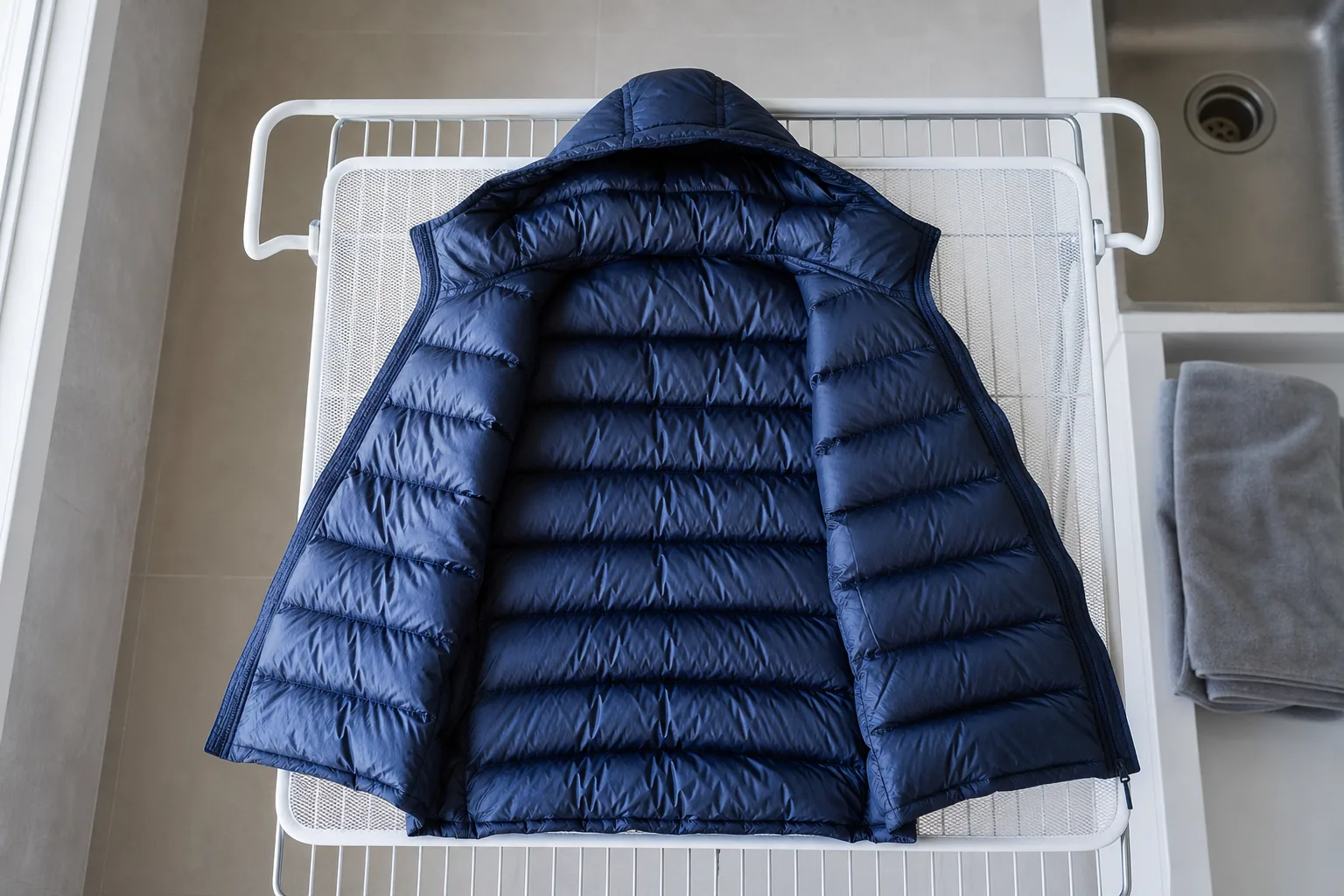
- Wash when the jacket smells, looks dirty, feels greasy at the collar or has lost loft. Follow its care label if it differs from general guidance.
- Empty pockets, close zips and fasten hook-and-loop cuffs. Use a front-loading or other agitator-free washer, since wet baffles become heavy and vulnerable.
- Use down-specific cleaner. Skip bleach and fabric softener. Select a gentle cycle, usually around 86°F or the temperature stated on the label, then run an extra rinse.
- Support the whole jacket when lifting it wet. Tumble dry on low heat with clean tennis balls or dryer balls to break apart clumps.
- Stop regularly and separate clumps by hand. Many jackets need roughly two to four hours; a heavy parka can take longer. Continue until every chamber feels light, dry and evenly filled.
- Store the jacket hanging or loose in a breathable bag. Keep the stuff sack for transport because permanent compression reduces loft.
- Push escaping down back through the fabric. Cover small punctures with rounded technical repair tape, and send large tears, baffle damage or zip failures for professional repair.
FAQ
Species, overall garment weight and waterproof shells should only break ties after insulation quantity and construction are clear.
Is goose down warmer than duck down?
Species is secondary once tested fill power, composition, fill weight and construction are equivalent. Goose is more common at the highest fill powers because it can produce larger clusters.
Can total jacket weight reveal how much down is inside?
Only as a weak sanity check. Total weight includes the shell, lining, zips, pockets and trim. A 200 g jacket cannot contain 250 g of down, but two 500 g jackets can carry very different amounts.
Do I need a waterproof down jacket?
Choose one for genuinely cold, wet and low-output use. It will be heavier, costlier and less adaptable. A separate down layer and waterproof shell gives most buyers more flexibility.
Does a few feathers escaping mean the jacket is faulty?
A few quills can work through tightly woven fabric without indicating major failure. Push them back inside and massage the fabric. Repeated leakage from one point suggests a puncture or damaged seam.
Do backpack straps reduce down warmth?
Yes, straps compress the insulation at the shoulders and reduce loft there. Look for well-filled shoulders, a tougher shell, or a hybrid design using synthetic insulation in compression-prone zones.
Verdict
Choose synthetic insulation for frequent rain, heavy perspiration or low-maintenance daily use. For dry cold, ask for size-specific fill grams, use the fill-weight bands to identify the jacket class, inspect baffle depth and seals, and select box walls for prolonged static winter use. Pay for 900 to 1,000 fill when carrying weight and packed space genuinely matter.
Compare midweight down jackets
Live prices from more than 20 shops, updated daily.
Buy in early autumn for the widest size choice. A transparent midweight jacket with adequate fill and good draft control is the sound choice for most dry-winter use.
This article was created using AI, following our team's editorial standards.