


A men's watch can have a respected movement and still sit in a drawer if it pinches, catches on cuffs, or feels wrong with your clothes. Choose the movement as a lifestyle decision, then use size, materials, water resistance, and budget to avoid an expensive mismatch.
This guide covers traditional men's wristwatches: analog, digital, and analog-digital, quartz, solar quartz, automatic, and hand-wound mechanical.
Start with your lifestyle: do you need grab-and-go accuracy, mechanical charm, or a daily ritual?
The useful question is not which movement has the most prestige. It is whether you will wear and maintain the watch without turning it into a chore.
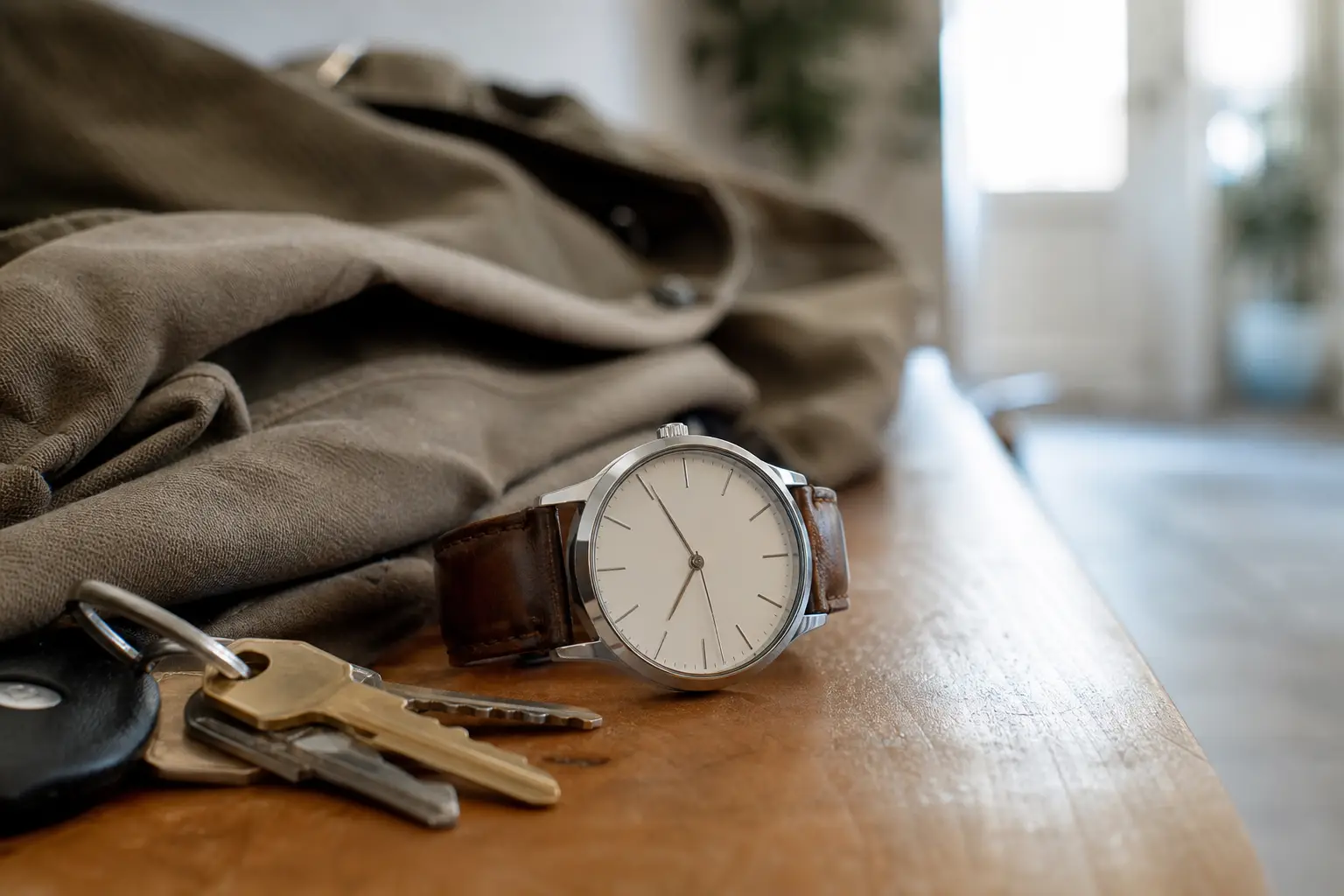
| Movement | Good fit | Why it works | Trade-offs |
|---|---|---|---|
| Quartz | Low-maintenance everyday wear, occasional wear, gifts where accuracy matters | Usually the most accurate, least expensive, and lowest-maintenance option. It can sit unworn and still be ready. | Battery replacement is typically needed every couple of years, depending on design and use. It does not give you the mechanical feel some buyers want. |
| Solar quartz | Everyday wear, travel, outdoor use, buyers who want quartz convenience with fewer battery worries | Keeps the accuracy and ease of quartz while using light as its power source. | It still feels like a quartz watch rather than a mechanical one, and it needs exposure to light. |
| Automatic | Someone who wears the watch often and likes mechanical craft | Wrist motion winds a rotor, so regular wear can keep it running without manual winding. | If left unworn past its power reserve, it stops and must be reset. Mechanical accuracy is usually measured in seconds per day, not seconds per month. |
| Manual mechanical | A buyer who enjoys the winding ritual and often wants a thinner, dressier watch | You wind it by the crown. It feels direct, traditional, and involved. | Poor choice for grab-and-go use. You must wind it regularly and accept lower accuracy than quartz. |
If you rotate watches or wear one only for special occasions, quartz is often the safer first serious watch. If you want the charm of a sweeping seconds hand, a display back, or a winding habit, choose automatic or manual mechanical with your eyes open.
Choose a case size and thickness that actually fit your wrist and shirt cuffs
Case diameter gets the attention, but thickness, lug-to-lug length, and case shape decide how a watch feels on the wrist. A thick 40 mm dive watch can wear larger than a thin 40 mm dress watch.

- Wrist under about 6.3 in (16 cm): start around 32 to 36 mm.
- Wrist about 6.3 to 7 in (16 to 17.8 cm): start around 36 to 42 mm.
- Wrist over about 7 in (17.8 cm): start around 42 to 46 mm.
- As a visual guide, the watch head should take up about two-thirds of your wrist width instead of covering it edge to edge.
- For thickness, 7 to 9 mm tends to feel smaller or dressier, 9 to 12 mm is versatile, and 12 to 15 mm usually feels sportier or more substantial.
Check how it wears, not just what the listing says
- Look at lug-to-lug length. If the lugs overhang your wrist, the watch will look too large even if the diameter seems reasonable.
- Check bezel width. A wide bezel can make the dial look smaller, while a thin bezel can make the same diameter feel larger.
- Check bracelet end links. Fixed or protruding end links can add visual length.
- Think about cuffs. For shirts and tailoring, thickness matters just as much as diameter.
- Try the watch on the strap or bracelet you will actually wear. A heavy bracelet can change the balance compared with leather, rubber, or fabric.
If you wear shirts most days, be strict. A bulky chronograph or sport watch may look good in a display case and still annoy you every time it catches under a sleeve.
Match the watch style to the clothes you wear most
The most versatile first watch is usually simple: three hands, moderate size, a neutral dial, and a stainless-steel bracelet or leather strap. Start there unless your everyday clothes clearly point toward sport, field, or formal wear.
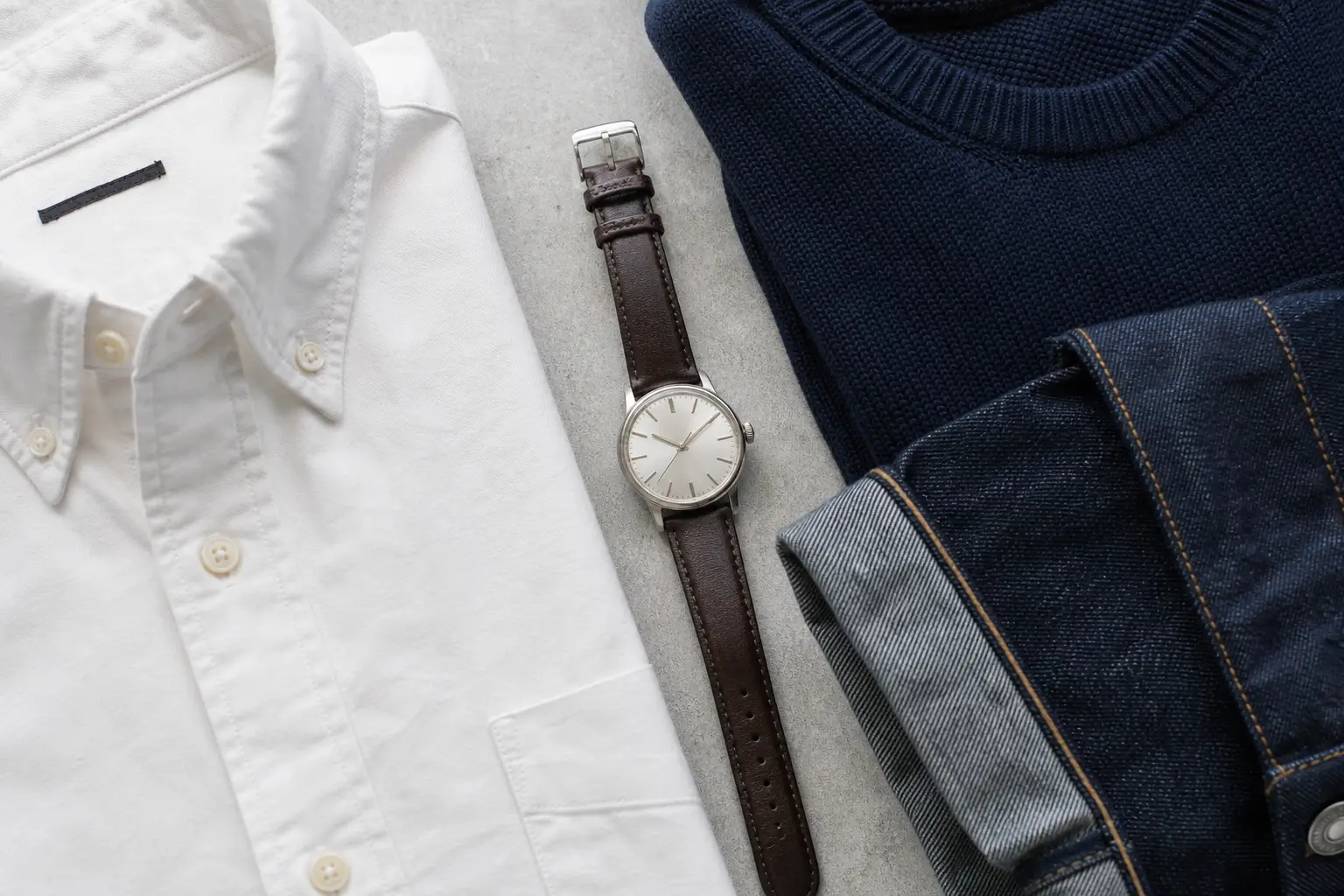
- Dress watch: slim case, clean dial, minimal extra features, leather strap or fine bracelet. It works best with tailoring, shirts, and evening wear.
- Field or pilot watch: clear Arabic numerals, matte dial, strong legibility, fabric, leather, or bracelet. Good with casual clothes, workwear, and relaxed office outfits.
- Dive or sport watch: rotating bezel, lume, stronger water resistance, rubber strap or bracelet. Often thicker and more casual.
- Chronograph: useful for timing and adds visual interest, but the dial is busier and the case is often larger or thicker.
- Digital or rugged watch: strong for utility, travel, the gym, and outdoor use. It is less natural with formal dress unless that contrast is part of the look.
Use the strap to make the watch fit your wardrobe
- Steel bracelet: the easiest all-around choice. It works with casual clothes, business-casual outfits, and many suits.
- Black leather: formal, office, and evening. It is easiest to match with black shoes or a black belt.
- Brown leather: warmer and more casual. It works well with denim, chinos, tweed, and tan or brown shoes.
- Rubber, resin, or fabric: good for sport, travel, summer, and water. Less suitable as your only strap for formal use.
- Gold-tone or highly polished cases: dressier and more conspicuous. They can be harder to match with casual wardrobes.
Buy features you will use
- Date: practical for daily wear, but very small date windows can reduce legibility.
- Day-date: useful for office wear and routines built around the workweek.
- GMT or second time zone: useful for travel or remote work across time zones.
- Chronograph: useful for timing, but it adds dial clutter and can increase thickness.
- Lume: valuable for sport, field, dive, and night readability.
- Screw-down crown: helpful for water resistance, but only if you secure it properly.
- Quick-release straps or standard lug widths: useful if you want one watch to cover more outfits.
Pick materials and straps that suit your comfort, durability needs, and allergies
Materials affect weight, scratches, water use, and comfort. They also affect cost, so do not pay for a harder or flashier material if it does not solve a real problem for you.
- Stainless steel: the default safe choice. It is durable, versatile, and widely serviceable.
- Titanium: lighter than steel and often comfortable on larger watches. It can look more matte and technical.
- Ceramic: scratch-resistant and modern-looking, but it can be costly and less forgiving of hard impacts.
- Acrylic crystal: scratches more easily, but scratches can often be polished.
- Mineral glass: common at lower prices.
- Sapphire crystal: preferred for scratch resistance, but it can raise the price.
Straps are a comfort and maintenance choice
- Leather looks smart, but it ages and does not like water or sweat.
- Rubber or resin handles water, sport, and summer wear better.
- Bracelets last well and suit many wardrobes, but they add weight.
- Fabric and NATO-style straps are affordable and casual, useful for changing the mood of a watch.
If you are nickel-sensitive, treat the caseback, bracelet, clasp, and buckle as contact points. Look for nickel-free or hypoallergenic options, or choose leather, cloth, plastic, or resin straps where they suit the watch.
Buy the right water resistance for your real routine, not the biggest depth number
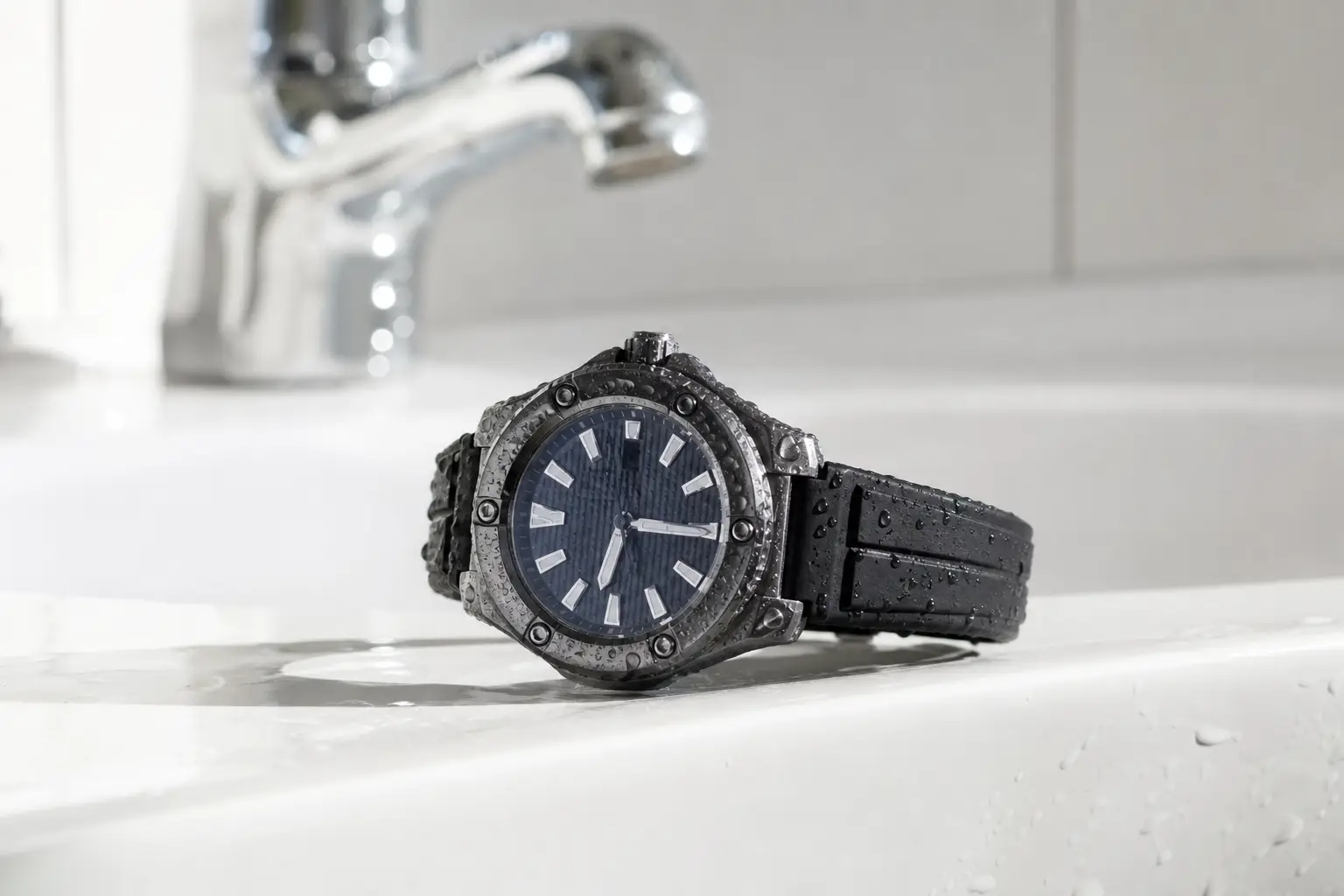
Water resistance is a usage rating, not a dare. Read the marking and match it to what you actually do: rain, hand washing, showers, swimming, snorkeling, or freediving without gear.
- No marking: keep the watch away from water.
- Water Resistant: suitable for splashes and rain only.
- 5 bar: suitable for splashes, bathing, washing, and showering, but not swimming.
- 10 bar: suitable for swimming and snorkeling.
- 20 bar: suitable for swimming, snorkeling, and freediving without gear.
The meter figures are test-pressure ratings, not permission to use the watch at that exact depth. Moving water can create higher pressure than a static test. Seals also age, and heat, cold, solvents, and cosmetics can speed up deterioration.
Use a lifestyle shortlist to balance movement, wardrobe fit, upkeep, and budget
Set your budget for ownership, not just checkout. Quartz may need battery changes, leather straps can age, mechanical watches cost more because of movement complexity, and water-resistant watches may need seal checks if you use them in water.
| Buyer type | Movement to shortlist | Case and style direction | Materials and water | Budget priority |
|---|---|---|---|---|
| Low-maintenance daily wearer | Quartz or solar quartz | Moderate case, clear dial, date only if useful | Stainless steel, resin, or rubber. Aim for 10 bar if it is your only everyday watch. | Put money into accuracy, comfort, legibility, and durability before brand prestige. |
| Office or dress buyer | Quartz, automatic, or hand-wound mechanical | Slimmer case, simple dial, restrained bracelet or leather strap | Steel case, leather for formal wear, sapphire if scratch resistance matters to you | Pay for thinness, clean design, and a strap that works with your shoes, belt, and shirts. |
| Mechanical enthusiast | Automatic for frequent wear, hand-wound mechanical for winding ritual | Size and thickness still matter. Do not let the movement excuse poor fit. | Steel is the safe choice. Display backs and finishing may matter if you enjoy movement architecture. | Accept lower accuracy and higher upkeep as part of the experience. |
| Sport, outdoor, or water user | Quartz, solar quartz, rugged digital, or automatic sport watch | Legible dial, lume, secure crown, practical bezel if needed | Rubber, resin, or bracelet. 10 bar for swimming and snorkeling, 20 bar for more demanding water use without gear. | Spend on water resistance, shock resistance, visibility, and straps you can rinse or dry easily. |
| Gift, status, or milestone buyer | Any, but match it to the recipient's routine | Avoid extreme size unless you know the wrist and taste well | Choose materials and strap with comfort, allergies, and wardrobe in mind | Consider brand, warranty, recognition, resale, and presentation, but do not skip fit. |
Because local prices move, use entry, mid, and premium as filters rather than fixed numbers. At entry level, quartz, solar quartz, stainless steel, mineral glass, and practical water resistance often give you the most usable watch. In the middle, decide whether better finishing, sapphire, an automatic movement, or a bracelet upgrade matters more. At premium level, be clear whether you are paying for movement craft, materials, brand, warranty, resale, or presentation.
Before you compare shops, set filters in this order: case diameter and thickness, style, movement, water resistance, strap or bracelet, crystal type, and price. That keeps the search focused on watches you might actually wear.
Compare men's watches
Live prices from more than 20 shops, updated daily.
Common mistakes that make a watch expensive but unworn
Most bad watch buys fail in ordinary use. They are too large, too delicate, too formal, too casual, or too annoying to reset.
- Buying movement prestige before checking wrist fit.
- Choosing a large case because it looks impressive in photos, then finding that the lugs overhang your wrist.
- Ignoring thickness and discovering the watch will not slide under a shirt cuff.
- Treating Water Resistant as swimming-safe. It usually means splashes and rain only.
- Assuming water resistance lasts forever. Seals age, and heat, cold, solvents, and cosmetics can make that worse.
- Choosing leather for regular water, gym, or heavy summer use.
- Buying a chronograph, GMT, or tiny date window because it looks technical, not because you will use it.
- Picking a gold-tone or highly polished watch as your only watch when your wardrobe is mostly casual.
- Forgetting nickel sensitivity in the caseback, bracelet, clasp, or buckle.
- Spending the whole budget on the watch and leaving nothing for straps, battery changes, or servicing.
FAQ
Is quartz a poor choice for a first serious men's watch?
No. Quartz is usually the most accurate, least expensive, and lowest-maintenance choice. It is a strong option if you want grab-and-go timekeeping or wear the watch only occasionally.
Should I buy an automatic watch if I will not wear it every day?
Only if you are happy to reset it after it stops. An automatic watch relies on wrist motion and will stop after its power reserve if left unworn. Quartz is easier for occasional wear.
What case size should I choose for a 6.7 in wrist?
Use 36 to 42 mm as a starting range. Then check lug-to-lug length, thickness, bezel width, and whether the watch clears your cuff. The same diameter can wear very differently across styles.
Is 5 bar water resistance enough for swimming?
No. 5 bar is generally for splashes, bathing, washing, and showering, not swimming. For swimming and snorkeling, look for 10 bar. For freediving without gear, look for 20 bar.
What is the safest one-watch style for mixed wardrobes?
A simple three-hand watch in a moderate case size with a neutral dial is the safest start. A stainless-steel bracelet gives you the widest wardrobe range, while leather can make the same style feel dressier.
Do I need sapphire crystal?
Not always. Sapphire is preferred for scratch resistance, but it can raise the cost. Acrylic scratches more easily but can often be polished, and mineral glass is common at lower prices.
Verdict: choose the watch you will wear often, maintain willingly, and can afford comfortably
Choose quartz or solar quartz if you want accurate grab-and-go time. Choose automatic if you will wear the watch often and enjoy the mechanics. Choose hand-wound mechanical if the winding ritual is part of the appeal.
Then reject any watch that wears too large, catches on cuffs, lacks enough water resistance for your routine, or forces awkward outfits. Spend where you will notice it every week: fit, legibility, strap comfort, useful water resistance, and upkeep you can live with.
This article was created using AI, following our team's editorial standards.


