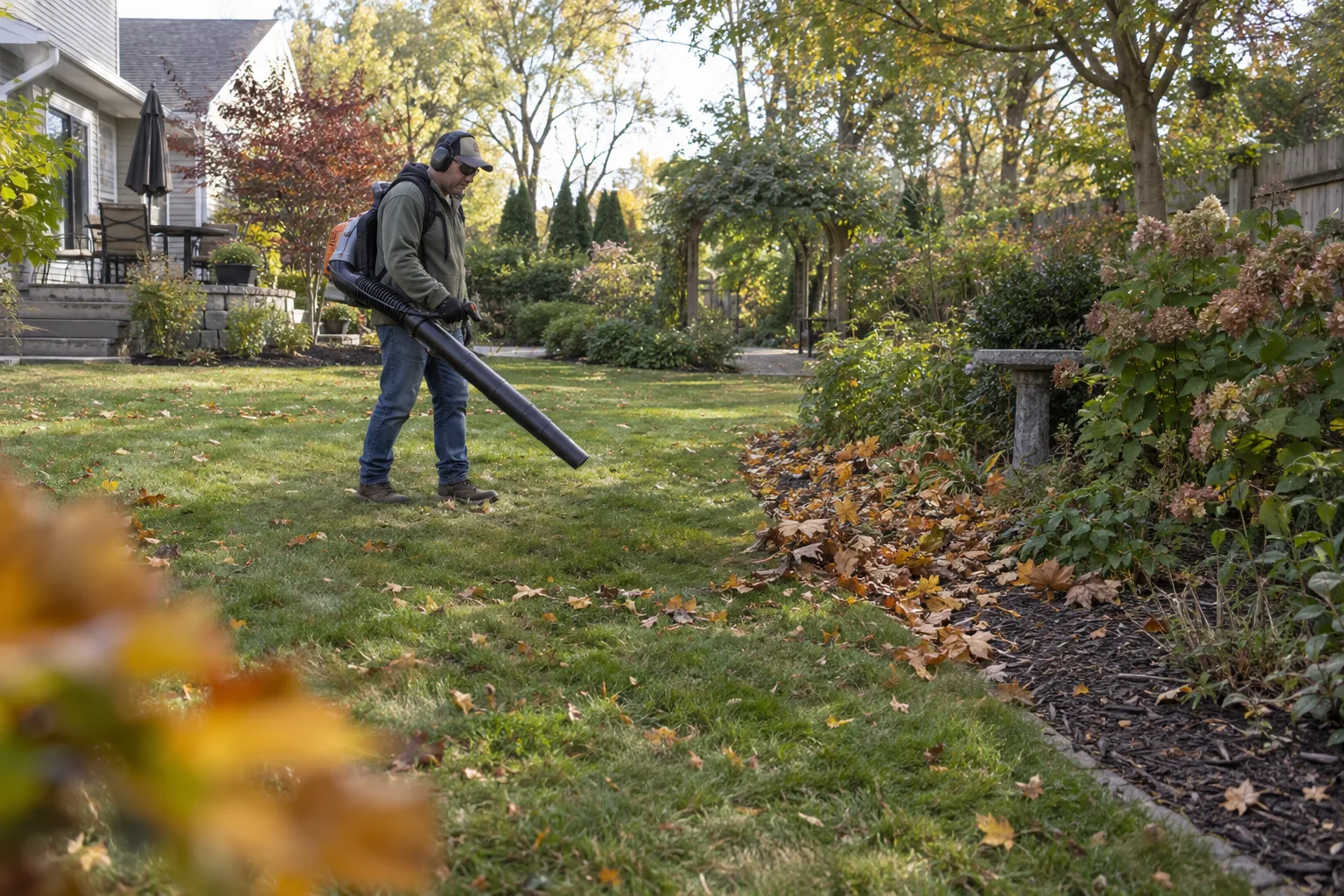


Small gardens don’t forgive clumsy robot mower design. A mower with a huge claimed coverage can still be the wrong buy if it can’t dock cleanly, pass a narrow side path or cut close enough to your borders.
How to choose for a small garden: judge setup, docking and edges before lawn size
Start with the awkward parts of the lawn, not the square metres. Measure the grass area, then check how the mower will enter, turn, dock, avoid borders and leave the lawn looking finished.
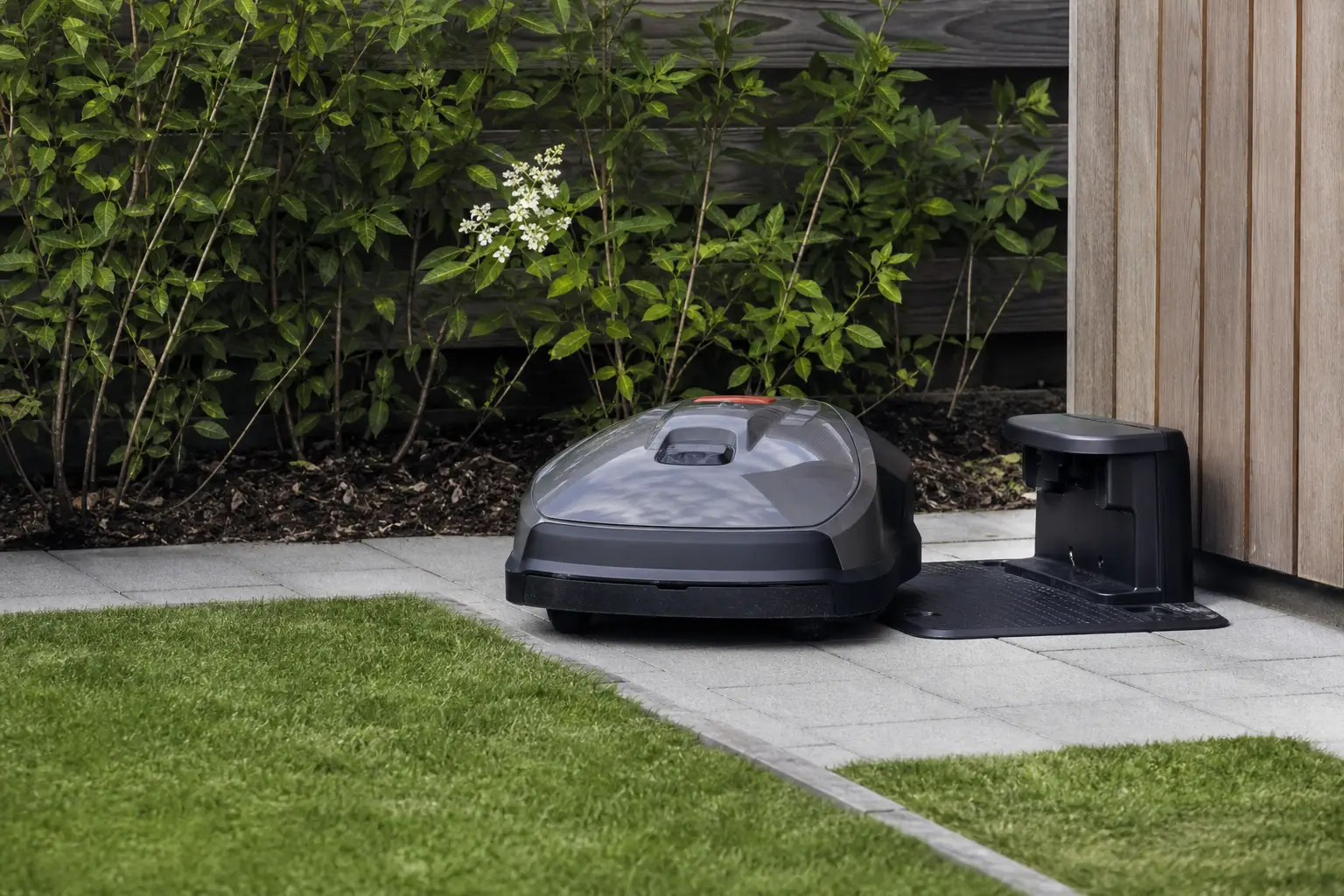
Claimed coverage is still useful, but it’s only a starting filter. A 500 m² or 0.25 acre class mower can be poor value on a 120 m² lawn if the body is bulky, the dock needs too much clear approach or the mower leaves a wide uncut strip around every edge.
- Boundary and setup: choose the system that fits your layout changes, patience and tolerance for pegging wire.
- Edge finish: small lawns make a 10 cm uncut strip look big, especially along patios, walls and raised beds.
- Dock placement: check for a flat, powered spot with a clear approach before you buy.
- Narrow passages and zones: many compact mowers quote minimum passages around 55 to 70 cm, but real success depends on turning room and boundary definition.
- Obstacle and safety behaviour: sensors help, but you still need to clear toys, hoses, pet waste, stones and sticks.
- Cutting range: most compact models use narrow decks and frequent maintenance cuts, not one-off rescue cuts through long grass.
- Running costs: blades, batteries, wire repairs, add-on modules and garages matter more than electricity, which is usually low. Gardena’s SILENO minimo 250, for example, lists mean energy use of 2.1 kWh per month at maximum use.
The best robot lawn mowers for small gardens, organised by layout problem
The strongest small-garden shortlist is not one ranking by area rating. It’s a set of mower types matched to the problem your garden actually has.
| Small-garden need | Good model families to shortlist | Why they make sense | Watch-outs |
|---|---|---|---|
| Best value for a simple small lawn | Gardena SILENO minimo 250/500, Worx Landroid S250/S300/S400 | Wired small-garden mowers remain a sensible choice where the lawn edge is stable and the layout is simple. They are usually cheaper than wire-free models and predictable once installed. | You must install and maintain boundary wire. Changes to beds, islands and no-go zones are more fiddly, and trimming is still part of ownership. |
| Best for a tiny lawn with no good dock spot | Bosch VISIMOW18V-100 and VISIMOW18V-200 | This portable, semi-autonomous style suits very small lawns where a permanent dock, RTK antenna or perimeter wire would be more trouble than the mowing. The VISIMOW18V-100 is rated to 100 m² and uses a removable 18V battery. | It is not a full set-and-forget docked mower. Bosch’s own guidance says VISIMOW can leave about 100 to 150 mm of edge grass to trim. |
| Best wire-free all-rounders for small family gardens | Segway Navimow i105/i110, Ecovacs GOAT O500 Panorama, eufy C15/E15, Mammotion YUKA mini 2 | These models aim to remove the hardest part of wired ownership: perimeter installation. They suit buyers who want app mapping, easier layout edits and less cable work. | Wire-free does not mean no setup. RTK/GNSS models need good sky view and careful base placement. Vision, LiDAR and hybrid systems still need clear boundaries and no-go zones. |
| Best for awkward small gardens with paths, islands or shade | Vision, LiDAR or hybrid wire-free models from Ecovacs, eufy and Mammotion small-garden ranges | In tight or changing layouts, virtual boundaries and visual navigation can be easier to adjust than wire. This matters around beds, trees, trampolines and separated patches. | Small-object detection is not foolproof. Ponds, steps, drop-offs and confusing surfaces still need careful exclusion. |
| Best for steep or rough compact lawns | Mammotion LUBA mini AWD or similar traction-focused compact models | Buy this type for grip, uneven ground and slopes, not for headline area. Better traction can matter more than capacity if the slope sits at the lawn edge or near the dock. | Often overkill for a flat rectangle. Bigger bodies and docks can be awkward in a truly small garden. |
Compare robot lawn mowers for small gardens
Live prices from more than 20 shops, updated daily.
Wired, wire-free or portable: which boundary system will cause you the least hassle?
The boundary system decides how much setup you’ll do before the mower ever cuts grass. In a small garden, the easiest system for your layout usually beats the most advanced-sounding one.
Boundary-wire mowers: cheap and steady, if the lawn is settled
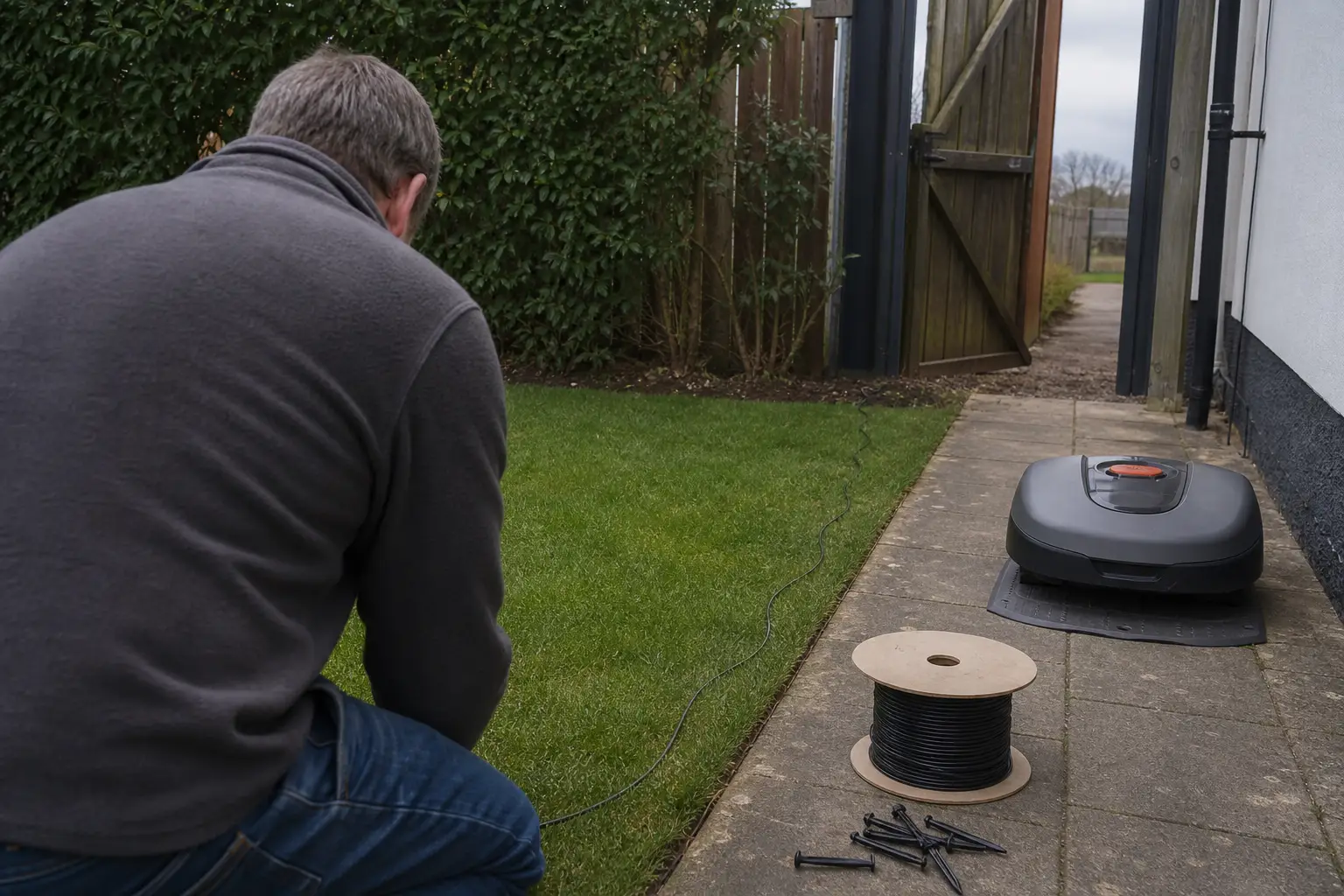
Wired mowers are still a good fit for simple lawns with permanent borders. You pay less, and the mower has a physical guide for the edge. The trade-off is the install: pegging or burying wire, routing it around islands and repairing it if it breaks.
RTK, vision and LiDAR wire-free mowers: easier edits, more setup checks
RTK/GNSS systems use app-drawn virtual boundaries and work best with open sky and a sensible base-station position. Tall walls, dense trees and narrow side returns can make them harder to place. Vision, LiDAR and hybrid models avoid some antenna headaches and can suit complex small gardens, but they still need visible edges, mapping time and first-run supervision.
Portable or semi-autonomous mowers: useful for tiny patches
A portable small mower makes sense if the grass is tiny, split into patches or rented with no place for a dock. It can also be easier to carry between front and back lawns than to engineer a mower gate. The compromise is more owner involvement: charging, moving and trimming are still on you.
What to check before you buy: passages, docks, slopes, edges and first-cut prep
Do a five-minute garden audit before comparing deals. It will tell you whether a mower will save time or create a new weekend project.
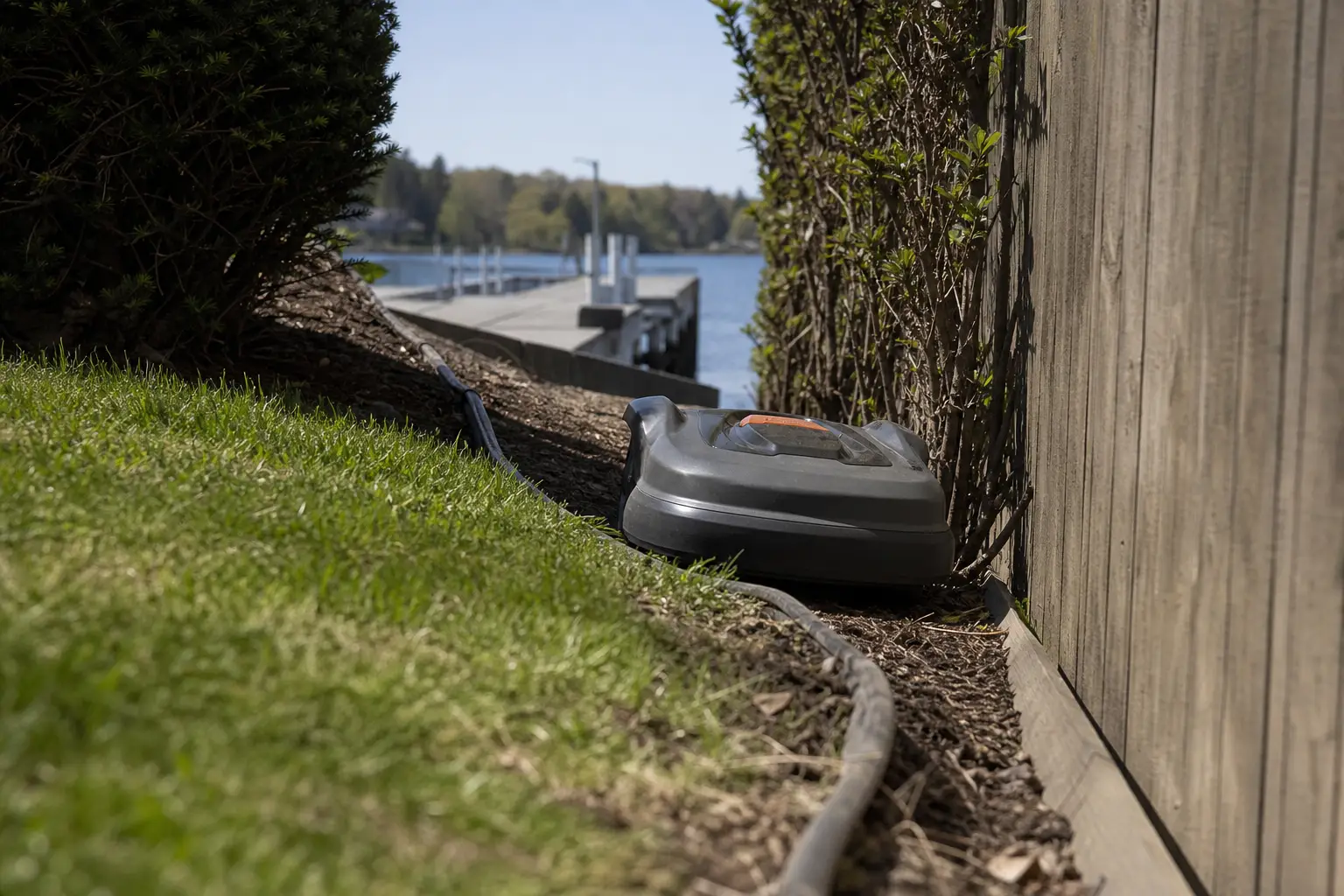
- Measure the narrowest route. Current compact mowers often claim around 55 to 70 cm minimum passage ability, but a dead-end strip or tight turn can still cause scuffing and failed coverage.
- Plan the dock first. Look for flat ground, outdoor-rated power and a clear route in and out. A dock hidden in a tight corner may look tidy but can cause missed starts and failed returns.
- Check edges you care about. Walls, fences, raised sleepers and inside corners usually need trimming. Offset decks and edge-specific features can reduce the strip, but they rarely remove trimming completely.
- Check slopes at the boundary, not just in the middle. Many compact mowers sit around 25 to 35% slope capability, while stronger wire-free models can claim around 40 to 50%. Boundary and docking slopes may be lower than the mower’s internal slope rating.
- Prepare the lawn for the first cut. Robot mowers are maintenance cutters. Mow long grass manually first, then clear stones, sticks, toys, hoses, pet waste and loose garden items.
- Check connectivity where the mower works. Bluetooth models may need you nearby. Wi-Fi models need garden coverage. Optional 4G modules can be region-specific, trial-based or subscription-based.
- Check safety and power details. Look for lift and tilt sensors, emergency stop, safe restart behaviour, PIN or app locking and local compliance with relevant robotic mower safety standards. Check mower, dock and power-supply weather ratings separately.
Common small-garden mistakes that make a robot mower more work than mowing
Most bad small-garden purchases fail on practical fit. Avoid these mistakes and you’ll remove most of the faff before it starts.
- Buying the biggest coverage claim. More capacity does not fix poor docking, weak edge performance or a body that can’t turn neatly in a tight garden.
- Assuming wire-free means no setup. You still need mapping, no-go zones, app pairing, firmware updates and a supervised first run.
- Ignoring the edge strip. On a 50 m² lawn, a narrow uncut border is a large visible share of the garden.
- Hiding the dock anywhere it fits. Robot mowers need a reliable approach, not just a spare corner near a socket.
- Expecting long-grass rescue mowing. These machines work by trimming little and often. Wet, long or neglected grass can clog, slip or cut unevenly.
- Scheduling at night without thinking about wildlife. Avoid dusk, dawn and night mowing where hedgehogs or other nocturnal wildlife may be present. Wet grass also increases slip and clogging risk.
- Forgetting used or discounted stock checks. Register lithium battery products where possible and check local recall information for the exact model before buying second-hand or unusually cheap stock.
FAQ: trimming, front-and-back lawns, night mowing, pets, wires and long grass
Do I still need a grass trimmer?
Usually yes. Robot mowers struggle against vertical walls, raised borders, fence lines and tight corners. Edge-focused decks can reduce trimming, but they don’t remove it for every border.
Can one robot mower handle front and back lawns?
Only if it can travel safely between them, support separate zones or maps, or be carried. Gates, steps, gravel and public paths are common deal-breakers.
Is boundary wire outdated?
No. Wired mowers are still good value for simple lawns with stable borders. Wire-free is most useful where installing wire is awkward, the layout changes, or the garden has many islands and paths.
Can I run a robot mower at night?
Many models can run at night, but it is better to avoid dusk, dawn and night schedules where nocturnal wildlife may be present. Wet night grass can also increase clogging and slipping.
Will a robot mower cut long grass?
Not well. Robot mowers are designed for regular maintenance cuts. Before first use after a growth spurt, cut the lawn manually and clear debris.
Are robot mowers safe around children and pets?
Use scheduling to keep children and pets off the lawn during mowing. Sensors and obstacle detection help, but they are not a substitute for clearing toys, hoses, pet waste and holes. Look for lift and tilt sensors, emergency stop and safe restart behaviour.
Verdict: buy the mower that fits your garden’s awkward bits, not the biggest coverage claim
For a simple small rectangle, shortlist a good wired model and spend the savings on spare blades and a clean install. For a tiny lawn with no dock space, a portable low-capacity mower may make more sense than a full docked system. For awkward, split or changing gardens, pay for easier mapping, better edge handling and reliable passage behaviour before paying for extra area you’ll never use.
This article was created using AI, following our team's editorial standards.