

Buying the highest PSI you can afford is a common way to end up with a washer that is slow, awkward or too aggressive for the surfaces you clean most. Choose by job first, then balance pressure, flow rate, nozzle choice and reach.
This guide helps you match a pressure washer to cars, decking, patios, driveways and heavier work without paying for power you do not use.
Start with the surfaces you clean most, not the highest PSI
The best pressure washer for you is the one that suits your regular cleaning, not the worst stain you might face once. Softer and painted surfaces need restraint. Large hard areas need enough flow to rinse dirt away quickly.
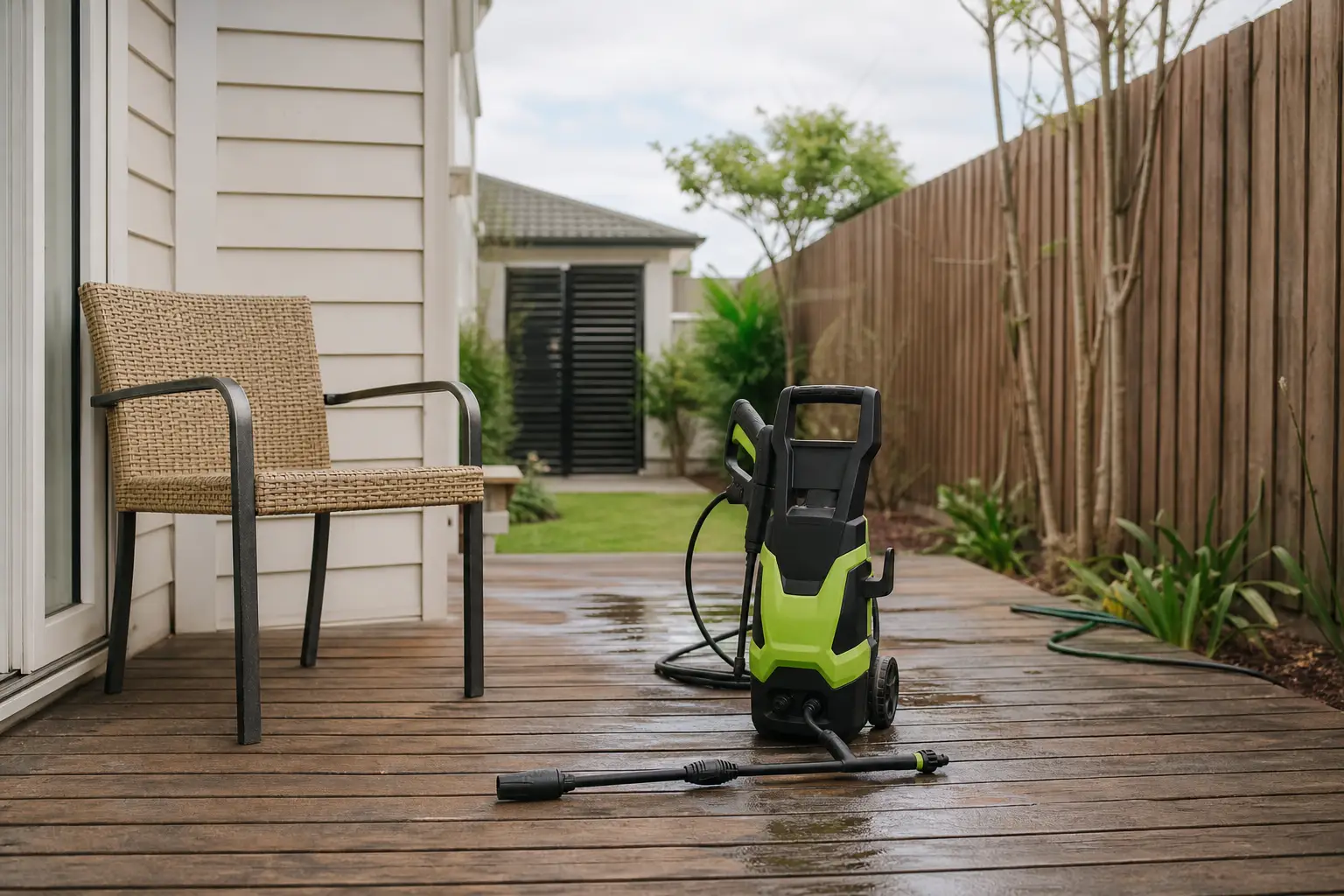
- List the jobs you do most often: car, outdoor furniture, bins, patio, decking, fence, siding, driveway or equipment.
- Pick the toughest regular job on that list. Buy for that, not for a rare one-off job.
- Treat vehicles, boats, grills and outdoor furniture as light-duty cleaning. Too much pressure can damage paint, seals, trim and soft finishes.
- Treat decks, fences, siding and patios as medium-duty jobs. Use detergent and wider tips before increasing pressure.
- Treat concrete, asphalt driveways and walkways as harder jobs. They often benefit from higher flow and a surface cleaner.
- For graffiti, paint stripping, heavy stains or frequent commercial work, look at commercial machines, hot-water options or rental instead of a standard household washer.
Balance PSI and GPM to get the right mix of force and cleaning speed
PSI breaks dirt loose. GPM moves the water that carries that dirt away. For patios and driveways, flow rate can make a machine feel much faster than a high-PSI model with weak rinsing power.
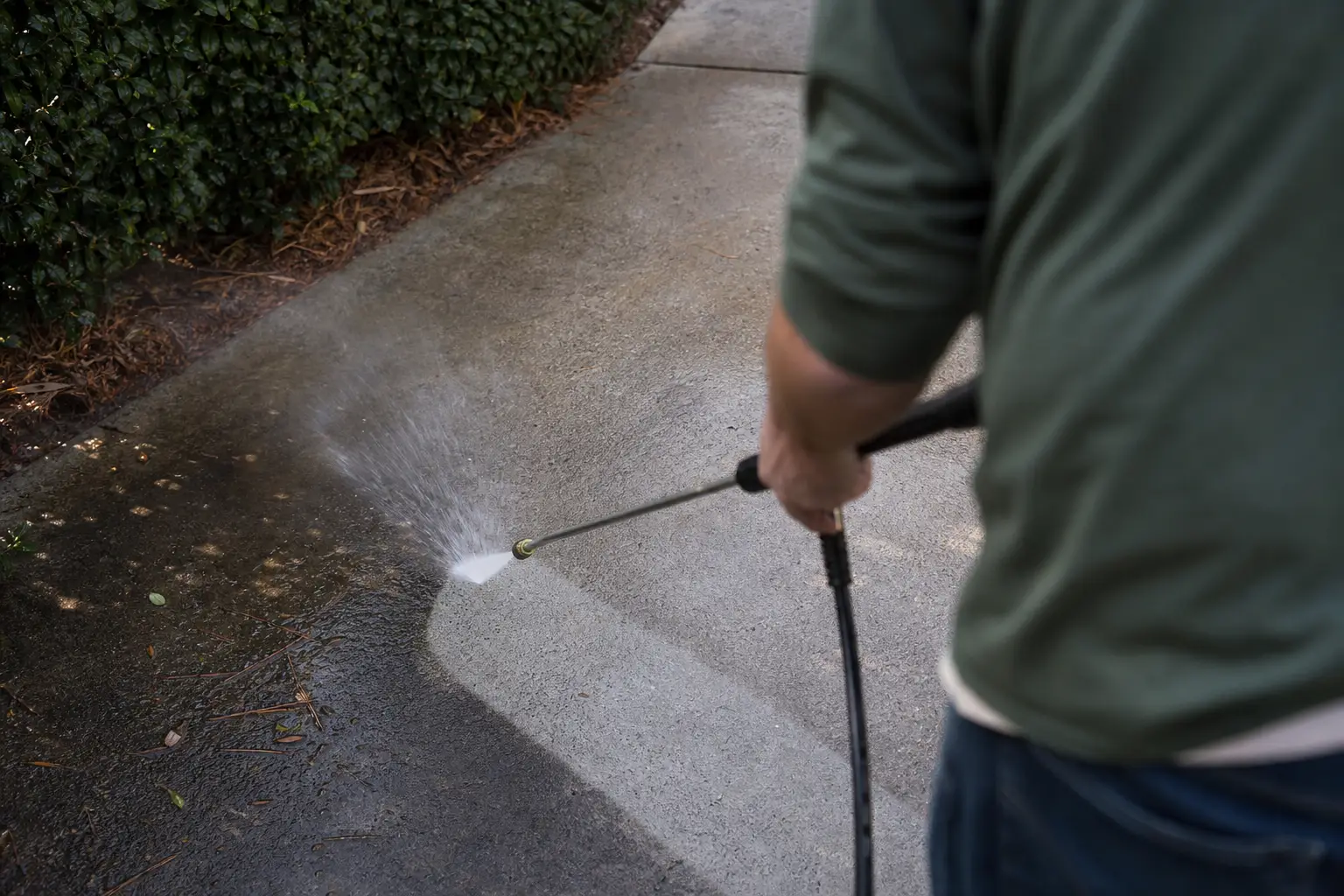
Many buying guides describe cleaning power as PSI times GPM. That is not a perfect real-world test, but it is a better way to compare washers than pressure alone.
| Job or surface | Typical PSI band | Typical flow clue | What to prioritise |
|---|---|---|---|
| Vehicles, boats, grills, outdoor furniture | Around 1,200 to 1,900 PSI | Light electric models often sit around 0.5 to 2 GPM | Wide spray, lower pressure, controlled rinsing |
| Decks, fences, siding, patios | Around 1,900 to 2,800 PSI | Medium-duty residential units are often around 1 to 3 GPM | Detergent, wider tips first, careful testing on wood or painted surfaces |
| Concrete, asphalt driveways, walkways | Around 2,500 to 3,500 PSI | Higher flow helps large areas feel quicker | Surface cleaner, enough flow to rinse each pass clean |
| Commercial cleaning, graffiti, paint stripping, heavy stains | 3,100 PSI and above | Heavy or commercial units can reach around 2 to 4 GPM | Petrol or commercial kit, possibly hot water for specialist work |
Choose electric, cordless or petrol based on workload, mobility and maintenance
Power source changes how the washer feels to own. Electric models are easier for many household jobs. Petrol models earn their keep on larger areas, tougher stains and places where a cord would get in the way.
| Type | Best suited to | Trade-offs |
|---|---|---|
| Corded electric | Cars, garden furniture, bins, small patios, decks and light-to-medium homeowner jobs | Usually cheaper, quieter, lighter, cleaner-running and lower maintenance. Limited by outlet, cord and typically lower GPM. |
| Battery or cordless | Very light rinsing where portability matters, such as bikes, camping gear and small spot jobs | Convenient, but generally not the choice for large concrete areas or heavy stains. |
| Petrol/gasoline | Large driveways, fences, siding, farm or equipment cleaning, paint prep and heavier stains | Higher power and better mobility. Louder, heavier and higher maintenance, with fuel storage and exhaust or carbon monoxide risk. |
| Commercial, hot-water or pro petrol | Contractors, facilities, grease or oil, graffiti and frequent daily work | Much higher cost and maintenance. Better treated as specialist kit if you only need it rarely. |
Use the right nozzle and attachment to clean faster without causing damage
The nozzle changes the force at the surface. A narrow spray concentrates pressure. A wider spray spreads it out, which is safer for vehicles, furniture, wood and painted finishes.
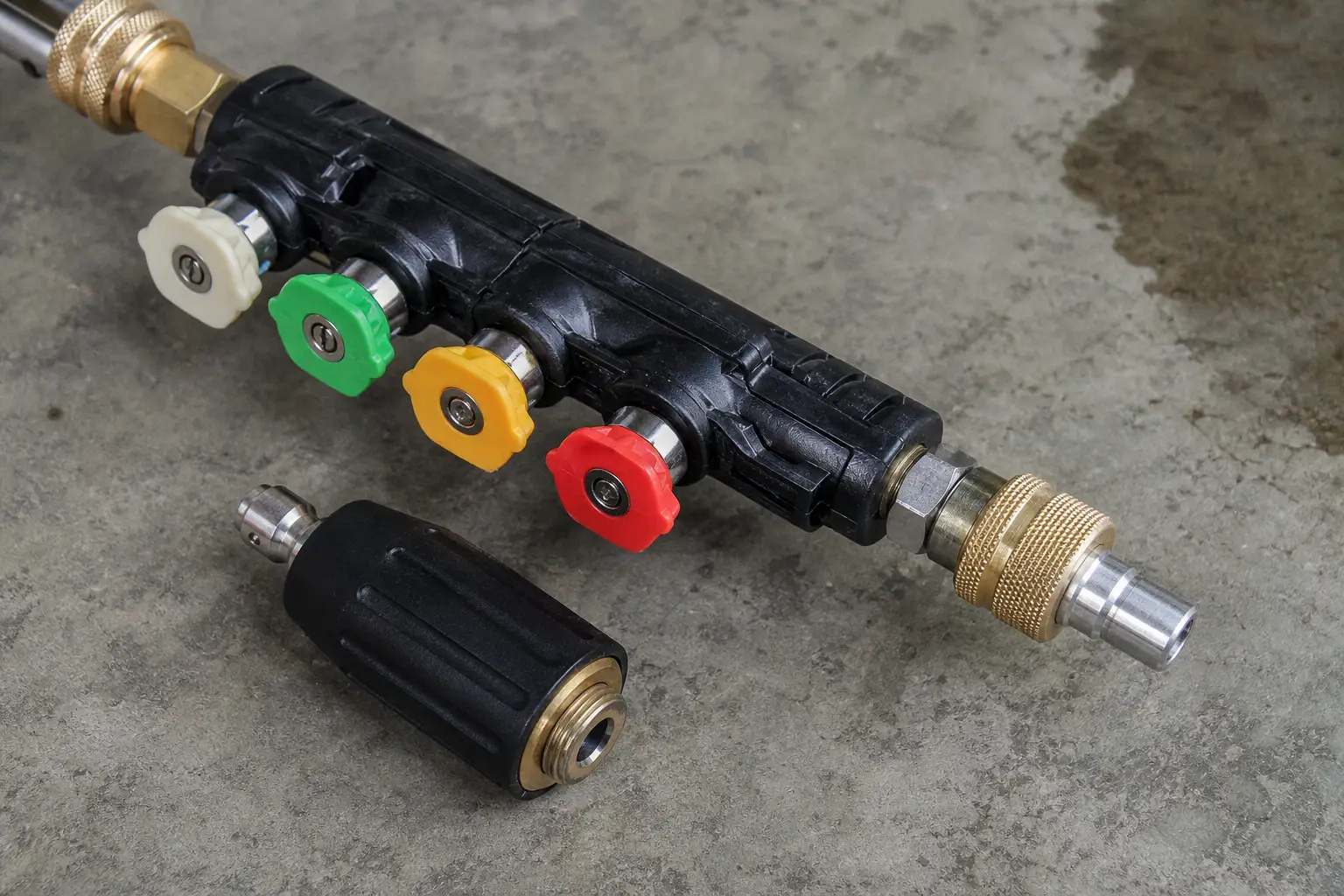
- 0° red: concentrated spray with the highest intensity. Do not treat it as a general-purpose tip.
- 15° yellow: heavy-duty cleaning where the surface can take more force.
- 25° green: general cleaning for many outdoor surfaces.
- 40° white: vehicles, furniture and more delicate surfaces.
- 65° black: low-pressure soap application.
A surface cleaner is one of the most useful attachments for driveways, patios and sidewalks. Its spinning jets spread pressure more evenly, which helps reduce striping and speeds up flat-area work.
Vehicle detailers should also check attachment compatibility before buying, especially if they want to use a foam cannon. For cars, the attachment and nozzle choice matter as much as the headline pressure figure.
Check hose, cord and water-supply reach before you buy
A washer with enough power can still be annoying if it cannot reach the work area. Before buying, walk the route from the water supply to the machine, from the machine to the surface and, for corded electric, from the outlet to the machine.
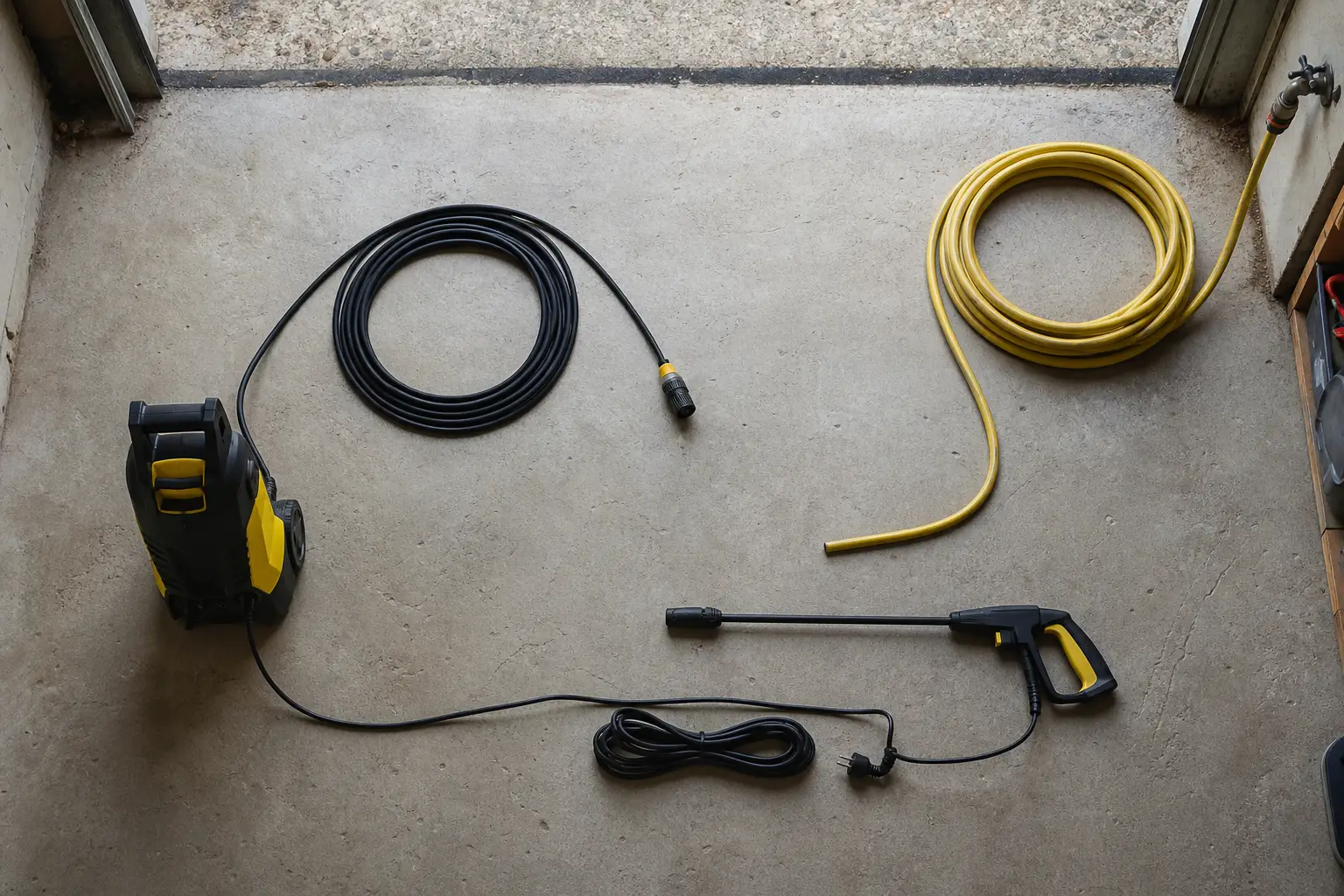
- Water supply reach: the washer still needs to connect to a tap or water source, even if the motor is petrol.
- High-pressure hose reach: a longer, flexible hose means less dragging the machine around cars, furniture or patio edges.
- Cord reach: corded electric models are limited by outlet position and cable route.
- Mobility: petrol removes the power cord but adds weight, noise, fuel handling and exhaust concerns.
- Storage: think about where the hose, wand, nozzles and attachments will live between uses.
Pressure washer shortlist: best fit by cleaning job and user type
Use your toughest regular job as the anchor. Then choose the least awkward machine that handles it safely.
| Your main use | Good fit | Why |
|---|---|---|
| Car, bikes, outdoor furniture, bins | Light-duty corded electric, or cordless for very light spot rinsing | Lower pressure is easier to control, and high flow is less critical for small items. |
| Decking, fences, siding, small patios | Medium-duty corded electric or a higher-flow residential model | Enough power for outdoor grime, with less maintenance than petrol for normal homeowner use. |
| Large patio, concrete driveway, asphalt walkway | Medium-to-heavy washer with stronger flow, plus a surface cleaner | The surface area makes GPM and even coverage matter more than PSI alone. |
| Large property, equipment, farm-style cleaning, paint prep | Petrol/gasoline washer | Better mobility and higher power for tougher, more spread-out work. |
| Facilities, trades, graffiti, grease or frequent daily use | Commercial washer, hot-water option or pro petrol | These jobs need more than a typical household cold-water washer. |
| One rare heavy job | Rental | You avoid buying, storing and maintaining a machine that is too aggressive for your normal cleaning. |
Compare pressure washers
Live prices from more than 20 shops, updated daily.
Common mistakes that make pressure washing slower, riskier or more expensive
- Buying by PSI alone. Flow rate, nozzle choice and reach affect the result just as much.
- Ignoring GPM for large flat areas. Low flow can make driveways and patios slow to rinse.
- Starting with a narrow nozzle. Begin wide, test first and only increase intensity if needed.
- Using too much pressure on cars, wood or painted surfaces. Damage can happen before the surface looks clean.
- Choosing corded electric without checking outlet and cord reach.
- Choosing petrol without accepting the noise, weight, maintenance, fuel storage and exhaust risk.
- Skipping a surface cleaner for large flat surfaces, then fighting streaks and striping.
- Buying a heavy-duty machine for a rare job instead of renting one.
FAQ: pressure washer PSI, flow rate, nozzles and safe use
Is higher PSI always better?
No. Higher PSI adds force, but it also increases damage risk. Match PSI to the surface, then use flow rate and attachments to improve cleaning speed.
What PSI is sensible for washing a car?
A light-duty range around 1,200 to 1,900 PSI is typical. Use a wide spray and avoid aggressive tips because too much pressure can damage paint, seals, trim and soft finishes.
What matters more, PSI or GPM?
They do different jobs. PSI loosens dirt. GPM rinses it away and speeds up large-area work. Compare both, not just pressure.
Should I buy electric or petrol for a driveway?
For a small or moderate area, a capable electric model may be enough. For large concrete or asphalt driveways, stronger flow, higher power and a surface cleaner matter, so petrol may be the better fit.
Which nozzle should I start with?
Start with the widest practical spray and test a hidden area. The 40° white tip is suited to vehicles and delicate surfaces, 25° green is general cleaning, and 65° black is for low-pressure soap.
Do I need a surface cleaner?
For driveways, patios and sidewalks, it is often worth having. It spreads pressure more evenly, helps reduce striping and makes large flat areas quicker to clean.
Verdict: buy for your toughest regular job, rent for rare heavy-duty cleaning
For cars, furniture and small outdoor jobs, choose a light or medium corded electric washer with wide nozzles and enough hose reach. For decking, fences and patios, stay in the medium-duty range and test carefully before increasing pressure.
For large driveways and hardstanding, do not chase PSI alone. Look for enough GPM, a practical hose setup and a surface cleaner. For graffiti, paint stripping, grease or rare heavy-duty work, rent or step up to commercial kit rather than buying too much machine for everyday use.
This article was created using AI, following our team's editorial standards.