

If a houseplant keeps yellowing, drooping or sitting in soggy soil, don’t start by changing the watering schedule. Put it in the right light first, because light controls growth, water use and how quickly the pot dries.
Start with the light test: why watering only works after the plant is in the right spot
The useful order is simple: identify the plant, match its light group, then adjust water, potting mix, feeding and humidity. If you skip the light step, every other care habit becomes guesswork.
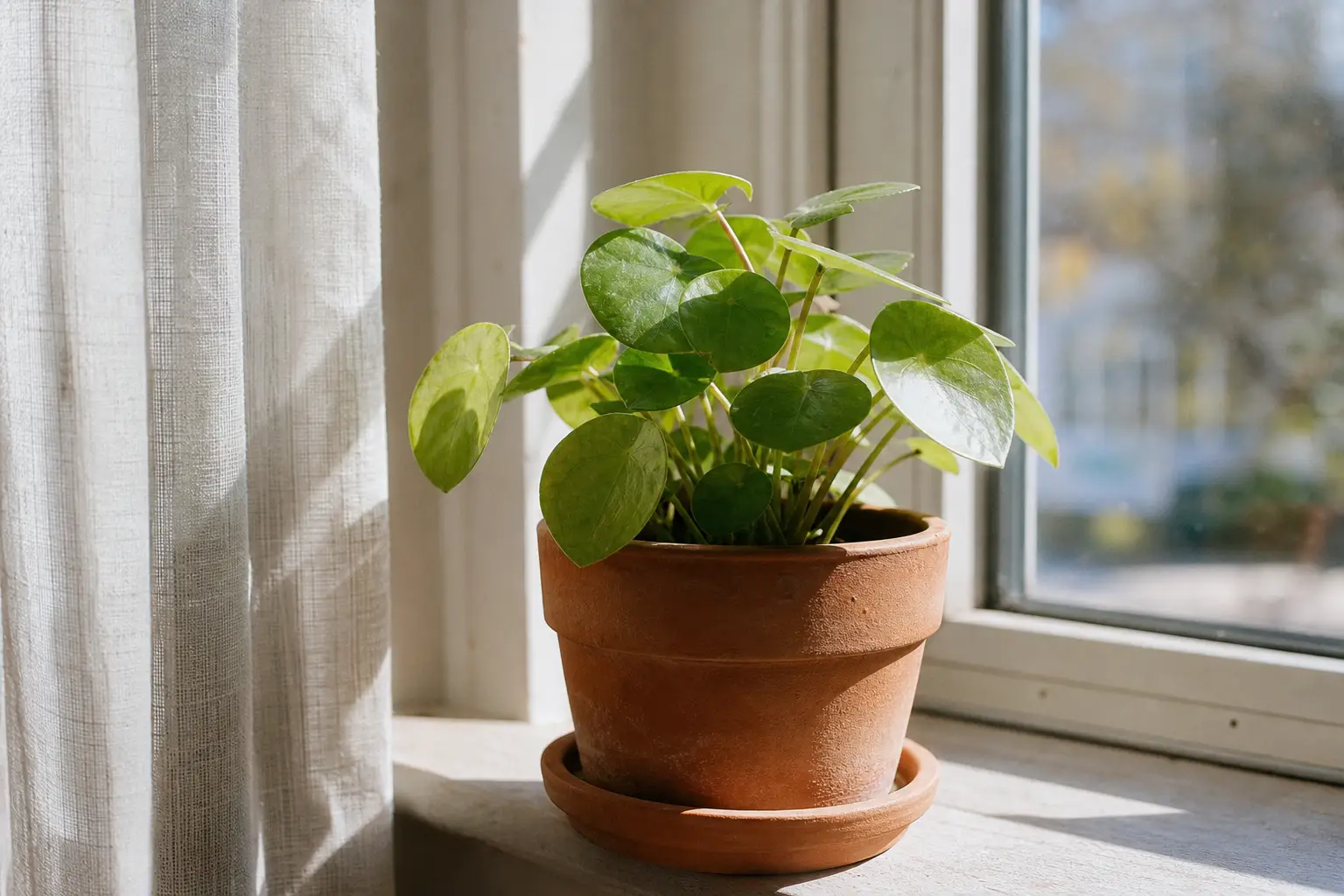
Low light slows growth. A slow-growing plant uses less water, so the same watering habit can leave the roots wet for too long. Brighter, warmer conditions usually increase water demand, so the same plant may dry faster after you move it.
- Identify the plant, or at least its group: tropical foliage, succulent, cactus, orchid, fern, palm, flowering plant or vine.
- Estimate the real light where it will live, not the light you wish the room had.
- Move the plant into the closest matching light zone.
- Water only after checking soil dryness, pot weight and growth rate.
- Repot only if the roots or soil show a real need.
- Feed and adjust humidity only when the plant is actively growing and the species benefits.
Match your plant to your room: low, medium, bright and direct-light options compared
“Bright indirect” is vague. Foot-candles are more useful, even if you only use them as rough ranges. Window direction is a guide, but the plant’s actual spot matters most.
| Light group | Typical range | Common indoor position | Plant examples | Care implication |
|---|---|---|---|---|
| Low light | About 25 to 100 foot-candles | North-facing windows or artificial room light | ZZ plant, snake plant, cast-iron plant, peace lily | Growth is slower, so water demand is lower. Let the pot dry more before watering again. |
| Medium to bright light | About 100 to 500 foot-candles | Often east or west windows | Chinese evergreen, rubber plant, dracaena, African violet | Good range for many foliage plants. Check dryness rather than using a fixed weekly routine. |
| High light | About 500 to 1,000 foot-candles | South or some west windows | Croton, hibiscus, jade, hoya | Plants can grow and dry faster. Watch the pot weight and soil surface closely. |
| Direct indoor sun | Over 1,000 foot-candles for several hours | A very sunny indoor position | Citrus, many succulents and cacti, gardenia, some air plants | Best for plants that need strong light. Succulents and cacti still need fast drainage and full drying between waterings. |
Use size as a care clue, not just a décor choice
A small plant in a small nursery pot dries differently from a floor plant in a heavy decorative container. Bigger plants, sunnier placements and warmer rooms usually dry faster. Large cachepots without drainage can hide standing water.
- Mini or starter plants: usually 2 to 4 inch nursery pots for desks, shelves and windowsills.
- Small tabletop plants: usually 4 to 6 inch pots, common for first plants and gifts.
- Medium plants: usually 6 to 10 inch pots, common for monsteras, philodendrons, dracaenas, ferns and hoyas.
- Floor specimens: usually 10 to 14 inch pots or larger, common for ficus, palms, large monsteras, bird of paradise and large dracaenas.
Water by dryness, pot weight and growth rate, not by the calendar
A calendar watering routine is the fastest way to lose track of what the plant needs. Check the pot first. Feel the top few inches of soil and lift the pot: a light pot is usually drier than a heavy one.
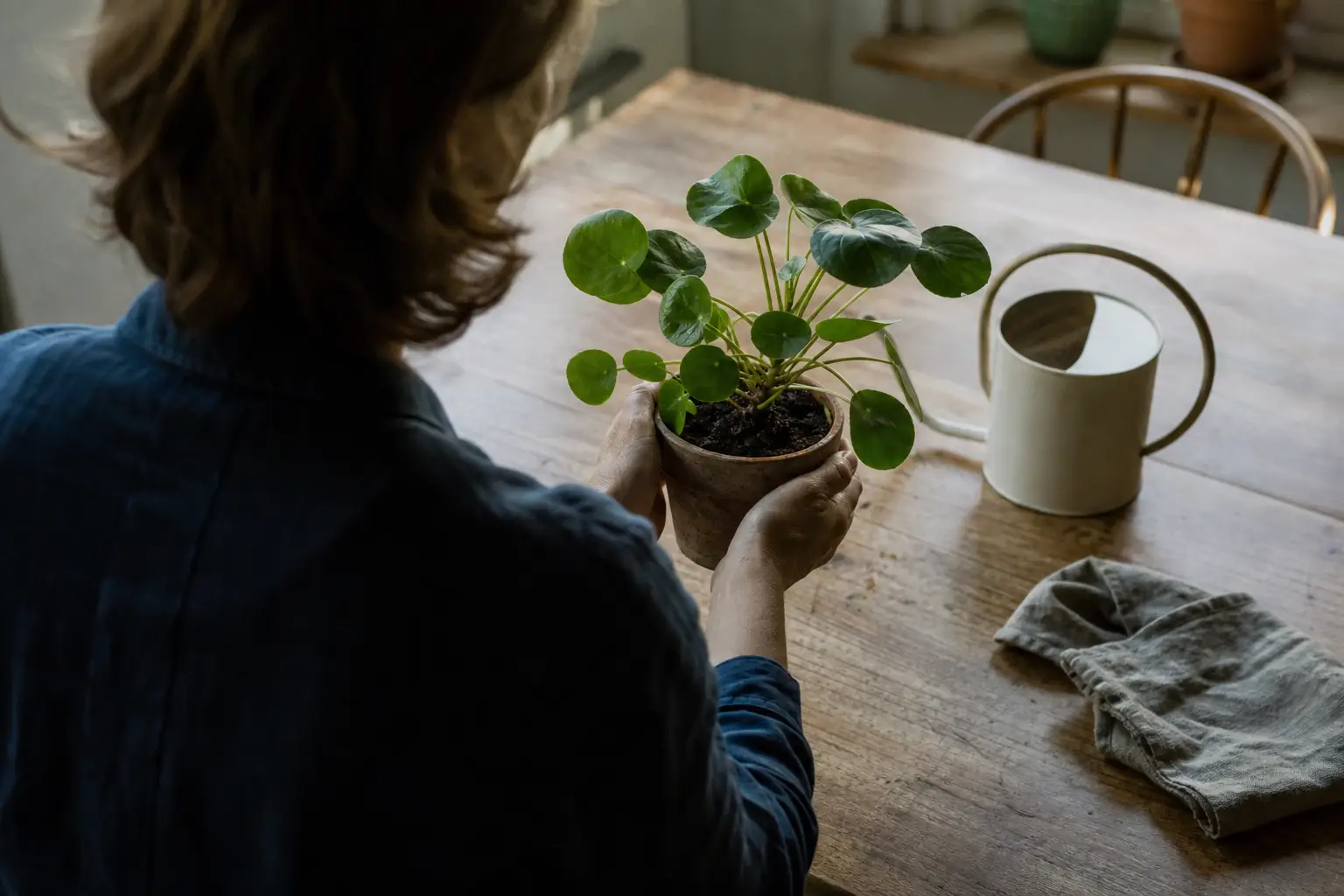
- Check the light. If the plant has been moved into lower light, expect it to use less water.
- Feel the top few inches of the mix. Do not judge only by the surface.
- Lift the pot. Learn how it feels after watering and when it is drying out.
- Water thoroughly when the plant is ready, so the mix is evenly moistened.
- Let excess water drain out completely.
- Empty the saucer or cachepot so roots are not left sitting in water.
Wilting does not always mean the plant is thirsty. If the soil is wet and the plant is wilting, the roots may have lost function because wet soil lacks air. Roots need oxygen, and constantly wet potting mix can lead to root rot.
Treat succulents and cacti differently
Succulents and cacti need abundant light, modest water and fast drainage. Let the mix dry completely between waterings. If they are kept in weak light, they are much easier to overwater.
Choose pots, drainage and soil mixes that stop roots sitting wet
Drainage is not a nice extra. It is part of the care system. The safest setup is a pot with drainage holes, a saucer or outer cachepot to catch runoff, and a habit of emptying that water after watering.
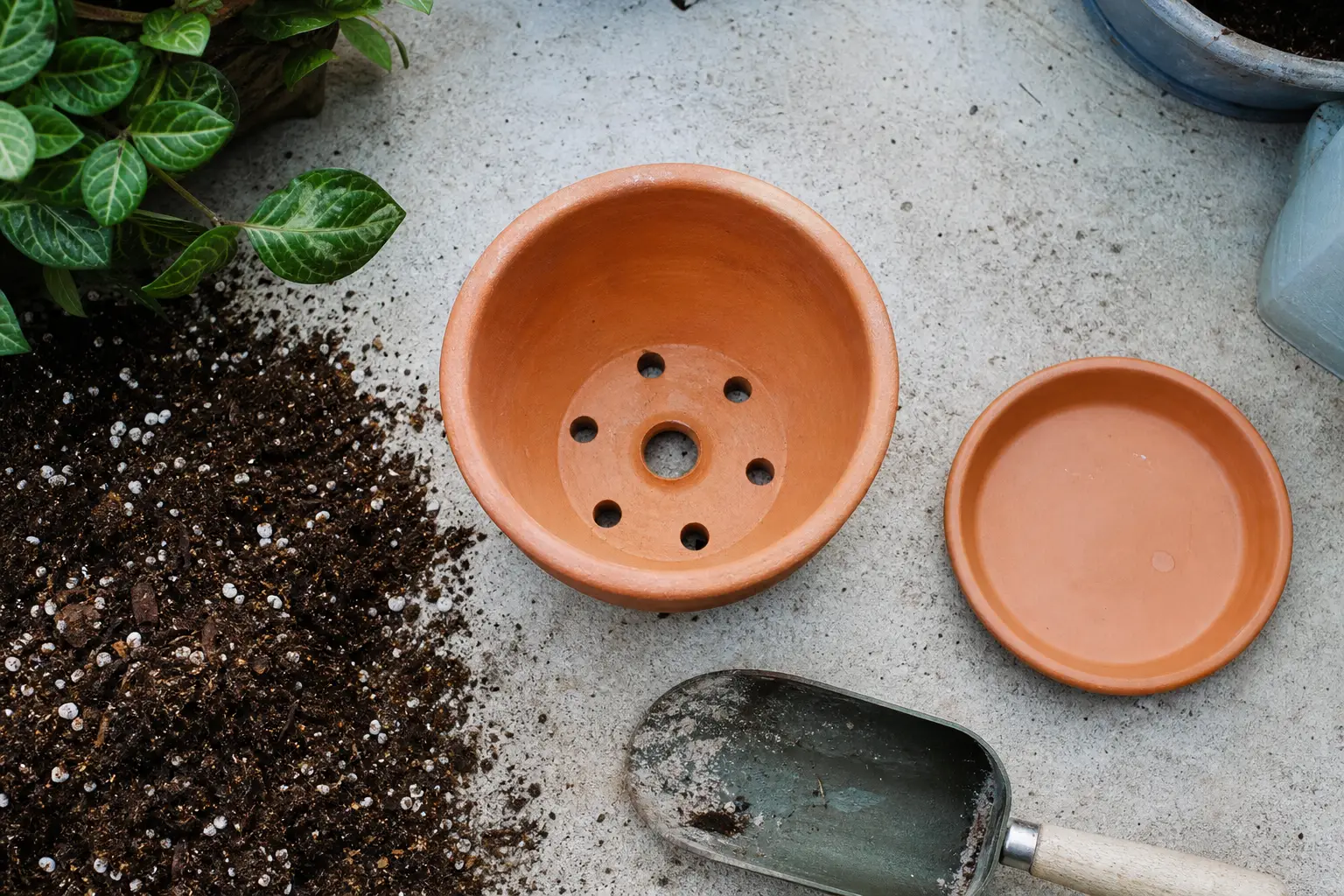
- Avoid planting directly into a sealed decorative pot unless you have a reliable way to remove excess water.
- Do not leave water pooled in a saucer or cachepot.
- Be cautious with oversized decorative containers, because extra wet mix can stay wet around the roots.
- Match the mix to the plant group instead of using one dense mix for everything.
| Plant group | Better potting approach | Why it matters |
|---|---|---|
| General tropical foliage | Indoor potting mix, often improved with perlite or bark if the plant is prone to root problems | Adds airflow and helps stop the roots sitting wet. |
| Cacti and succulents | Sandy, very well-drained mix | Copies the fast-draining conditions these plants are adapted to. |
| Orchids and epiphytes | Bark-based media, not dense potting soil | Moth orchids are commonly grown in bark because roots need both moisture and air. |
| Acid-loving plants, such as some azaleas | Ericaceous or acidic compost | The wrong compost can contribute to yellowing. |
Repot only when the roots ask for it, and size up carefully
Repotting is not an automatic rescue fix. If the plant is in the wrong light or the soil is waterlogged, a bigger pot can make the wet-root problem worse.
Look for root and soil signs. Repot when roots are circling tightly, roots are growing through drainage holes, or the soil dries unusually fast even though your watering is thorough.
- Repot during active growth if possible, with spring often a good time.
- Choose just one size larger, or about 5 to 10 cm larger in diameter.
- Use the right mix for the plant group.
- Keep the root ball at a similar depth in the new pot.
- Water in, let excess drain, and empty the saucer or cachepot.
Many houseplants only need potting on every 2 to 3 years. If the plant is healthy but the surface mix looks depleted, top-dressing can refresh the surface without giving the roots too much extra wet soil.
Adjust feeding and humidity to the plant’s light level and active growth
Fertilizer supports growth. It does not replace light. Feed only when the plant is actively growing, and use less caution in lower light because the plant’s demand is lower.
If a plant is stalled in a dim corner, feeding more is the wrong first move. Put it in suitable light first, then judge whether it is making new leaves, roots or flowers.
Use humidity as a targeted fix
Average homes can be too dry for many tropical foliage and flowering plants, especially with heating or air conditioning. A hygrometer helps you stop guessing.
Many foliage and flowering houseplants can grow at about 20 to 40% relative humidity. Cacti and succulents tolerate much drier air, around 5 to 15%, so they usually should not be treated like ferns or tropical foliage.
- Raise humidity only for plants that benefit from it, not for every plant in the room.
- Check humidity before buying a humidifier, especially if only one plant looks stressed.
- Do not use humidity to compensate for soggy soil, poor drainage or the wrong light.
- Keep feeding linked to active growth, not to a fixed habit.
Common indoor plant care mistakes that look like watering problems
Many “watering problems” start earlier. The plant was put in the wrong light, planted in the wrong mix, or left in a pot that traps water.
| Mistake | What it can look like | Better first check |
|---|---|---|
| Choosing the decorative spot before checking light | Yellowing, slow growth, soil staying wet | Move the plant to the light range its group needs. |
| Treating low light as no light | Decline over time | Aim for at least enough usable light. Under about 50 foot-candles is usually not sustainable long term. |
| Watering every week without checking the pot | Soggy mix, wilting, root decline | Feel the top few inches and lift the pot first. |
| Leaving runoff in a cachepot | Wet roots even if watering seemed careful | Drain fully and empty the outer pot or saucer. |
| Putting a small plant into a much larger pot | Mix stays wet too long | Repot one size up only when roots show a need. |
| Using dense potting soil for orchids, cacti or succulents | Root stress, weak growth, rot risk | Use bark for orchids and a sandy, fast-draining mix for cacti and succulents. |
| Feeding to force growth in poor light | No real improvement | Fix the light first, then feed during active growth. |
| Adding humidity for the wrong plant | No improvement, possible extra dampness around plants that like dry air | Use humidity for tropical plants that need it, not for cacti and succulents. |
FAQ: fixing yellow leaves, wilting, dry tips, slow growth and soggy soil
Why are my houseplant’s leaves turning yellow?
Do not diagnose from the leaf alone. First check whether the plant is in the right light and whether the soil is staying wet. For acid-loving plants such as some azaleas, the wrong compost can also contribute to yellowing.
My plant is wilting, but the soil is wet. Should I water again?
No. Wilt with wet soil can mean the roots are not working well because the soil lacks air. Let the pot drain, empty any saucer or cachepot, and check whether the plant is in too little light for the amount of water it is getting.
How do I know when to water without a schedule?
Feel the top few inches of soil and lift the pot. If the mix is drying and the pot feels light for that plant, water thoroughly, let excess drain, then empty the saucer or cachepot.
Can a low-light plant live in a dark corner?
Not for long if the corner is below about 50 foot-candles. Low-light plants tolerate lower light than many houseplants, but they still need usable light to grow and use water.
Do dry leaf tips mean I need to water more?
Not automatically. Check soil moisture, drainage and light first. If the plant is a tropical foliage plant and the room is dry, measure humidity with a hygrometer before deciding whether extra humidity is useful.
When should I repot a houseplant?
Repot when roots circle tightly, grow through drainage holes, or the soil dries unusually fast. Choose just one size larger, about 5 to 10 cm wider, because too much extra mix can hold too much water.
Next step: move the plant first, then change one care habit at a time
The best fix is usually not a dramatic overhaul. Move the plant into the right light, watch how fast the pot dries, then change one thing: watering, drainage, repotting, feeding or humidity.
Compare indoor plant care supplies
Live prices from more than 20 shops, updated daily.
Choose care tools around the plant’s real need. Low-light foliage needs patience and careful watering. Succulents need strong light and fast drainage. Orchids need airy bark. Tropical plants may need measured humidity. Get the light right first, and the rest of the routine becomes much easier to judge.
This article was created using AI, following our team's editorial standards.