


Don’t buy a hair dryer because the wattage number is the biggest on the box. Drying speed comes from controlled airflow, usable heat, motor design and the right attachment for your hair, and this guide shows you how to judge those specs together.
Why wattage alone won’t tell you how fast a hair dryer will dry
Wattage is electrical input. It doesn’t tell you the air speed, air volume, temperature stability, nozzle efficiency or real drying time.
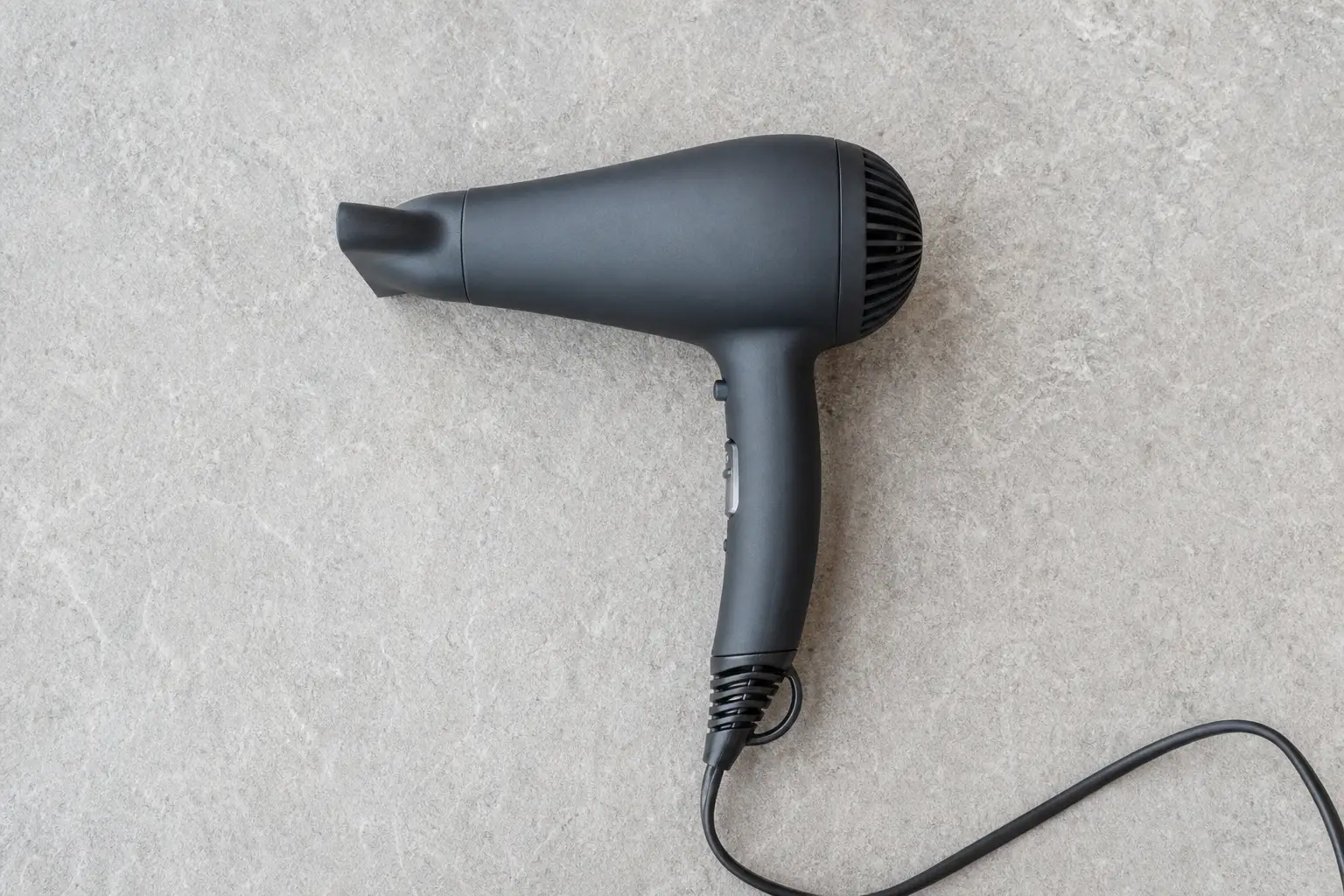
Many full-size dryers advertise wattage in the high-wattage band, with some salon-style models around 1875 to 2000W in the examples available. Compact, travel and hot-air brush styles are often lower. That still doesn’t make wattage a speed score.
The better buying question is: can the dryer move enough air at medium heat? Strong airflow removes water without forcing you to use maximum heat for the whole session.
Match airflow, heat control and motor type to how often you dry your hair
The motor affects airflow, weight, balance and likely durability. If you dry long, thick or dense hair most days, a better motor and comfortable handling can matter more than another heat setting.
DC motor: lighter and cheaper, best for lighter use
DC motors are common in budget and travel dryers. They’re usually lighter and cheaper, which suits occasional drying, guest bathrooms or compact bags. Under heavy daily use, they’re often less durable than pro-style alternatives.
AC motor: stronger conventional airflow, but usually heavier
AC motors are common in salon-style conventional dryers. They’re usually built for stronger airflow and longer-duty use, but the dryer can feel heavier in the hand. If your hair takes a long time to dry, test the balance as well as the airflow.
Brushless or digital motor: premium speed and balance, not always necessary
Brushless and digital motors sit in the premium tier. They’re often compact and high-speed, and they can move air efficiently from lower or similar wattage. Some also pair the motor with sensor-based heat control.
Choose heat and speed settings that protect your hair while still saving time
Separate heat and airflow controls are more useful than one vague “low” and “high” switch. A practical minimum is 3 heat settings, 2 speed settings and a cool shot.
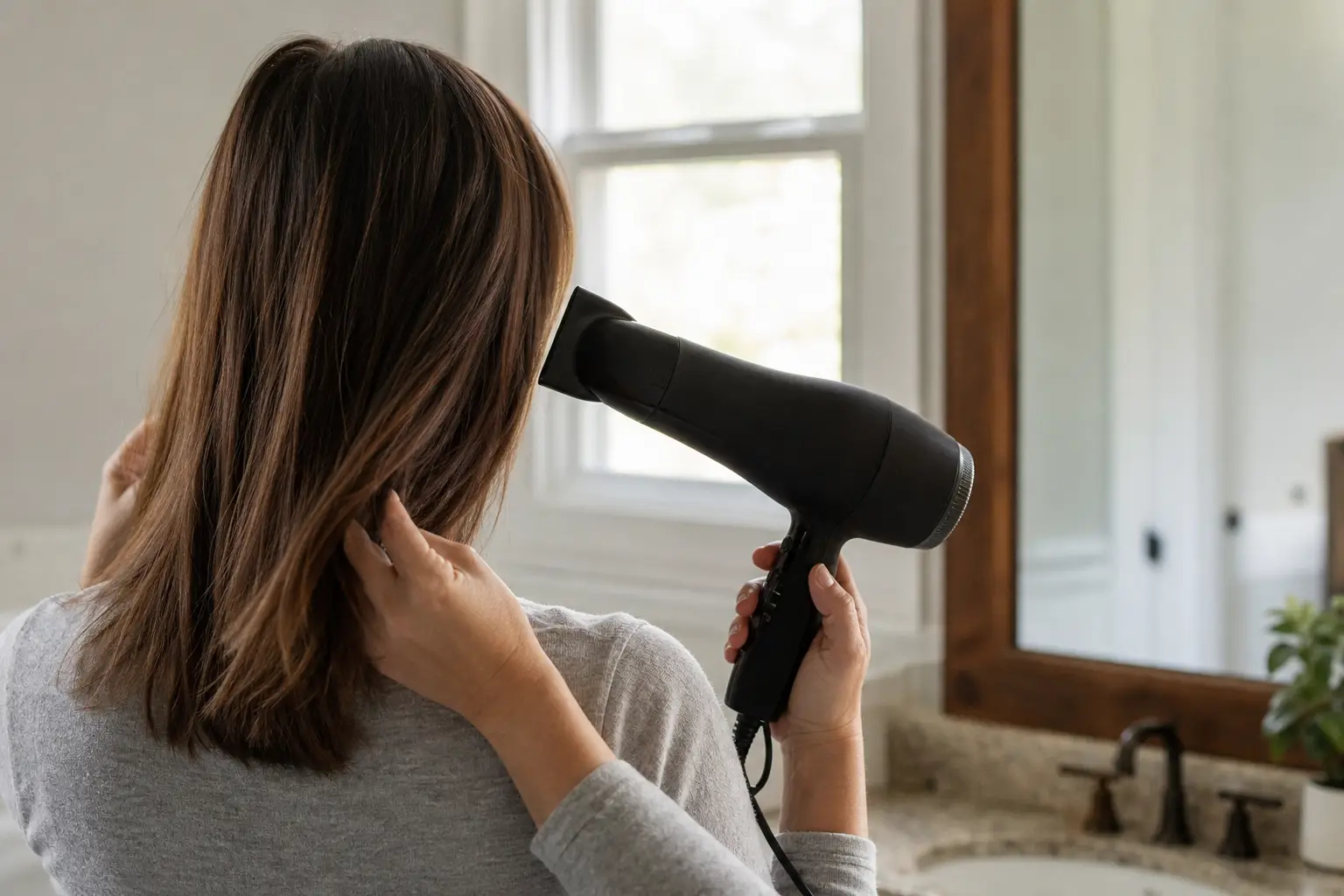
High airflow helps remove moisture. Lower heat helps reduce stress on fine, damaged or colour-treated hair. The cool shot helps set the shape after you’ve dried a section with a brush or diffuser.
- Fine, fragile or colour-treated hair: use low to medium heat and moderate airflow. Avoid lingering near the ends.
- Thick, coarse or dense hair: prioritise higher airflow. Use higher heat only when needed, then reduce heat as the hair gets drier.
- Curly, wavy or coily hair: use low or medium speed with a diffuser to avoid blasting the pattern apart.
- Sensitive scalp: look for gentle or low-temperature modes, and keep the dryer moving.
Controls should also be easy to use. Rocker switches can be easier than stiff sliders, but placement matters. If you keep changing the setting by accident, the dryer will annoy you every time you use it.
Treat ionic, ceramic and tourmaline as secondary features, not shortcuts
Ionic dryers are intended to reduce static and frizz by using negative ions. They may help frizz-prone or thick hair feel smoother, but they don’t guarantee faster drying or healthier hair.
Ceramic and tourmaline are marketed for more even heat and, in some cases, ion generation. Those claims only matter if the dryer also has good airflow and real heat control.
Treat infrared and oil-infusion language with the same caution. Independent consumer testing has not found these labels to reliably predict dryer performance. Use them as tie-breakers, not the reason to buy.
Pick the right attachments for your hair type and styling routine
Attachments change how the air hits your hair. They can matter as much as the dryer body, especially for curls, coils and smooth blowouts.
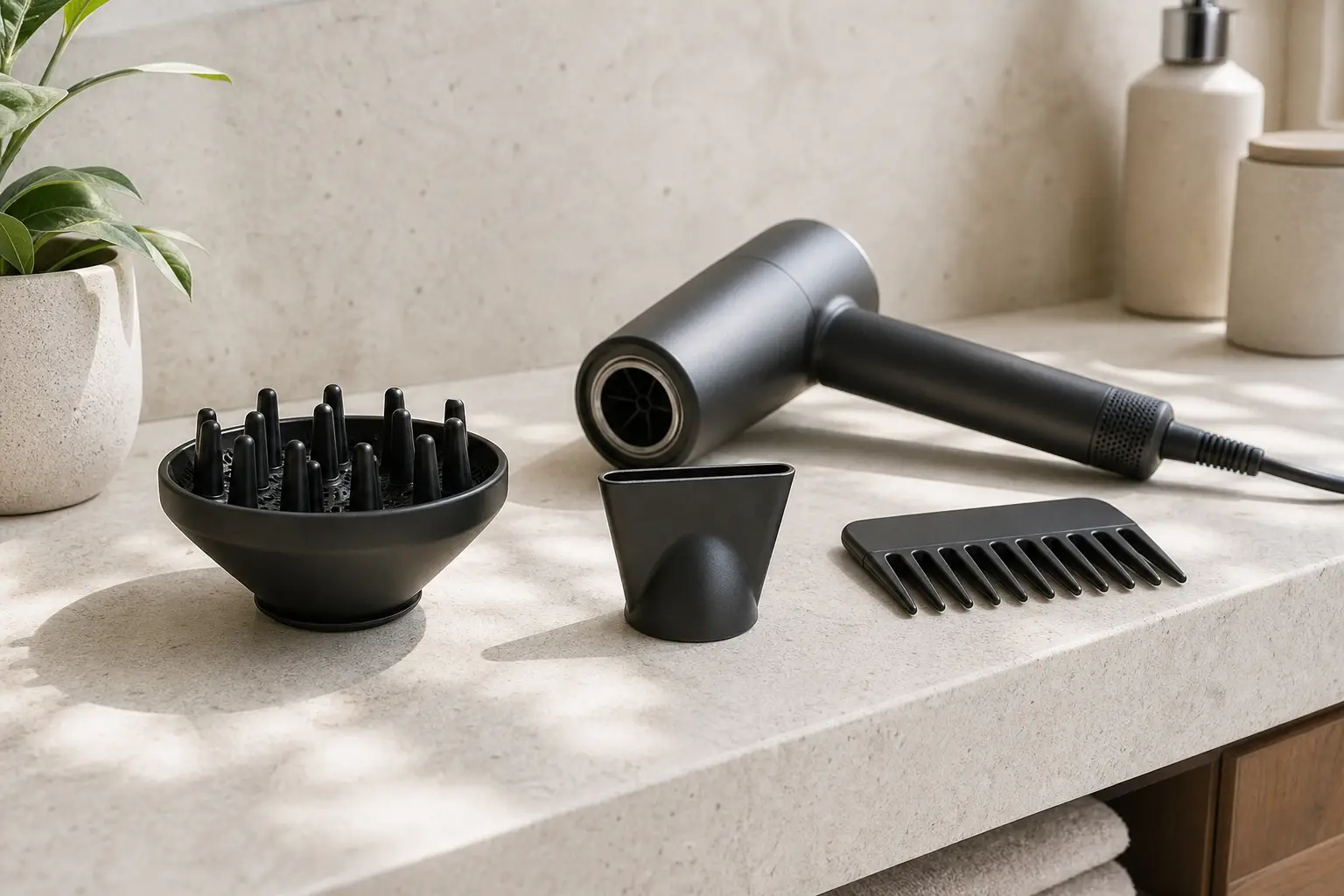
Concentrator nozzle: for smooth blowouts
A concentrator focuses air onto one section, usually while you use a brush. Narrow nozzles give precision, but they also concentrate heat, so keep the dryer moving and avoid pressing the nozzle into the hair.
Diffuser: for waves, curls and coils
A diffuser spreads airflow over a wider area. That reduces direct blast, helps preserve curl pattern and can reduce frizz. For many curly or wavy routines, it’s not optional.
Wide-tooth comb or pik: for stretching and root drying
A wide-tooth comb or pik attachment can help curly, coily or textured hair dry at the roots, add volume or stretch the shape while drying. Use controlled heat and don’t force the attachment through tangled hair.
Gentle air attachment: for fine hair and sensitive scalps
A gentle air or scalp attachment softens the airflow. It can suit fine hair, children or anyone who finds standard high-speed air too harsh.
- Check what’s included in the box. The dryer you like may sell the diffuser separately.
- Check that attachments lock securely and don’t fall off when hot.
- Check replacement availability if several people will use the dryer.
- Be careful with “universal” diffusers. Fit depends on barrel diameter and shape.
Compare the best hair dryer specs for fine, thick, curly, coily and damaged hair
Start with your hair type and usual style, then choose the dryer. A fast dryer for thick straight hair may be too hot and forceful for fragile hair. A great curl diffuser setup may feel slow if you only want a sleek brush blowout.
| Hair type or routine | Prioritise | Use | Avoid |
|---|---|---|---|
| Fine or fragile hair | Low to medium heat, moderate airflow, lightweight body, gentle mode if available | Lower heat, controlled airflow, cool shot to set shape | Maximum heat near the scalp or ends |
| Thick, coarse or dense hair | Strong airflow, comfortable balance, good heat range, AC or brushless motor if you dry often | Higher airflow first, higher heat only as needed | Choosing by ceramic or ionic claims while ignoring airflow |
| Wavy or curly hair | Diffuser, separate speed and heat controls, low to medium speed | Cup or hover with the diffuser, then use cool air to set | High-speed direct blast without a diffuser |
| Coily or textured hair | Diffuser or wide-tooth comb or pik, controlled heat, strong but adjustable airflow | Dry roots carefully, stretch or shape with the right attachment | Forcing a comb attachment through knots or using high heat in one spot |
| Colour-treated, damaged or heat-sensitive hair | Stable heat control, lower heat settings, cool shot, enough airflow to avoid long exposure | Low to medium heat, continuous motion, heat protection if you use one | Relying on maximum heat to save time |
| Smooth blowout styling | Concentrator nozzle, cool shot, separate controls, comfortable grip | Focus air down the section with a brush, then cool to set | Using the dryer without a nozzle and chasing frizz with more heat |
Common hair dryer buying mistakes that lead to slower drying or more heat damage
- Treating wattage as a performance rating. It’s only power draw, not measured drying speed.
- Ignoring airflow at medium heat. A dryer that only feels fast on maximum heat may push you into more heat exposure than you want.
- Buying the wrong attachment package. Curly and coily hair often need a diffuser or comb attachment from day one.
- Assuming ionic, ceramic or tourmaline will fix weak controls. These features are secondary.
- Ignoring weight and balance. Long drying sessions make a heavy or nose-heavy dryer feel worse than it did for the first minute.
- Choosing a compact travel dryer for daily thick-hair drying. Compact models are useful, but they often trade drying power for size.
- Not checking cord length, filter access and switch placement. These small details affect daily use, especially in shared households.
Compare hair dryers
Live prices from more than 20 shops, updated daily.
FAQ: hair dryer wattage, drying speed, attachments and hair type
Is a higher-wattage hair dryer always faster?
No. Wattage tells you electrical input, not airflow, temperature stability or real drying time. A lower-watt high-speed dryer can dry faster if it moves air efficiently and controls heat well.
What wattage should I look for?
Use wattage as a basic sanity check, not the main ranking. Full-size dryers often sit in a high-wattage band, while compact and travel dryers are usually lower. After that, compare airflow, heat settings, motor type and attachments.
Is ionic technology good for frizzy hair?
It may help reduce static and make frizz-prone hair feel smoother, especially thicker hair. It’s not a guarantee of faster drying, and it should not outweigh airflow and heat control.
Do I need a diffuser for curly hair?
Most wavy, curly and coily routines benefit from one. A diffuser spreads the airflow, reduces direct blast and helps keep the curl pattern intact.
Which motor type should I choose for daily use?
For frequent drying, especially long or thick hair, look at AC or brushless or digital motors. AC motors are common in heavier salon-style dryers. Brushless or digital motors are usually premium and can offer strong airflow in a more compact body.
Is air drying safer than blow-drying?
High heat can damage the hair surface, so careless blow-drying is risky. In one lab study, careful drying at about 15 cm with continuous motion caused less damage than natural drying in that study, although blow-drying still produced more surface wear than air drying. Use distance, motion and lower heat.
Verdict: buy for controlled airflow first, wattage second
Choose the dryer that moves plenty of air at medium heat, gives you separate heat and speed controls, includes the attachment you’ll actually use and feels comfortable for a full drying session.
Use wattage as a quick check, not a ranking. If airflow, heat control and hair-type fit are weak, a bigger number on the box won’t fix the dryer.
This article was created using AI, following our team's editorial standards.