


If stew reaches your table only a few times each month, use the oven and lidded Dutch oven you already own. Buy a slow cooker for planned all-day meals, or pay more for a pressure multicooker when dried legumes and late starts are regular parts of your week.
When you start cooking determines the appliance
Choose according to when you start cooking, how often you make stew and how much sauce control you want. These rules settle the choice for most households:
- Keep the oven if you own a stovetop-compatible lidded Dutch oven, cook stew occasionally or value deep browning and easy reduction. It also handles two pots or another dish during the same heated cycle.
- Choose a basic slow cooker if you can load it in the morning and want the cheapest, least complicated specialist. A timer and automatic keep-warm are useful when your return time varies.
- Choose a pressure multicooker if you regularly cook dried beans, chickpeas, stock or tough meat after work. Pressure turns those foods into practical same-evening meals.
- Buy nothing if a new appliance would live in a difficult cupboard and appear once a month. Energy savings alone rarely justify the purchase.
Pressure cooking uses the least electricity
Pressure cooking uses the least electricity in the available monitored examples, followed by a modern slow cooker and then a long electric-oven braise. The table uses two illustrative US residential electricity rates: about $0.18 and $0.25 per kWh.
| Method | Illustrative energy per batch | Cost at about $0.18 per kWh | Cost at about $0.25 per kWh |
|---|---|---|---|
| Pressure multicooker | About 0.45 kWh | About $0.08 | About $0.11 |
| Modern slow cooker | About 0.64 to 0.81 kWh | About $0.12 to $0.15 | About $0.16 to $0.20 |
| Electric oven and lidded pot | About 2.2 to 2.7 kWh | About $0.40 to $0.49 | About $0.55 to $0.68 |
These are planning figures from separate monitored examples. The pressure result included browning, while the slow-cooker figure may exclude energy used by a separate frying pan. Appliance age, temperature, batch size and cooking time can change the result, and older monitored slow cookers sometimes used 2 kWh or more per event.
- Calculate your cost by multiplying the recipe’s measured kWh by your local unit price. Daily service charges don’t change when you cook one extra dish.
- Ignore rated wattage as a running-cost shortcut. A 1,000 W pressure cooker can consume less per meal than a 160 W slow cooker because it heats for much less time.
- Pressure saves only about 0.19 to 0.36 kWh against the cited slow cooker, roughly $0.03 to $0.09 at the US reference rates. Its purchase premium pays for speed and ingredient flexibility.
- An oven becomes more competitive per finished dish when it cooks two casseroles, baked potatoes or bread together. Gas ovens need a separate calculation using local gas prices.
The oven gives you the most control over the sauce
The oven gives the cook the strongest control over browning and sauce concentration, while pressure handles dried legumes and fast tenderizing best. All three can soften chuck, shoulder, shank, brisket and similar collagen-rich cuts if cooking stops once the meat is tender.
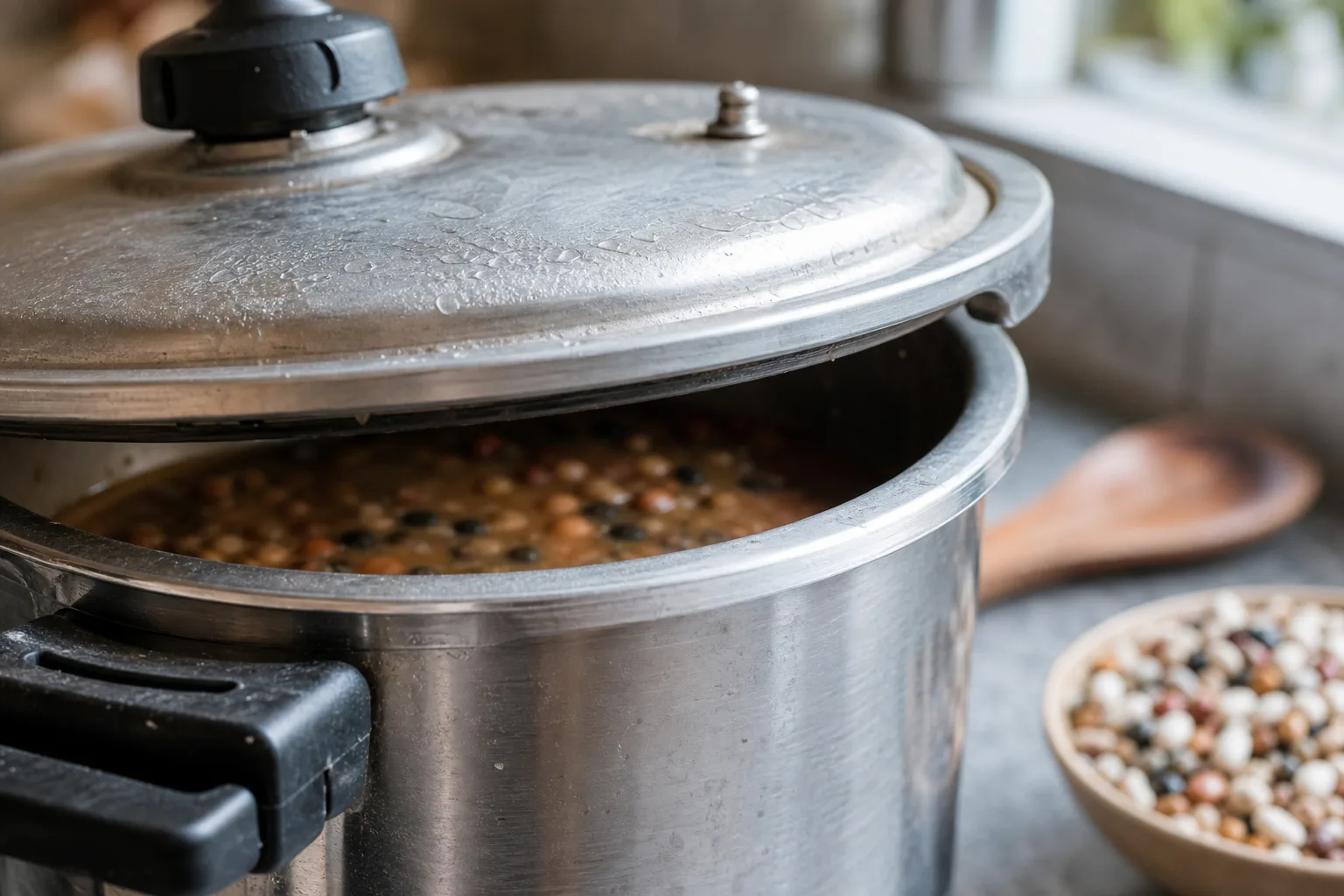
- Oven: sear, deglaze and braise in the same stovetop-compatible pot. Crack or remove the lid near the end to concentrate the sauce and expose upper surfaces to browning.
- Slow cooker: gentle heat softens tough meat with little supervision. Evaporation is limited, so reduce the liquid when adapting an oven recipe. Skipping that adjustment causes many watery slow-cooker stews.
- Pressure multicooker: sauté first, lock the lid, then reduce the sauce with sauté mode after pressure cooking. Cut root vegetables larger or add them later because a few extra pressure minutes can make them too soft.
Dried beans cook in under an hour under pressure
About 1 pound of dried beans can cook in under an hour in an electric pressure cooker, although published pressure stages range from roughly 6 to 35 minutes by legume. Pressure build and release add more time. Oven-baked beans work well, while their elapsed cooking still runs to hours.
Elapsed time separates them, not hands-on work
Elapsed time separates these methods more sharply than active work. Browning, chopping and final seasoning take a similar 20 to 35 minutes in an oven pot or pressure multicooker.
- Oven braise: allow about 15 to 25 minutes for preparation and searing, then 2.5 to 4 hours of cooking. Plan it for a day when someone is at home to check tenderness and uncover the pot if needed.
- Slow cooker: skipping browning cuts active work to about 10 to 20 minutes, followed by 4 to 10 hours of cooking. Browning in a frying pan raises active time to roughly 20 to 35 minutes and adds washing up.
- Pressure multicooker: allow 15 to 25 minutes to prepare and sauté, 20 to 45 programmed pressure minutes, then 10 to 30 minutes for pressure build and release. A display showing 30 minutes often means 50 to 90 minutes from a cold full pot to opening the lid.
A slow cooker is designed for extended countertop operation when used according to its instructions. Thaw meat and poultry before slow cooking, start a prepared raw meal promptly and use delay-start only where the manufacturer and food-safety guidance allow it. Pressure multicookers automate cooking, though the lid, seal, valves and steam release demand more attention and knowledge.
Pressure-cooker fill limits swallow a third of the volume
A nominal 6 to 7 qt cooker suits many four-to-six-person batches, but pressure fill limits can remove a third or half of that advertised volume.
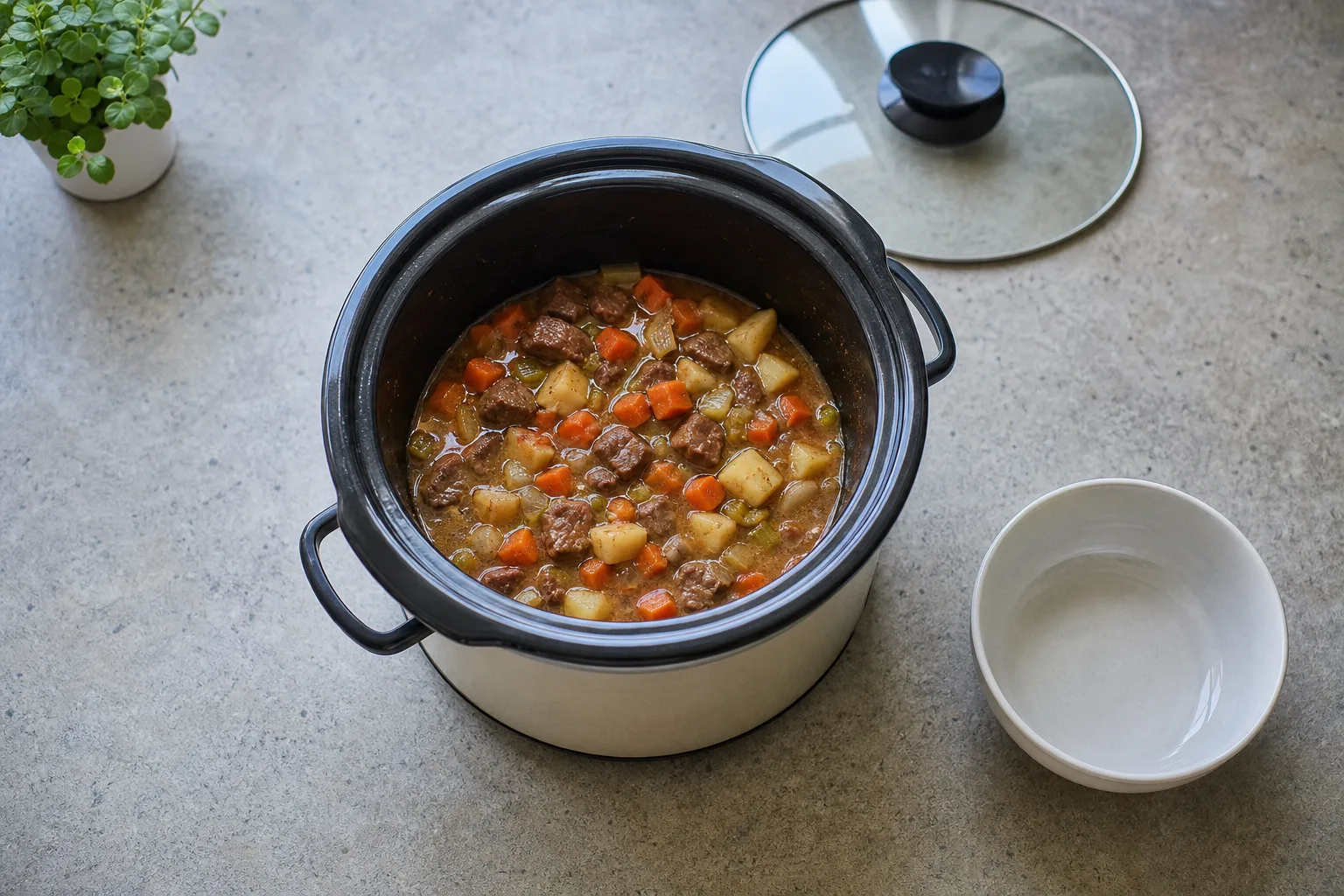
- Under 3.2 qt suits one or two people, side dishes and small soups. It is restrictive for family freezer batches.
- A 3.7 to 4.8 qt slow cooker usually handles four or five moderate portions. Slow cookers work best around half to three-quarters full, depending on the recipe and instructions.
- A 6 qt pressure cooker commonly allows about 4 qt for ordinary pressure cooking. Beans, grains and other expanding foods are generally limited to half full, leaving about 3 qt for ingredients and water.
- An 8 qt pressure model allows about 5.4 qt for ordinary food or 4 qt for expanding food. Choose this size for regular bean batches, then check that its weight and footprint suit your kitchen.
- A 5.5 to 6 qt Dutch oven is a useful six-serving size. The oven can also hold two pots, though one representative 6 qt cast-iron pot weighs about 13.4 lb.
Only the oven is genuinely one vessel
The oven offers the cleanest true one-vessel route if its Dutch oven can move from stovetop to oven. Slow cookers gain an extra pan when meat is browned, while pressure cookers add lid parts and seals.
- Dutch oven: one vessel, plus baked-on residue and considerable weight. Enameled cast iron is often dishwasher-safe, though manufacturers commonly recommend hand washing to preserve the finish.
- Slow cooker: the glass lid and removable crock are commonly dishwasher-safe, yet a 5 to 7 qt insert occupies much of a dishwasher rack. Avoid impact and thermal shock, and check replacement-crock availability before buying.
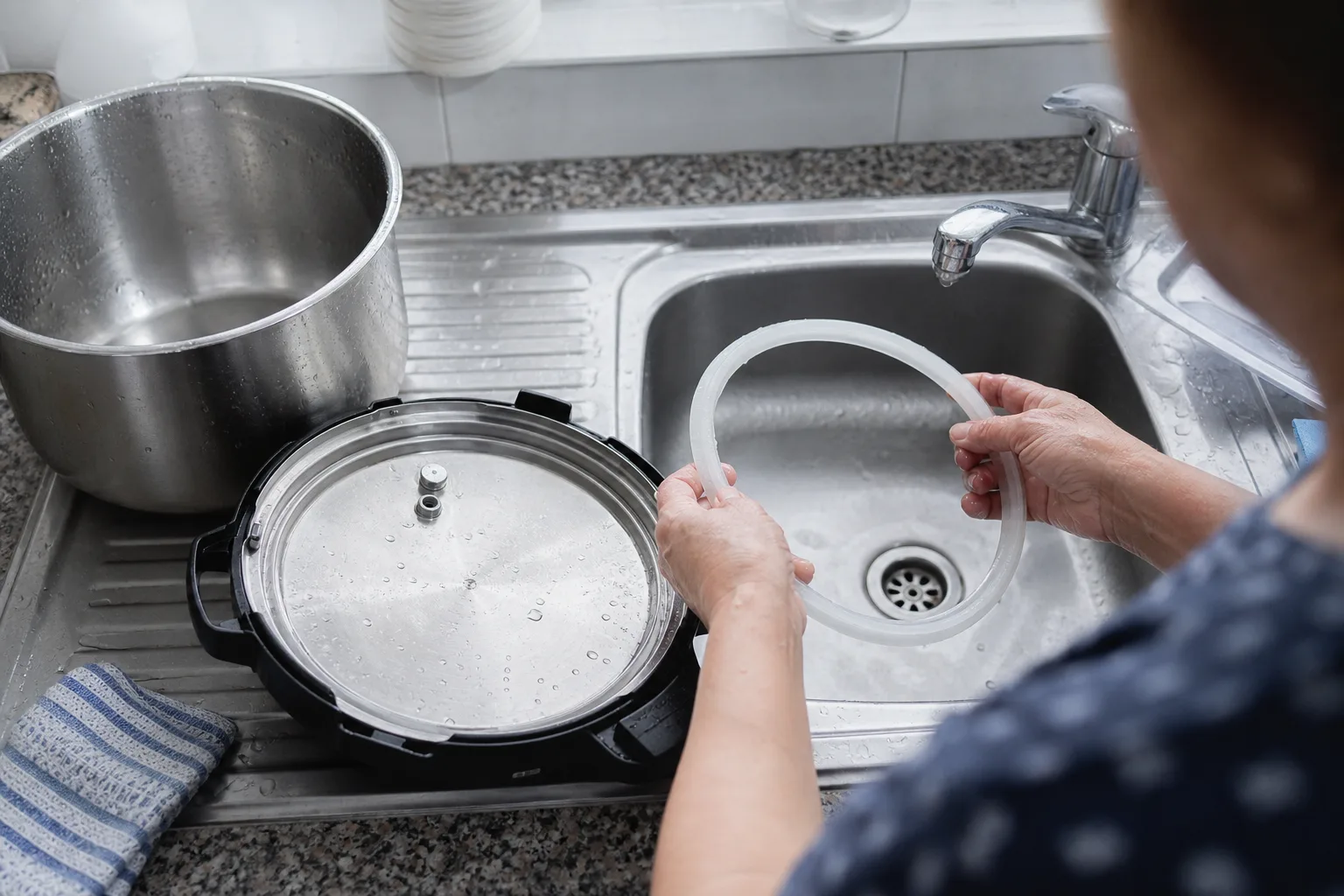
- Pressure multicooker: wash the inner pot, lid and sealing ring, then clear the float, steam path and condensation areas. One current manufacturer recommends ring replacement every 12 to 18 months, or sooner if the ring is damaged or deformed.
- Counter space: family slow cookers commonly need 12 to 18 inches of width. A representative 6 qt pressure cooker occupies about 12 by 13 inches, stands roughly 13 inches high and needs clear space above for steam.
Measure the intended shelf and the open space beneath wall cabinets before shopping. “Oven-safe” on a slow-cooker insert doesn’t mean stovetop-safe, and preset count has little value for stew. Pressure, manual time, sauté and keep-warm cover the main multicooker jobs.
The oven still wins for occasional stews
The oven still wins for occasional cooking, flavor control, mixed oven loads and kitchens with no accessible appliance space. Run this repeat-use test before spending:
- Use the oven if you make stew less than weekly, already own the right pot or often bake another dish at the same time.
- Buy a manual slow cooker if your schedule is predictable and low purchase cost matters most. Choose a programmable model with automatic keep-warm when meal timing shifts.
- Pay for pressure if you cook dried legumes or stock several times a week, start tough meat after work or will genuinely use rice, steaming and sauté functions.
- Skip pressure and air-fryer combinations unless air frying is also a repeated job. They cost more, occupy more space and add another lid or mechanism.
- Ignore Wi-Fi and long preset lists unless you have a specific use for them. Confirm that replacement rings, valves and inner pots are readily available.
Across verified 2026 listings, entry pressure multicookers often started around three to four times the price of the cheapest manual slow cookers. That extra money buys rapid pressure cooking, in-pot sautéing and wider ingredient flexibility. The energy saving against a slow cooker is too small to recover the premium quickly.
Compare programmable slow cookers
Live prices from more than 20 shops, updated daily.
Common one-pot cooking questions
A few operating rules prevent thin sauce, overfilled pots and unsafe shortcuts.
How much liquid should I use when adapting an oven stew?
Use less liquid in slow and pressure cookers because very little escapes. Keep the multicooker manufacturer’s required minimum, then reduce the finished sauce with sauté mode if needed.
Can I fill a pressure multicooker to the top?
No. Ordinary food commonly stops at the two-thirds line. Beans, grains, pasta and other expanding or starchy foods stop at the half-full line.
Can canned kidney beans go into a slow cooker?
Yes, canned beans have already received the necessary heat treatment. Drain or rinse them as your recipe requires, and add them early or late according to the texture you want.
Can frozen meat go straight into a slow cooker?
Thaw meat and poultry first. Slow cooking from frozen can leave food warming too gradually through unsafe temperatures.
Can I quick-release pressure after cooking stew or beans?
Follow the recipe and appliance instructions. Thick, fatty and starchy dishes commonly require natural release because a forced release can carry hot food or foam through the valve.
Can keep-warm reheat cold leftovers?
Use keep-warm for hot holding. Reheat cold leftovers by stove, microwave or oven to 165°F first, then transfer them to a preheated cooker if needed.
Which cooker to buy?
Keep your oven if you already own a suitable pot and cook stew occasionally. A slow cooker is the sensible low-cost buy for morning preparation and all-day cooking. Spend more on a pressure multicooker only when fast tough cuts, dried legumes or several genuinely useful cooking functions will earn their place every week.
This article was created using AI, following our team's editorial standards.


