


Spend one windy afternoon tracing airflow before buying heating controls or turning up the temperature. Mark each leak, fit the smallest suitable seal, then repeat the same test immediately. This sequence finds low-cost comfort gains and exposes faults that need a professional.
Basic tools make this an easy afternoon check
The inspection is a beginner-level job, and most simple adhesive repairs fit into the same afternoon. Sealants and foams need the curing time stated on their packaging.
- An incense stick, smoke pencil or narrow strip of tissue
- Painter’s tape or removable labels for marking leaks
- A strip of paper for testing seal pressure
- Tape measure, cleaning cloth, compatible cleaner and scissors or a utility knife
- Weatherstrip, brush seal, flexible sealant or low-expansion foam bought after measuring the gap
- A phone camera for recording smoke movement before and after each repair
Replacement windows, a new thermostat and large cans of general-purpose expanding foam are usually unnecessary for the first pass. Treating a basic room often costs only about $10 to $20, provided the frames and surrounding structure are sound.
Intentional vents and combustion air must stay open
Identify deliberate ventilation before testing or sealing anything. Leave foundation vents, wall grilles, background vents, mechanical-air inlets, extractor outlets and combustion-air openings clear. Internal door undercuts can also form part of a ventilation system.
- Prefer incense, a smoke pencil or tissue. A candle adds an open flame beside curtains, timber and furnishings.
- If using a candle, clear combustibles, keep it upright and attended, and keep children and pets away.
- Never use flame or smoke near flammable vapors.
- A carbon monoxide alarm adds protection and never makes a blocked vent or flue safe.
- Don’t alter fire doors, smoke doors or required clearances without checking local fire and building rules.
Sideways smoke distinguishes leaks from cold surfaces
Sharp horizontal smoke movement at a particular seam confirms airflow. Smoke that stays still or falls gently down cold glazing usually indicates cooled room air and surface heat loss.
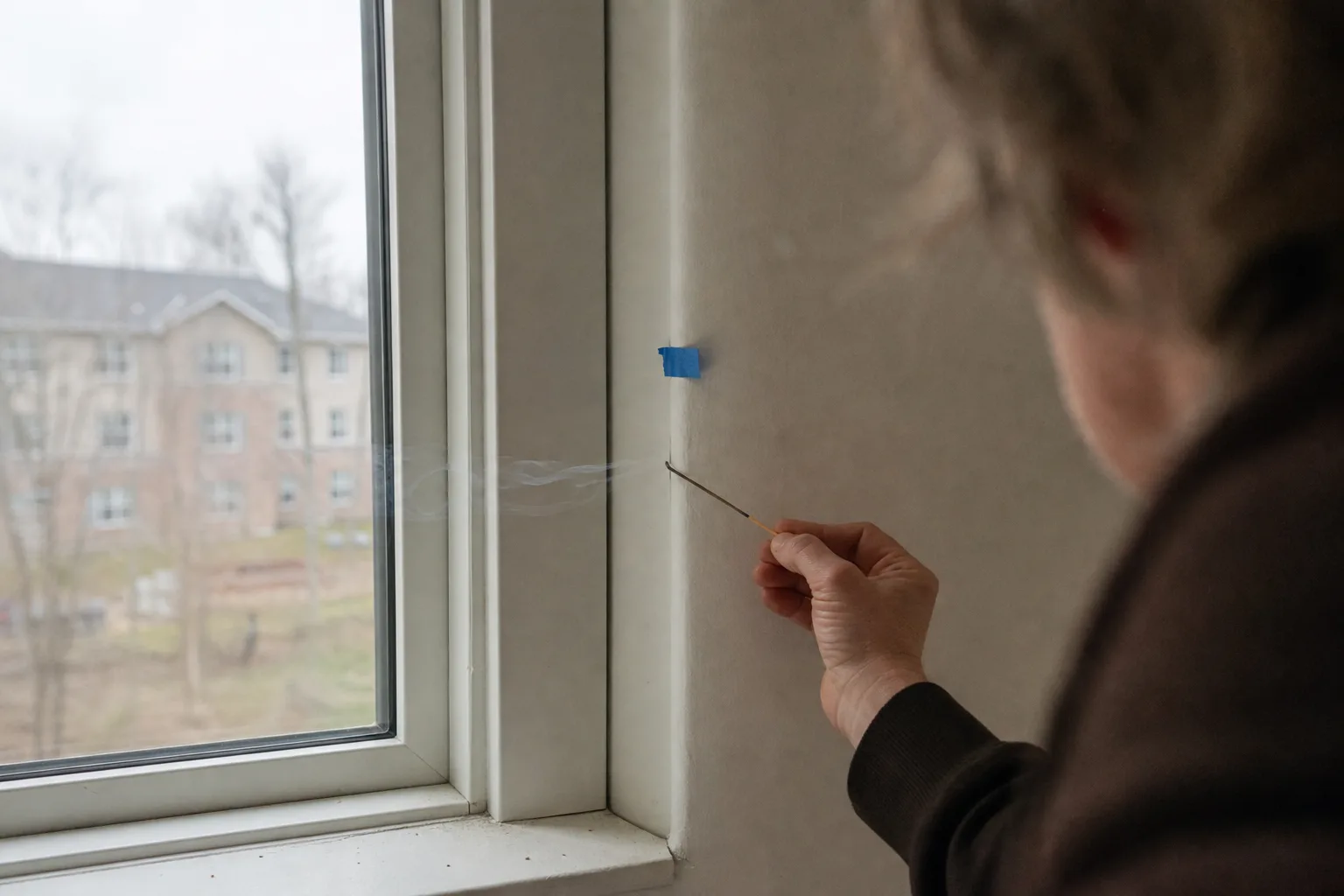
- Choose a cool, windy day. Close exterior windows and doors normally, and keep the heating arrangement and internal doors in a repeatable position.
- Hold the smoke source a few inches from each joint. Move slowly and watch for movement that follows wind gusts. Test opening joints and fixed frame-to-wall joints.
- Mark every leak with removable tape. Note its location, approximate size and the direction of airflow.
- Close a strip of paper in each window or door joint and pull it. A working compression seal gives noticeable, fairly even resistance. Paper that slips out freely marks weak compression.
- After each repair, recreate the same setup and repeat both tests immediately. Changing wind can make a next-day comparison misleading.
Inspect the likeliest leaks first
Starting with moving seals finds the most accessible faults before you reach less obvious openings.
- Worn window seals, including meeting rails and the fixed frame perimeter
- The gap beneath an exterior door
- Mail-slot flaps
- Keyholes
- Attic hatches
- Roller-shade and blind housings
- Pipe and cable penetrations
- A verified unused chimney
- Floorboards above a basement, crawlspace, garage or other unheated space
Windows and exterior doors offer the cheapest wins
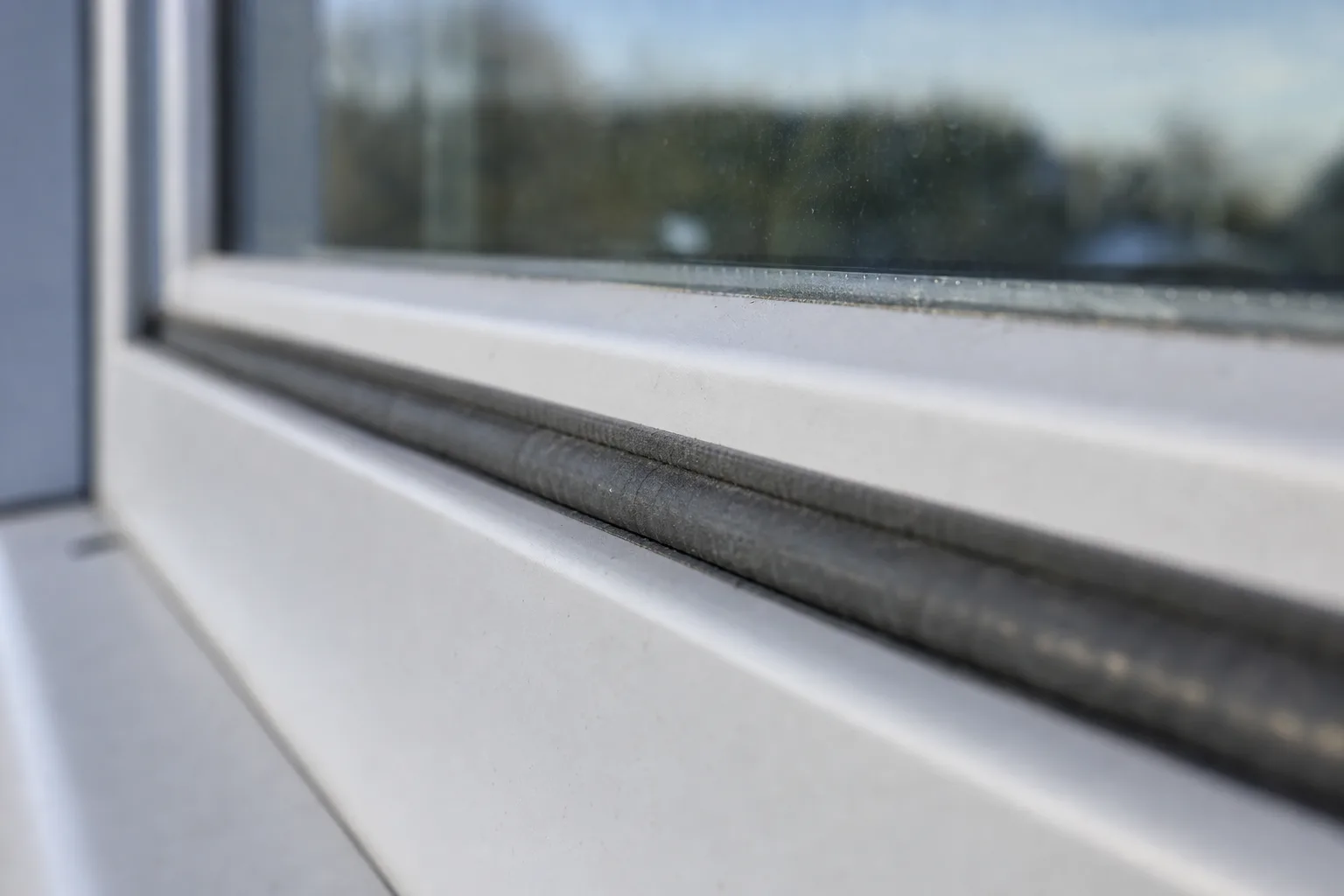
Most sound windows and doors need a measured strip or brush rather than wholesale replacement. Clean and dry every adhesive surface, remove failed material and keep new seals continuous around corners.
Even gaps point to a failed window seal
A sash that operates normally with a flattened, brittle or missing seal usually needs fresh weatherstrip. Use these checks before buying it.
- Failed seal: weak paper resistance follows much of the seal line, while the sash remains square and closes normally.
- Warp or misalignment: resistance changes sharply, daylight appears at one corner, or the sash rubs, drops or needs lifting to latch. Minor hinge or keeper adjustment can help. Severe warp, rot or recurring movement needs a window professional.
- Fixed crack: airflow comes from the frame-to-wall joint. Use compatible flexible caulk here.
- Mist trapped between double-glazing panes: the sealed glazing unit has failed. Perimeter weatherstrip won’t repair it.
| Seal type | Typical gap example | Best use |
|---|---|---|
| Foam or I-profile | About 1/32 to 1/8 inch | Uniform small gaps and temporary or rental repairs |
| Rubber E-profile | About 1/32 to 1/8 inch | Small compression gaps on hinged windows and doors |
| Rubber P-profile | About 1/16 to 3/16 inch | Medium compression gaps |
| Rubber D-profile | About 1/8 to 1/4 inch | Larger, reasonably even compression gaps |
| Brush seal | Use the product’s stated size | Sliding sashes and surfaces moving past each other |
These ranges are examples because package ratings vary. Choose by measured gap and closing force. A strip that is too thin still leaks. One that is too thick can strain hinges, crush quickly or prevent safe locking.
Compare self-adhesive weatherstrip
Live prices from more than 20 shops, updated daily.
Door hardware needs room to move freely
Every door repair must reduce airflow while preserving secure latching, easy opening and any required self-closing action.
- Exterior door bottom: use a brush sweep on an uneven hard floor or a flexible wiper on a smooth threshold. A fabric draft stopper is renter-friendly but works only while correctly positioned. Retest the full threshold and check for dragging.
- Mail slot: fit a measured internal brush plate or a flap that closes fully. Post an envelope through it, then confirm the flap returns to its sealed position.
- Keyhole: fit a swinging escutcheon or drop-over cover. Retest with it hanging naturally, then operate the lock from both sides.
Each remaining leak needs its own targeted fix
Use removable seals on access panels, flexible products where timber moves and specialist products around fire-rated construction. One filler cannot safely cover every joint.
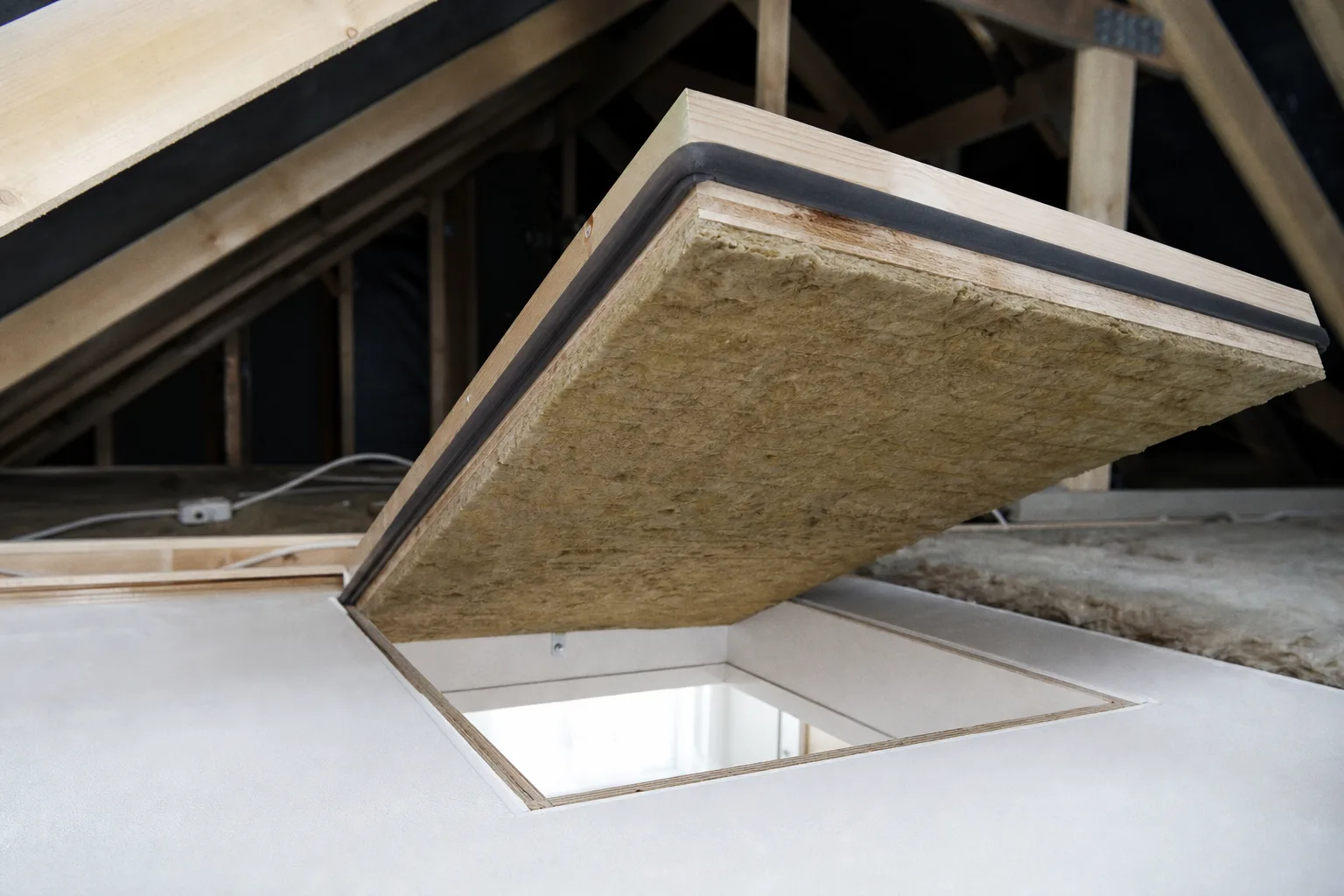
- Attic hatch: test all four edges and look for dark dust tracks. Fit continuous compression strip where the hatch rests, adjust the catches for even pressure and secure suitable insulation to the attic side. Keep materials clear of hot flues, unsuitable recessed lights, wiring and moving ladders. Retest the perimeter and confirm the hatch stays safely supported.
- Shutter or blind housing: check first for an integrated ventilation inlet. Seal a removable access cover with compression strip and fixed joints with flexible sealant. An insulation kit can improve a thin box if it clears the roller, motor, belt and drainage route. Run a full operating cycle before retesting.
- Pipe and cable penetrations: confirm the hole leads outdoors or into an unheated space. Use flexible sealant for small stable gaps, backer rod plus sealant for deeper joints, and low-expansion foam sparingly for larger concealed openings. Fire-rated walls and floors require an approved fire-stopping system. Retest after curing, including behind clips and cable bundles.
- Unused chimney: proceed only after verifying that the flue is disconnected and unused. Fit a correctly sized removable balloon or breathable plug, preserve the ventilation route required by its instructions and keep the removal tag visible. Never install one in a working, shared or uncertain flue. Retesting should show calmer smoke, although a small designed airflow can remain.
- Floorboards over an unheated space: use movement-tolerant flexible filler in narrow board or baseboard gaps. A rug improves comfort without creating a continuous air seal. Larger suspended-floor leaks often need work from below, with supported insulation and a continuous air-control layer. Keep foundation vents open. Retest the joints and inspect the filler again after seasonal timber movement.
Tighter homes need short, deliberate cross-ventilation
After sealing, replace random airflow with short, controlled ventilation. Moisture from breathing, showers, cooking and indoor laundry can otherwise condense on cold windows, walls and thermal bridges.
- Open windows on opposite sides of the home to create cross-flow.
- Use 5 to 10 minutes as a starting point in cool or windy weather. Shorten this during severe cold or high wind, and extend it in mild, still weather.
- Ventilate after showers, cooking and drying clothes indoors, and whenever condensation rises.
- Use an inexpensive hygrometer. A general target is 30 to 50% relative humidity, staying below 60% where possible. Very cold surfaces can still collect condensation at lower readings.
DIY ends before structural or combustion work
Stop when the repair could affect the building structure, fire protection or the safe supply and removal of combustion air.
- Window or exterior-door replacement, severe frame warp, rot, cracking or recurring misalignment
- Structural cracks, moving masonry, water penetration or large unexplained gaps
- Whole suspended-floor work involving damp, damaged joists or subfloor ventilation
- Shutter housings with motors, concealed wiring, damp construction or integrated ventilation
- Fire-rated walls, floors and doors requiring a specified fire-stopping detail
- Anything involving a gas, oil, wood, coal or other fuel-burning appliance, its air supply, flue or chimney
- Any chimney that is active, connected, shared, damp, blocked, damaged or of uncertain status
FAQ
How much can draft-proofing save on heating?
A broad U.S. Department of Energy estimate puts annual savings from reducing drafts at about 5 to 30%, but climate, building type and starting leakage create a wide spread. Comfort can improve before the energy saving becomes clear.
Does double glazing eliminate window drafts?
Double glazing reduces heat conduction through the pane. Air can still enter through worn opening seals, meeting rails or gaps between the frame and wall.
Can an infrared camera prove that a gap leaks air?
It can reveal cold areas, but reflections, wind and temperature differences can mislead. Confirm airflow with smoke or tissue. For persistent whole-home problems, a professional blower-door test gives stronger evidence.
Should I switch on every exhaust fan to expose small leaks?
Avoid deliberate depressurization as a casual DIY test, especially in homes with fuel-burning appliances. It can encourage combustion products to spill indoors. Use ordinary windy conditions or hire a professional assessor.
What if the smoke stays still but the room remains cold?
Investigate cold glazing, thermal bridges, weak insulation, an obstructed or undersized heat emitter, duct losses or heating-system imbalance. Thicker weatherstrip won’t correct those faults.
Retesting proves whether every repair worked
A successful repair produces much less smoke deflection while the window, door, hatch or shutter still operates safely. Check neighboring joints too, since closing the largest opening can reveal a smaller one. Once the leaks are controlled, keep deliberate ventilation working and hand structural, chimney and combustion risks to a qualified professional.
This article was created using AI, following our team's editorial standards.


