


The mess is what decides this purchase. A manual espresso machine can reward you with better coffee, but only if you’re willing to handle grinding, tamping, wiping, and dialing in before and after every drink.
A super-automatic machine buys you speed and repeatability, not a chore-free life. This guide helps you choose the routine you’ll actually stick with on a weekday morning.
The real divider: how much coffee ritual and cleanup you’ll tolerate
Taste matters, but it’s a weak first filter. The better question is: do you want to make coffee, or do you want the machine to handle most of it for you?
With manual espresso, you handle the barista steps: dose, grind, distribute, tamp, lock in the portafilter, start or stop the shot, steam milk, then knock out and clean the puck. The reward is control. The cost is attention.
With super-automatic, the machine grinds, doses, compresses, extracts, and ejects the puck internally. Many models also froth milk automatically. The reward is convenience. The cost is hidden maintenance: brew group rinsing, drip-tray emptying, milk-system cleaning, filters, and descaling.
| Criterion | Manual espresso machine | Super-automatic espresso machine |
|---|---|---|
| Best fit | People who enjoy learning, tweaking, and cleaning as part of the routine | Busy homes, shared kitchens, and drinkers who want fresh-bean coffee with very little technique |
| Before the drink | Weigh, grind, distribute, tamp, lock in, pull the shot, and steam milk if needed | Fill water and beans, choose a drink, adjust strength or volume if needed |
| After the drink | Knock out the puck, rinse the basket, wipe the portafilter, purge and wipe the steam wand | Empty grounds and drip tray, rinse the brew group if it’s removable, run milk-cleaning cycles |
| Taste ceiling | Higher, if paired with a capable grinder and careful prep | Lower control ceiling, but easier repeatability |
| Milk drinks | Best texture control, especially for latte art, but it takes practice | Easier cappuccinos and lattes, but milk cleaning becomes the hotspot |
| Cost traps | A good grinder and accessories can add a lot to the real price | Filters, descaler, cleaning tablets, and repairs matter more than buyers expect |
| Counter space | The machine may be compact, but the grinder, scale, knock box, and tools add up | Usually deeper and boxier, but all the main brewing parts sit in one unit |
Daily workflow: manual prep rewards attention, super-automatic rewards repetition
Manual espresso suits people who like small, repeatable tasks. You’ll weigh or dose the coffee, grind fine enough for espresso, distribute the grounds, tamp, lock in the portafilter, and pull the shot. If the shot runs too fast or too slow, you adjust the grind or dose and try again.
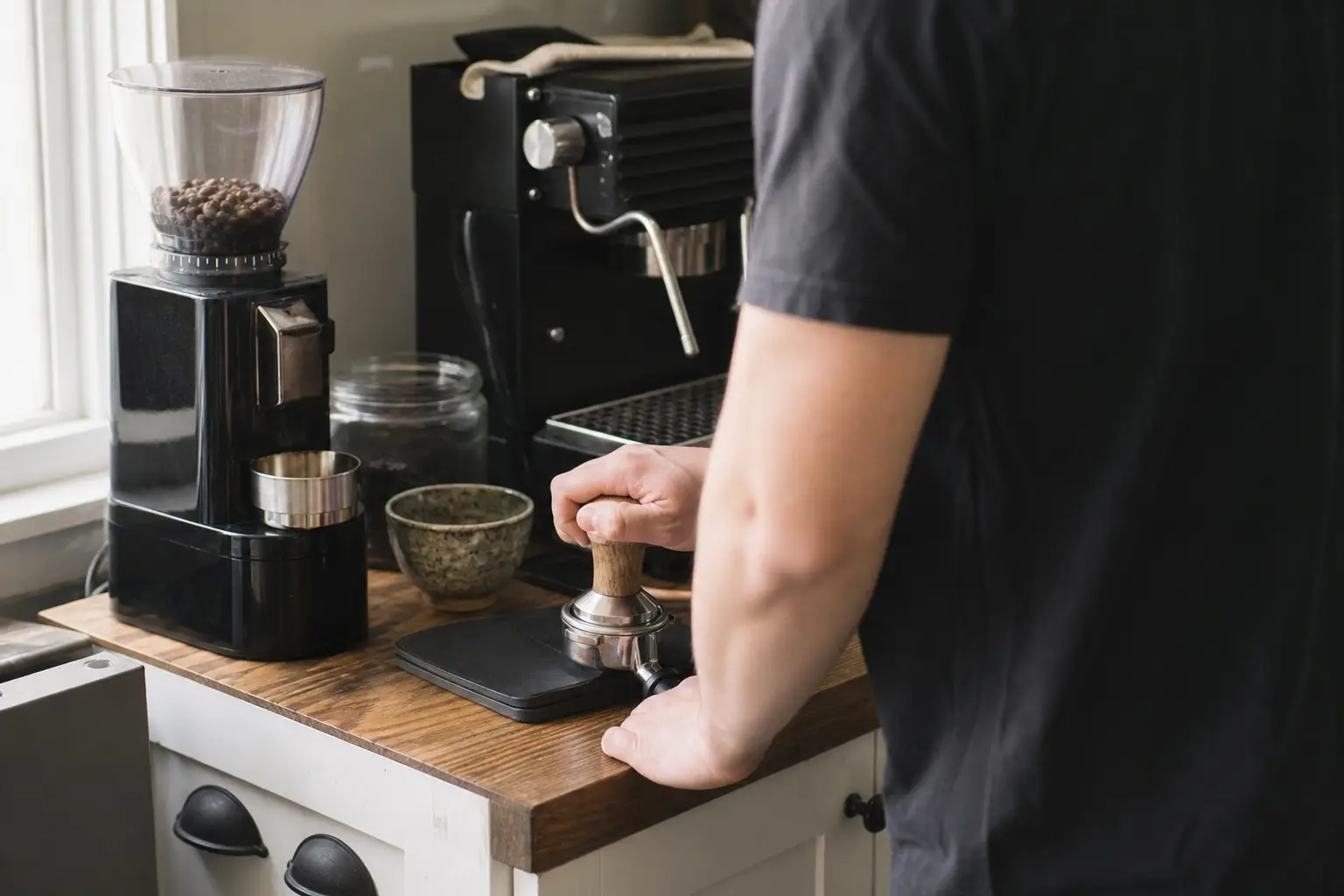
That sounds annoying to some buyers. For others, it’s the point. Manual espresso gives feedback: the grind was too coarse, the puck was uneven, the milk stretched too long. If that feedback interests you, the routine can become satisfying rather than slow.
Super-automatic machines suit households where repetition matters more than technique. You fill the water tank and bean hopper, choose espresso, coffee, cappuccino, or another recipe, then let the machine handle grinding and brewing. You may still adjust strength, volume, temperature, or grind setting, but you’re not building each shot by hand.
This matters most in the morning. If two or three people need drinks before work or school, a super-automatic machine can reduce friction. If one person wants a carefully made flat white after breakfast, manual espresso may feel less like a delay and more like a small hobby.
Cleanup and maintenance: visible puck mess vs hidden brew-group and milk-system chores
Manual mess is obvious. You see the wet puck, the coffee dust, the used basket, and the milk on the steam wand. That visibility is useful because it reminds you to clean as you go.
After a manual shot, you knock out the puck, rinse or wipe the basket and portafilter, empty the drip tray or knock box as needed, and purge the group according to the machine’s routine. After steaming milk, you should purge and wipe the wand every time. Dried milk is harder to remove and is bad hygiene.
Super-automatic mess is tidier until it isn’t. Used pucks land inside a grounds bin, rinse water collects in the drip tray, and coffee oils build up around the brew group. If the brew group is removable, you can rinse residue away by hand. If it isn’t, you rely more on cleaning programs and tablets.
Automatic milk systems cut technique, not cleaning. Carafes, tubes, and tube-free systems still need rinsing after milk drinks and deeper cleaning on a schedule. Milk residue is usually the maintenance point that turns a convenient machine into a neglected one.
Taste and control: manual has the higher ceiling, automatic has easier consistency
Manual espresso has the higher ceiling because more variables are in your hands. Grind size, dose, yield, puck preparation, brew time, milk texture, and sometimes temperature or pre-infusion all affect the cup. A capable espresso grinder is not optional if you want that ceiling.
Classic espresso references often sit around a 0.5 to 0.6 oz double dose, water near 195 to 205°F, pressure around 9 bars, and a shot time around 20 to 30 seconds. Modern recipes vary, but the point is practical: small changes in grind, dose, and time can change flavor a lot.
Super-automatic machines narrow the range of outcomes. Their internal grinders and brew units usually offer fewer adjustments than a separate grinder and portafilter. The advantage is that the same input tends to produce similar drinks with less effort.
Ignore pressure bragging. Many home machines advertise 15-bar pumps, but good espresso extraction is typically around 9 bars at the puck. Temperature stability, grinder quality, and workflow matter more than the biggest pressure number printed on the box.
True cost and counter space: grinder, accessories, consumables, and machine footprint
A cheap manual machine is not the full setup. If it doesn’t include a grinder, budget for an espresso-capable grinder, plus a scale, tamper, milk pitcher, knock box, tamping mat, and cleaning supplies. A modest manual machine with a good grinder often makes more sense than an expensive machine paired with a weak grinder.
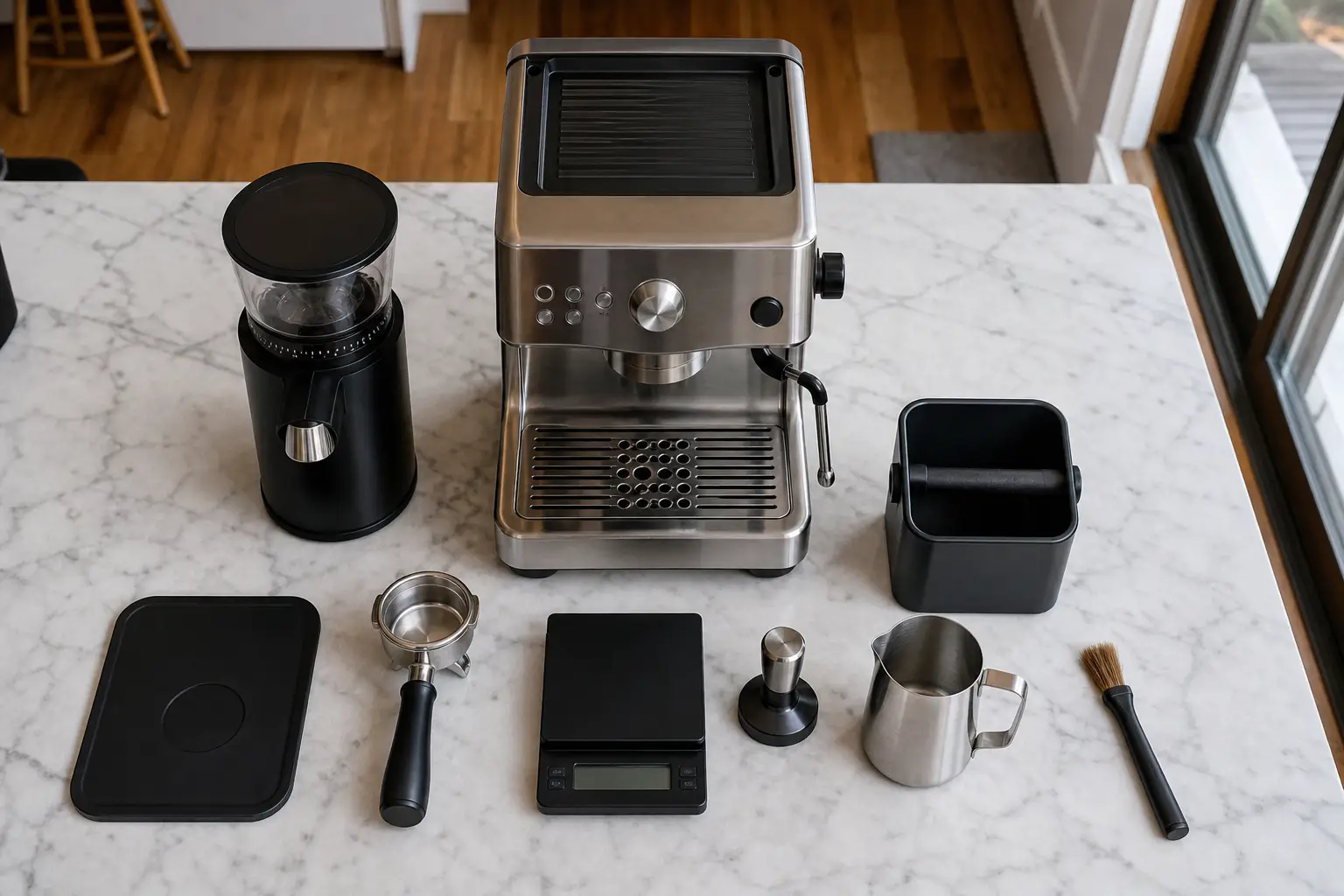
Super-automatic machines look expensive up front, but the integrated grinder changes the comparison. If a discounted automatic lands near the price of a manual machine plus grinder, convenience may win for many households. If the total spend is equal and the buyer wants to learn, manual still has the higher taste potential.
Running costs are not just electricity. Beans dominate. A double espresso dose of about 0.5 to 0.6 oz means a 12 oz bag gives roughly 19 to 24 double shots. Milk drinks add milk cost and extra cleaning work.
Cleaning consumables also matter. Descaler, cleaning tablets, and water filters add a steady cost, especially with super-automatic machines that prompt for rinses, filters, and descaling. Hard water increases scale, so use the machine’s hardness setting or test strip where provided.
Footprint can mislead buyers. Compact manual machines can be around 6 to 12 inches wide, but the grinder and accessories need their own space. Super-automatic machines are usually deeper, boxier, and heavier, with common home capacities around 37 to 74 fl oz for water, about 9 to 11 oz for beans, and roughly 10 to 14 servings in the grounds container.
Access matters as much as width. Front-loading tanks and grounds drawers help under wall cabinets. Side-access brew groups need clearance. Check where the water tank, drip tray, bean hopper, and brew group open before you measure the counter.
Compare current prices on manual espresso and super-automatic coffee machines
Live prices from more than 20 shops, updated daily.
Who should buy a manual espresso machine, and who should buy super-automatic
Choose by routine first, then budget and features. The right machine is the one that fits how your kitchen runs five days a week, not the one that sounds most impressive in a review.
Buy a manual espresso machine if you want control and don’t mind the mess
- You enjoy learning, measuring, and changing variables until the coffee improves.
- You care about milk texture, latte art, or the feel of manually steaming milk.
- You’re willing to buy a proper grinder if the machine doesn’t include one.
- You want an upgrade path: baskets, tampers, distribution tools, grinders, and accessories.
- You prefer visible cleaning tasks over hidden internal systems.
- You make one or two careful drinks at a time rather than many fast drinks for a group.
For manual machines, skip ultra-cheap steam-pressure designs if your goal is real espresso. Entry-level pump machines can be compact and capable, but the grinder budget matters. Enthusiast and prosumer machines add better temperature stability, stronger steaming, broader parts support, and often better repairability, but they also need more space, warm-up time, and maintenance knowledge.
Buy a super-automatic machine if you want fresh beans with fewer hand steps
- Several people use the machine and want consistent drinks without training.
- You’re upgrading from pods and want whole beans without a manual workflow.
- You make daily cappuccinos or lattes and value one-touch milk more than latte art.
- You want one appliance instead of a separate machine, grinder, and tools.
- You’ll follow prompts for cleaning, descaling, filters, and milk-system care.
- You value speed and repeatability over maximum espresso control.
Entry super-automatic machines often suit black coffee, espresso-style drinks, and occasional manual milk frothing. Mid-range models add automatic milk and more recipes, which helps households that drink cappuccinos every day. Premium models may add user profiles, quieter grinders, better screens, and more drink menus, but recipe count does not guarantee better espresso.
Compatibility and safety checks before you buy
Most home machines draw a lot of power while heating, often around 1,200 to 1,560 watts on a standard 120-volt outlet. Look for UL or ETL listing, use a suitable grounded outlet, and avoid weak extension cords or overloaded power strips, especially if the same circuit also runs a kettle, toaster, or other high-draw appliance.
Steam wands, hot-water spouts, and drip trays can burn. With manual machines, never remove a portafilter while it is under pressure. With automatic grinders, avoid sugary, caramelized, cocoa-dusted, or heavily oily beans unless the manual allows them, since sticky residue can cause hopper and grinder problems.
For office or shared commercial use, don’t assume a household machine is suitable. Check duty cycle, warranty terms, sanitation requirements, electrical certification in your market, water connection needs, and service access.
FAQ: grinders, 15-bar claims, oily beans, descaling, milk cleaning, and café savings
Do I need a grinder with a manual espresso machine?
Yes, unless you plan to use pre-ground coffee in pressurized baskets and accept lower quality. Fresh espresso needs fine, adjustable grinding. Budget for an espresso-capable grinder if the machine doesn’t include one.
Is 15 bar better than 9 bar?
Usually no. Many machines use 15-bar pumps but brew espresso at around 9 bars at the puck. Focus on grinder quality, temperature control, and workflow rather than the biggest pressure claim.
Can I use oily or flavored beans in a super-automatic machine?
Be careful. Oily, sugary, caramelized, or flavored beans can leave sticky residue in hoppers and grinders. Check the manual and use dry-roasted beans unless the manufacturer says otherwise.
Can I descale with vinegar?
Do not assume so. Many manufacturers specify coffee-machine descaler and may discourage vinegar because of residue, taste, or material issues. Follow the manual for your machine.
Does automatic milk frothing mean no cleaning?
No. Automatic milk reduces technique, not hygiene. Rinse milk parts after use, run the cleaning cycle when prompted, and do deeper cleaning on schedule.
Will either machine save money compared with cafés?
Only if you use it consistently. Count beans, milk, filters, cleaner, descaler, accessories, repairs, and machine depreciation. Super-automatic is often easier for non-hobbyists to use daily. Manual machines pay off best for people who enjoy the ritual.
Verdict: choose the routine you’ll actually repeat
Buy manual espresso if the process sounds appealing: grind, tamp, pull, taste, adjust, wipe, and repeat. It gives you the best route to higher-quality espresso and milk texture at home, but only with a good grinder and regular cleaning.
Buy super-automatic if your real goal is fast fresh-bean coffee for everyday use. It trades some control for consistency and convenience, but you still need to empty, rinse, descale, and clean the milk system.
If you’re unsure, be honest about your busiest morning. If you’d skip tamping and wand cleaning, choose super-automatic. If you’d enjoy the small mess because the coffee gets better, choose manual.
This article was created using AI, following our team's editorial standards.


