


Put produce destined for sauces, pies and compotes into spare freezer space. Use a low-temperature fan oven to prove you’ll eat dried food, then buy a dehydrator only when recurring, full-tray batches justify its footprint.
Freeze food destined for cooking, oven-dry occasional batches, and buy a dehydrator only for repeat full loads
Choose according to the finished food you want and the appliance capacity you already have.
| Method | Choose it for | Where it wins | Main penalty |
|---|---|---|---|
| Freezer | Sauces, soups, pies, compotes and herbs for cooking | Lowest monitoring and very low initial energy use when spare capacity exists | Stores nearly all the crop’s water and needs continuous power |
| Dehydrator | Apple rings, prunes, tomato powder, fruit leather and repeated large batches | Controlled airflow, compact finished food and an available oven | Purchase cost and permanent cupboard or worktop space |
| Fan oven | Occasional apple chips, sliced tomatoes and trial batches | Uses an appliance you already own | High supervision, lost oven access and uncertain energy efficiency |
Compare cost per starting pound, because dried-pound figures distort the result
Drying removes most of the weight you started with: about 22 lb of apples, 19.6 lb of plums or 58.9 lb of tomatoes produces roughly 2.2 lb dried. Cost each route per starting pound or future recipe, including electricity, packaging, pretreatment and a realistic share of appliance cost.
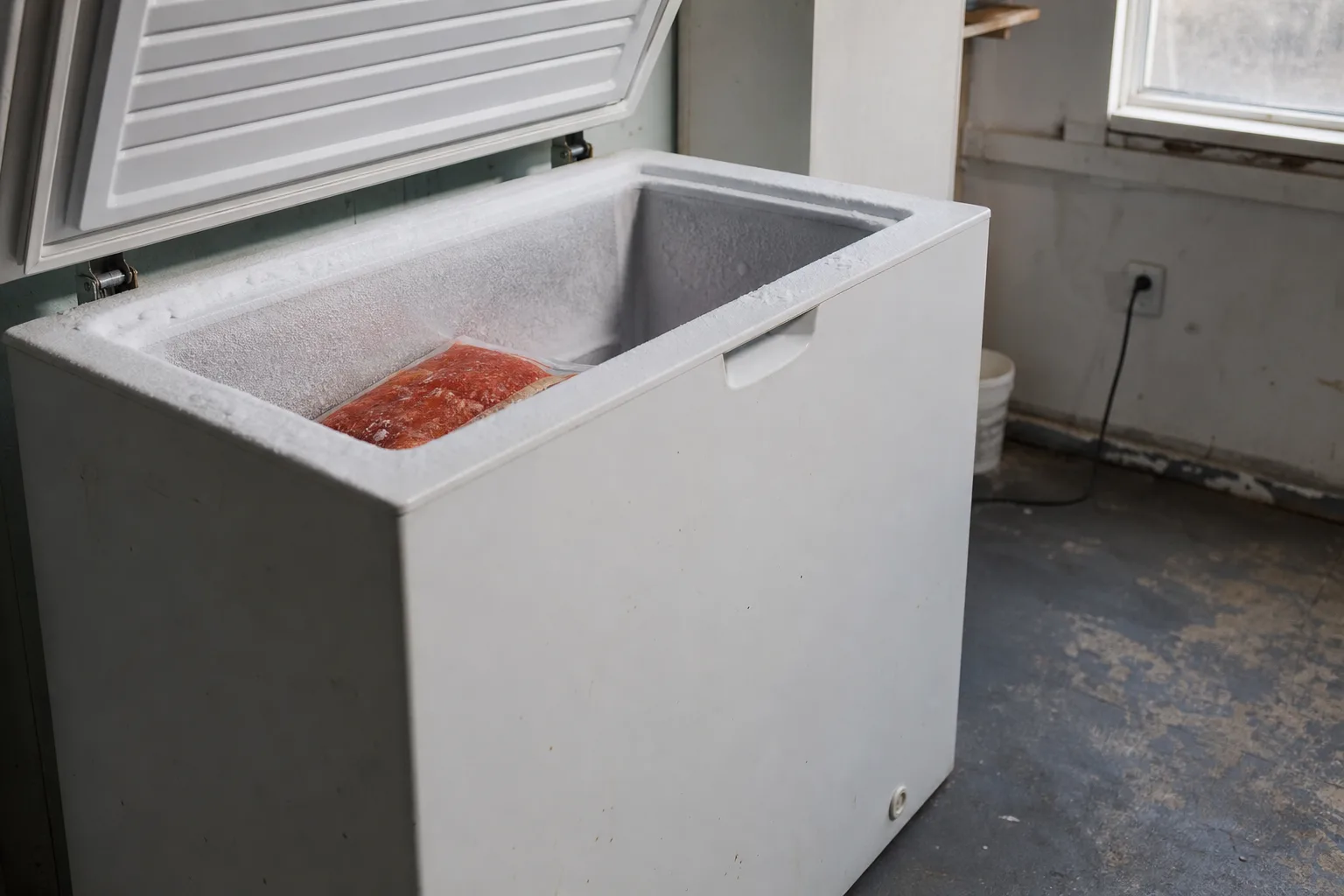
- Freezer: initial freezing uses roughly 0.48 kWh per starting pound. Spare capacity in an appliance already running is difficult to beat.
- Dehydrator: a full 4 lb load uses an illustrative 3.17 to 6.33 kWh per starting pound for thin apples, 3.17 to 12.65 kWh for tomatoes and 12.65 to 18.99 kWh for thick or halved plums.
- Oven: there is no reliable universal kWh figure. Cavity size, insulation, airflow, minimum temperature and door position change the result too much.
A half-empty dehydrator can roughly double energy per starting pound, so full trays matter more than rated watts. Measure a complete oven or dehydrator load with an energy monitor or smart meter, subtract normal household use, then multiply by your electricity rate. Fixed monthly charges usually stay outside the calculation.
Extra freezer capacity changes the result. An efficient chest freezer using around 215 kWh a year and serving 110 lb of harvest allocates about 2.0 kWh per stored pound before purchase cost and packaging. An upright example at about 395 kWh a year costs more to run. Use marginal cost for genuine spare space, and annual appliance cost for a freezer kept because of the harvest.
Electricity savings rarely repay a dehydrator quickly. If a machine costs $100, saves 3 kWh per full load and electricity costs $0.26 per kWh, payback takes about 128 full loads. Capacity, control and freeing the oven must carry the purchase case.
Match the method to tomatoes, apples, plums and herbs
Freezing generally retains nutrients best and keeps flavours close to fresh in cooked dishes, while drying concentrates flavour and preserves fibre and many minerals. Vitamin C is particularly vulnerable to heat, oxygen and long storage.
- Tomatoes: freeze whole or chopped fruit for sauces, soups and stews. It thaws soft and watery, which doesn’t matter once cooked down. Drying suits concentrated slices, flakes and powder, with about 0.83 lb dried from 44 lb fresh. Use the oven for one or two trial batches only.
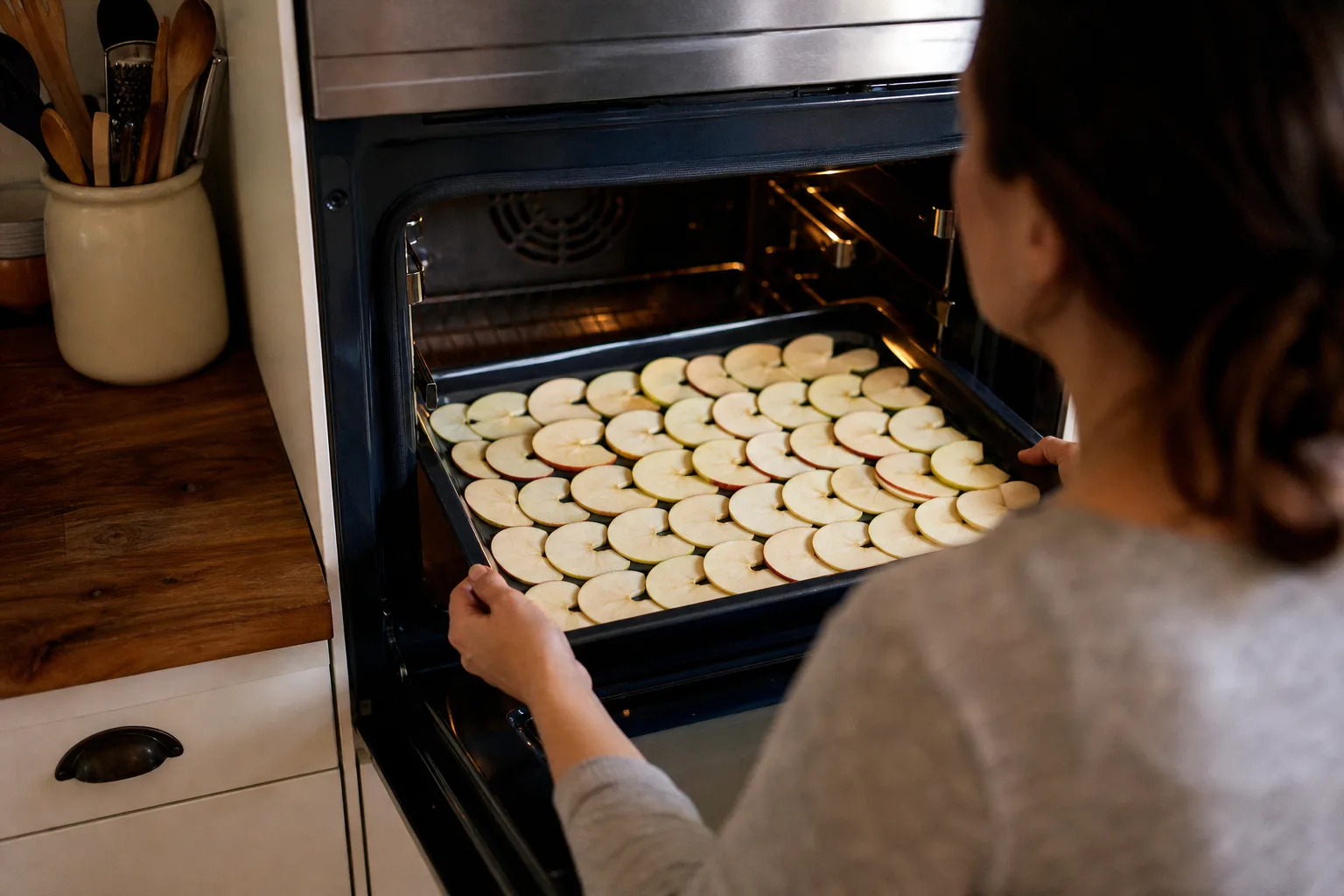
- Apples: freeze prepared slices for pies, crumbles and sauce. Thawed slices soften and release more juice, so recipes can need extra thickening. Thin, even 1/8 inch slices take about 6 to 12 hours to dry and make apples one of the better oven trials. A dehydrator becomes credible for repeated orchard-scale batches.
- Plums: freezing suits compote, crumbles and later jam-making. Drying makes sense if the household already eats prunes. Whole or halved plums can take 24 to 36 hours, so pit and slice them to shorten the run. Annual large crops favour a dehydrator because the oven would be tied up for too long.
- Herbs: freeze basil, parsley, dill, chives, mint and tarragon for cooked dishes with a fresher aroma. They become limp after thawing. Dry thyme, rosemary, sage and oregano for room-temperature storage, then keep leaves whole until use. A dedicated machine rarely makes sense for herbs alone.
Frozen fruit and vegetables keep their best quality for about 8 to 12 months at 0°F. Home-dried foods commonly keep for about 4 to 12 months, depending on the crop, storage temperature, dryness and packaging. Oven and dehydrator products have the same shelf life when they reach the same safe endpoint.
Follow the water into storage
Twenty-two pounds of tomatoes still occupies freezer space for close to 22 lb of food, while its published dried yield is about 0.83 lb. That difference matters more than a neat appliance wattage figure in a crowded kitchen.
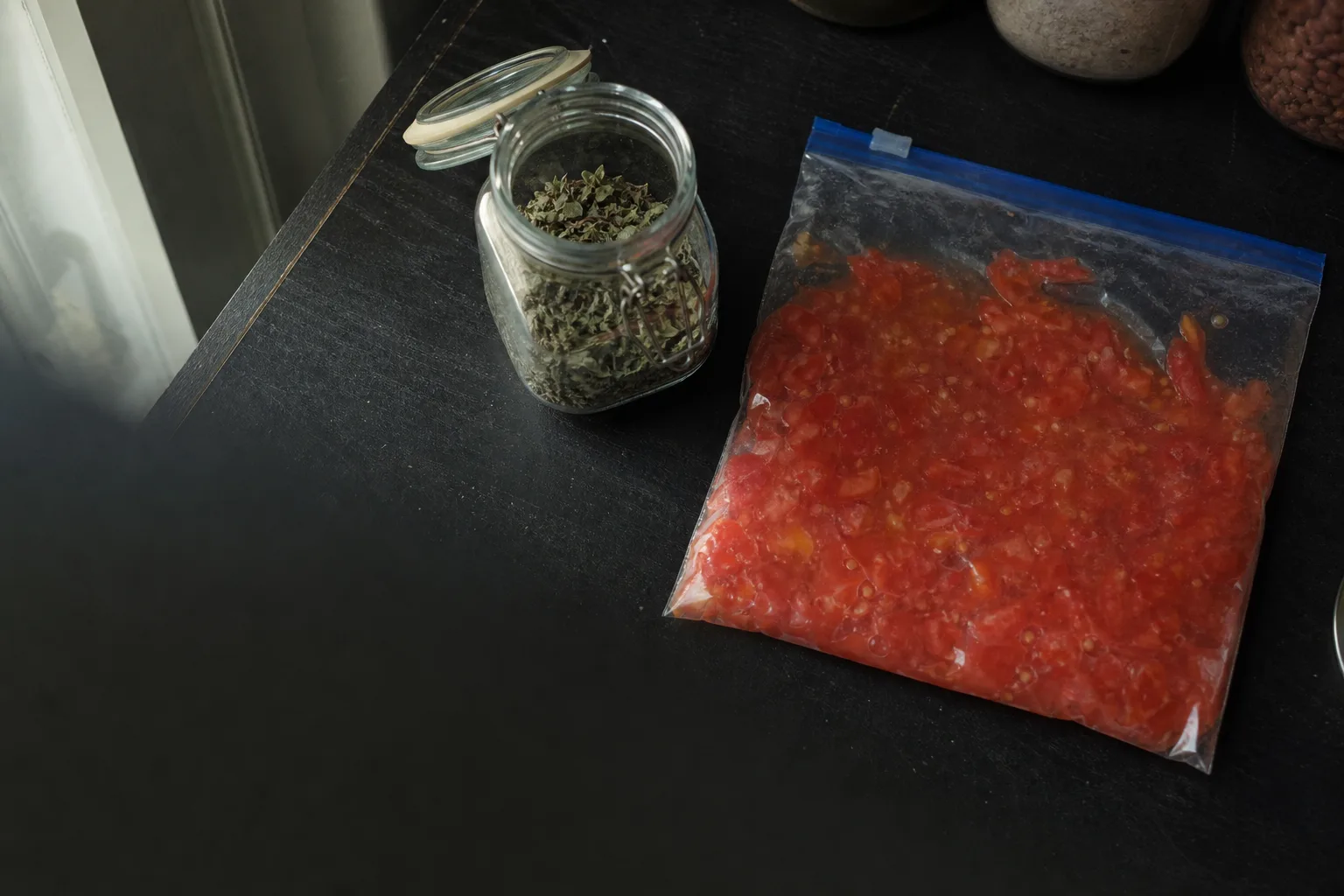
- Freeze chopped produce or sauce in moisture-resistant bags laid flat, then stack them once solid. Use freezer-rated wide-mouth jars for liquids and leave the specified expansion headspace. Keep packages at or below about 1/2 gallon so they freeze quickly.
- Pack dried food in small airtight jars or moisture-barrier bags. Small packs stop every opening from exposing the whole harvest to humid air. Glass reveals condensation and insects but needs dark storage. Flexible packs save space but puncture more easily.
- Remove excess air, label the crop and date, and use freezer-grade packaging. Thin shopping bags and reused dairy cartons provide poor long-term moisture protection. Vacuum sealing helps storage but cannot rescue inadequately dried food.
Count hands-on work separately from elapsed hours
Freezing needs the least monitoring, while oven drying creates the highest supervision cost.
- Freezer: wash, trim, pit or core, pretreat where required, pack and label. Tray-freezing adds a second packaging step but keeps pieces separate. Future work includes thawing, draining and sometimes reducing excess liquid.
- Dehydrator: prepare thin, even pieces, load single layers, rotate trays if airflow is uneven and check frequently near the end. Fruit then needs 7 to 10 days of conditioning before final storage.
- Oven: preparation is similar to dehydrator work, with added rack rotation, door management, room heating and lost cooking access. Uneven ovens can need rotation every 30 minutes. Conventional models can take up to two or three times as long as a dehydrator.
The oven loses repeated drying, yet remains the best no-purchase test
A fan oven that reliably holds around 140°F can produce good apple chips, tomato slices and fruit leather. One controlled comparison even found its particular fan oven about 10% faster on average, although it didn’t report electricity use. Poor airflow and hot spots still raise the risk of browning, cooked flavours and uneven drying.
When a dehydrator earns permanent shelf space
A dedicated machine earns its place through recurring capacity, controlled low heat and a free oven.
- Name the output first. Apple rings, prunes, tomato powder, fruit leather or lightweight meal ingredients need a real place in the household menu.
- Count annual full loads. Occasional half-loads waste the efficiency advantage. Compare total drying area rather than tray count, since four large square trays can exceed several small round ones.
- Measure the storage location and working clearance. Compact examples are around 12 × 12 × 9 inches, while large cabinets reach roughly 17 × 17 × 20 inches before allowing room to remove trays.
- Look for adjustable temperatures around 95 to 163°F if you’ll dry herbs, fruit and vegetables. Fixed machines around 160°F are poor all-purpose choices. Temperature consistency matters more than 1°F display increments.
- Prioritise even airflow, removable drip trays, fine mesh for herbs and solid sheets for purées. High wattage alone says little about energy per full batch.
Based on July 2026 manufacturer examples, an adjustable mainstream machine can cost roughly twice as much as a basic four or five-tray model. The extra money buys useful temperature control, more drying area and often better flexibility. Premium rear-fan cabinets buy easier tray access and more even airflow. They remain excessive for one annual basket of tomatoes, herb-only drying in a dry climate, or a home with a verified low-temperature fan-oven mode.
Compare food dehydrators
Live prices from more than 20 shops, updated daily.
FAQ: safe temperatures, loading and storage
These checks prevent the most common safety and quality failures.
What temperatures should I use for freezing and drying?
Keep the freezer at 0°F or colder. Fruit and most vegetables are commonly dried around 135 to 140°F, following crop-specific tested guidance. Vegetables should finish brittle or crisp, while fruit is generally leathery.
How much unfrozen food can I add to a freezer at once?
Add about 2 to 3 lb of unfrozen food per 1 cubic foot of freezer capacity in 24 hours. Overloading slows freezing, creates larger ice crystals and worsens texture.
Why must dried fruit be conditioned?
Loosely fill sealed jars for 7 to 10 days and shake them daily. This redistributes remaining moisture. Condensation means the fruit needs further drying. Discard mouldy food.
Can I store tomatoes or fresh herbs in oil at room temperature?
No. Fresh herbs in oil must remain frozen. Home-preserved tomatoes in oil aren’t recommended because oil can create an oxygen-free environment around trapped water. Oil cannot make under-dried food shelf-stable.
How do I avoid case hardening?
Don’t raise the temperature to hurry the final stage. Excess heat can dry and seal the surface while the centre stays moist enough to mould. Use even slices, steady airflow and the tested endpoint.
Verdict: use spare freezer capacity first, then prove demand before buying
Freeze crops headed for cooked dishes and use a suitable fan oven for occasional drying. Buy a dehydrator after you can name the dried foods, fill the trays repeatedly and give the appliance a permanent home. Its strongest return comes from capacity and control rather than promised electricity savings.
This article was created using AI, following our team's editorial standards.


