


An air fryer only feels roomy if dinner can sit flat in it. This guide helps you choose the capacity, basket style, heat control, cleaning effort, and footprint that fit the way you actually cook, not the biggest quart number or the longest preset list.
Decide whether you need faster portions, flexible batches, or a daily-use countertop workhorse
Start with your meals, not the appliance. Air fryers are best for small batches of frozen foods, fries, wings, chicken pieces, fish fillets, vegetables, reheated pizza, breaded foods, quick sides, and small roasts, especially when you don’t want to heat up a full-size oven.
- Faster weeknight portions: choose a compact or mid-size single drawer if you mostly cook snacks, one or two portions, or quick sides.
- Flexible batch cooking: choose a wider 5 to 6.5 qt basket, an XL single basket, or a dual-zone model if you often cook a main and a side.
- Daily-use countertop workhorse: choose a larger basket, flex drawer, or air-fryer toaster oven if it will replace several oven jobs, not just cook fries.
The trade-off is space. Larger models can handle more food flat, but they take up more counter and storage room. A smaller model can be the better buy if you’ll use it every day and can clean it quickly.
Judge capacity by the flat cooking area, not just quarts
Advertised capacity tells you the basket volume, including vertical space. For crisping, the useful capacity is the flat cooking area, because most air-fried foods cook best in a single layer.
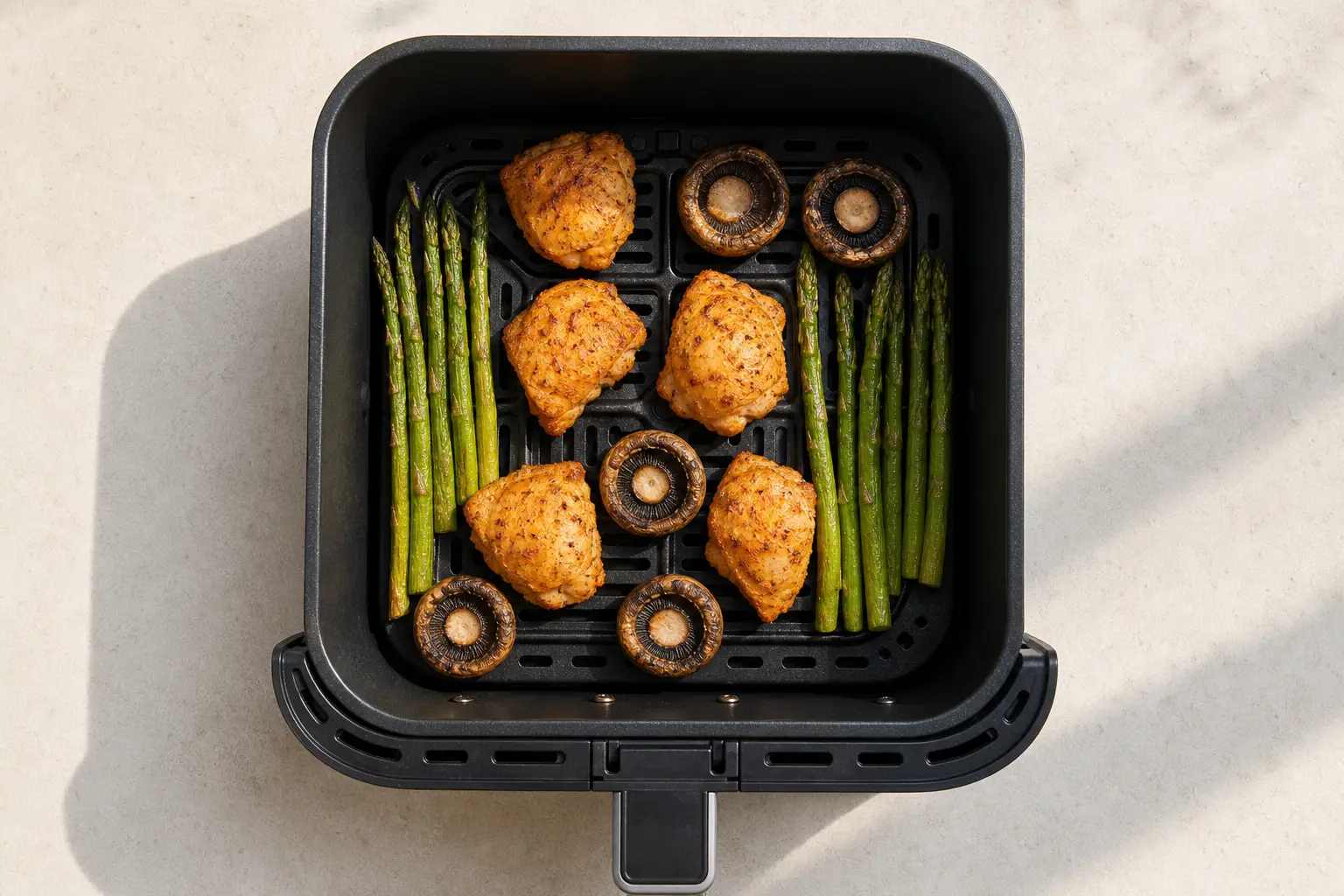
A wide square or rectangular basket often beats a narrow tall one at the same listed size. More food can sit flat, overlap less, and cook more evenly. A 6-quart square basket can be more useful than a taller 7-quart basket if it fits more food in one layer.
- Around 2 to 3 qt: snacks, single portions, and very small kitchens.
- Around 3 to 4 qt: one to two people if you cook small batches.
- Around 5 to 6.5 qt: a common size for many households, usually enough for two to four portions depending on the food shape.
- Around 6.5 to 9.5 qt: families, batch cooking, and buyers who want more single-layer area.
- Dual-zone models around 8 to 10 qt total: useful for two foods, but the total capacity is split into two smaller baskets.
Choose the basket format that matches your meals: single drawer, XL, dual-zone, or oven-style
The basket format decides how you load food, shake it, cook two items, and store the machine. No style wins for everyone, so match the format to your usual dinner, not to the most complicated meal you might cook once.
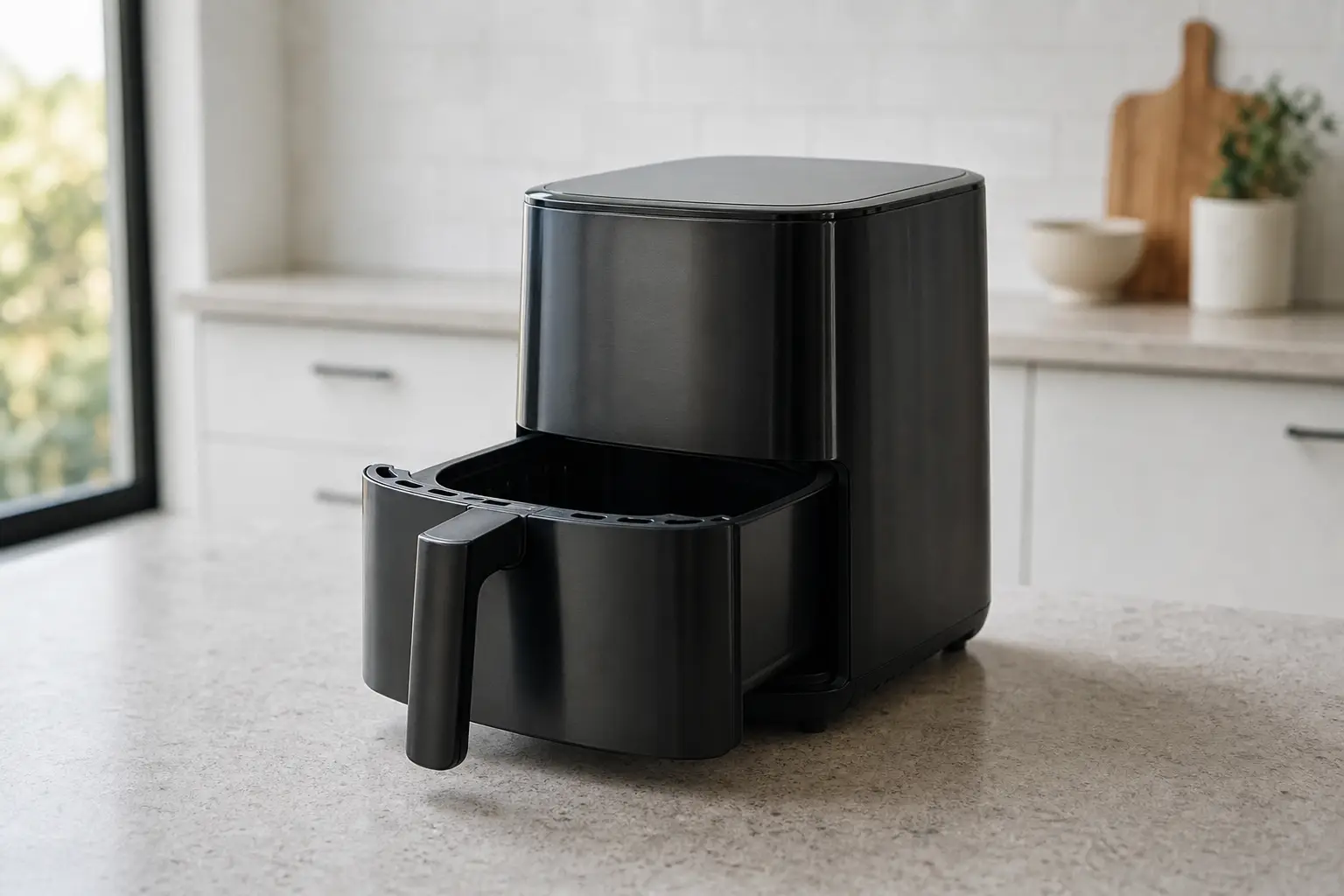
Single basket or drawer
This is the common, practical choice for quick meals and smaller kitchens. It is easy to pull out, shake, and reload, which helps with fries, nuggets, and vegetables.
Choose this if you usually cook one food at a time or you’re happy to cook a side while the main dish rests. For many people and families, a basket-style model is the simplest fit.
XL single basket or flex drawer
An XL basket gives you one large flat area for wings, vegetables, fish fillets, or a small chicken. Flex drawers with removable dividers can add versatility, but check how sturdy and easy to clean the divider looks before buying.
Dual basket or dual-zone
Dual-zone models are useful if you often cook two foods at different temperatures or times, such as chicken pieces in one basket and vegetables in the other. Features that finish both zones together or copy settings across both baskets can save effort.
Air-fryer toaster oven
An air-fryer toaster oven gives you a larger tray area and extra functions such as toast, bake, roast, and broil. It makes sense if you want one countertop appliance to handle several oven jobs.
The trade-off is recovery speed. A larger chamber can take longer to recover heat after food goes in, so it may not feel as quick as a basket model for small portions.
Glass basket or container
Glass models appeal to buyers who want visibility and prefer to avoid cooking directly on traditional nonstick basket surfaces. Check the weight, handling, and crisper tray material, because the tray may still use a coating.
Look past wattage and check the heat control that actually affects crisping
Wattage gives you a rough clue, not a result. Many mid-size basket air fryers sit around 1,500 to 1,800 W, but crisping depends on how well the heater, fan, airflow, and temperature control work together.
A strong fan without enough heater power can hurt temperature recovery. A high-capacity basket with weak heat or airflow can steam crowded food instead of crisping it.
- Look for manual temperature and time adjustment, not preset-only cooking.
- For browning and crisping, a usable maximum temperature around 400 to 450 F is helpful.
- Check whether the appliance has clear preheat behavior. Some models ask you to preheat, while others build it into a program.
- Shake or turn reminders help with fries, nuggets, wings, and vegetables.
- Expect better results when food is spread in one layer and the basket is not crowded.
If you cook dense loads, frozen food, or family portions, don’t buy on wattage alone. Read the specs and look for signs of good airflow, clear temperature control, and enough flat area to avoid piling food up.
Prioritize manual controls and useful reminders over long preset lists
Preset buttons are shortcuts. They store starting times and temperatures, but they don’t know food thickness, load size, or whether the food is frozen.
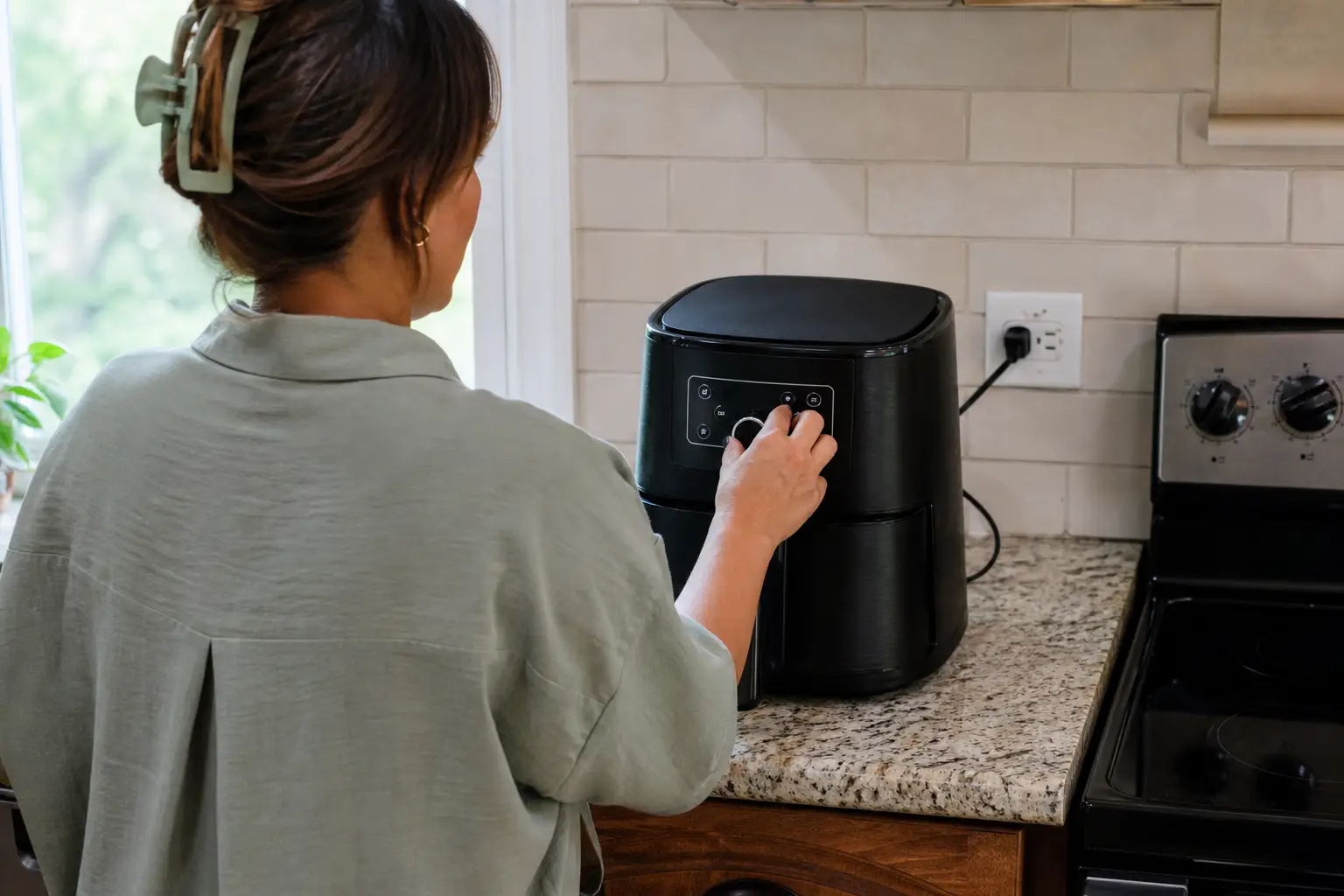
- Clear manual time and temperature controls.
- A readable display and buttons or dials that respond without fuss.
- Pause and resume when the drawer is removed.
- Shake or turn reminders.
- Custom saved settings if you repeat the same meals often.
- A window and light if you hate opening the drawer to check food.
Wi-Fi, app recipes, big lists of branded presets, and decorative touchscreens are less essential. They can be nice extras, but they should not replace basic manual control.
Check cleaning effort, coating choices, ventilation space, and storage before buying
An air fryer that is annoying to clean or too awkward to leave out will not become a daily tool. Check the parts you’ll handle every time: basket, crisper plate, divider, window, and drawer opening.
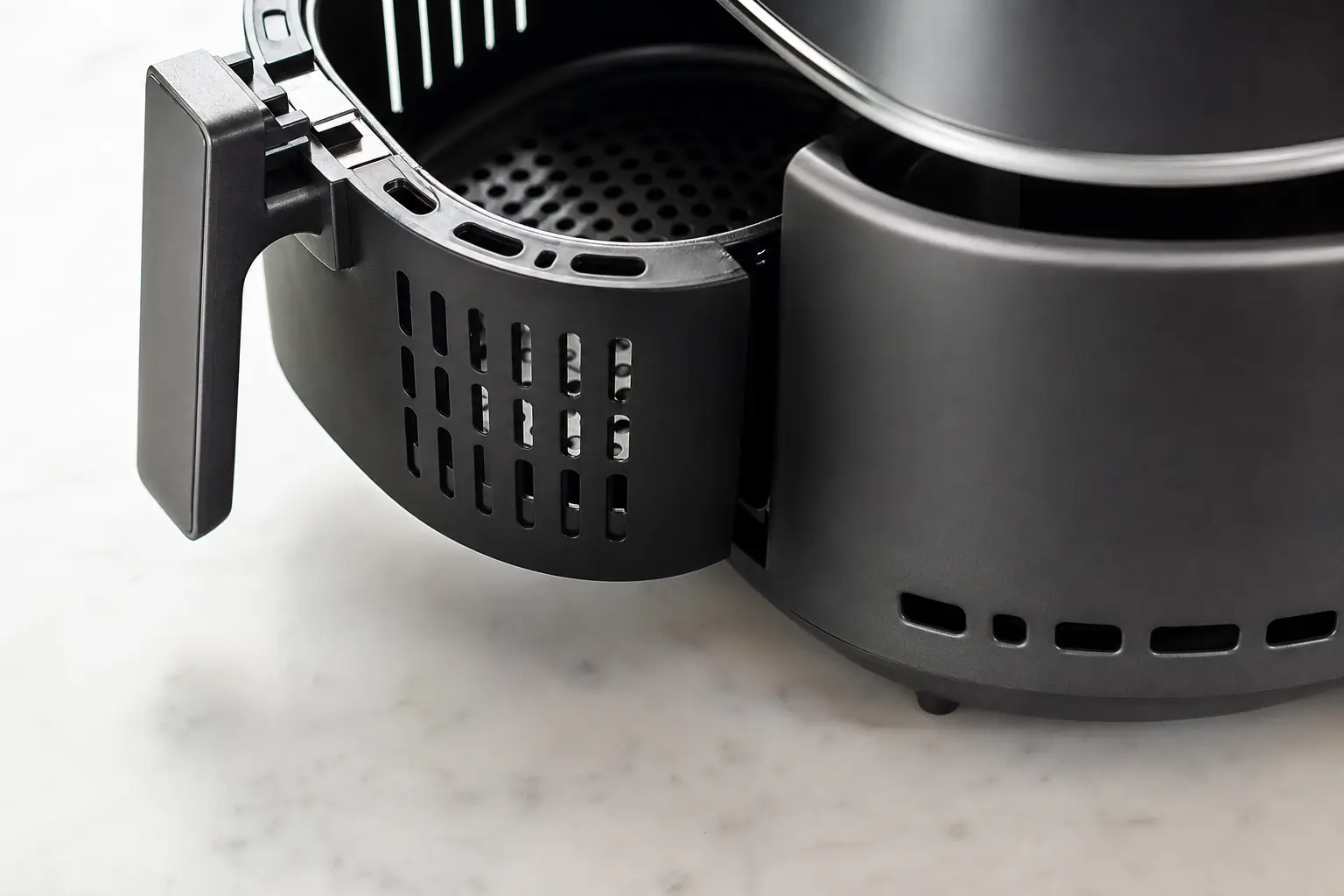
- Plan to clean it after every use so grease and food residue do not build up.
- Look at the basket and crisper plate shape. Deep grooves, awkward corners, and extra dividers mean more wiping.
- If you prefer to avoid traditional nonstick, compare ceramic-coated, PFAS-free, or glass options where available, but still check the crisper tray material.
- Glass can help you watch food without opening the drawer, but it may add weight and another surface to wipe.
- Leave ventilation space around the hot-air outlet and do not trap the appliance under low cabinets while cooking.
- Measure width, depth, and height, plus the space needed to pull the drawer out fully. Also check where it will live when not in use.
Comparison table: which air fryer type fits your household and cooking style?
| Air fryer type | Best fit | Main strengths | Trade-offs to check |
|---|---|---|---|
| Compact single drawer | Solo cooks, couples, renters, small kitchens | Fast snacks and small meals, easy to shake, easier to store | Limited flat area, not ideal for family portions |
| Mid-size single drawer | Most everyday users who cook one food or one tray of food at a time | Good balance of speed, capacity, and footprint | Capacity still depends on basket width, not only quarts |
| XL single basket or flex drawer | Families, wing nights, vegetables, small roasts, batch cooks | Large single-layer area, can handle bigger pieces | Bigger footprint, dividers can add cleaning work |
| Dual-zone basket | Main plus side, different cooking times, different temperatures | Two independent cooking areas and helpful finish-together features on some models | Total capacity is split, not always faster than one large basket |
| Air-fryer toaster oven | Buyers replacing toaster and small oven tasks | Larger tray area and more oven functions | Larger chamber, more counter space, may recover heat more slowly |
| Glass basket or container | Coating-conscious buyers and people who want visibility | Lets you see food and may reduce direct use of traditional nonstick surfaces | Check weight, handling, and whether the crisper tray is coated |
Common mistakes that make an air fryer feel too small, slow, or annoying
- Buying the tallest quart number instead of the widest usable cooking surface.
- Assuming a dual-zone model gives twice the output speed, even though the capacity is split.
- Trusting preset count more than manual time and temperature control.
- Crowding fries, wings, or vegetables into a pile, then wondering why they steam instead of crisp.
- Ignoring heat recovery after opening the drawer or adding a cold load.
- Choosing an oven-style model for tiny snacks, then finding it slower and larger than needed.
- Forgetting to measure drawer pull-out space, ventilation room, and storage space.
- Not checking how many parts need cleaning after greasy foods.
FAQ: air fryer capacity, wattage, presets, cleaning, and countertop footprint
What size air fryer do I need for one or two people?
Around 3 to 4 qt is often enough for one to two people if you cook small batches. Choose around 2 to 3 qt only if you mainly want snacks or single portions.
What capacity suits a family?
Look around 5 to 6.5 qt for many household meals, or 6.5 to 9.5 qt if you want more single-layer area for family sides, wings, or batch cooking. Basket shape still matters as much as the number.
Is a bigger air fryer always better?
No. Bigger can mean more flat area, but it also means more counter space and storage. A wide 6-quart basket may be more useful than a taller larger basket if it holds more food flat.
Does higher wattage mean crispier food?
Not by itself. Crisping depends on the balance between heater power, airflow, basket design, and temperature control. A crowded basket can still cook poorly even with decent wattage.
Are presets necessary?
No. Presets are starting points for time and temperature. Manual controls, shake reminders, pause and resume, and readable buttons matter more.
Is dual-zone worth it?
Yes, if you often cook two foods with different times or temperatures. No, if you mainly want one large batch, because two smaller baskets may be less useful than one wide basket.
Compare air fryers
Live prices from more than 20 shops, updated daily.
Verdict: buy the air fryer you can load flat, control easily, and clean without resentment
Choose by loading pattern. For quick snacks and small meals, buy a compact or mid-size single drawer. For family portions and batch cooking, prioritize a wider basket or XL drawer. For a main and side at different settings, consider dual-zone. For toast, bake, roast, and broil as well as air frying, look at an air-fryer toaster oven.
The best choice is the one with enough flat cooking area, clear manual heat control, a cleanable basket, and a footprint that fits your kitchen. That is the air fryer you’ll still use after week one.
This article was created using AI, following our team's editorial standards.


