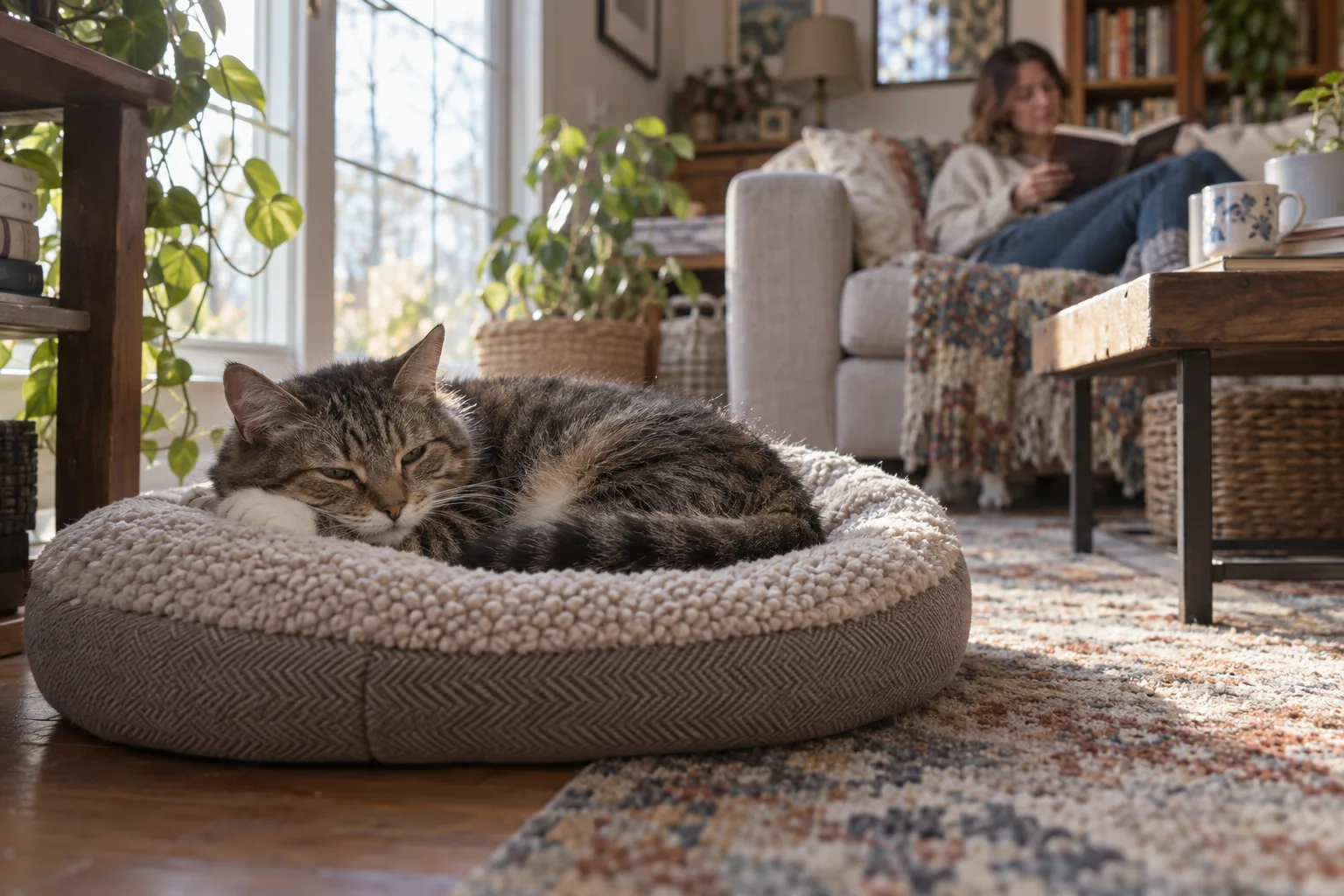


Part the fur at your pet’s shoulder before you shop. A soft, dense layer beneath longer guard hairs points towards an undercoat rake, smooth coats usually suit a rubber glove, and curly or silky coats need a slicker and often a comb.
Before you buy: identify the coat layer and the problem first
Coat structure tells you what the brush needs to reach and which hair must stay intact. As daylight shortens in early autumn, many pets shed more, though indoor lighting, climate and individual hair cycles can spread shedding across the year.
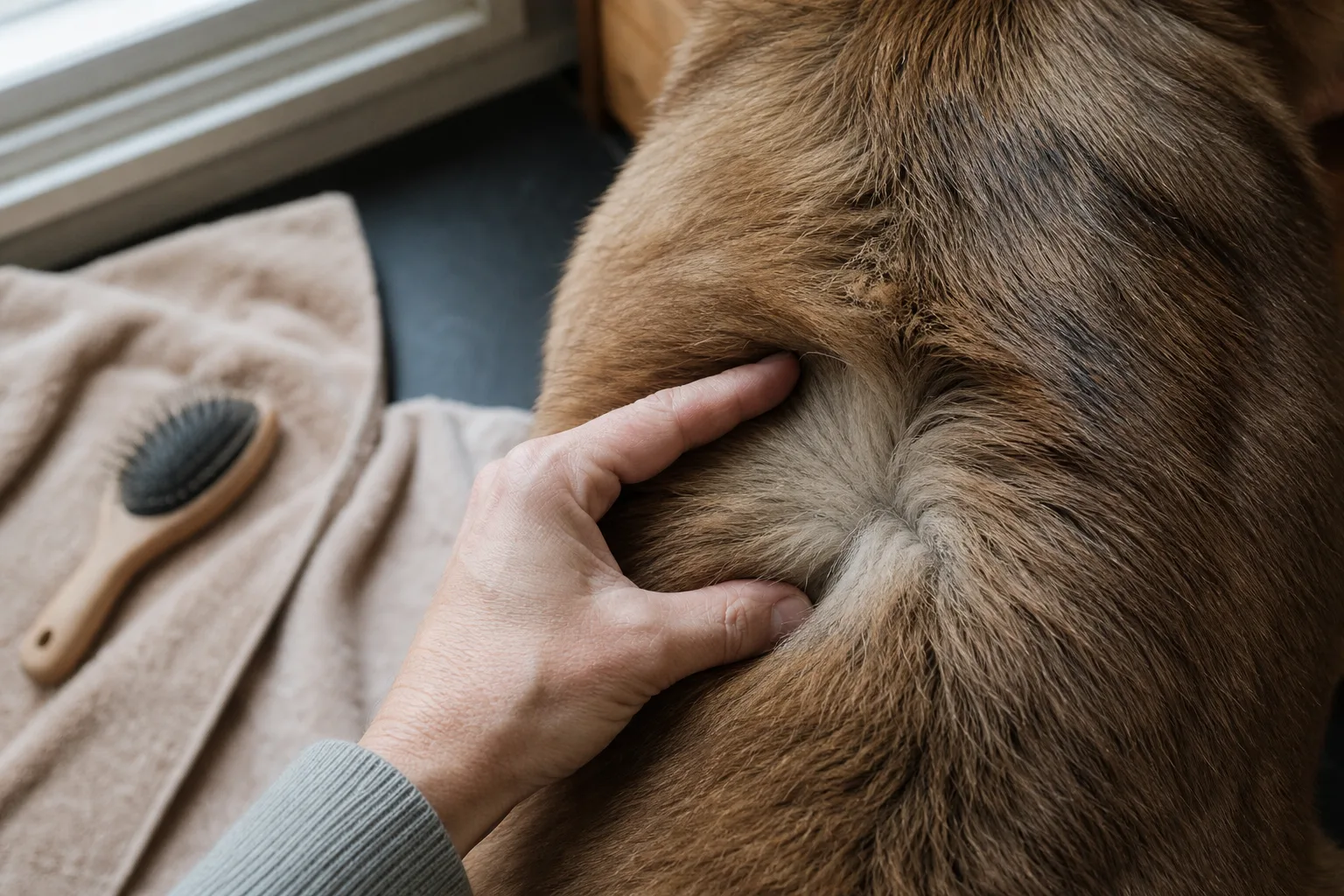
- Part the coat: look for a softer, denser layer beneath longer guard hairs.
- Feel the surface: is it short and flat, plush, long and flowing, curly, wiry or sparse?
- Check the hair cycle: does hair shed freely, or grow until it needs clipping?
- Name the current problem: surface hair, loose undercoat, tangles or a tight mat.
Smooth-coated dogs and short-haired cats often need only a glove or rubber curry. Dense double coats need a tool that reaches the undercoat. Curly, woolly and long silky coats need separation and tangle control. Hairless cats need no shedding brush, and owners already getting good results from a safe, comfortable tool can keep it.
Coat-to-tool comparison: match the tool to the fur it handles safely
Choose the gentlest geometry that reaches the loose hair without repeatedly scraping the skin or shortening healthy guard hairs.
| Tool | Best fit | What it does well | Main limit |
|---|---|---|---|
| Rubber glove or curry | Short, smooth coats and many short-haired cats | Loosens surface hair and feels like stroking | Barely enters a long or dense undercoat |
| Slicker brush | Curly, woolly and medium to long coats, including long-haired cats | Separates hair, lifts loose coat and helps prevent tangles | Pins can scratch, while shallow strokes miss packed undercoat |
| Blunt undercoat rake | Short dense or medium to long double coats | Reaches loose secondary coat while preserving guard hairs | Poorly matched teeth can snag or rake the skin |
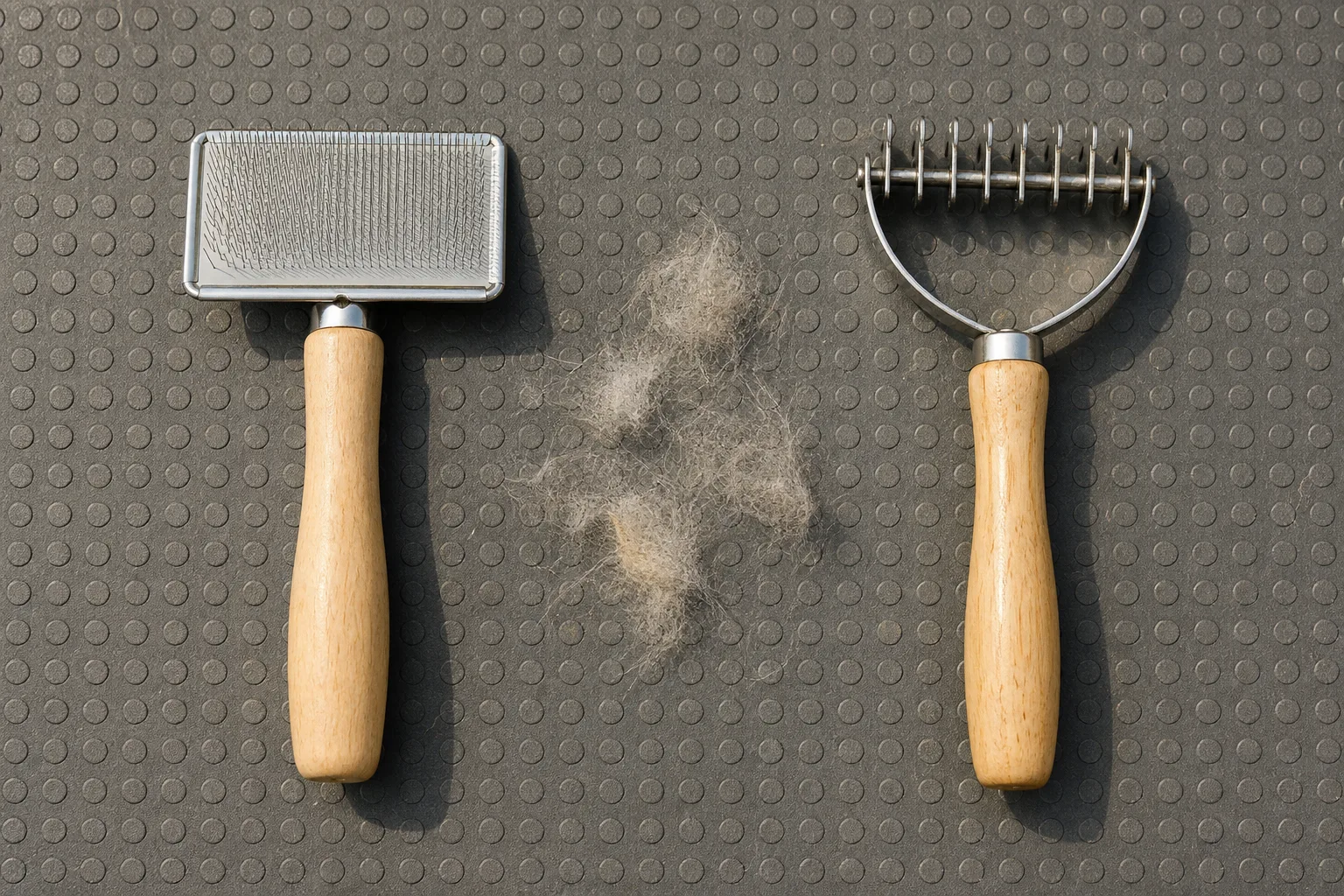
| Edge-style de-shedding tool | Clean, dry, tangle-free shedding coats with a distinct undercoat | Collects a large amount of loose undercoat quickly | Repeated passes can abrade skin and break topcoat |
| Loop shedding blade | Large areas of short, flat dog coat | Covers the body quickly and lifts freely shedding surface hair | Offers little precision and performs poorly on long or tangled fur |
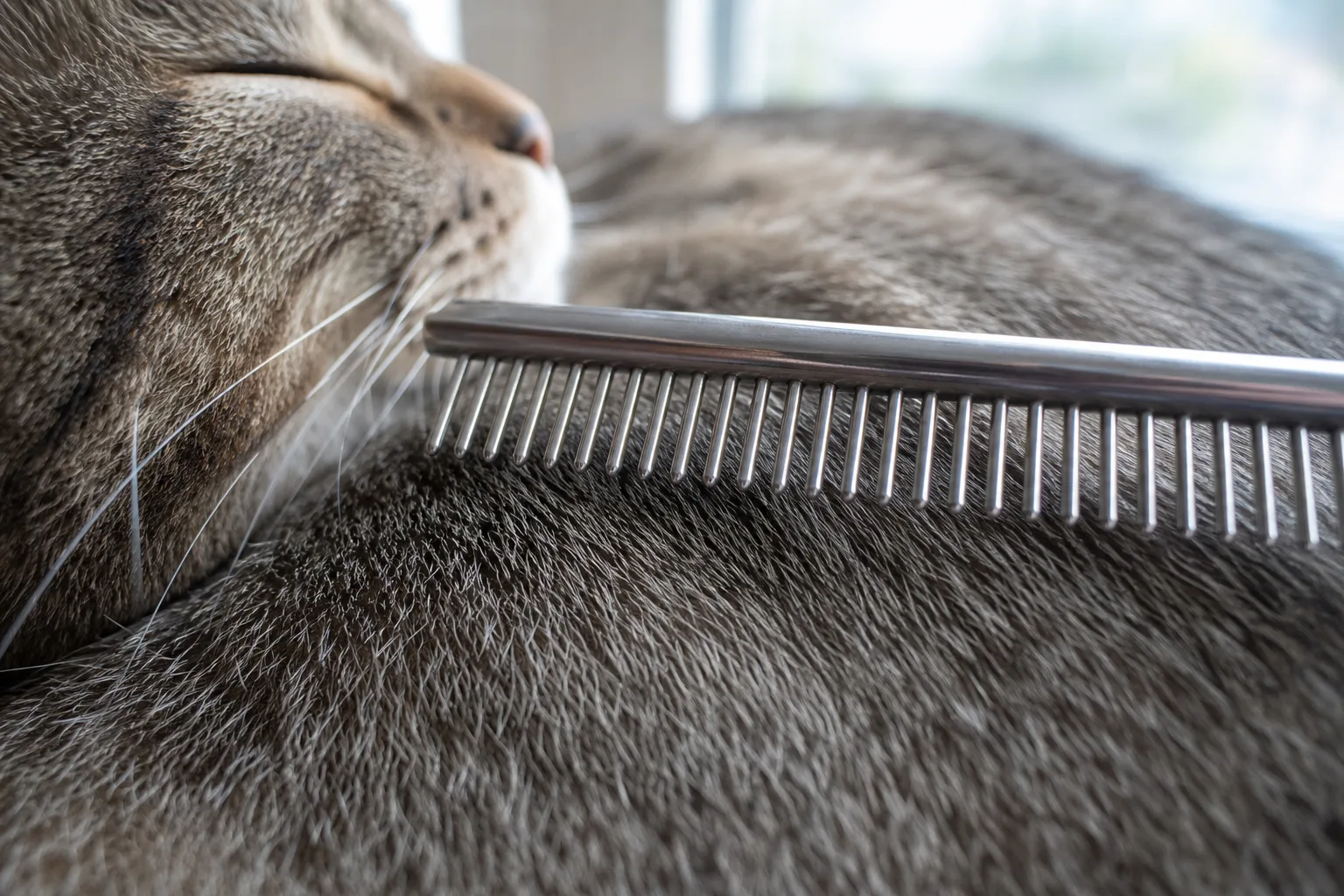
| Metal comb | Long, curly or dense coats | Checks whether grooming reached near the skin | Slow for removing a heavy seasonal shed |
Retailers use “de-shedding blade” loosely. A metal loop suits short flat coats. A rigid toothed edge reaches some undercoats. A hooked dematting rake or coat stripper often has sharpened parts that cut hair, so it belongs in experienced hands.
- Avoid bladed de-shedding tools on curly or wool coats, fine silky single coats, sparse coats and sensitive skin.
- Keep them away from mats, long fine guard coats and wire coats that require coat-specific hand stripping.
- Watch the removed hair. Soft, pale, woolly undercoat is the target. Numerous coarse full-length hairs or short broken pieces mean stop.
Get the fit right: choose teeth and width that reach without scraping
Coat depth sets tooth length, while the animal’s body and contours set the useful working width.
- Long, dense double coat: choose longer, widely spaced or rotating rake teeth to reduce snagging.
- Fine or shorter coat: use shorter, closer pins for control.
- Cats, small dogs and bony areas: a narrow head follows contours. Broad heads save time across a large dog’s torso.
- Check the finish: teeth should feel rounded or polished, pins must be secure, and a slicker pad should flex without exposing sharp wire ends.
- Hold the tool nearly parallel to the body. A steep angle concentrates force on pin tips.
Ignore percentage claims about reducing shedding and add-ons such as steam, ionic or blue-light functions. They cannot repair a poor coat match. As of August 2026, paying two or three times an entry price can buy better-finished teeth, stronger pin anchoring, handle comfort and replacement support. Self-cleaning buttons only eject trapped hair.
Build a realistic peak-moult routine: use short, light sessions
Plan 5 to 10 minutes at a time and finish while your pet is still cooperative. Several calm sessions remove more loose coat safely than one forced marathon.
- Choose a calm, non-slip place and let the animal inspect the tool.
- Check the coat by hand for mats, soreness, lumps, parasites or damp areas.
- Start at the shoulder or upper back. Work with hair growth using light, even pressure.
- On long coats, lift small sections and brush from the lower edge outward. Clean hair from the tool frequently.
- Make only a few passes over each strip, then move on. Use a medium-spaced comb to check long, curly or dense coats.
- End the session for flinching, skin twitching, redness, swatting, growling or repeated escape attempts.
- Smooth short coats: weekly normally, then several brief sessions each week during a clear seasonal shed.
- Dense double coats: at least weekly, increasing to daily or most days during active coat blow.
- Long, silky or curly coats: often daily for tangle prevention, regardless of shedding volume.
- Short-haired cats: about weekly, rising to twice weekly or brief frequent sessions during heavier shedding.
- Long-haired cats: generally daily, especially around the armpits, belly, chest and hind legs.
- Edge-style tools: commonly one or two 10 to 20 minute sessions a week on a suitable coat, with an ordinary brush between sessions.
Dogs need bathing when dirty, odorous or when their coat and lifestyle justify it. Brush out debris and tangles first, use dog-specific shampoo, rinse thoroughly and dry dense undercoat properly. Most healthy cats need no routine bath; a damp cloth often handles minor dirt. Always follow species, age and weight instructions for shampoos and parasite products, since a dog product is not automatically safe for cats.
Avoid the damaging shortcuts: blade overuse, mat attacks and shaving
Aggressive grooming can turn loose seasonal coat into scratched skin, broken guard hairs and painful resistance to future sessions.
- Use light pressure and follow hair growth. More force raises the risk of brush burn and breakage.
- Avoid the face, ears, nipples, genitals, lower belly, armpits, hocks and prominent bones with stiff or sharp tools.
- Never force restraint. Use rewards, short sessions and an escape option, especially with cats.
- Do not shave a healthy double coat to control heat or sofa hair. Shaving shortens hairs that will still shed, removes UV and mechanical protection, and can cause uneven or delayed regrowth. In affected plush-coated dogs, regrowth can take up to two years.
- Clipping can still be necessary for surgery, skin treatment or severe matting that cannot be brushed humanely.
Know when sofa hair signals a health problem
Seasonal shedding leaves an evenly covered coat and normal-looking skin. A sudden change, obvious thinning or symptoms elsewhere need veterinary assessment.
- The coat remains evenly covered, without bald patches.
- Skin colour and smell remain normal, with no pain or persistent itch.
- Appetite, weight, thirst, energy and behaviour stay unchanged.
- The timing resembles the animal’s previous seasonal pattern.
- Bald spots, patchy or symmetrical thinning, circular loss, or broken stubbly hairs
- Persistent scratching, licking, chewing, rubbing or overgrooming
- Red, swollen, greasy, scaly, crusted or darkened skin, sores, discharge or unpleasant odour
- Visible fleas or ticks, suspected mites, pain during grooming, or delayed regrowth after clipping
- A previously tidy older cat becoming matted or unkempt
- Shedding with lethargy, weight or appetite changes, vomiting, diarrhoea, or increased thirst and urination
Parasites, infection, allergy, hormonal disease, poor nutrition, chronic illness, stress and reduced mobility can all alter coat growth or self-grooming. A brush cannot diagnose or treat them.
FAQ: practical questions before the next brushing session
A suitable tool should remove loose hair while leaving the skin calm and the intact coat even.
Is a slicker enough for a double coat?
It can handle maintenance if its pins reach the undercoat. During heavy coat blow, a correctly sized blunt rake is usually faster. Pass a medium-spaced comb from near the skin to the ends to check whether the slicker reached full depth.
Can I brush a wet coat?
Use wet fur tools only where their instructions allow it. Rubber bathing brushes often work wet. Rigid edge tools work most predictably on clean, fully dry, tangle-free fur. Fine teeth dragged through wet tangles can pull painfully.
Can my cat and dog share a brush?
Only when the head, tooth length and stiffness suit both coats. Remove hair and clean the tool between animals. Contaminated grooming equipment can spread ringworm, and a large stiff dog rake is usually unsuitable for a small cat.
Does brushing prevent hairballs?
It can reduce the loose hair a cat swallows, but it cannot make repeated vomiting or unproductive retching normal. Loss of appetite, lethargy or ongoing vomiting needs veterinary advice.
When should I stop brushing during a heavy shed?
Stop when each pass collects clearly less hair, or earlier if the coat feels warm and the skin becomes pink or sensitive. Trying to reach a hair-free brush encourages excessive passes over the same area.
Verdict: buy one coat-matched brush
Choose a glove for smooth surface shedding, a slicker for separation and tangle control, or a blunt rake for a true double coat. Add a plain metal comb only when you need to verify depth or find hidden tangles. A basket of overlapping brushes adds clutter, while one correctly fitted tool makes the routine safer and easier to sustain.
Compare pet grooming brushes
Live prices from more than 20 shops, updated daily.
This article was created using AI, following our team's editorial standards.