


Start with the run you actually do. A running shoe has to match the surface, distance, and pace first, then still hold your foot securely after it swells and your stride gets tired. Pronation and cushioning labels matter, but they make more sense after that first filter.
Start with your run: match the shoe to surface, distance, and pace before labels
The fastest way to narrow the wall of shoes is to name the job. A comfortable daily road trainer, a mud-ready trail shoe, and a light race shoe solve different problems, even if they all say running on the box.
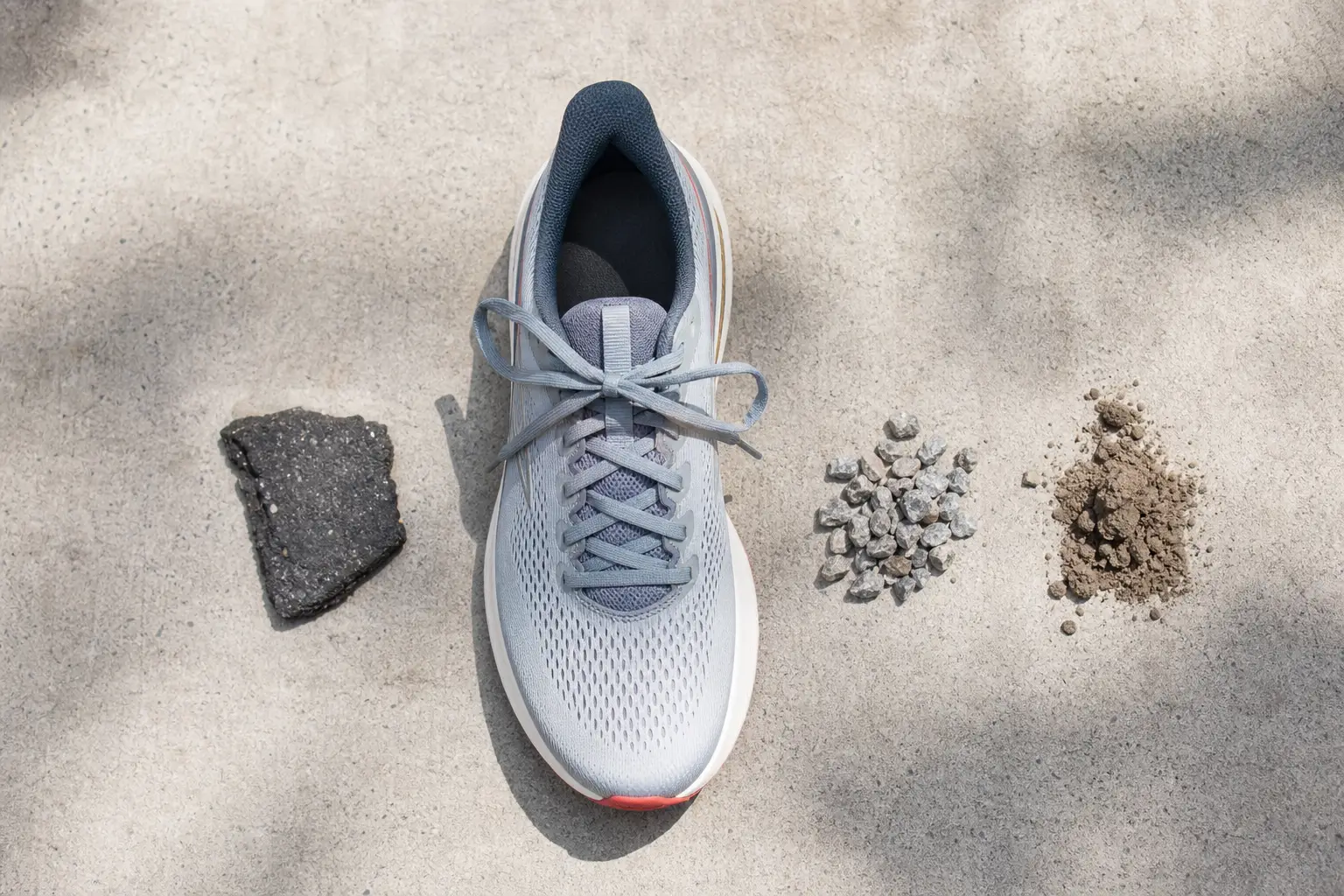
- Surface: road, treadmill, track, packed gravel, park paths, rocky trail, or mud.
- Run type: easy daily miles, long runs, faster workouts, or race day.
- Distance: short fitness runs need less protection than long-run or marathon-training shoes for many runners.
- Pace and feel: easy shoes should disappear on the foot; workout shoes often feel lighter, firmer, or more responsive.
- Foot shape: the right category still has to fit your heel, midfoot, forefoot width, and toe room.
This order stops you from buying more support than you may need. Pronation is normal, and static arch shape alone is a poor way to choose a running shoe.
Compare running shoes
Live prices from more than 20 shops, updated daily.
Choose the right outsole and protection for road, treadmill, gravel, or trail
Use the outsole as the surface clue. Smooth, lighter shoes suit repeated impact on hard, even ground. Lugged, more protective shoes suit uneven ground, loose dirt, and rocks.
Road, treadmill, and track
Pick a road shoe if most of your running is on pavement, treadmills, or other firm, even surfaces. These shoes usually use smoother outsoles, lighter uppers, and midsoles built for repetitive impact.
They can also work for occasional smooth packed dirt. If that occasional use becomes every run, move toward a light-trail or door-to-trail shoe.
Light gravel and park paths
For mixed pavement, canal paths, dry forest tracks, or smooth gravel, look for a door-to-trail shoe or a mild trail shoe. You get extra grip without the weight and stiffness of a technical trail shoe.
Technical trail, mud, and rocks
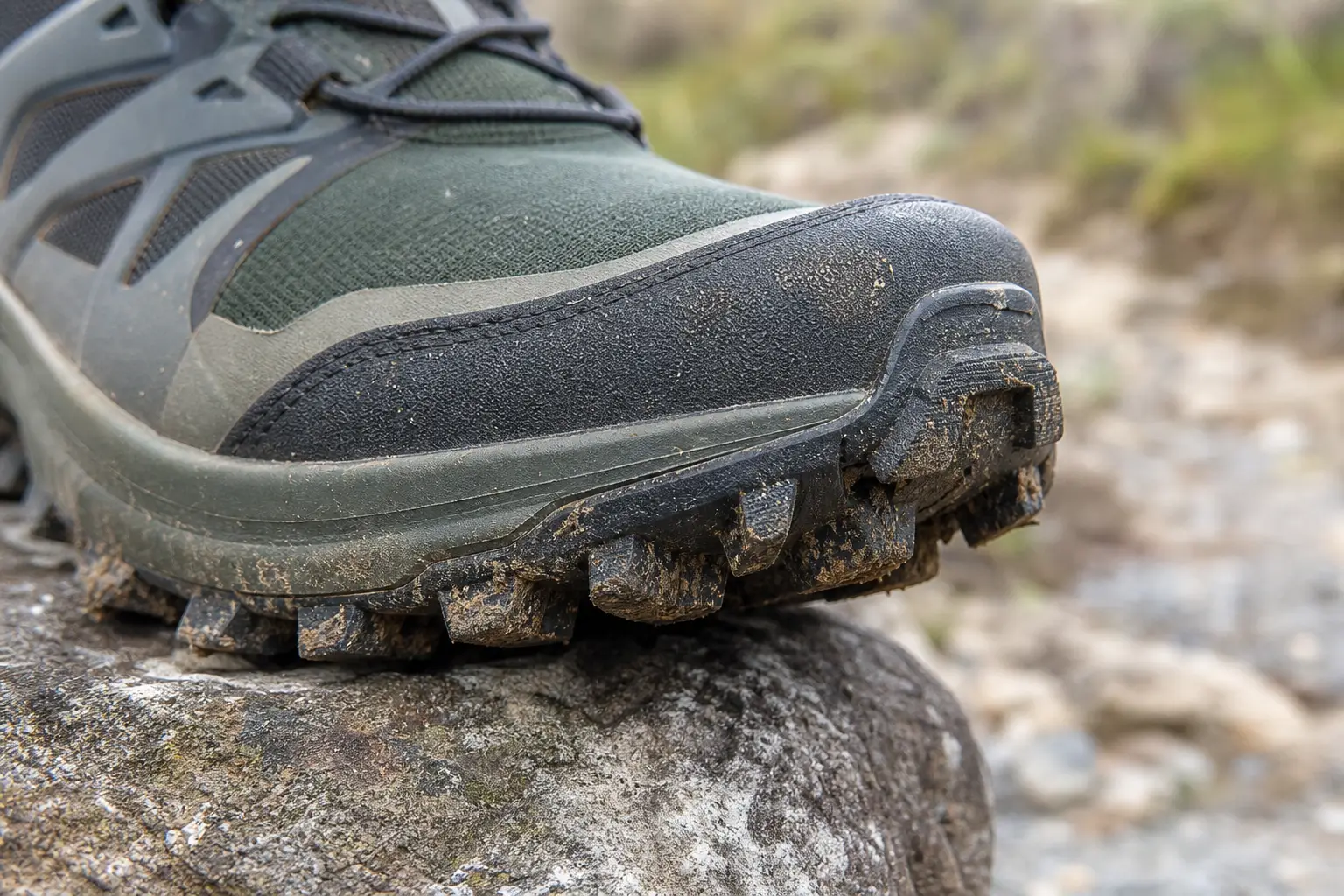
Trail shoes add lugs, toe protection, stiffer platforms, and sometimes rock plates for uneven ground. Shallow, closely spaced lugs suit dry hardpack. Deeper, wider-spaced lugs make more sense in mud and loose terrain.
Pick cushioning by job: daily comfort, long-run protection, speedwork response, or race-day efficiency
More foam is not automatically the better shoe. Cushioning affects protection, weight, ground feel, and stability, so match it to the run instead of chasing the highest stack.
- Minimal or barefoot-style: little foam, with minimalist shoes sometimes up to about 3/4 inch. Best for runners who want ground feel and are prepared to transition gradually.
- Moderate cushioning: often up to around 1 1/4 inches. A useful middle ground for daily training because it balances protection, weight, and ground feel.
- Maximum cushioning: roughly 1 3/8 to 1 5/8 inches or more. Useful for long-distance protection and a floating feel, but it can add bulk and reduce stability, especially on uneven ground.
Stack height and softness are different. A tall shoe can feel firm, while a lower- or moderate-stack shoe can feel soft. Try to judge the ride, not just the number.
Match cushioning to the run type
- Daily easy runs: prioritize comfort, secure fit, durability, and a ride that does not fight your natural stride.
- Long runs: many runners prefer more underfoot protection, but very high cushioning can feel less stable late in the run.
- Tempo and speedwork: lighter uppers, a firmer or snappier feel, a secure tongue, and better lockdown are common. Durability may be lower.
- Race day: plated race shoes can be expensive and less versatile. If your event has shoe rules, check current World Athletics regulations before buying.
Get the fit right when feet swell: toe room, heel hold, width, and lacing checks
Fit is the pass or fail test. A running shoe should feel right out of the box, with the socks and any orthotics you actually use for running. Do not buy a tight shoe and hope it will break in.
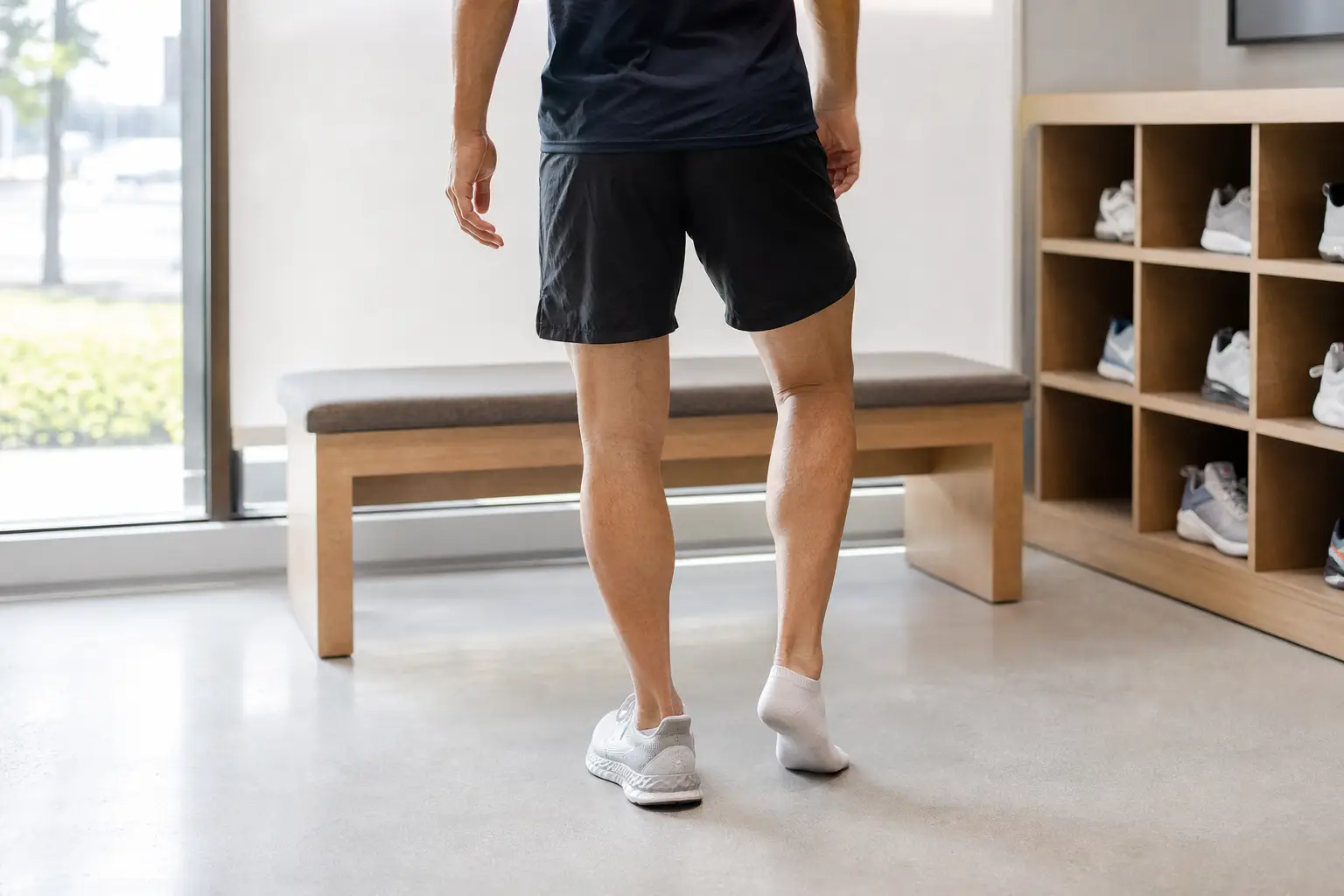
- Toe room: leave about a thumb's width in front of your longest toe.
- Heel and midfoot: aim for snug, not tight. A little heel movement may improve with runner's-loop lacing, but persistent heel blisters can mean the heel cup is wrong for you.
- Width and volume: if your foot spills over the insole, your toes go numb, or the upper feels stretched, try a wide or extra-depth option.
- Toe box shape: a wider toe box helps some runners, but it can feel sloppy on narrow feet or technical trails.
- Timing: try shoes late in the day or after a run, because feet swell. Fit the larger foot.
- Sizing: brand and model sizing is not standardized. You may need to move up or down a half or full size when you change shoes.
Use support and pronation as a comfort filter, not the main buying rule
Pronation is part of normal running. The useful question is not “Do I pronate?” but “Does this shoe feel stable, comfortable, and natural for the run I’m buying it for?”
Research reviews have not shown clear injury-prevention benefits from prescribing running shoes mainly by static foot posture. Arch height and foot shape are poor standalone buying rules, and evidence for stability or motion-control shoes preventing injuries is uncertain or low-certainty.
- Start neutral if it feels comfortable and controlled. Do not add support just because a label says you should.
- Try stability support if neutral shoes feel unstable or tiring, but keep the same fit standards.
- Do not let a gait label override pressure points, heel slip, or cramped toes.
- If you use orthotics, try shoes with them in place, because they change volume and heel hold.
- Choose the shoe that lets your stride feel natural, especially when you run at your usual pace.
Compare your best options: daily trainer vs max-cushion shoe vs speed shoe vs door-to-trail vs technical trail
Once you know the surface and main run type, compare shoes by job. Most runners buying one serious pair should start with a daily trainer unless their terrain or racing goal clearly points elsewhere.
| Shoe type | Best fit for | Look for | Main trade-off |
|---|---|---|---|
| Daily road trainer | Beginners, fitness runners, and regular easy miles on road, treadmill, or track | Comfort, secure heel and midfoot, enough toe room, durable outsole | Not as light or aggressive as speed and race shoes |
| Max-cushion road shoe | Long runs and runners who like more underfoot protection on smooth surfaces | Higher stack, stable base, ride that still feels controlled when tired | Can feel bulky and less stable, especially away from even ground |
| Speedwork or tempo shoe | Faster workouts and runners who want a lighter, snappier feel | Lower weight, secure tongue, strong lockdown, responsive ride | May be less durable or less comfortable for easy daily miles |
| Plated race shoe | Race day or key efforts where efficiency matters | Race-focused fit, low weight, current rule compliance if your event requires it | Expensive and less versatile for everyday training |
| Door-to-trail or light-trail shoe | Mixed pavement, gravel, park paths, and dry hardpack | Moderate lugs, flexible enough for road sections, secure upper | Less bite than technical trail shoes in mud or rough terrain |
| Technical trail shoe | Mud, rocks, roots, and uneven terrain | Deeper or surface-specific lugs, toe cap, stiffer platform, possible rock plate | Heavier and harsher on pavement, with lugs that can wear faster on hard ground |
Avoid the common buying mistakes that cause blisters, instability, or wasted money
Most bad running shoe buys fail in predictable ways: wrong surface, wrong fit, too much shoe, or a support choice that ignores comfort.
- Starting with pronation instead of surface and run type.
- Buying the size you usually wear without checking toe room in that brand and model.
- Trying shoes only in the morning, then discovering they squeeze once your feet swell.
- Assuming a tight shoe will break in. It should feel right from the start.
- Choosing maximum cushioning for uneven trail if tall, soft platforms make you feel unstable.
- Using aggressive trail shoes mostly on pavement, which can feel harsh and wear down the lugs faster.
- Buying plated race shoes as your only pair if you need a durable, versatile daily trainer.
- Using high-stack road shoes for lateral gym work. Cross-training sessions may be better served by cross-trainers.
- Using trail runners for hiking and expecting hiking-shoe durability. Trail runners are lighter, but they can wear faster than hiking shoes.
FAQ: sizing up, wide fits, rotation, trail shoes on roads, plated shoes, and when to replace them
Should I size up in running shoes?
Do not size up by habit. Aim for about a thumb's width in front of your longest toe, try shoes late in the day or after a run, and fit the larger foot. Because sizing varies by brand and model, you may need a half or full size different from your usual shoe.
How do I know if I need a wide fit?
Try wide or extra-depth options if your foot spills over the insole, the upper feels stretched, or your toes go numb. A wider toe box can help, but narrow-footed runners or technical-trail runners may find too much width sloppy.
Do I need more than one pair?
Beginners can usually start with one comfortable daily trainer that matches their surface. Higher-mileage runners often rotate shoes for easy runs, long runs, and workouts, but rotation is useful only if each shoe has a clear job.
Can I wear trail shoes on roads?
For short road links to the trail, yes, many runners do. For mostly pavement, use road shoes or door-to-trail shoes. Aggressive trail lugs can feel harsh on hard surfaces and may wear faster.
Are plated race shoes worth buying?
They make the most sense for racing or key fast efforts, not as a first do-everything shoe. They are usually expensive and less versatile, and you should check current shoe rules if your event applies them.
When should I replace running shoes?
There is no single replacement number that fits every runner in these notes. Replace them when they no longer do their job: the outsole has lost the grip you need, the upper no longer holds your foot securely, the shoe feels unstable, or the cushioning no longer protects you as expected.
Verdict: buy the shoe that still feels secure and natural at the end of your usual run
Choose by run first: surface, distance, and pace. Then check fit under real conditions, with toe room, heel hold, enough width, and your running socks or orthotics. Use cushioning and support to fine-tune comfort, not to override a shoe that matches your terrain and still feels stable when you’re tired.
Search running shoes by surface, cushioning, and support
Live prices from more than 20 shops, updated daily.
This article was created using AI, following our team's editorial standards.


