


If your face feels tight, flakes or stings under a familiar moisturizer, spend first on a gentle cleanser, fragrance-free moisturizer and daily sunscreen. Add one retinoid or acid after those signs have settled, then judge the routine after eight to twelve weeks.
First decide whether you need a product, a barrier reset or a dermatologist
Your skin's condition today should decide what you buy, even if an active worked well before summer.
- Keep your current routine if your skin feels comfortable and you only notice mild seasonal dullness. You don't need a special post-summer kit.
- Buy the basic barrier routine if washing causes tightness, a usual moisturizer stings, or you have widespread flaking and redness.
- Consider one active if your skin is comfortable and your main concern is rough texture, clogged pores, mild uneven-looking tone or fine lines.
- Book a dermatologist if redness, pain, swelling, oozing, blistering or a recurrent itchy rash persists. Changing, irregular or unexplained dark marks also need assessment before you treat them as cosmetic pigmentation.
- Seek professional advice for persistent flushing, visible vessels, eye irritation, acne nodules or scarring. That needs a dermatologist, not a stronger shopping basket.
Repair the barrier first, and use the no-sting test before adding an active
Comfort under a basic moisturizer is the most useful home check before restarting stronger skincare.
Aggressive exfoliation can deepen dryness and irritation because it removes more surface material from skin that is already struggling to retain water. In pigmentation-prone skin, the resulting inflammation can also leave longer-lasting dark marks. If a moisturizer that felt fine in June now burns for ten minutes after a late-August swimming holiday, an acid peel is the wrong purchase.
- Use a mild, non-scrub cleanser once or twice daily as needed. Rinse after swimming.
- Apply a fragrance-free moisturizer containing a useful mix of humectants, emollients and occlusives. Glycerin holds water, emollients smooth surface gaps, and ingredients such as petrolatum or dimethicone reduce water loss.
- Use reliable broad-spectrum UVA and UVB sunscreen with SPF 30 or higher every morning.
- Pause brushes, scrubs, peel pads, high-alcohol toners, retinoids and leave-on acids until flaking and sustained redness have settled and moisturizer no longer stings.
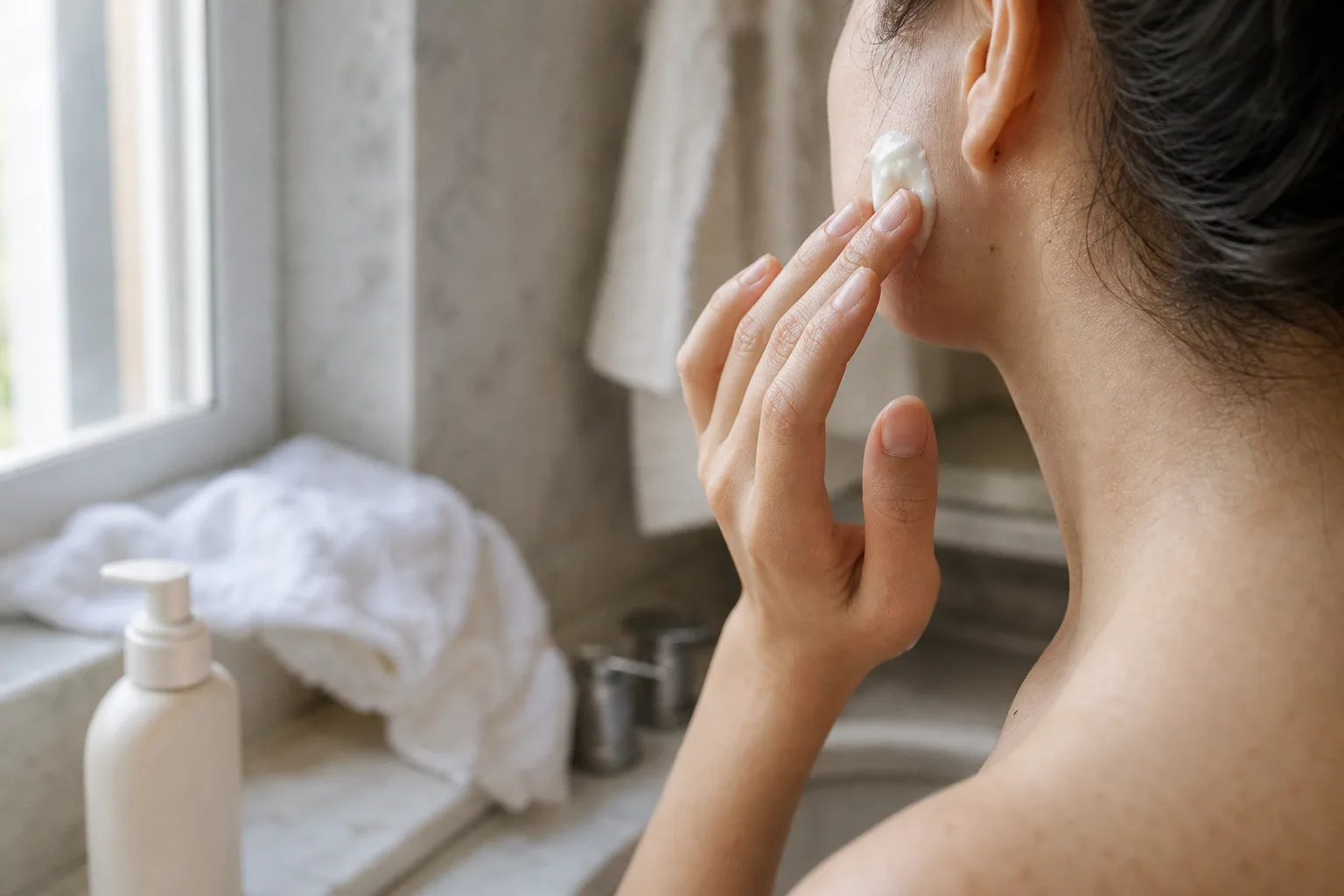
Mild dryness may settle after several days or a week or two of simplification, but there is no universal reset period. Use the condition checks. Ceramides can be useful, especially for dry or eczema-prone skin, although the word on the label doesn't prove superiority to a well-made basic cream.
Match one ingredient family to your main concern and expect gradual change in eight to twelve weeks
Choose the ingredient that addresses your main concern and accept that visible changes should be modest at the first review.
- Barrier moisturizers: glycerin, petrolatum, dimethicone, squalane, emollients and barrier lipids can improve hydration, softness and tightness relatively quickly. They don't remove established pigmentation or rebuild lost collagen.
- Retinol and retinal: useful for a broad mix of mild roughness, fine lines, blemishes and uneven-looking tone. Some users see smoother texture or modest appearance changes within eight to twelve weeks. Dryness, scaling and redness are common early problems, and percentage labels aren't directly comparable across retinoid forms.
- AHAs: glycolic and lactic acid suit surface roughness and dullness. Expect smoother-feeling skin and possibly a modest improvement in luminosity or discoloration over roughly eight to twelve weeks. Glycolic acid can be harder to tolerate, and daily use isn't required.
- BHA: salicylic acid makes more sense for oiliness, blackheads and congested pores than for dry, flaky post-summer skin. It can still cause dryness and shouldn't be introduced alongside a new retinoid.
- Niacinamide: a useful lower-irritation choice for barrier support and the appearance of blotchiness, texture and uneven tone. Controlled 12-week evidence exists at 5 percent. Labels showing 10 or 20 percent don't establish better results, and a separate serum is unnecessary if your moisturizer already contains it.
- Vitamin C and azelaic acid: vitamin C can provide antioxidant support and modest improvement in overall photodamaged appearance, but evidence is highly formula-specific. Azelaic acid is better matched to acne-linked redness and unevenness, though tingling can occur and the best-studied products may be regulated as medicines in some markets.
Hyaluronic acid provides surface hydration and temporary plumping, but a standalone serum has little value if a complete moisturizer already works. Tranexamic acid and alpha-arbutin are secondary tone products with narrower formulation evidence. Bakuchiol has promising small trials, yet its evidence base is much smaller than that for established retinoids.
Make retinoids and acids an autumn purchase: start slowly and keep SPF 30+ every day
Autumn usually makes active use easier because intense sun, swimming and travel become less frequent.
The season is a practical buying window. Retinoids can be used year-round by people who tolerate them and protect their skin from UV. AHAs carry a clearer warning because they can increase sun sensitivity during use and for up to one week after stopping.
- Wait until your skin passes the no-sting test and has no active sunburn, cracking or unexplained rash.
- Choose one active. A cautious pattern is one or two non-consecutive nights each week, following the product label and using moisturizer.
- Stay at that frequency through several comfortable applications. Increase gradually only if there is no sustained burning, marked redness, cracking or rash. Irritation isn't evidence that the formula is working.
- Review at eight to twelve weeks. Look for smoother texture, less scaling, modestly more even-looking tone or fewer clogged pores, depending on the product. Visible pigmentation and wrinkles can remain.
September doesn't guarantee low UV. Latitude, altitude, cloud and time of day all matter, so check the local UV Index and use protection when it reaches 3 or higher. Choose broad-spectrum UVA and UVB protection. Follow the label for reapplication outdoors and reapply after swimming, heavy sweating or towel drying.
Pay for stable, tolerable formulation, not luxury packaging or inflated percentages
Entry and mid-tier products cover most post-summer routines because price is a weak indicator of cosmetic results.
- Moisturizer: glycerin, petrolatum, dimethicone and ceramides don't require luxury pricing. Pay extra if a fragrance-free texture solves a real comfort or adherence problem.
- Retinoids and vitamin C: opaque, light-restrictive or air-restrictive packaging can help protect unstable formulas. A well-designed vehicle and testing of the finished product are stronger reasons for a premium price.
- Acids: concentration, final pH, vehicle and tolerability matter. The largest percentage on the shelf can become poor value if irritation limits use.
- Sunscreen: compare cost per 1.7 fl oz, UVA and UVB credentials, cast, eye comfort and finish. A cheap sunscreen you avoid applying generously is false economy.
- Marketing: heavy jars, magnetic lids, spatulas, fragrance and proprietary complex names provide no evidence of better barrier support or stronger results.
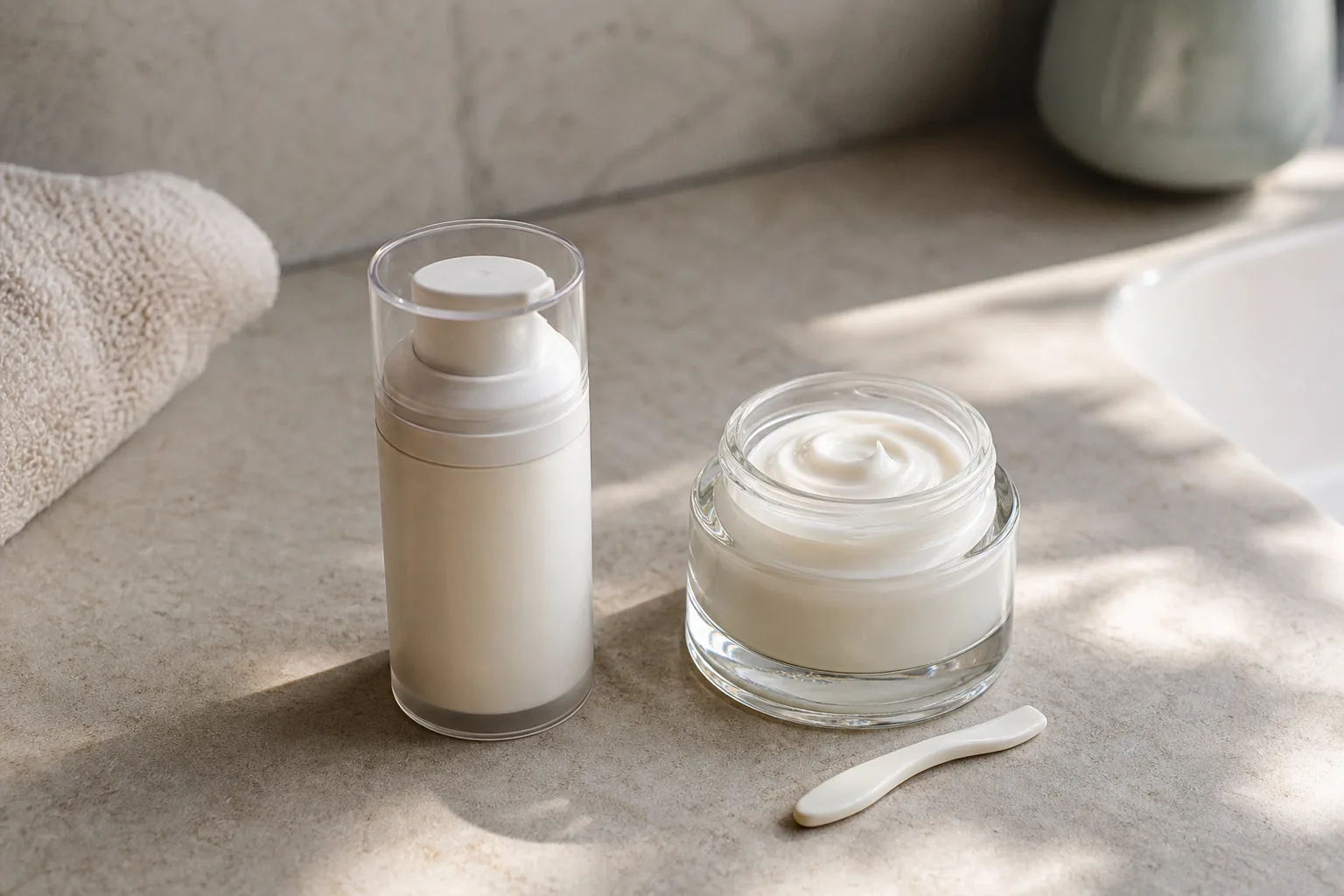
Illustrative shelf prices sampled in August 2026 show prestige cosmetic retinoids at roughly six to ten times the price of entry products. Some 1.7 fl oz luxury moisturizers cost more than ten times the shelf price of basic creams sold in 13.5 to 17.6 oz or g sizes. The extra spend can buy stabilization, a more elegant vehicle, better packaging and finished-formula testing. It cannot guarantee a matching increase in results.
Compare the best post-summer routines by skin need, active choice and price tier
Most readers should begin in the entry tier and move up only for a specific formulation advantage.
| Skin need | Routine | First active | Price tier | Main caution |
|---|---|---|---|---|
| Tight, flaky or stinging | Mild cleanser, richer fragrance-free moisturizer, SPF 30+ | None until comfortable | Entry | Avoid exfoliation and facial brushes |
| Comfortable but dull and rough | Basic routine plus one gentle AHA | Lactic or suitable glycolic acid | Entry to mid | Build frequency slowly and protect from UV |
| Oily with blackheads | Light moisturizer, sunscreen, one pore-focused product | Salicylic acid | Entry to mid | Can still dry or irritate |
| Sensitive with mild unevenness | Fragrance-free basics plus a lower-irritation option | Niacinamide | Entry | Check for duplication across products |
| Several mild concerns, including texture and fine lines | Basic routine plus one tolerable retinoid | Cosmetic retinol or retinal | Entry to mid | Avoid during pregnancy or pregnancy planning |
| Needs a specific elegant texture or stabilized formula | Basic routine plus a documented finished formula | One matched active | Premium | Check the evidence before paying |
Avoid the mistakes that turn dryness and uneven tone into sustained irritation
The common failures come from adding too much, too quickly, while the skin is still stressed.
- Trying to scrub away dullness. Flaking can signal barrier disruption, and further exfoliation can prolong discomfort.
- Starting a retinoid, acid and abrasive tool together. Add one active so you can identify the cause of irritation.
- Chasing maximum strength. Retinoid percentages aren't interchangeable, acid pH matters, and higher niacinamide percentages haven't proved proportionally better.
- Buying several open bottles. Treatment serums are commonly only 0.5 to 1 fl oz, yet they can still outlast the manufacturer's period-after-opening guidance when used slowly.
- Stopping sunscreen because the calendar says autumn. Local UV conditions decide the protection you need.
- Buying unverified imported skin-lightening products. These can contain undeclared mercury or hydroquinone and may breach local cosmetic rules. An unexplained dark mark deserves diagnosis before treatment.
Post-summer skincare FAQ: layering, frequency, pregnancy, UV and when to stop
Can I use vitamin C in the morning and a retinoid at night?
A stable, comfortable routine can eventually contain both, but don't introduce them together. Establish tolerance to one active first. Vitamin C is optional, while morning sunscreen remains the priority.
Do I have to reach daily retinoid or acid use?
No. A product used comfortably on two or three nights each week can be more sustainable than daily use that causes repeated peeling. Follow the label and keep the lowest frequency that produces acceptable tolerance.
Can bakuchiol replace retinoids during pregnancy?
Do not assume that. Bakuchiol has a much smaller evidence base and should not automatically be marketed as pregnancy-safe. Discuss skincare actives with a clinician or pharmacist during pregnancy and breastfeeding.
Is sea water the main cause of post-holiday dryness?
Evidence doesn't support treating salt as a universal skin toxin. The combined effects of UV, repeated swimming and rinsing, chlorine, heat, air conditioning and an individual tendency to dryness are more useful guides.
When should I stop an active and seek help?
Stop and simplify the routine if you develop sustained burning, marked redness, swelling, cracking or rash. Recurrent itchy or painful reactions can require dermatological assessment and patch testing.
Does sunscreen matter on cloudy autumn days?
Cloud and season alone aren't reliable guides. Check the local UV Index. Protection is recommended when it reaches 3 or higher, especially if you are using an AHA or irritation-prone active.
Compare barrier face moisturizers
Live prices from more than 20 shops, updated daily.
Verdict: keep the routine basic until your skin earns one well-chosen active
Start with a mild cleanser, fragrance-free moisturizer and broad-spectrum SPF 30+ sunscreen. Once washing and moisturizing feel comfortable again, choose one retinoid, AHA, BHA or lower-irritation tone ingredient for your main concern. Introduce it slowly, review after eight to twelve weeks, and spend extra only for stability, tolerability or credible finished-formula evidence.
This article was created using AI, following our team's editorial standards.